---
title: "A Toda Madre or Una Madre: Same Word, Opposite Verdicts"
description: "Twenty-two coarse expressions hang off one noun in the Mexican dictionary, and they point in both directions at once. The small word in front decides which one you got."
type: "article"
category: "slang"
url: "https://consalsa.app/blog/a-toda-madre-meaning"
canonical: "https://consalsa.app/blog/a-toda-madre-meaning"
published: "2026-11-07"
updated: "2026-11-07"
author: "Andrey the Nomad"
site: "ConSalsa.App"
license: "https://consalsa.app/terms#ip"
---

# A Toda Madre or Una Madre: Same Word, Opposite Verdicts
URL: https://consalsa.app/blog/a-toda-madre-meaning
Date: 2026-11-07
Updated: 2026-11-07
Category: slang
Keywords: a toda madre meaning, me vale madres meaning, hasta la madre meaning, de poca madre meaning, que poca madre, mexican slang madre
Summary: Twenty-two coarse expressions hang off one noun in the Mexican dictionary, and they point in both directions at once. The small word in front decides which one you got.

Quick answer:
- A toda madre means excellent. Una madre means worthless. Both are in the same dictionary entry.
- The article and preposition carry the polarity: de poca madre is praise, qué poca madre is an accusation.
- Madre also works as a placeholder noun for any object whose name you have lost, like thingy.
- Every one of these is marked coarse. Tone does not rescue them in front of somebody's mother.

What you'll learn:
- The twenty-two expressions El Colegio de México lists, sorted by whether they praise or damage.
- The two-word pairs that look identical and mean opposite things.
- Why Mexican Spanish routes its worst insults through the mother specifically.
- Which three of them a foreigner can use without anybody blinking.

Don't sound gringo:
De poca madre is a compliment and qué poca madre is an accusation of shamelessness. Same three words. If you cannot hold the difference under pressure, say padrísimo for the good one and skip the other entirely.

Body:

<mark lang="es-MX">Está a toda madre</mark> means it is fantastic. <mark lang="es-MX">Es una madre</mark> means it is garbage. Nobody in Mexico has ever confused the two, and no learner has ever worked out why on their own.

<mark lang="es-MX">Toda</mark> and <mark lang="es-MX">una</mark>. That is the whole distance between the compliment and the insult.

## Twenty-two expressions, one entry

El Colegio de México gives <mark lang="es-MX">madre</mark> four groups. The first three are the ordinary ones: a mother, a mother superior, the source of something, the bed of a river. Then comes group four, marked coarse, and it runs to twenty-two numbered expressions.[^dem-madre]

Sorted by which way they point:

| Direction | Expression | What it does |
|---|---|---|
| Praise | A toda madre | Excellent, the best |
| Quantity | De a madres | In huge amounts |
| Placeholder | Madre | Thing, whatsit |
| Complaint | Estar o andar hasta la madre | Fed up, or very drunk, depending on what follows |
| Complaint | Qué poca madre | What shamelessness |
| Dismissal | Valer madres | To be worth nothing |
| Dismissal | Me vale madres | I do not care |
| Refusal | Ni madres, pura madre | Absolutely not |
| Damage | En la madre | Oh no, bad luck |
| Damage | Darse en la madre | To get badly hurt |
| Violence | Partirle la madre a alguien | To beat somebody up |
| Character | Tener o no tener madre | To have shame, or none |
| Oath | Te cae de madres | Swearing you are telling the truth |
| Sensory | Oler a madres | To smell terrible |

Seventeen of the twenty-two are damage, refusal or dismissal. Exactly one is straight praise, and **that single one is the one you will hear most**.

One more belongs on the praise side and is not in the entry at all: <mark lang="es-MX">de poca madre</mark>, meaning outstanding. Note that it is the opposite of the <mark lang="es-MX">qué poca madre</mark> the dictionary does list, and the difference between them is two letters.

<figure>
  <img src="/images/blog/optimized/pexels-liogooo-coyolillo-mother-daughter-1400-2b8bb67c.webp" alt="A woman braiding her daughter's hair in a brightly painted living room." loading="lazy" />
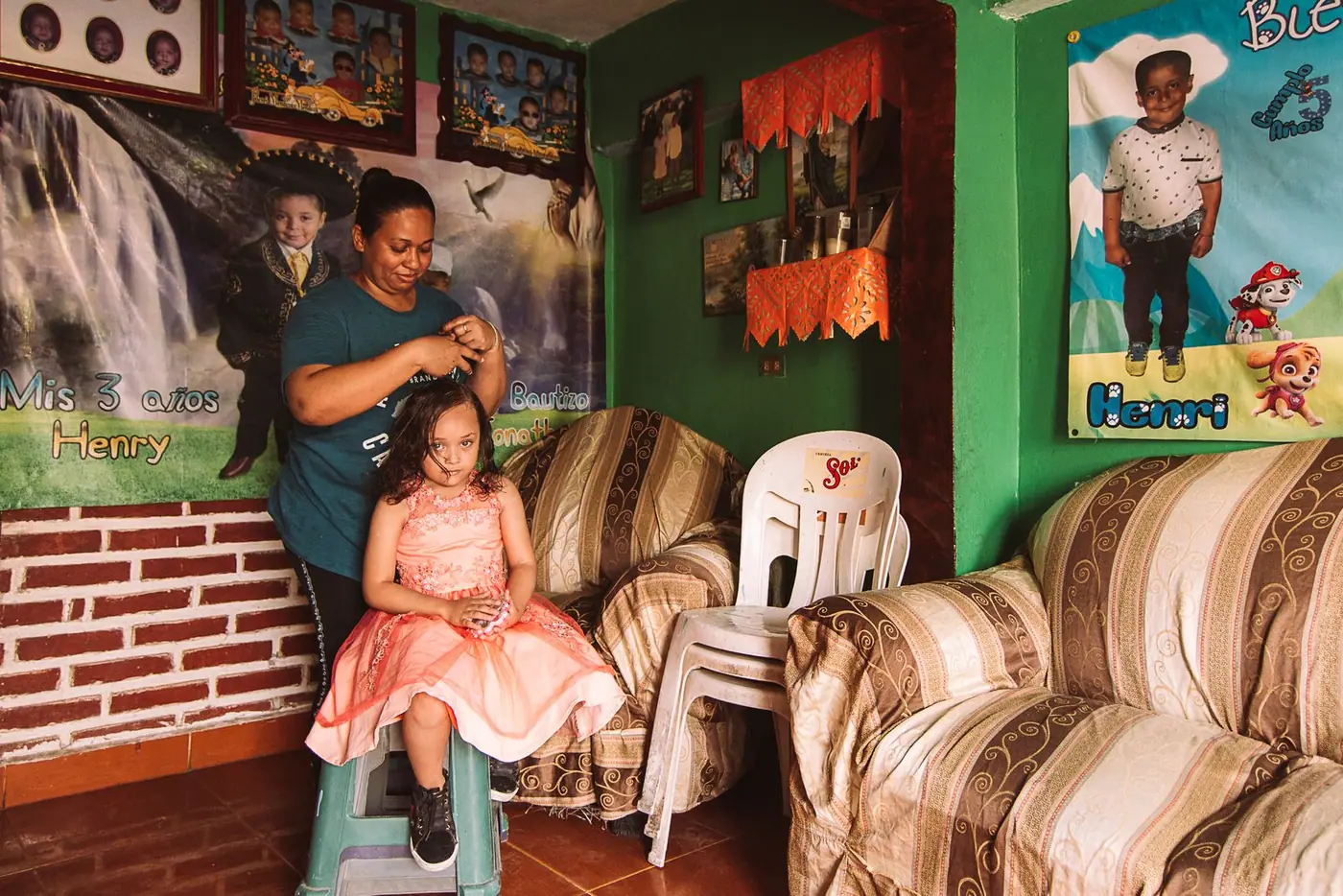
  <figcaption>Coyolillo, Veracruz. Photo by <a href="https://www.pexels.com/photo/woman-waving-brides-to-little-girl-at-home-13878393/" target="_blank" rel="noopener noreferrer">liogooo on Pexels</a>.</figcaption>
</figure>

## The pairs that flip

Four pairs sit close enough together to trip anybody, and the difference is never in the noun.

| Praise | Damage | What changed |
|---|---|---|
| A toda madre | Una madre | Toda versus una |
| De poca madre | Qué poca madre | De versus qué |
| Tener madre | No tener madre | One word, and a verdict on your character |
| Está a toda madre | Está hasta la madre | A toda versus hasta la |

That last pair is the one that gets people in real conversation, because at speed <mark lang="es-MX">a toda</mark> and <mark lang="es-MX">hasta la</mark> are not far apart and they mean the party was great versus I want to go home.

<div class="do-dont">
  <div class="dd-col dd-do"><p class="dd-title">Praise</p><ul>
    <li><b lang="es-MX">Está a toda madre.</b></li>
    <li><b lang="es-MX">Estuvo de poca madre.</b></li>
    <li><b lang="es-MX">Nos fue de poca madre.</b></li>
  </ul></div>
  <div class="dd-col dd-dont"><p class="dd-title">Damage</p><ul>
    <li><b lang="es-MX">Es una madre.</b></li>
    <li><b lang="es-MX">Qué poca madre.</b></li>
    <li><b lang="es-MX">Vale pura madre.</b></li>
  </ul></div>
</div>

<div id="midpost-newsletter-slot"></div>

## The one you will use most is the boring one

Sense 22 in that entry has no insult anywhere in it: <mark lang="es-MX">madre</mark> meaning thing, the word you reach for when the name of the object has left your head. The dictionary's example is somebody asking for the thing and then clarifying: the hammer.[^dem-madre]

<ul class="examples">
  <li class="example">
    <div class="es" lang="es-MX">Pásame esa madre, la de al lado.</div>
    <div class="en" lang="en">Pass me that thing, the one next to it.</div>
  </li>
  <li class="example">
    <div class="es" lang="es-MX">Traía no sé qué madres en la mochila.</div>
    <div class="en" lang="en">He had who knows what in his backpack.</div>
  </li>
  <li class="example">
    <div class="es" lang="es-MX">Se le cayó una madrecita al control y ya no sirve.</div>
    <div class="en" lang="en">Some little piece fell off the remote and now it is dead.</div>
  </li>
</ul>

Look at the diminutive in that third line. <mark lang="es-MX">Madrecita</mark> for a small component is completely ordinary, and it is sitting in the same sentence as a word that can start a fight.

<figure>
  <img src="/images/blog/optimized/pexels-jibarofoto-workshop-tools-1400-69fffff4.webp" alt="Tools and equipment hanging across the wall of a cluttered workshop." loading="lazy" />
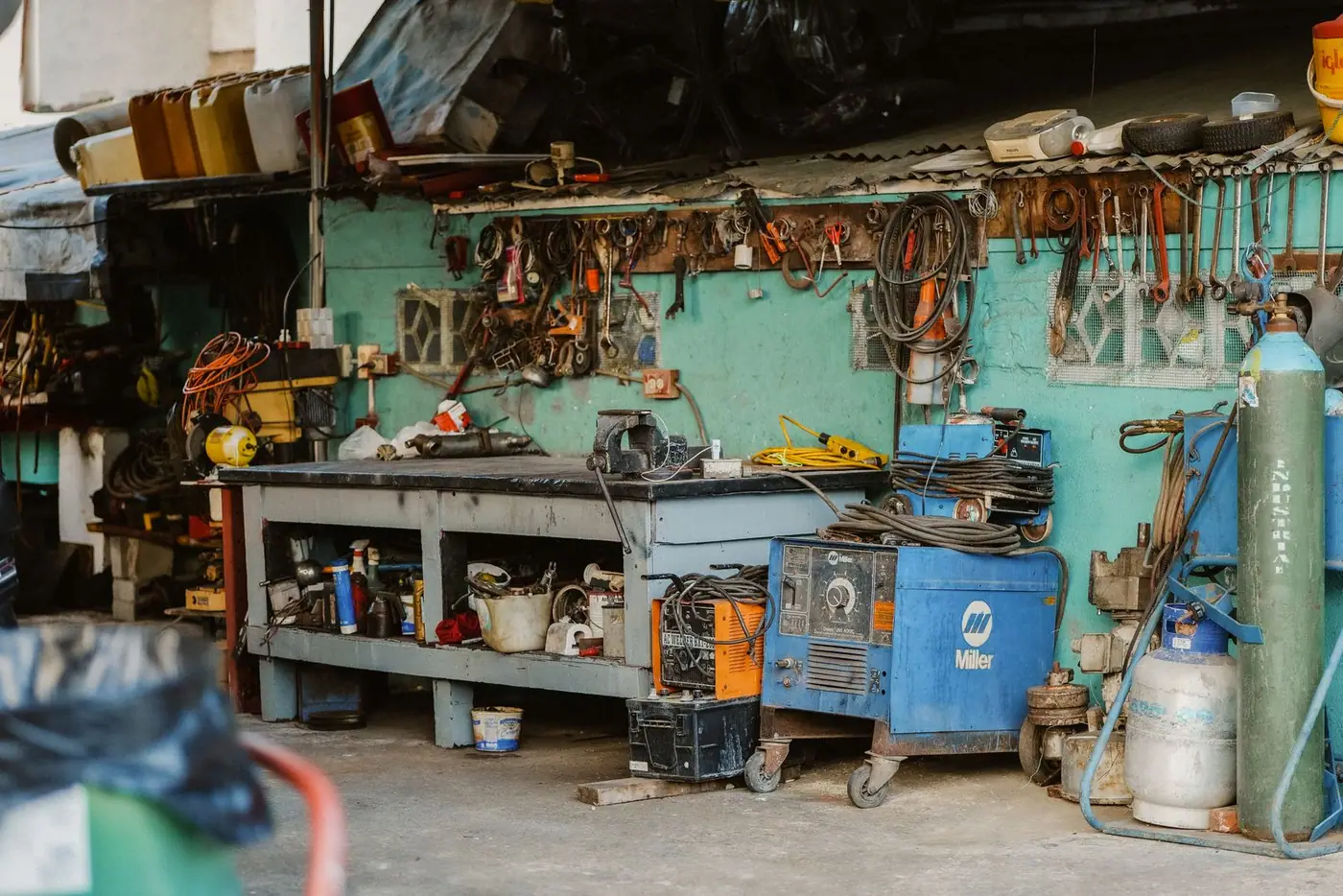
  <figcaption>Every object on this wall is, at some point in the week, going to be called a madre. Photo by <a href="https://www.pexels.com/photo/tools-and-accessories-on-wall-in-workshop-16243257/" target="_blank" rel="noopener noreferrer">Jibarofoto on Pexels</a>.</figcaption>
</figure>

## Why the mother, and not something else

There is a reason this noun carries the load and not some other one, and it runs the opposite way from the obvious guess. Mexico does not think little of mothers.

Mexico's Mother's Day was created by a newspaper. In April 1922 Rafael Alducin, founder of Excélsior, ran a campaign proposing 10 May as a national day for mothers. The Secretary of Public Education José Vasconcelos backed it, the Church picked it up as a counterweight to the birth-control campaigns then running in Yucatán, and the first celebration took place that same May.[^unam-madres] A century later Excélsior was still writing about the campaign as its founder's legacy.[^excelsior]

Octavio Paz put the two halves of this together in one sentence. <mark lang="es-MX">La Chingada</mark>, he wrote, is one of Mexico's representations of Motherhood, in the same set as <mark lang="es-MX">la Llorona</mark> and the long-suffering Mexican mother the country celebrates every 10 May.[^paz] The reverence and the taboo are not in tension. They are the same fact, seen from two ends.

Which is also why the dictionary's phrase for the ultimate dismissal, <mark lang="es-MX">mandar a alguien a chingar a su madre</mark>, is defined not as an insult but as ignoring somebody, getting rid of them, cutting them off.[^dem-madre] The insult is so total that it functions as an ending.

Which of the twenty-two a listener even hears is not fixed, either. A Monterrey study of Mexican polysemy ran <mark lang="es-MX">madre</mark> through oral corpora sorted by the speaker's age, gender and schooling, and the reading moved with all three.[^humanitas] A grandmother and a nineteen-year-old are not using the same word.

<figure>
  <img src="/images/blog/optimized/pexels-jorge-acre-alley-mother-child-1400-610a1460.webp" alt="A woman and a small child walking along a quiet alley in a Mexican town." loading="lazy" />
  <figcaption>Photo by <a href="https://www.pexels.com/photo/people-in-a-town-16624864/" target="_blank" rel="noopener noreferrer">Jorge Acre on Pexels</a>.</figcaption>
</figure>

## Where the line is

The damage side is not one temperature. Sorted by how much of it is in there:

<ul class="meter-list">
  <li class="meter-head"><span>the phrase</span><span>how much damage is in it</span><span></span></li>
  <li data-tone="soft" style="--fill:18%">
    <span class="meter-es" lang="es-MX">Me vale madres.<span class="meter-en" lang="en">I do not care.</span></span>
    <span class="meter-track"><span class="meter-fill"></span></span>
    <span class="meter-val">dismissal</span>
  </li>
  <li data-tone="mid" style="--fill:38%">
    <span class="meter-es" lang="es-MX">Estoy hasta la madre.<span class="meter-en" lang="en">I have had it.</span></span>
    <span class="meter-track"><span class="meter-fill"></span></span>
    <span class="meter-val">complaint</span>
  </li>
  <li data-tone="mid" style="--fill:56%">
    <span class="meter-es" lang="es-MX">Ni madres.<span class="meter-en" lang="en">Absolutely not.</span></span>
    <span class="meter-track"><span class="meter-fill"></span></span>
    <span class="meter-val">refusal</span>
  </li>
  <li data-tone="firm" style="--fill:76%">
    <span class="meter-es" lang="es-MX">Qué poca madre.<span class="meter-en" lang="en">What shamelessness.</span></span>
    <span class="meter-track"><span class="meter-fill"></span></span>
    <span class="meter-val">accusation</span>
  </li>
  <li data-tone="blunt" style="--fill:96%">
    <span class="meter-es" lang="es-MX">Te voy a partir la madre.<span class="meter-en" lang="en">I am going to beat you up.</span></span>
    <span class="meter-track"><span class="meter-fill"></span></span>
    <span class="meter-val">threat</span>
  </li>
</ul>

<div class="note-card is-safety">
  <span class="note-label">The one rule</span>
  <p>Anything in this family aimed at a person, rather than at a situation or an object, changes category. <b lang="es-MX">Está a toda madre</b> about a taco is nothing. <b lang="es-MX">Te voy a partir la madre</b> is a specific threat and Mexicans hear it as one. And none of it belongs anywhere near somebody's actual mother, which includes your partner's.</p>
</div>

Three of them belong in your own speech: <mark lang="es-MX">a toda madre</mark>, <mark lang="es-MX">de poca madre</mark> and the placeholder <mark lang="es-MX">madre</mark>. A compliment, a bigger compliment, and a word for thing. Take those and leave the other nineteen where they are.

Where the other nineteen sit, and which ones have polite stand-ins, is [the coarse vocabulary with clean substitutes](/blog/mexican-swear-words).

[^dem-madre]: [Diccionario del español de México, madre](https://dem.colmex.mx/ver/madre) - El Colegio de México.
[^humanitas]: [Zulema Cruz y Ma. Eugenia Flores, Vocablos polisémicos en la cultura mexicana](https://humanitas.uanl.mx/index.php/ah/article/view/295) - Humanitas n. 44, Universidad Autónoma de Nuevo León.
[^unam-madres]: [Día de las Madres, orígenes y significado](https://unamglobal.unam.mx/global_revista/dia-de-las-madres-origenes-y-significado/) - UNAM Global.
[^excelsior]: [Día de las Madres, 100 años del legado de Rafael Alducin](https://www.excelsior.com.mx/nacional/dia-de-las-madres-100-anos-legado-alducin-fundador-excelsior/1514313) - Excélsior.
[^paz]: [Los hijos de la Malinche, fragmento](https://www.uv.mx/celulaode/leta-2024/descargas/modulo-3/M3-Act-11-Paz-2020.pdf) - Octavio Paz, reader hosted by the Universidad Veracruzana.

FAQ:
Q: What does a toda madre mean?
A: Excellent, the best. The dictionary's own examples are a trip to the beach and a car somebody just bought.

Q: Is a toda madre rude?
A: It is marked coarse, but it is at the mild end. Among friends it passes without comment. At work or with elders it registers.

Q: What is the difference between de poca madre and qué poca madre?
A: De poca madre means great. Qué poca madre means what a shameless thing to do. The dictionary lists the second as a complaint about a lack of decency.

Q: What does me vale madres mean?
A: I could not care less. The dictionary defines it as having very little value or none, or being none of your concern.

Q: What does estar hasta la madre mean?
A: Fed up, at the end of your patience. There is a second sense too: very drunk or high, as in iba hasta su madre.

Q: What does madre mean when it is not about a mother?
A: Thing. Pásame la madre esa is pass me that thing. It is the coarse version of cosa and it is everywhere.

Q: Why do Mexican insults involve the mother so much?
A: Because the mother is the highest-value figure in the culture, which is exactly what makes her the most expensive thing to attack. Mexico built a national holiday around her in 1922.

Q: Is tener madre about having a mother?
A: No. Tener madre means having shame or honor, and no tener madre means having none. It is a judgment about character.

Q: Can a foreigner say a toda madre?
A: Yes, with friends, and it lands well. Keep away from the ones containing chingar and from anything aimed at a person.

Sources:
- Diccionario del español de México, madre - El Colegio de México: https://dem.colmex.mx/ver/madre
- Zulema Cruz y Ma. Eugenia Flores, Vocablos polisémicos en la cultura mexicana - Humanitas, Universidad Autónoma de Nuevo León, n. 44: https://humanitas.uanl.mx/index.php/ah/article/view/295
- Día de las Madres, orígenes y significado - UNAM Global: https://unamglobal.unam.mx/global_revista/dia-de-las-madres-origenes-y-significado/
- Día de las Madres, 100 años del legado de Rafael Alducin - Excélsior: https://www.excelsior.com.mx/nacional/dia-de-las-madres-100-anos-legado-alducin-fundador-excelsior/1514313
- Octavio Paz, Los hijos de la Malinche (fragmento) - Universidad Veracruzana: https://www.uv.mx/celulaode/leta-2024/descargas/modulo-3/M3-Act-11-Paz-2020.pdf

Related words: me-vale-madres, ni-madres, jefa, chingar
