---
title: "Aguas, Cuidado or Ojo: Matching the Warning to the Danger"
description: "Three warnings with three urgency levels. Which one to shout when a bike is coming, which one is just advice, and why aguas is not a synonym for cuidado."
type: "article"
category: "slang"
url: "https://consalsa.app/blog/aguas-warning-word"
canonical: "https://consalsa.app/blog/aguas-warning-word"
published: "2026-07-11"
updated: "2026-07-11"
author: "Andrey the Nomad"
site: "ConSalsa.App"
license: "https://consalsa.app/about"
---

# Aguas, Cuidado or Ojo: Matching the Warning to the Danger
URL: https://consalsa.app/blog/aguas-warning-word
Date: 2026-07-11
Updated: 2026-07-11
Category: slang
Keywords: aguas vs cuidado, ojo meaning spanish warning, echar aguas meaning, mexican warning words, how to warn someone in spanish, urgent warning phrases spanish
Summary: Three warnings with three urgency levels. Which one to shout when a bike is coming, which one is just advice, and why aguas is not a synonym for cuidado.

Quick answer:
- ¡Aguas! is a common informal Mexican alert meaning watch out, careful, or heads up.
- Use it for immediate, visible trouble: a step, spill, bike, closing door, falling object, or risky move.
- Cuidado is more neutral and universal; cuidado con names the hazard, while ojo can flag a detail to notice.
- For real emergencies, shout the specific danger and give an action instead of relying on slang alone.

What you'll learn:
- How an ordinary water word became one of Mexico’s fastest and most useful everyday warnings.
- Which warning fits immediate movement, general caution, a detail, advice, or a serious emergency.
- How to add the hazard after aguas so a learner, child, or distracted person can react correctly.
- Where the informal word sounds natural and where a neutral, explicit warning is safer.

Don't sound gringo:
If danger is real, do not stop at ¡aguas! Add the noun or command: ¡aguas con la bici!, ¡quítate!, or ¡no lo toques!

Body:

When someone in Mexico shouts <mark lang="es-MX">¡aguas!</mark>, do not look for a leak. Look up—and fast—for the step, bike, tray, closing door, low branch, loose dog, or friend backing into traffic while checking a map.

<mark lang="es-MX">¡Aguas!</mark> means “watch out,” “careful,” or “heads up.” It is informal, fast, and far more useful than its literal translation suggests.

## Pick the warning that matches the moment

| Warning | Best job | Register | Example |
|---|---|---|---|
| ¡Aguas! | Immediate visible trouble | Informal, Mexican | ¡Aguas con la bici! |
| Cuidado | General or serious caution | Neutral | Cuidado, está caliente |
| Ojo | Notice a detail or condition | Neutral-casual | Ojo con la fecha |
| Fíjate | Pay attention / consider this | Conversational | Fíjate por dónde pisas |
| Cuidado con... | Name a continuing hazard | Neutral | Cuidado con el perro |
| ¡Quítate! / ¡Sal! | Immediate action | Direct | ¡Quítate de ahí! |

The DEM explicitly records <mark lang="es-MX">¡aguas!</mark> as a popular alert in the face of danger and <mark lang="es-MX">echar aguas</mark> as warning someone about danger.[^dem-agua] So if you hear it on the street, check what is moving around you before you start thinking about water.

<figure>
  <img src="/images/blog/pexels-aguas-pointing-friends.jpg" alt="Two friends outdoors while one points toward something ahead." loading="lazy" />
  <figcaption>A good warning directs attention fast enough for the other person to act. Photo by <a href="https://www.pexels.com/photo/two-adults-engaged-in-conversation-outdoors-33889635/" target="_blank" rel="noopener noreferrer">OUR LORD BISHOP. on Pexels</a>.</figcaption>
</figure>

## Why aguas is not the same as cuidado

<mark lang="es-MX">Cuidado</mark> is neutral and portable across the Spanish-speaking world. RAE connects it with attention, vigilance, and concern.[^rae-cuidado] <mark lang="es-MX">Aguas</mark> feels more conversational and distinctly Mexican.

<ul class="examples">
  <li class="example">
    <div class="es" lang="es-MX">¡Aguas, viene una moto!</div>
    <div class="en" lang="en">Watch out, a motorcycle is coming!</div>
  </li>
  <li class="example">
    <div class="es" lang="es-MX">Cuidado con el aceite; está hirviendo.</div>
    <div class="en" lang="en">Careful with the oil; it's boiling.</div>
  </li>
  <li class="example">
    <div class="es" lang="es-MX">Ojo: mañana no abren.</div>
    <div class="en" lang="en">Heads up: they're closed tomorrow.</div>
  </li>
</ul>

The first interrupts what your body is doing. The second frames an ongoing hazard. The third flags information rather than physical danger. You can swap some of these, but the focus shifts.

## Add con plus the hazard

Bare <mark lang="es-MX">¡aguas!</mark> is perfect when both people can see what is happening. If the danger is behind them, ambiguous, or easy to misread, name it.

| Scene | Better warning |
|---|---|
| Bicycle approaching | ¡Aguas con la bici! |
| Wet stair | Aguas con el escalón, está mojado |
| Hot plate | Cuidado, quema |
| Pickpocket concern | Ojo con tu bolsa |
| Dog near the gate | Cuidado con el perro |
| Car reversing | ¡Aguas, échate para atrás! |

If the person cannot tell what to avoid, make the warning more specific. This is a bad moment to worry about sounding impressively local.

<figure>
  <img src="/images/blog/pexels-aguas-cdmx-phone.jpg" alt="A man with a phone walking beside colorful planters in Mexico City." loading="lazy" />
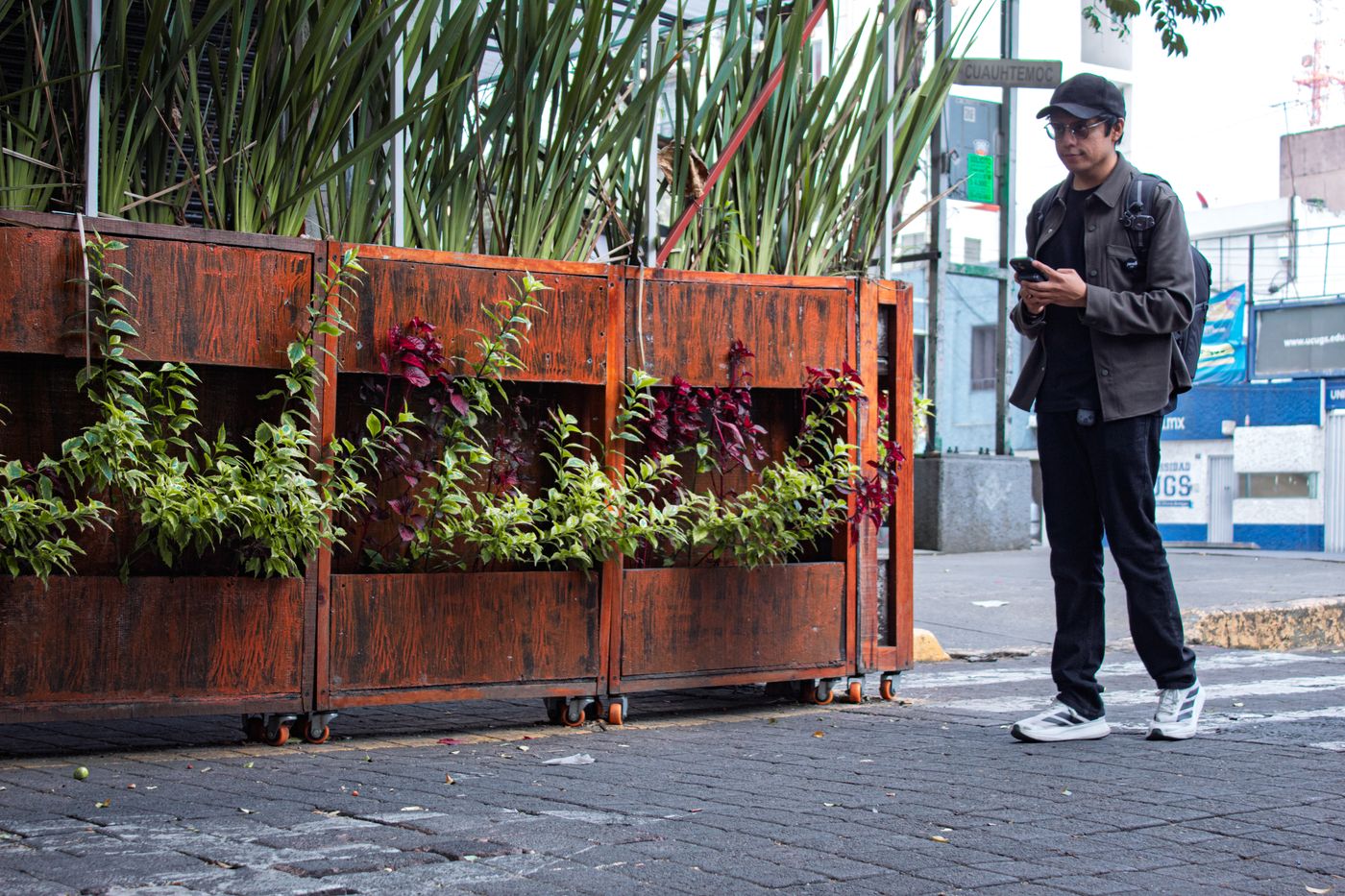
  <figcaption>Phones steal attention; naming the bike, curb, or car can buy back the second someone needs. Photo by <a href="https://www.pexels.com/photo/street-scene-in-ciudad-de-mexico-with-urban-planters-35643623/" target="_blank" rel="noopener noreferrer">Miguel Rodríguez on Pexels</a>.</figcaption>
</figure>

<div id="midpost-newsletter-slot"></div>

## Ojo is often informational

<mark lang="es-MX">Ojo</mark> literally means “eye,” and RAE also documents uses that call attention to something.[^rae-ojo] In everyday speech it can mean “watch this detail” more than “move your body now.”

<ul class="examples">
  <li class="example">
    <div class="es" lang="es-MX">Ojo, el precio no incluye propina.</div>
    <div class="en" lang="en">Heads up, the price doesn't include the tip.</div>
  </li>
  <li class="example">
    <div class="es" lang="es-MX">Ojo con esa cláusula.</div>
    <div class="en" lang="en">Pay attention to that clause.</div>
  </li>
  <li class="example">
    <div class="es" lang="es-MX">Aguas, se va a caer.</div>
    <div class="en" lang="en">Watch out, it's going to fall.</div>
  </li>
</ul>

As a rough guide, <mark lang="es-MX">ojo</mark> highlights information and <mark lang="es-MX">aguas</mark> interrupts you before something happens.

## Echar aguas means keeping watch

The phrase <mark lang="es-MX">échame aguas</mark> asks someone to watch and warn. It shows up in harmless situations—watching for the bus while a friend ties a shoe—and in situations you should not volunteer to join.

If the request involves trespassing, theft, a fight, dodging authorities, or anything that makes your stomach tighten, do not let your excitement about recognizing the phrase override judgment. <mark lang="es-MX">No, gracias</mark> is complete Spanish.

Origin stories about people shouting “water” from old windows are less useful than current use, and the tidy versions are hard to verify. RAE’s large entry for <mark lang="es-MX">agua</mark> shows how many expressions the noun has accumulated across Spanish.[^rae-agua] The DEM gives the specific Mexican alert sense. That is enough history for using the word correctly today.

<figure>
  <img src="/images/blog/pexels-aguas-caution-portrait.jpg" alt="A woman posing behind bright yellow caution tape." loading="lazy" />
  <figcaption>Among friends, aguas can flag the curb or the plan; the point is to direct attention without turning a warning into drama. Photo by <a href="https://www.pexels.com/photo/14074731/" target="_blank" rel="noopener noreferrer">Oscar Gloria on Pexels</a>.</figcaption>
</figure>

## Serious danger needs specific language

For smoke, fire, gas, violence, a medical crisis, or an evacuation, do not make one slang word carry the emergency. Name the danger and the action:

<ul class="examples">
  <li class="example">
    <div class="es" lang="es-MX">¡Fuego! ¡Salgan por la otra puerta!</div>
    <div class="en" lang="en">Fire! Go out through the other door!</div>
  </li>
  <li class="example">
    <div class="es" lang="es-MX">¡No lo toques! Hay un cable suelto.</div>
    <div class="en" lang="en">Don't touch it! There's a loose wire.</div>
  </li>
  <li class="example">
    <div class="es" lang="es-MX">Llama al 911. No está respirando bien.</div>
    <div class="en" lang="en">Call 911. They're not breathing properly.</div>
  </li>
</ul>

Mexican civil-protection guidance emphasizes planning, identifying risks, and knowing how household members will act in an emergency.[^cenapred-plan] The CDMX civil-protection authority likewise centralizes risk and emergency guidance.[^cdmx-protection] In an actual emergency, name the danger and tell people what action to take.

## Put the warning before the vocabulary lesson

This word is friendly to learners because the right moments are visible. A friend steps backward toward a chair: <mark lang="es-MX">¡aguas!</mark> Someone reaches for a hot plate: <mark lang="es-MX">cuidado, quema</mark>. A group is about to miss a condition in the booking: <mark lang="es-MX">ojo, no incluye equipaje</mark>.

Use the shortest warning that creates the right action. You can polish the accent later; first make sure your friend sees the bike.

[^dem-agua]: [Diccionario del español de México, agua](https://dem.colmex.mx/ver/agua) — El Colegio de México.
[^rae-cuidado]: [Diccionario de la lengua española, cuidado](https://dle.rae.es/cuidado) — Real Academia Española.
[^rae-ojo]: [Diccionario de la lengua española, ojo](https://dle.rae.es/ojo) — Real Academia Española.
[^rae-agua]: [Diccionario de la lengua española, agua](https://dle.rae.es/agua) — Real Academia Española.
[^cenapred-plan]: [Prepara tu Plan Familiar de Protección Civil](https://www.gob.mx/cenapred/articulos/plan-familiar-de-proteccion-civil-23751) — Centro Nacional de Prevención de Desastres.
[^cdmx-protection]: [Secretaría de Gestión Integral de Riesgos y Protección Civil](https://www.proteccioncivil.cdmx.gob.mx/) — Gobierno de la Ciudad de México.

FAQ:
Q: What does aguas mean in Mexican slang?
A: ¡Aguas! means watch out, careful, or heads up. It is an informal alert used throughout Mexico.

Q: Why does aguas mean watch out?
A: The exact popular story is debated, but the warning use is firmly documented in Mexican dictionaries. Modern speakers use it as a conventional alert, not as a reference to water.

Q: What is the difference between aguas and cuidado?
A: Aguas feels quick, local, and conversational. Cuidado is neutral, broadly understood, and easier to use in formal or serious safety contexts.

Q: Can I say aguas con...?
A: Yes. Aguas con el escalón, aguas con la bici, and aguas con ese cable name the hazard and make the warning more useful.

Q: What does echar aguas mean?
A: In Mexican Spanish, echar aguas can mean to keep watch and warn someone if danger or another person approaches.

Q: Can foreigners use aguas?
A: Absolutely. It is practical and widely understood; just use it for a real heads-up rather than as decorative slang.

Sources:
- Diccionario del español de México, agua: https://dem.colmex.mx/ver/agua
- Diccionario de la lengua española, agua: https://dle.rae.es/agua
- Diccionario de la lengua española, cuidado: https://dle.rae.es/cuidado
- Diccionario de la lengua española, ojo: https://dle.rae.es/ojo
- CENAPRED, prepara tu plan familiar de protección civil: https://www.gob.mx/cenapred/articulos/plan-familiar-de-proteccion-civil-23751
- Secretaría de Gestión Integral de Riesgos CDMX, qué hacer en una emergencia: https://www.proteccioncivil.cdmx.gob.mx/

Related words: aguas, aguanta, al-tiro, calmate