---
title: "Albur: The Mexican Word Game That Makes You the Punchline"
description: "It is a duel, not a dirty joke, and the trap is built out of ordinary words. A linguist fed one to ChatGPT and the machine said the sentence made no sense."
type: "article"
category: "slang"
url: "https://consalsa.app/blog/albur-mexican-spanish"
canonical: "https://consalsa.app/blog/albur-mexican-spanish"
published: "2026-11-04"
updated: "2026-11-04"
author: "Andrey the Nomad"
site: "ConSalsa.App"
license: "https://consalsa.app/terms#ip"
---

# Albur: The Mexican Word Game That Makes You the Punchline
URL: https://consalsa.app/blog/albur-mexican-spanish
Date: 2026-11-04
Updated: 2026-11-04
Category: slang
Keywords: albur meaning, mexican albur examples, doble sentido mexicano, how to respond to an albur, mexican wordplay, albures explained in english
Summary: It is a duel, not a dirty joke, and the trap is built out of ordinary words. A linguist fed one to ChatGPT and the machine said the sentence made no sense.

Quick answer:
- An albur is a double-meaning reply in a spoken duel, usually built so the loser is cast in a sexually humiliating position.
- It is played between two people, in real time, and answering badly is how you lose.
- The trap is ordinary vocabulary. Eggs, chile, sweet potato, milk, and the pronoun la carry the second reading.
- You are not expected to play. You are expected to hear it coming and not walk into it.

What you'll learn:
- The two documented albures that El Colegio de México prints in its own dictionary entry.
- Why pattern-matching models fail on this and native speakers do not.
- The words and sentence shapes that set the trap, and why most are not in any dictionary.
- Three defensive replies that end the exchange without making you look stiff.

Don't sound gringo:
Never answer a stranger's odd yes or no question with a flat sí when the room has gone quiet and somebody is grinning. That pause is the setup. Ask qué, laugh, or change the subject, and the albur dies with nowhere to land.

Body:

The <mark lang="es-MX">albur</mark> gets described in English as Mexican dirty jokes, which is roughly like calling chess a game about horses. It is a duel. Somebody sets a sentence in front of you, the sentence has a second reading, and if you finish the exchange the way the words invite you to, you have just agreed to be the one on the losing end of it.

You do not have to play. You do have to hear it.

## What the dictionary actually calls it

El Colegio de México defines the <mark lang="es-MX">albur</mark> as a play on words with a double meaning, used in conversation to mock somebody, normally by alluding to something regarded as a sexual humiliation. It adds that the exchange sometimes becomes a verbal contest where the two sides improvise, often in rhyme.[^dem-albur]

Then it does something dictionaries rarely do. It prints two worked examples.

The first is a student answering a teacher who has announced a literature exam: the class would love an oral exam on <mark lang="es-MX">Los de abajo</mark>, Mariano Azuela's novel, whose title also reads as the testicles, which is the whole joke. The second is a name, Don José Boquitas de la Corona, which is a <mark lang="es-MX">calambur</mark>: keep the sounds, move the word boundaries, and a completely different sentence falls out.[^dem-albur]

That is the machinery. Not filth, exactly. Reassembly.

<figure>
  <img src="/images/blog/optimized/pexels-noemiji-dried-chiles-market-1400-c7ef87ea.webp" alt="Open sacks of dried chiles in different colors at a market stall in Mexico City." loading="lazy" />
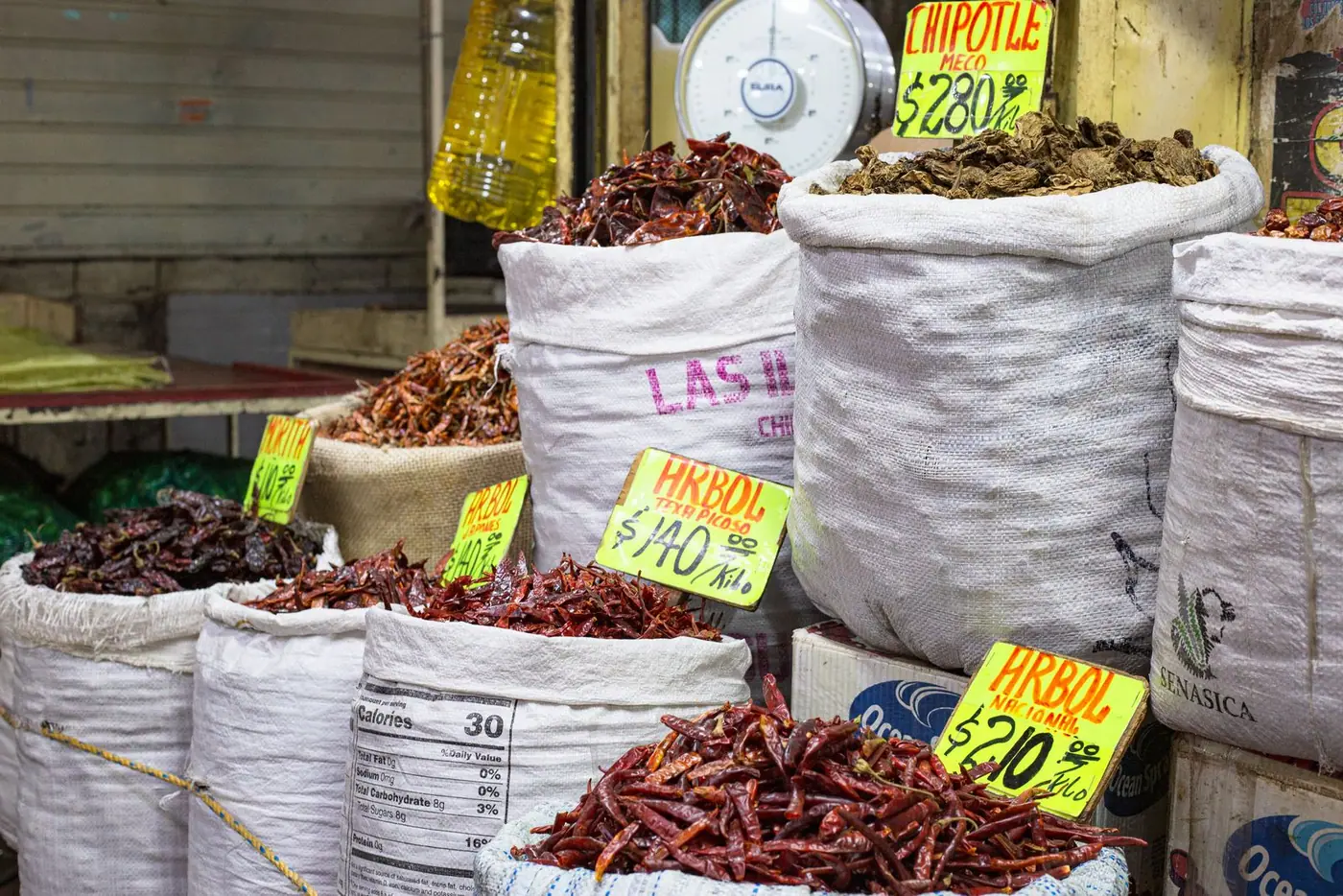
  <figcaption>Half of the working vocabulary of the albur is on sale at any market in Mexico City. Photo by <a href="https://www.pexels.com/photo/variety-of-dried-chilies-in-mexican-market-37829754/" target="_blank" rel="noopener noreferrer">Noemiji on Pexels</a>.</figcaption>
</figure>

Senses two through four in that entry explain the name. An <mark lang="es-MX">albur</mark> is a two-player card game, the pair of cards it opens on, and a bet placed on nothing but luck.[^dem-albur] The word arrived in the gambling house before it arrived in the cantina, and both meanings are still live. When somebody says <mark lang="es-MX">ese negocio es un albur</mark>, they mean the deal is a gamble.

## The test the machine failed

Luis Fernando Lara has directed the Diccionario del español de México since the 1970s and sits at El Colegio Nacional. In July 2026 he described an experiment: his team fed a classic public-transport <mark lang="es-MX">albur</mark> into two artificial intelligence models. The sentence was <mark lang="es-MX">cambio mi llanta nueva por tu vieja</mark>, trading a new tire for your old one, where <mark lang="es-MX">vieja</mark> is also a colloquial word for your woman.

ChatGPT replied that the trade was impossible and that the sentence made no sense. It could not find the second reading. Lara studied computational linguistics in Europe in the 1970s, so this is not a humanities professor being rude about machines, and he expects the failure to hold.[^lara]

**A native speaker does not solve one of these, they hear it.** The second reading arrives before the first has finished landing. A bus full of strangers catches that in half a second, and the model, with the whole internet behind it, reported a problem with the tire.

<div id="midpost-newsletter-slot"></div>

## The vocabulary, and an honest caveat about it

Every list of <mark lang="es-MX">albur</mark> words on the internet gives you the same nouns. They are not wrong, but almost none of them work the way the lists imply.

| Word | Ordinary sense | Why it is dangerous |
|---|---|---|
| Huevos | Eggs | The testicle sense is in the dictionary, marked popular |
| Chile | Chili pepper | Allusion by shape, not a recorded second definition |
| Camote | Sweet potato | Same, and the dictionary's other senses are about getting into a mess |
| Leche | Milk | Allusion only |
| Plátano | Banana | Allusion only |
| Cola | Tail, queue | Backside, by extension |
| La | The pronoun it or her | A pronoun with no clear antecedent is the classic trap |

<mark lang="es-MX">Huevo</mark> is the one that behaves like a dictionary word: El Colegio de México lists the anatomical sense and a whole family of expressions built on it, from <mark lang="es-MX">tener huevos</mark> to <mark lang="es-MX">a huevo</mark>.[^dem-huevo] Look up <mark lang="es-MX">camote</mark> in the same dictionary and there is no sexual sense at all, just a tuber and a set of phrases about being hopelessly confused.[^dem-camote]

So the loaded meaning is not sitting in the word waiting to be looked up. It gets built in the moment, by two people who both know the move is available. Which is why the lists protect nobody, and why reading the definitions is precisely where the machine got stuck.

The structural traps matter more than the nouns anyway:

<ul class="examples">
  <li class="example">
    <div class="es" lang="es-MX">¿Me la prestas?</div>
    <div class="en" lang="en">Can you lend me it? — and what is it, exactly.</div>
  </li>
  <li class="example">
    <div class="es" lang="es-MX">Agárrala bien, no se te vaya a caer.</div>
    <div class="en" lang="en">Hold it tight, do not drop it.</div>
  </li>
  <li class="example">
    <div class="es" lang="es-MX">Te la voy a dejar ahí.</div>
    <div class="en" lang="en">I will leave it there for you.</div>
  </li>
</ul>

A bare pronoun, an imperative, a question you are meant to answer yes to. Those three shapes carry most of it.

<figure>
  <img src="/images/blog/optimized/pexels-rolanddrz-cdmx-tricycle-carts-1400-900a1848.webp" alt="Men riding tricycle delivery carts loaded with goods along a sunlit street in Mexico City." loading="lazy" />
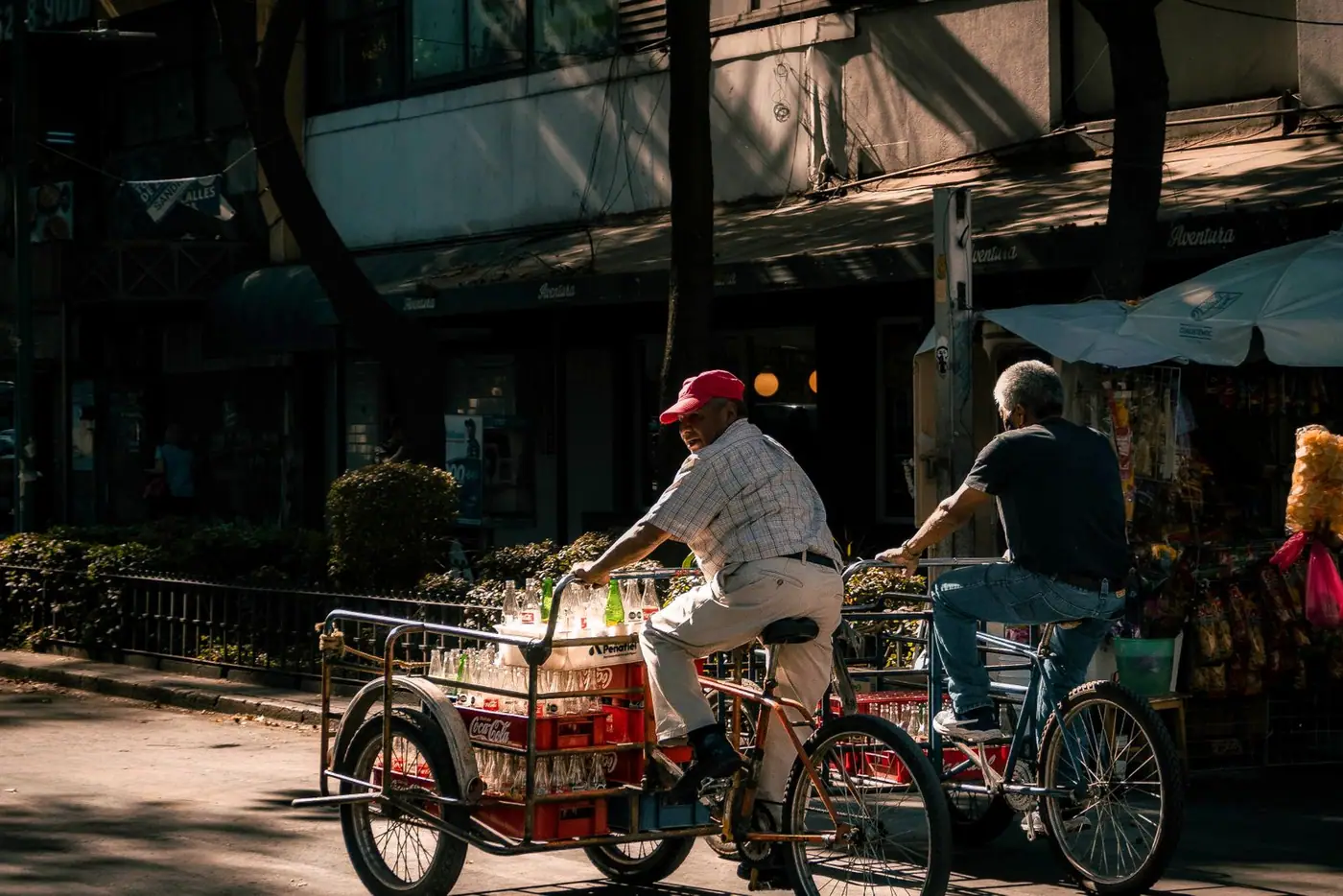
  <figcaption>Mexico City. Lara traces the albur to cantinas, then everywhere else. Photo by <a href="https://www.pexels.com/photo/man-riding-bicycle-with-cart-15851619/" target="_blank" rel="noopener noreferrer">rolanddrz on Pexels</a>.</figcaption>
</figure>

## Defense, which is the only realistic goal

Everything below is about not completing the move. Here is the same setup, once walked into and once stepped around.

<div class="chat-thread">
  <div class="chat-head"><span class="chat-avatar"></span><span>the tire, two ways</span><span class="chat-meta">the one they fed to the models</span></div>
  <ul class="chat-msgs">
    <li class="in"><span class="es" lang="es-MX">cambio mi llanta nueva por tu vieja</span><span class="en">trading my new tire for your old one</span></li>
    <li class="out"><span class="es" lang="es-MX">sí</span><span class="en">yes</span></li>
    <li class="out"><span class="es" lang="es-MX">algo así</span><span class="en">something like that</span></li>
  </ul>
  <p class="chat-read">One setup, two exits. The first signs for the whole thing in a single syllable. <strong>The second confirms nothing, refuses nothing, and leaves the exchange nowhere to go.</strong></p>
</div>

<div class="do-dont">
  <div class="dd-col dd-do"><p class="dd-title">Ends it</p><ul>
    <li><b lang="es-MX">No me alburees.</b> — names the game, everyone laughs</li>
    <li><b lang="es-MX">Algo así.</b> — commits to nothing</li>
    <li>Laughing and moving on</li>
    <li><b lang="es-MX">Ya, en serio.</b> — when it has gone far enough</li>
  </ul></div>
  <div class="dd-col dd-dont"><p class="dd-title">Completes it</p><ul>
    <li>A flat <b lang="es-MX">sí</b></li>
    <li>Repeating the setup phrase back</li>
    <li>Asking earnestly what they meant</li>
    <li>Firing back with a line you memorized</li>
  </ul></div>
</div>

<div class="note-card is-safety">
  <span class="note-label">Where it is not a game</span>
  <p>Between friends this is scorekeeping. Aimed at somebody who cannot answer, at work, or by a stranger at a woman on the street, it is not the same thing at all and Mexicans know the difference. Being able to hear an albur does not mean you are being invited into one.</p>
</div>

## The champion, and what she said it was

The best-known practitioner was not a comedian or a linguist. Lourdes Ruiz sold clothes in Tepito, won the title of <mark lang="es-MX">Reina del Albur</mark> in 1997 at a tournament run by the Museo de la Ciudad de México, wrote a book, taught a course on it, and died in 2019 at forty-seven.[^infobae]

Interviewed by Martín Caparrós for El País, she put it in a way that reframes the whole skill. The <mark lang="es-MX">albur</mark>, she said, is a way of listening rather than a way of speaking.[^infobae]

<figure>
  <img src="/images/blog/optimized/pexels-jorge-acre-record-stall-guanajuato-1400-257db5da.webp" alt="Two men talking across a stall of second-hand records at a market in Guanajuato." loading="lazy" />
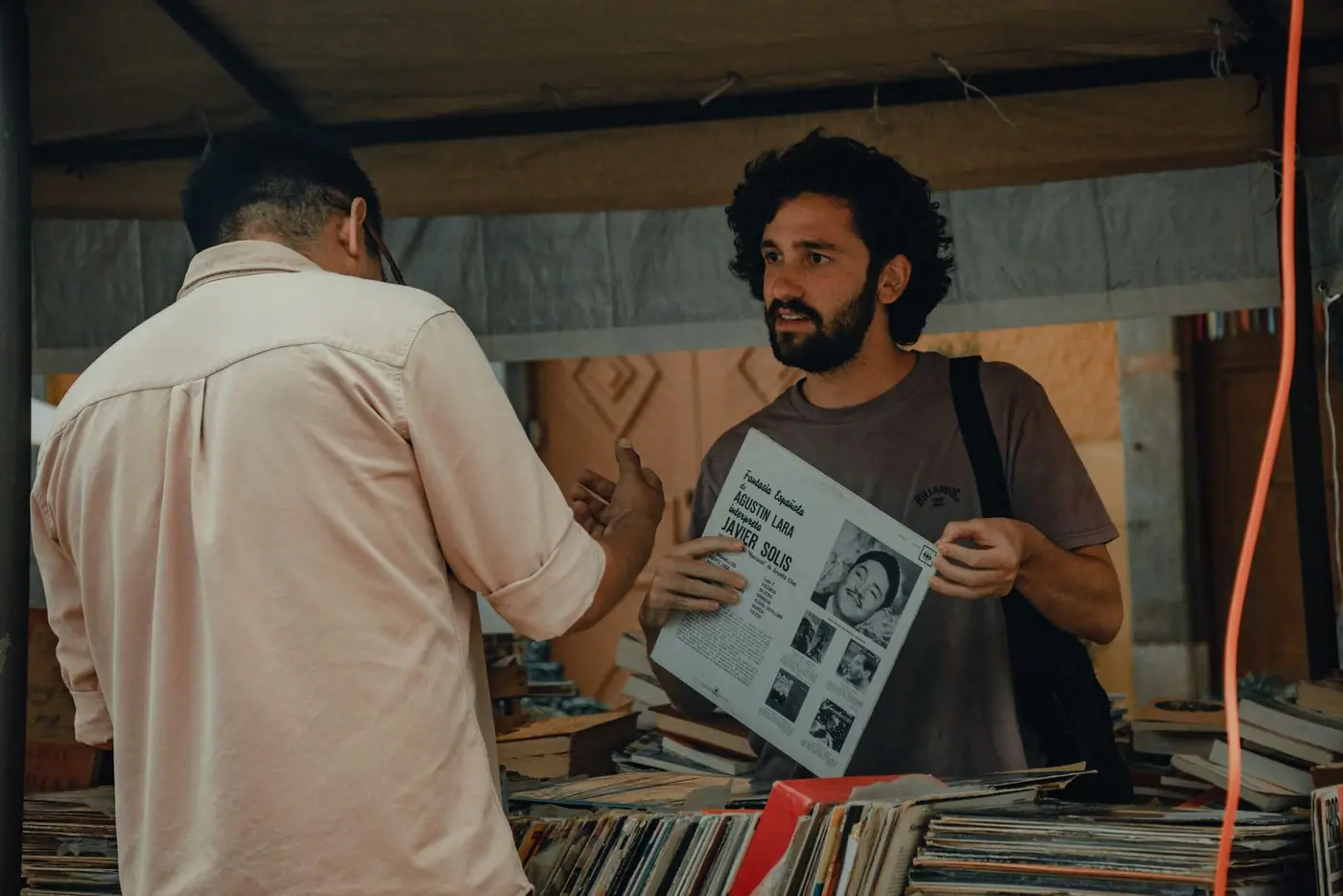
  <figcaption>Guanajuato. Two people, one conversation, and a scoreboard nobody mentions. Photo by <a href="https://www.pexels.com/photo/customer-buying-record-16625470/" target="_blank" rel="noopener noreferrer">Jorge Acre on Pexels</a>.</figcaption>
</figure>

UNAM's Helena Beristáin gave it a full academic treatment in Acta Poética.[^beristain] Cantina wordplay, with a bibliography.

For a foreigner the practical target is small and reachable. You are not going to win one of these for years. You can, within a few months, notice the half-second of silence after a sentence, work out that a second reading exists, and decline to be the person who says yes to it.

The neighboring skill is [Mexican teasing between friends](/blog/carrilla-mexican-spanish), which runs on the same instinct and is much safer to practice.

[^dem-albur]: [Diccionario del español de México, albur](https://dem.colmex.mx/ver/albur) - El Colegio de México.
[^dem-huevo]: [Diccionario del español de México, huevo](https://dem.colmex.mx/ver/huevo) - El Colegio de México.
[^dem-camote]: [Diccionario del español de México, camote](https://dem.colmex.mx/ver/camote) - El Colegio de México.
[^lara]: [El albur es un fenómeno exclusivamente mexicano, Luis Fernando Lara](https://aristeguinoticias.com/2607/cultura/el-albur-es-un-fenomeno-exclusivamente-mexicano-luis-fernando-lara/) - El Colegio Nacional y Aristegui Noticias, 26 de julio de 2026.
[^infobae]: [Lourdes Ruiz, la Reina del albur](https://www.infobae.com/america/mexico/2019/04/13/lourdes-ruiz-la-reina-del-albur-que-fue-entrevistada-por-martin-caparros-y-aparecio-en-ingobernable-de-netflix/) - Infobae México, 13 de abril de 2019.
[^beristain]: [Helena Beristáin, El albur, Acta Poética 21](https://repositorio.unam.mx/contenidos/6563) - Repositorio Institucional UNAM.

FAQ:
Q: What is an albur in Mexican Spanish?
A: A double-meaning word game used in conversation to mock somebody, usually by implying a sexual humiliation. El Colegio de México notes it often turns into an improvised verbal duel, sometimes in rhyme.

Q: Is the albur only Mexican?
A: Double meaning exists in every language, but linguist Luis Fernando Lara says that as far as his research goes, this specific attacking dialogue form appears only in Mexico.

Q: Why does the word albur also mean a card game?
A: Because that came first. The same dictionary entry covers a two-player card game and a bet made on pure luck, which is where the sense of risk comes from.

Q: Can a foreigner play albures?
A: You can try once you have real friends and a lot of exposure. Before that, the useful skill is defensive: recognizing the setup fast enough not to complete it.

Q: Do women use albures?
A: Yes. Lara describes it as born in cantinas among men and now played by women too. The most famous champion of it was a woman from Tepito.

Q: Which words are used in albures?
A: Huevos, chile, camote, leche, plátano and cola come up constantly, along with the pronoun la with no clear antecedent. Most of these do not have a recorded second meaning in the dictionary. They work by allusion.

Q: What do I say if somebody throws an albur at me?
A: Laugh, say algo así, or hand it back with no me alburees. Any of the three ends it. What loses is confusion, or answering the question as asked.

Q: Is an albur an insult?
A: Between friends it is teasing with a score attached. Aimed at somebody who cannot answer, or in a workplace, it stops being a game.

Sources:
- Diccionario del español de México, albur - El Colegio de México: https://dem.colmex.mx/ver/albur
- Diccionario del español de México, huevo - El Colegio de México: https://dem.colmex.mx/ver/huevo
- Diccionario del español de México, camote - El Colegio de México: https://dem.colmex.mx/ver/camote
- El albur es un fenómeno exclusivamente mexicano, Luis Fernando Lara - El Colegio Nacional y Aristegui Noticias, 26 de julio de 2026: https://aristeguinoticias.com/2607/cultura/el-albur-es-un-fenomeno-exclusivamente-mexicano-luis-fernando-lara/
- Lourdes Ruiz, la Reina del albur - Infobae México, 13 de abril de 2019: https://www.infobae.com/america/mexico/2019/04/13/lourdes-ruiz-la-reina-del-albur-que-fue-entrevistada-por-martin-caparros-y-aparecio-en-ingobernable-de-netflix/
- Helena Beristáin, El albur, Acta Poética 21 - Repositorio Institucional UNAM: https://repositorio.unam.mx/contenidos/6563

Related words: echar-carrilla, no-mames, cabron, carnal