---
title: "How to Ask for Help in Mexico Without Sounding Like a Police Report"
description: "Learn warm, practical Mexican Spanish for asking strangers for help: oye, disculpa, me ayudas, me orientas, de casualidad, and more."
type: "article"
category: "living"
url: "https://consalsa.app/blog/ask-for-help-in-mexico"
canonical: "https://consalsa.app/blog/ask-for-help-in-mexico"
published: "2026-06-01"
updated: "2026-06-01"
author: "Andrey the Nomad"
site: "ConSalsa.App"
license: "https://consalsa.app/about"
---

# How to Ask for Help in Mexico Without Sounding Like a Police Report
URL: https://consalsa.app/blog/ask-for-help-in-mexico
Date: 2026-06-01
Updated: 2026-06-01
Category: living
Keywords: ask for help in mexico spanish, mexican spanish help phrases, disculpa me ayudas meaning, me orientas meaning spanish, polite spanish mexico
Summary: Learn warm, practical Mexican Spanish for asking strangers for help: oye, disculpa, me ayudas, me orientas, de casualidad, and more.

Quick answer:
- To ask for help in Mexico, start with disculpa or oye, disculpa, then ask one specific question: ¿me ayudas?, ¿me orientas?, or ¿sabes dónde está...?
- Me orientas means can you point me in the right direction. It is useful for streets, offices, buildings, and errands.
- De casualidad softens a question, like by any chance, and can make stranger-help requests feel less abrupt.
- Keep the ask short. People can help faster when you ask for one next step instead of explaining the whole problem.

What you'll learn:
- How to open a stranger-help request without sounding too stiff or too familiar.
- How to ask for directions, office help, store help, and quick clarification.
- How to soften requests with de casualidad, perdón, and gracias.
- When to use oye, disculpa, me ayudas, and me orientas.

Don't sound gringo:
Don't start with emergency-level Spanish for a normal favor. Perdón, ¿me puede ayudar? is enough. Calm words make people more willing to actually help.

Body:

The best way to ask for help in Mexico is not to sound impressive. It is to sound like a person. <mark lang="es-MX">Disculpa</mark>, <mark lang="es-MX">¿me ayudas?</mark>, <mark lang="es-MX">¿me orientas?</mark>, and <mark lang="es-MX">de casualidad</mark> will carry you through more real situations than a perfect subjunctive ever will.

The secret is warmth plus one clear ask.

## The stranger-help phrase map

Use this when you need help from a person you do not know.

| Situation | Say this | Feeling |
|---|---|---|
| General help | Disculpa, ¿me ayudas? | Warm and direct |
| Directions | Disculpa, ¿me orientas? | Very useful |
| Not sure they know | De casualidad, ¿sabes...? | Soft |
| Need a place | ¿Sabes dónde está...? | Clear |
| Need the way | ¿Por dónde queda...? | Local-feeling |
| Need repetition | Perdón, ¿me repites? | Safe recovery |

<mark lang="es-MX">Ayudar</mark> means to help,[^rae-ayudar] and <mark lang="es-MX">orientar</mark> means to orient or guide.[^rae-orientar] In daily Mexican Spanish, <mark lang="es-MX">¿me orientas?</mark> feels especially useful when you are near the right place but not the right door.

## Start warm, then get specific

Do not start with a full biography.

Start like this:

<ul class="examples">
  <li class="example">
    <div class="es" lang="es-MX">Disculpa, ¿me orientas? Busco la entrada.</div>
    <div class="en" lang="en">Excuse me, can you point me in the right direction? I am looking for the entrance.</div>
  </li>
  <li class="example">
    <div class="es" lang="es-MX">Oye, disculpa, ¿sabes dónde está la farmacia?</div>
    <div class="en" lang="en">Hey, excuse me, do you know where the pharmacy is?</div>
  </li>
  <li class="example">
    <div class="es" lang="es-MX">De casualidad, ¿sabes si todavía está abierto?</div>
    <div class="en" lang="en">By any chance, do you know if it is still open?</div>
  </li>
</ul>

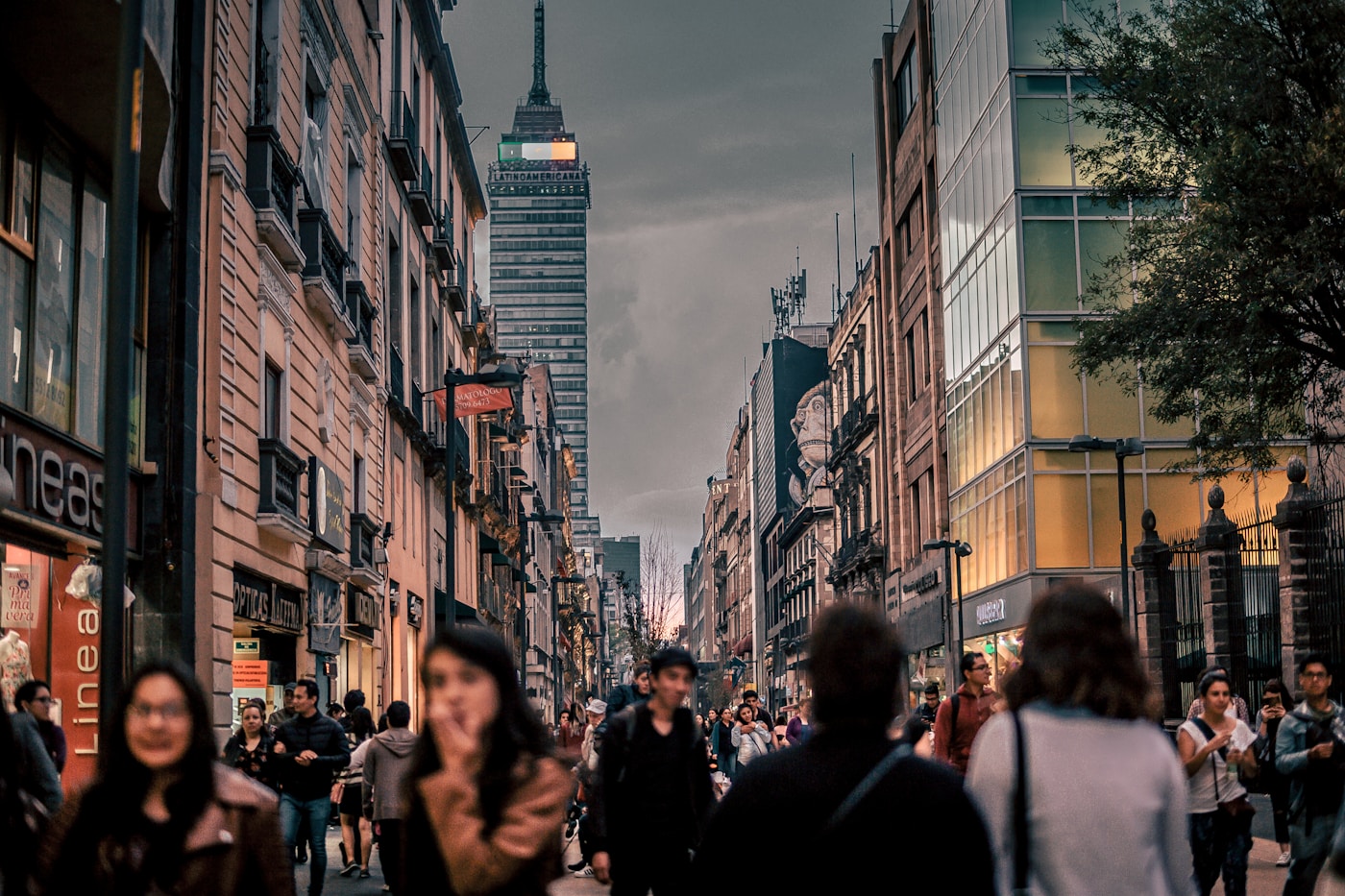
The word <mark lang="es-MX">disculpa</mark> gives you a soft entry.[^rae-disculpa] You are interrupting someone's flow, so you cushion the interruption.

<figure>
  <img src="/images/blog/cdmx-pedestrian-street.jpg" alt="People walking on a busy Mexico City pedestrian street at dusk." loading="lazy" />
  <figcaption>Asking for help in a busy place works best when the question is small enough to answer while walking. Photo by <a href="https://unsplash.com/photos/lot-of-people-walking-on-street-KbR06h9dNQw" target="_blank" rel="noopener noreferrer">Jezael Melgoza on Unsplash</a>.</figcaption>
</figure>

## De casualidad is social cushioning

<mark lang="es-MX">Casualidad</mark> means chance or coincidence.[^rae-casualidad] <mark lang="es-MX">De casualidad</mark> turns a question into "by any chance."

It helps when you are not sure the person can answer:

| Direct | Softer |
|---|---|
| ¿Sabes dónde está? | De casualidad, ¿sabes dónde está? |
| ¿Tienes cambio? | De casualidad, ¿tienes cambio? |
| ¿Está abierto? | De casualidad, ¿sabes si está abierto? |
| ¿Va para allá? | De casualidad, ¿va para allá? |

**This is not weakness. It is social engineering with manners.** You are giving the other person an easy exit if they do not know.

<div id="midpost-newsletter-slot"></div>

## What to ask in real situations

The best questions are small and local.

<ul class="examples">
  <li class="example">
    <div class="es" lang="es-MX">¿Por dónde queda la salida?</div>
    <div class="en" lang="en">Which way is the exit?</div>
  </li>
  <li class="example">
    <div class="es" lang="es-MX">¿Aquí es para recoger paquetes?</div>
    <div class="en" lang="en">Is this where you pick up packages?</div>
  </li>
  <li class="example">
    <div class="es" lang="es-MX">¿Tengo que formarme aquí?</div>
    <div class="en" lang="en">Do I need to line up here?</div>
  </li>
  <li class="example">
    <div class="es" lang="es-MX">¿Sabe si hay otra entrada?</div>
    <div class="en" lang="en">Do you know if there is another entrance?</div>
  </li>
</ul>

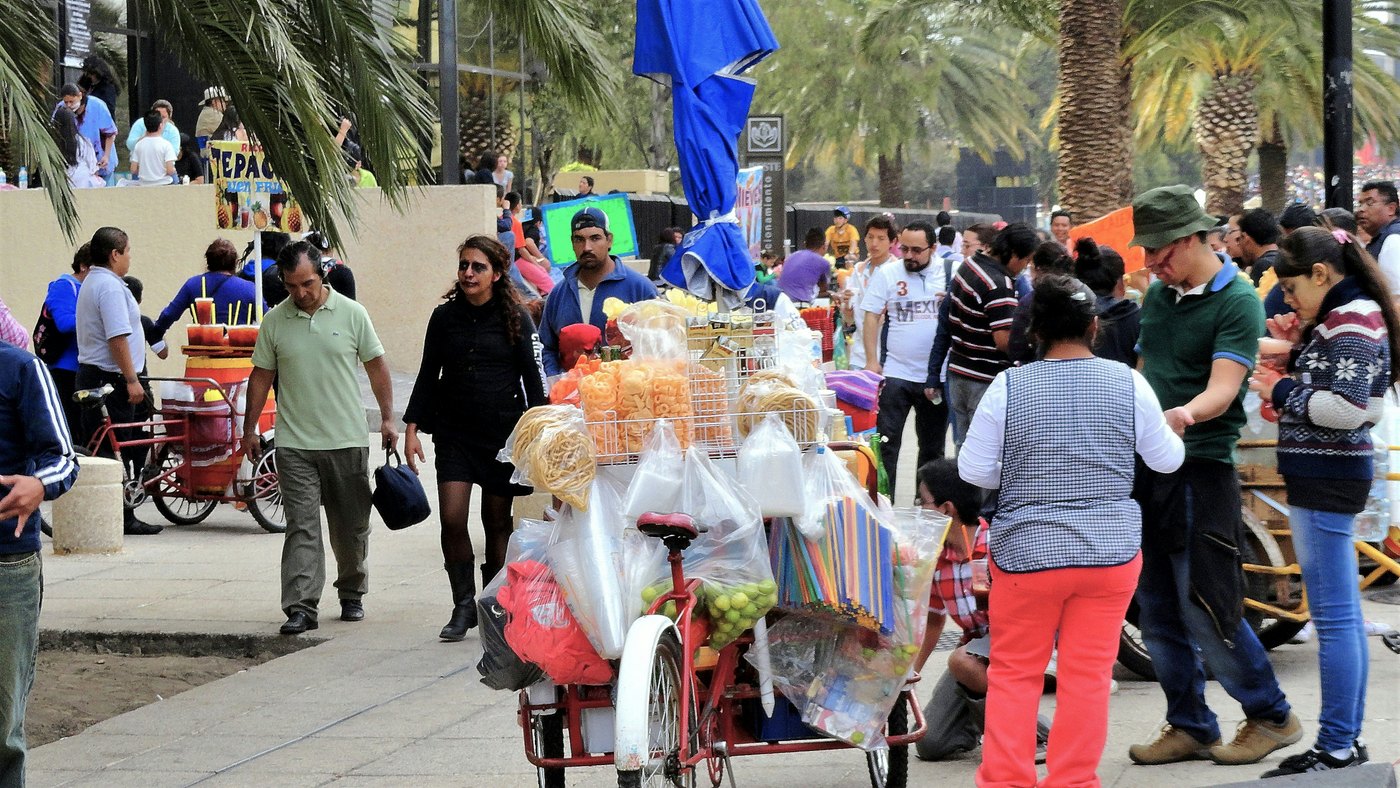
Use <mark lang="es-MX">perdón</mark> when you interrupt, bump someone, or need repetition.[^rae-perdon] Use <mark lang="es-MX">disculpa</mark> to open the request. They overlap, and nobody will arrest you for choosing one. But the rhythm helps.

<figure>
  <img src="/images/blog/cdmx-street-vendors-people.jpg" alt="People standing near storefronts and street vendors in Mexico City." loading="lazy" />
  <figcaption>Street help often comes from the person who knows the block, not the person who knows the app. Photo by <a href="https://unsplash.com/photos/man-standing-in-front-of-store-gscb7_qyE6o" target="_blank" rel="noopener noreferrer">Carl Campbell on Unsplash</a>.</figcaption>
</figure>

## Tone rules for learners

With strangers, avoid forced slang. You do not need <mark lang="es-MX">güey</mark>, <mark lang="es-MX">no manches</mark>, or a giant friendly performance.

Use this pattern:

- opener
- one clear ask
- thanks

Like:

<ul class="examples">
  <li class="example">
    <div class="es" lang="es-MX">Disculpa, ¿me orientas? Busco la ventanilla tres. Gracias.</div>
    <div class="en" lang="en">Excuse me, can you point me in the right direction? I am looking for window three. Thanks.</div>
  </li>
</ul>

That sentence is not flashy. It is better than flashy. It gets you helped.

For English-speaking visitors, local travel guidance says basic Spanish goes a long way in CDMX and can make everyday help easier to ask for.[^sheroams-english]

[^rae-ayudar]: [Diccionario de la lengua española, ayudar](https://dle.rae.es/ayudar) — Real Academia Española
[^rae-orientar]: [Diccionario de la lengua española, orientar](https://dle.rae.es/orientar) — Real Academia Española
[^rae-disculpa]: [Diccionario de la lengua española, disculpa](https://dle.rae.es/disculpa) — Real Academia Española
[^rae-casualidad]: [Diccionario de la lengua española, casualidad](https://dle.rae.es/casualidad) — Real Academia Española
[^rae-perdon]: [Diccionario de la lengua española, perdón](https://dle.rae.es/perd%C3%B3n) — Real Academia Española
[^sheroams-english]: [She Roams About, Do people speak English in Mexico City?](https://www.sheroamsabout.com/do-people-speak-english-in-mexico-city/) — She Roams About

FAQ:
Q: How do you politely ask for help in Mexico?
A: Say disculpa, ¿me ayudas? or disculpa, ¿me orientas? Then ask one specific question.

Q: What does me orientas mean?
A: Me orientas means can you orient me or point me in the right direction. It is very useful for directions and offices.

Q: Is oye rude in Mexico?
A: Oye can be normal, especially with a friendly tone, but oye, disculpa is safer with strangers because it softens the opening.

Q: What does de casualidad mean?
A: De casualidad means by any chance. It softens a question when you are not sure the person can help.

Q: Should I use perdón or disculpa?
A: Both work. Disculpa is a useful opener, while perdón is good when you interrupt, bump into someone, or need them to repeat.

Q: How do I ask if someone knows where something is?
A: Say disculpa, ¿sabes dónde está...? or disculpa, ¿por dónde queda...?

Q: What is the biggest mistake learners make when asking for help?
A: They explain too much before asking. Start with a short question, then add details only if needed.

Sources:
- Diccionario de la lengua española, ayudar: https://dle.rae.es/ayudar
- Diccionario de la lengua española, orientar: https://dle.rae.es/orientar
- Diccionario de la lengua española, disculpa: https://dle.rae.es/disculpa
- Diccionario de la lengua española, casualidad: https://dle.rae.es/casualidad
- Diccionario de la lengua española, perdón: https://dle.rae.es/perd%C3%B3n
- She Roams About, Do people speak English in Mexico City?: https://www.sheroamsabout.com/do-people-speak-english-in-mexico-city/

Related words: mande, que-onda, sale, aguas