---
title: "They Keep Calling You Güera and Your Hair Is Brown: What Is Going On"
description: "Güero and güerita get called at people whose hair is nowhere near blond. Here is what the word is really marking, and where it stops being harmless."
type: "article"
category: "manners"
url: "https://consalsa.app/blog/being-called-guero"
canonical: "https://consalsa.app/blog/being-called-guero"
published: "2026-09-21"
updated: "2026-09-21"
author: "Andrey the Nomad"
site: "ConSalsa.App"
license: "https://consalsa.app/terms#ip"
---

# They Keep Calling You Güera and Your Hair Is Brown: What Is Going On
URL: https://consalsa.app/blog/being-called-guero
Date: 2026-09-21
Updated: 2026-09-21
Category: manners
Keywords: guero meaning mexico, why do mexicans call me guera, guerita meaning, is guero offensive, mexican market vendor guero, skin color words mexican spanish
Summary: Güero and güerita get called at people whose hair is nowhere near blond. Here is what the word is really marking, and where it stops being harmless.

Quick answer:
- In a market, güero and güerita are how a vendor gets a stranger's attention, in the same slot as jefe, joven or marchante.
- El Colegio de México lists that vendor use as a separate sense of the word, next to the one about hair color.
- It gets aimed at people who are not light at all, so it is a poor guide to what anyone thinks you look like.
- Hearing it is nothing to defend against. Saying it about a Mexican is a different move and it costs you more than it gains.

What you'll learn:
- The sense of güero that has nothing to do with hair, straight out of the dictionary.
- What Mexico City speakers actually report being called at a street stall, from a study that counted 2,011 of them.
- The rural sense of the word that means a rotten egg, and why the etymology is still argued about.
- What to say instead when you genuinely need to describe somebody.

Don't sound gringo:
Do not answer güerita by explaining that you are not blond. Nobody claimed you were. Answer the actual question, which is usually what you want and how many.

Body:

Your hair is brown and four stalls in a row have called you <mark lang="es-MX">güerita</mark>. Nobody made a mistake. Nobody is being sarcastic either, and in a market the word is not describing you at all.

## The dictionary has a sense for exactly this

El Colegio de México gives <mark lang="es-MX">güero</mark> three senses. The first is the one you expect: yellow hair, or something near enough. The second is this, more or less word for word - a polite way for a market or trinket vendor to address a person, illustrated with <mark lang="es-MX">¡Pásele güero, a ver qué se le ofrece!</mark>[^dem-guero]

Dictionaries do not usually do that. A national one decided that "what a seller calls a customer" is a separate meaning of the word, sitting next to the one about hair. Not a usage note. A sense.

| Where you heard it | Who said it | What it is doing |
|---|---|---|
| A market aisle | A vendor you have never met | Getting your attention, same as joven or jefe |
| A taquería counter | The taquero, mid-order | Naming the third person in your group |
| Inside a family | An aunt, about her nephew | Actually describing, and often a permanent nickname |
| A salon | The stylist, about dye | Literal hair color, for once |
| A conversation about class | A Mexican, about other Mexicans | The loaded one, and the reason the rest of this page exists |

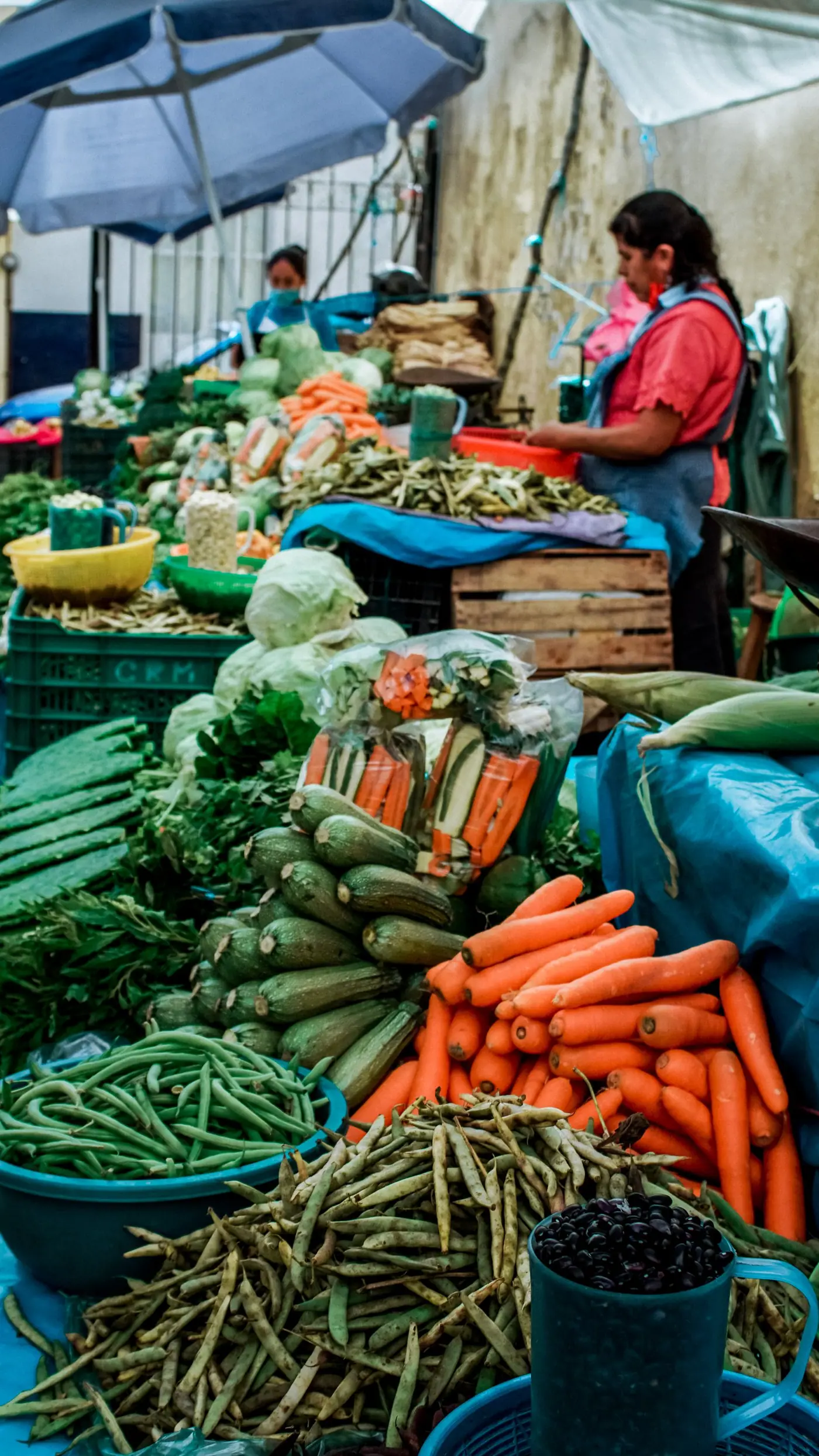
<figure>
  <img src="/images/blog/optimized/pexels-marco-carmona-puebla-produce-stall-1400-0bc5a945.webp" alt="Vegetable sellers behind a stacked produce stall at a Mexican market." loading="lazy" />
  <figcaption>The word arrives before anybody has looked up. Photo by <a href="https://www.pexels.com/photo/stock-of-fresh-vegetables-on-a-stall-8827369/" target="_blank" rel="noopener noreferrer">Marco Carmona on Pexels</a>.</figcaption>
</figure>

## What Mexico City speakers report being called

Cristal Cepeda Ruiz collected 2,011 forms of address used outside the family, from 52 people across four generations in Mexico City, and then sorted them by who was talking to whom.[^cepeda-nofamiliar]

One of the scenarios was buying something from a street vendor. (The study covers address outside the family generally; the market is one slice of it.) Among the terms respondents reported *receiving* in that situation, <mark lang="es-MX">güero</mark> and <mark lang="es-MX">güerito</mark> both turn up, next to <mark lang="es-MX">jefe</mark>, <mark lang="es-MX">joven</mark>, <mark lang="es-MX">marchante</mark>, <mark lang="es-MX">amiga</mark> and <mark lang="es-MX">don</mark>.[^cepeda-nofamiliar]

Those are provisional names for a stranger. Every one of them is a way of not saying "hey, you", and the vendor grabs whichever one seems to fit the person walking past. Being handed <mark lang="es-MX">[jefe](/words/jefe)</mark> is the same event as being handed <mark lang="es-MX">güero</mark>.

<div class="note-card is-tip">
  <span class="note-label">Worth knowing</span>
  <p>The <b>-ito</b> is doing the friendliness, not the color. Cepeda's respect category is full of the same move: <b lang="es-MX">jefecito</b>, <b lang="es-MX">patroncito</b>, <b lang="es-MX">señito</b>, <b lang="es-MX">güerita</b>. If a stranger uses the plain form on you, it is usually because you look older, not paler.</p>
</div>

<div id="midpost-newsletter-slot"></div>

## The third sense, which nobody warns you about

Same dictionary, sense three, marked rural: of eggs or fruit, spoiled or hollow. The example is <mark lang="es-MX">un palo güero</mark>.[^dem-guero] And <mark lang="es-MX">huero</mark>, the word it is usually traced back to, means empty or lacking content, and of an egg, rotten.[^dem-huero]

So in Mexican Spanish right now, one word covers a blond person, a market vendor's courtesy, and an egg that went bad in the shell.

How those connect is genuinely argued about. The RAE treats <mark lang="es-MX">güero</mark> as coming from an indigenous word; one line of argument runs it through <mark lang="es-MX">huero</mark>, from a spoiled egg to something without substance to a sickly pale man; another proposal takes it back to a Celtic root for incubating.[^infobae-origen] There is also a popular story about colonial-era children born pale. That one gets repeated the most and documented the least.

None of it is settled.

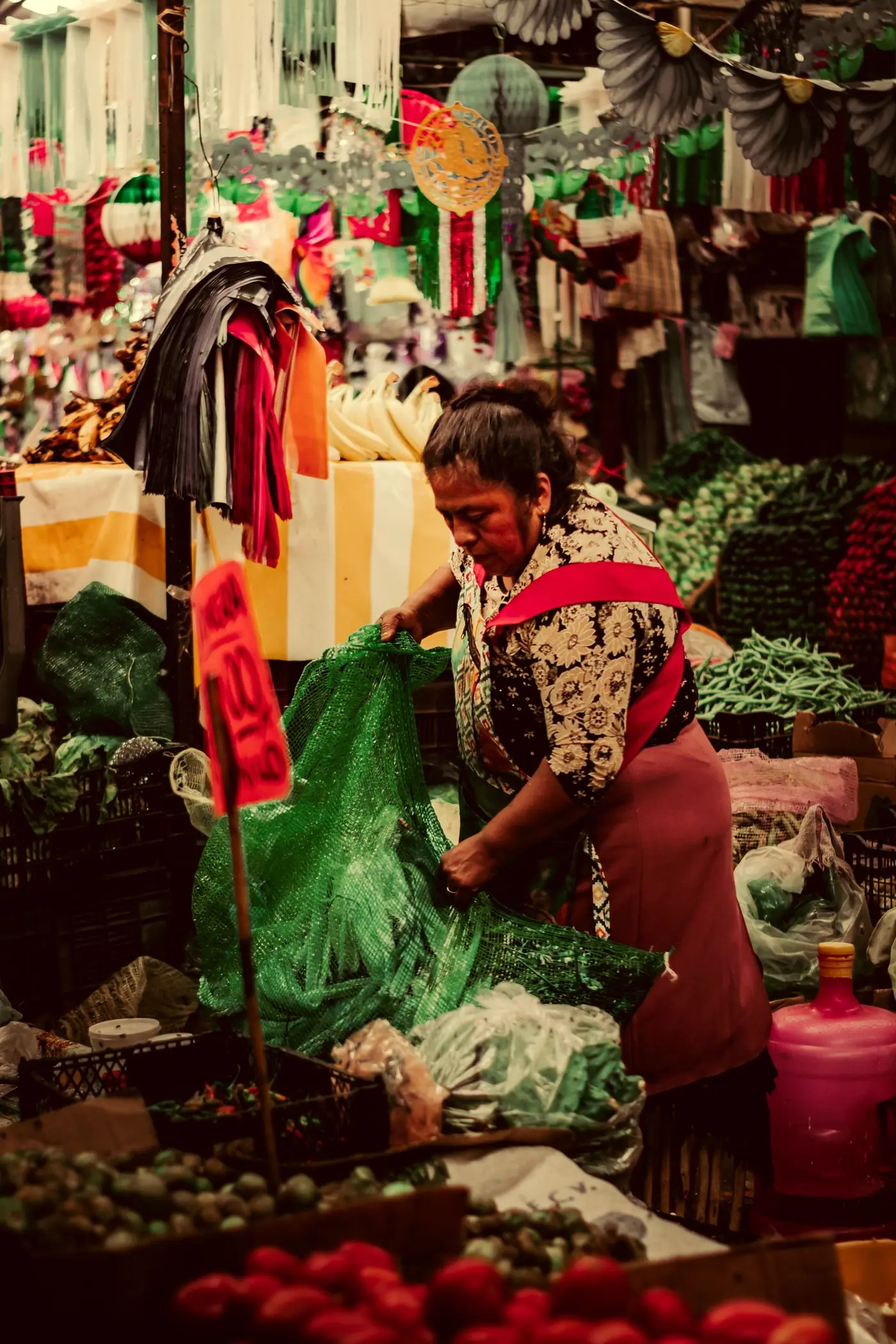
<figure>
  <img src="/images/blog/optimized/pexels-mauro-castillero-cholula-market-woman-1400-7b92b445.webp" alt="A woman lifting a green mesh sack of produce at a market stall in Cholula." loading="lazy" />
  <figcaption>Cholula, Puebla. The vendor's version of the word travels well beyond Mexico City. Photo by <a href="https://www.pexels.com/photo/a-woman-is-shopping-at-a-market-with-vegetables-28115230/" target="_blank" rel="noopener noreferrer">Mauro Castillero on Pexels</a>.</figcaption>
</figure>

## Where it stops being harmless

None of the above makes the word neutral. It just means the harm is not in the stall.

INEGI's 2016 module on intergenerational social mobility asked people to place their own skin tone on the PERLA scale, an eleven-point strip running from darkest to lightest, across a national sample.[^inegi-mmsi] El Colegio de México's Color de Piel project works through what came back. Two thirds of Mexicans aged 25 to 64 put themselves in the middle tones. Schooling rises as the reported tone lightens, and in the highest income quintile half of the people in it reported one of the two lightest tones.[^colordepiel]

<mark lang="es-MX">Güero</mark> sits at the friendly end of a scale that turns out to track schooling and money. Which is why a word that is genuinely warm at a fruit stand goes cold the moment it is used to sort Mexicans against each other.

## So what do you actually say

<div class="do-dont">
  <div class="dd-col dd-do"><p class="dd-title">Works</p><ul>
    <li>Their name, obviously, if you have it</li>
    <li><b lang="es-MX">El del suéter azul</b> - the one in the blue sweater</li>
    <li><b lang="es-MX">Joven</b> or <b lang="es-MX">señor</b> or <b lang="es-MX">disculpe</b> to get attention</li>
    <li><b lang="es-MX">Moreno</b> if coloring really is the only difference</li>
  </ul></div>
  <div class="dd-col dd-dont"><p class="dd-title">Costs you</p><ul>
    <li>Calling a Mexican <b lang="es-MX">güero</b> to sound local</li>
    <li>Any use of <b lang="es-MX">prieto</b>, in any tone</li>
    <li>Telling a vendor you are not blond</li>
    <li>Explaining Mexican colorism to a Mexican in month two</li>
  </ul></div>
</div>

None of that is about your Spanish. Mexicans are already having the argument about tone among themselves, loudly, with survey data on the table. You can follow it as a reader for years. Saying the words yourself, in a foreign accent, is a different thing.

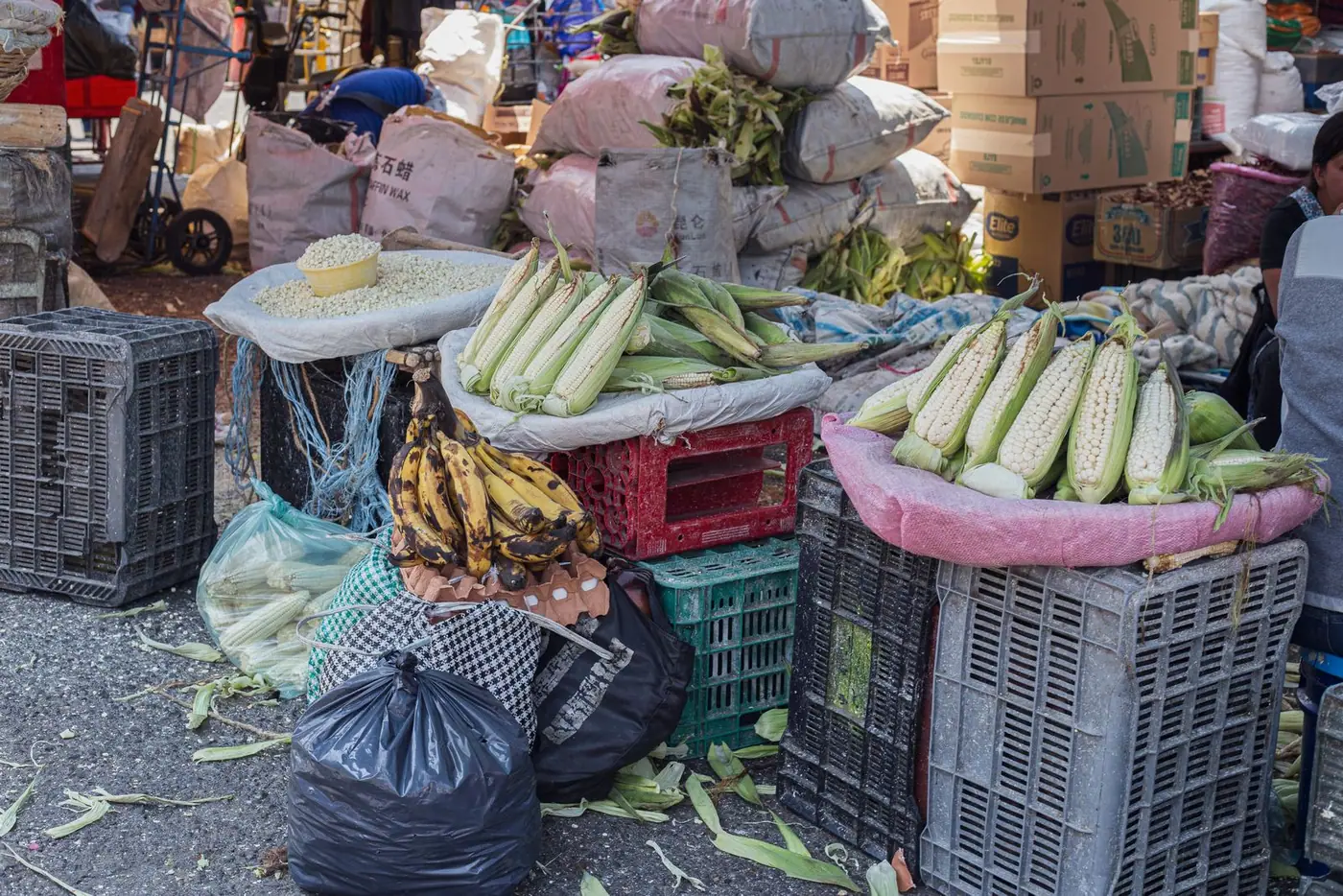
<figure>
  <img src="/images/blog/optimized/pexels-noemi-jimenez-cdmx-street-corn-1400-4ec40c7f.webp" alt="Corn and bananas laid out on crates at a street market in Mexico City." loading="lazy" />
  <figcaption>Mexico City. Nobody at this stall needs to know your hair color. Photo by <a href="https://www.pexels.com/photo/street-market-scene-with-fresh-produce-in-mexico-city-37676664/" target="_blank" rel="noopener noreferrer">Noemí Jiménez on Pexels</a>.</figcaption>
</figure>

## How to answer it

You mostly do not. The word is a doorbell, and the correct response is to open the door.

<ul class="examples">
  <li class="example">
    <div class="es" lang="es-MX">- ¿Qué le damos, güerita? - Dos kilos de jitomate, por favor.</div>
    <div class="en" lang="en">- What can I get you? - Two kilos of tomatoes, please.</div>
  </li>
  <li class="example">
    <div class="es" lang="es-MX">- Pásele, güero, ¿qué busca? - Nada más estoy viendo, gracias.</div>
    <div class="en" lang="en">- Come in, what are you after? - Just looking, thanks.</div>
  </li>
</ul>

Answer the question, not the label. That is also what makes you sound like you have been around a while - you did not notice the word, because there was nothing in it to notice.

The uncomfortable version is different, and you will know it when it lands. Somebody uses it about another Mexican, in a tone that is doing work. Nobody needs you to referee that. Don't join in.

[^dem-guero]: [Diccionario del español de México, güero](https://dem.colmex.mx/ver/g%C3%BCero) - El Colegio de México.
[^dem-huero]: [Diccionario del español de México, huero](https://dem.colmex.mx/ver/huero) - El Colegio de México.
[^cepeda-nofamiliar]: [Cristal Yeseidy Cepeda Ruiz, «¡Oye, papi!». Fórmulas nominales en el contexto no familiar de la ciudad de México](https://rasal.sael.org.ar/index.php/inicio/article/view/54) - RASAL Lingüística, núm. 2 (2022), pp. 61-88.
[^infobae-origen]: [Cuál es el origen de la palabra güero en México](https://www.infobae.com/mexico/2024/05/02/cual-es-el-origen-de-la-palabra-guero-en-mexico/) - Infobae México.
[^inegi-mmsi]: [Módulo de Movilidad Social Intergeneracional (MMSI) 2016](https://www.inegi.org.mx/programas/mmsi/2016/) - INEGI.
[^colordepiel]: [Color de piel: color de piel y condiciones de vida](https://colordepiel.colmex.mx/vida/) - El Colegio de México.

FAQ:
Q: What does güero mean in Mexico?
A: Fair-haired or light-skinned, and separately, a polite way for a vendor to address a customer. The second sense is the one you hear most in a market and it says nothing about your appearance.

Q: Why do vendors call me güera when I am not blond?
A: Because in that setting the word is a friendly handle for a stranger, not a description. It occupies the same slot as joven, jefe or marchante.

Q: Is güero offensive?
A: Not as something aimed at you. It gets uncomfortable when it is used to sort Mexicans by skin tone, which is a live argument in Mexico with real numbers behind it.

Q: What is the difference between güero and gringo?
A: Gringo is about nationality, güero is about coloring. Most people called güero in Mexico are Mexican, though in the plural los güeros can mean foreigners as a group.

Q: Can I call a Mexican person güero?
A: You can, and it usually passes without comment. It also puts you inside a conversation about skin tone that you have no standing in, and it gains you nothing.

Q: What should I say instead of güero when describing someone?
A: Use their name, or what they are wearing, or where they are standing. If coloring is genuinely the only distinguishing feature, moreno is the ordinary neutral word.

Q: Is prieto the opposite of güero?
A: Structurally yes, socially no. Moreno is neutral and everyday. Prieto carries a lot of insult and there is no safe casual version of it for a foreigner.

Q: Does güero really come from a word for a rotten egg?
A: That is one of the proposed routes and it is not settled. What is documented is that in rural Mexican Spanish, güero still describes an egg or fruit that is spoiled or hollow.

Sources:
- Diccionario del español de México, güero - El Colegio de México: https://dem.colmex.mx/ver/g%C3%BCero
- Diccionario del español de México, huero - El Colegio de México: https://dem.colmex.mx/ver/huero
- Cepeda Ruiz, Fórmulas nominales en el contexto no familiar de la ciudad de México, RASAL Lingüística 2 (2022): https://rasal.sael.org.ar/index.php/inicio/article/view/54
- Color de piel - proyecto de El Colegio de México: https://colordepiel.colmex.mx/vida/
- Módulo de Movilidad Social Intergeneracional (MMSI) 2016 - INEGI: https://www.inegi.org.mx/programas/mmsi/2016/
- Cuál es el origen de la palabra güero en México - Infobae: https://www.infobae.com/mexico/2024/05/02/cual-es-el-origen-de-la-palabra-guero-en-mexico/

Related words: jefe, naco, fresa, compa