---
title: "Your Cut Doesn't Exist Here: Buying Meat at a Mexican Carnicería"
description: "Mexican meat cuts don't match US ones. Learn what arrachera, bistec, milanesa, maciza, and chamorro really are, and how to order at a carnicería."
type: "article"
category: "markets"
url: "https://consalsa.app/blog/carniceria-spanish"
canonical: "https://consalsa.app/blog/carniceria-spanish"
published: "2026-08-23"
updated: "2026-08-23"
author: "Andrey the Nomad"
site: "ConSalsa.App"
license: "https://consalsa.app/about"
---

# Your Cut Doesn't Exist Here: Buying Meat at a Mexican Carnicería
URL: https://consalsa.app/blog/carniceria-spanish
Date: 2026-08-23
Updated: 2026-08-23
Category: markets
Keywords: carniceria spanish, mexican meat cuts in spanish, how to order meat in mexico, arrachera meaning, bistec vs milanesa, buying meat mexican spanish
Summary: Mexican meat cuts don't match US ones. Learn what arrachera, bistec, milanesa, maciza, and chamorro really are, and how to order at a carnicería.

Quick answer:
- A Mexican carnicería sells by local cut names, not US ones. Ask for arrachera, bistec, milanesa, aguja, maciza, pierna, chamorro, costilla, or molida.
- Bistec and milanesa describe how the meat is cut, not which animal. Always add de res, de puerco, or de pollo.
- Order in one line: the amount, the cut, the animal, then the plan. Medio kilo de bistec de res, para asar.
- The butcher cuts and trims to order, so delgadito, en trozos, sin grasa, and molida una vez are all normal requests.

What you'll learn:
- The cuts that actually exist behind the counter, and what each one is really for.
- Why asking for sirloin or brisket gets you a polite, confused pause.
- How to say the amount, the animal, and the cooking plan in one short sentence.
- The social script of the counter, including how turns work with no ticket machine.

Don't sound gringo:
Don't name the animal and expect a cut, or name a cut and forget the animal. Bistec and milanesa are cut styles, so say bistec de res or milanesa de pollo or the butcher has to guess what you meant.

Body:

Two blocks from my building in Mexico City there was a <mark lang="es-MX">carnicería</mark>, and the first thing I ever asked for in it was sirloin. The guy behind the counter did not laugh. He just paused, looked at the case, looked back at me, and said <mark lang="es-MX">¿para qué es?</mark>

That question is the whole article. He was not being difficult. He genuinely could not answer me until he knew what I was cooking, because in Mexico the cut is named after what it will become.

A Mexican butcher counter runs on its own map of the animal, so the cut you know from home probably has no name here. What works is the local vocabulary plus a plan: <mark lang="es-MX">medio kilo de bistec de res, para asar</mark>. Amount, cut, animal, what you are going to do with it.

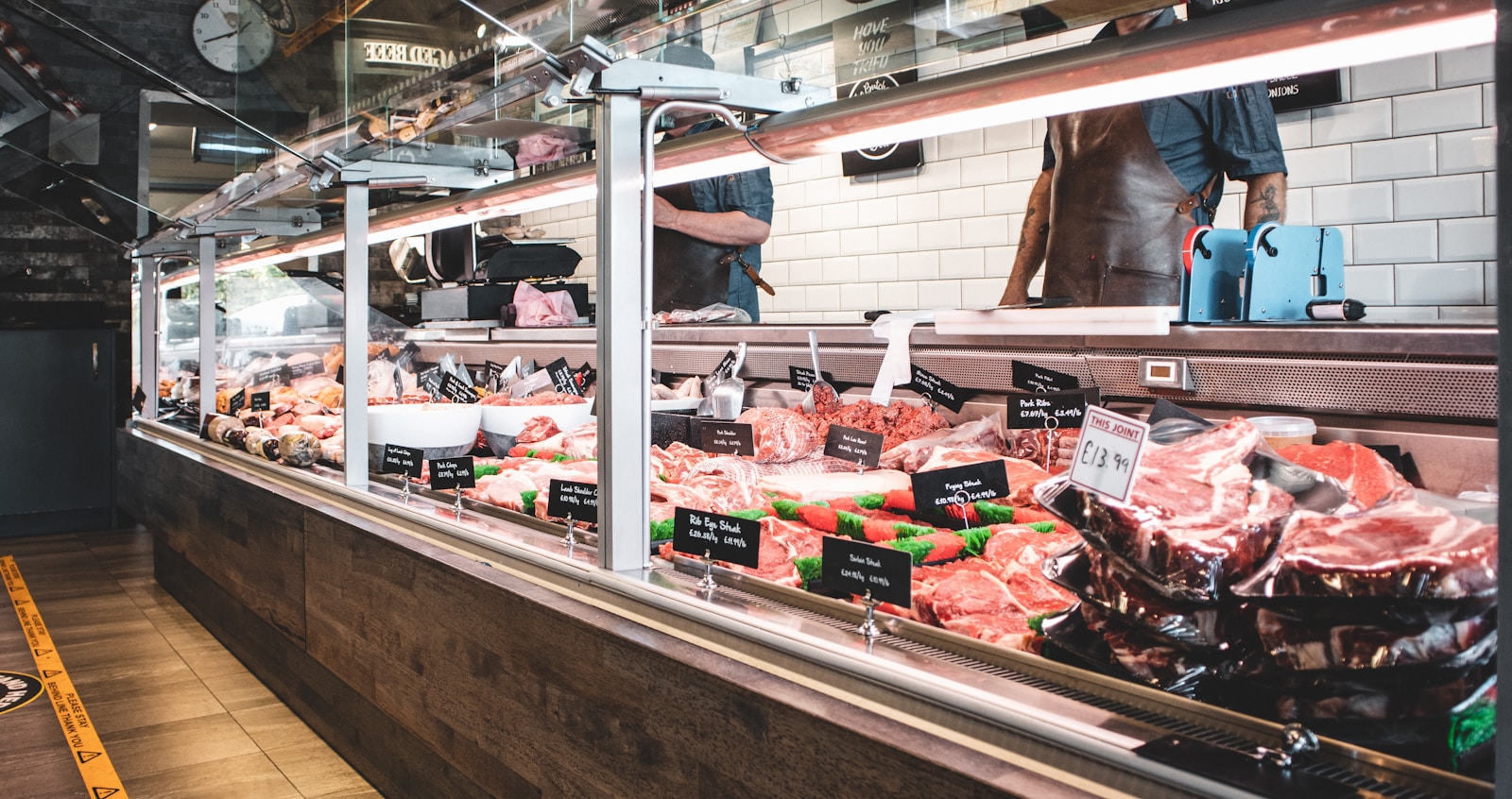
A <mark lang="es-MX">carnicería</mark> is a butcher shop,[^rae-carniceria] and unlike a supermarket tray, nothing here is pre-decided. The meat gets cut, trimmed, sliced, or ground while you stand there. That is why the conversation matters more than the vocabulary.

## The cuts that actually exist

Learn these eleven and you can cook almost anything.

| Cut | What it is | What it's for |
|---|---|---|
| Arrachera | Long thin belly cut near the ribs | Charcoal grill, tacos |
| Bistec | Thin steak slice | Pan, grill, quick tacos |
| Milanesa | Very thin slice, flattened | Breaded and fried |
| Aguja | Fatty shoulder-rib area | Grill or slow stew |
| Maciza | Clean boneless meat, no bone | Guisados, carnitas |
| Pierna | Leg | Roasting, big slow cuts |
| Chamorro | Shank, usually pork | Braised, baked, fall-apart |
| Costilla | Ribs | Grill, broth, stews |
| Molida | Ground | Albóndigas, picadillo, filling |
| Suadero | Thin fatty beef under the skin | Taco griddle |
| Chuleta | Chop, usually pork | Pan or grill, on the bone |

<mark lang="es-MX">Arrachera</mark> is the one most people from the US recognize by taste before they recognize the word: a long, thin cut from the belly next to the ribs, associated with the northern states and cooked over mesquite charcoal.[^larousse-arrachera] <mark lang="es-MX">Aguja</mark> sits in the front-rib and shoulder region, carries a lot of fat and very little bone, and is one of those cuts that works on the grill and in a pot.[^larousse-aguja]

<mark lang="es-MX">Chamorro</mark> is the shank, classically pork, cooked until it collapses.[^larousse-chamorro] <mark lang="es-MX">Suadero</mark> is the thin fatty beef that sits between the hide and the muscle,[^larousse-suadero] which is why it belongs on a taco griddle and almost nowhere else.

**If you want one rule: describe the shape and the cooking method, not the American name.** "Thin, for the grill" gets you further than "flank steak."

## Bistec and milanesa are not animals

This is the mistake that costs the most time at the counter.

<mark lang="es-MX">Bistec</mark> comes into Spanish from the English beefsteak,[^rae-bistec] which makes English speakers assume it always means beef. It does not. In Mexico it just means a thin slice, and the animal has to be named separately.

<mark lang="es-MX">Milanesa</mark> is the same idea taken further. The name refers to the breaded-and-fried preparation,[^larousse-milanesa] so at the counter it means a slice cut thin and flattened enough to bread. Again, no animal attached.

So these are all real, different orders:

<ul class="examples">
  <li class="example">
    <div class="es" lang="es-MX">Un kilo de bistec de res.</div>
    <div class="en" lang="en">A kilo of thin-sliced beef.</div>
  </li>
  <li class="example">
    <div class="es" lang="es-MX">Medio kilo de bistec de puerco.</div>
    <div class="en" lang="en">Half a kilo of thin-sliced pork.</div>
  </li>
  <li class="example">
    <div class="es" lang="es-MX">Cuatro milanesas de pollo, delgaditas.</div>
    <div class="en" lang="en">Four chicken milanesas, nice and thin.</div>
  </li>
</ul>

Note <mark lang="es-MX">de res</mark>, not <mark lang="es-MX">de vaca</mark>. <mark lang="es-MX">Res</mark> is the word for the animal as meat. Saying <mark lang="es-MX">vaca</mark> at a counter is not wrong exactly, it just sounds like you are describing a field.

For pork, <mark lang="es-MX">de puerco</mark> is the everyday word. <mark lang="es-MX">De cerdo</mark> is more the label on the package.

<figure>
  <img src="/images/blog/carniceria-spanish-1.jpg" alt="Butcher shop display counter with fresh cuts of meat laid out behind glass." loading="lazy" />
  <figcaption>Nothing in the case is finished. It gets cut, trimmed, and weighed after you say what you want. Photo by <a href="https://unsplash.com/photos/qgfjZUXup1M" target="_blank" rel="noopener noreferrer">Kyle Mackie on Unsplash</a>.</figcaption>
</figure>

<div id="midpost-newsletter-slot"></div>

## How much, and how you want it cut

The amount part is short. The interesting half is the instruction after it.

| You want | Say this |
|---|---|
| A kilo | Un kilo |
| Half a kilo | Medio kilo |
| A quarter | Un cuarto |
| A bit more | Un poquito más |
| That's fine | Así está bien |
| Sliced thin | Delgadito / delgaditas |
| In chunks | En trozos |
| Ground once | Molida una vez |
| Trimmed | Sin grasa / limpiecita |
| For grilling | Para asar |
| For stewing | Para guisar |

The butcher usually starts cutting, drops it on the scale, and asks <mark lang="es-MX">¿así está bien?</mark> That is not a final question. It is an offer. You can say <mark lang="es-MX">un poquito más</mark> or <mark lang="es-MX">un poquito menos</mark> and he adjusts on the spot.

**The two words that change the most are <mark lang="es-MX">para asar</mark> and <mark lang="es-MX">para guisar</mark>.** One means grill, one means stew, and they send him to completely different parts of the case. If you say nothing else, say one of those.

<ul class="examples">
  <li class="example">
    <div class="es" lang="es-MX">Un kilo de maciza en trozos, para guisar.</div>
    <div class="en" lang="en">A kilo of clean boneless meat in chunks, for stewing.</div>
  </li>
  <li class="example">
    <div class="es" lang="es-MX">Medio kilo de arrachera, para asar.</div>
    <div class="en" lang="en">Half a kilo of arrachera, for the grill.</div>
  </li>
  <li class="example">
    <div class="es" lang="es-MX">¿Me lo corta delgadito, por favor?</div>
    <div class="en" lang="en">Could you slice it thin, please?</div>
  </li>
  <li class="example">
    <div class="es" lang="es-MX">Sin grasa, porfa.</div>
    <div class="en" lang="en">Trimmed, no fat, please.</div>
  </li>
</ul>

Ground meat has its own small dial. <mark lang="es-MX">Molida una vez</mark> is the default and gives you a looser texture. <mark lang="es-MX">Molida dos veces</mark> comes out finer and holds together better in <mark lang="es-MX">albóndigas</mark>. You can ask for either while he is still holding it.

<figure>
  <img src="/images/blog/carniceria-spanish-2.jpg" alt="Raw beef cuts of different thicknesses arranged on a dark surface." loading="lazy" />
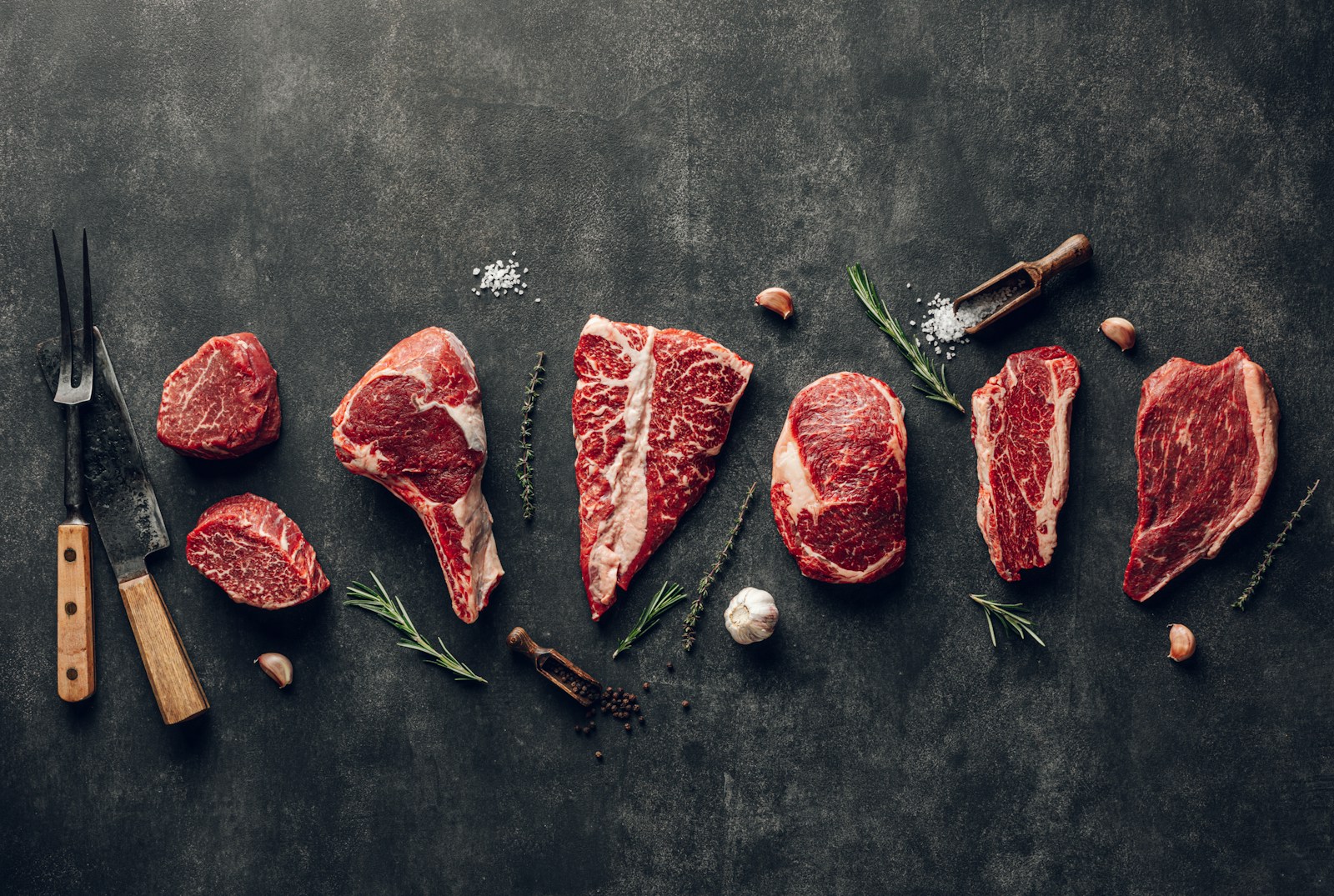
  <figcaption>Same animal, four different answers. The thickness is the decision, and the butcher makes it after you talk. Photo by <a href="https://unsplash.com/photos/CEsrs0WHOiw" target="_blank" rel="noopener noreferrer">Sergey Kotenev on Unsplash</a>.</figcaption>
</figure>

## The counter script

Most neighborhood <mark lang="es-MX">carnicerías</mark> have no ticket machine. Turns are held in everyone's head, which sounds chaotic and almost never is. When you walk in, either clock who was already standing there, or ask:

<ul class="examples">
  <li class="example">
    <div class="es" lang="es-MX">¿Quién es el último?</div>
    <div class="en" lang="en">Who's last in line?</div>
  </li>
  <li class="example">
    <div class="es" lang="es-MX">¿Quién sigue?</div>
    <div class="en" lang="en">Who's next?</div>
  </li>
</ul>

Then wait. When the butcher looks at you and says <mark lang="es-MX">¿qué le damos?</mark> or <mark lang="es-MX">¿qué va a llevar?</mark>, you are up.

Here is the whole interaction, start to finish:

<ul class="examples">
  <li class="example">
    <div class="es" lang="es-MX">Buenas. Medio kilo de bistec de res, delgadito.</div>
    <div class="en" lang="en">Hi. Half a kilo of beef, sliced thin.</div>
  </li>
  <li class="example">
    <div class="es" lang="es-MX">Así está bien, gracias.</div>
    <div class="en" lang="en">That's fine, thanks.</div>
  </li>
  <li class="example">
    <div class="es" lang="es-MX">Sí, un cuarto de molida también.</div>
    <div class="en" lang="en">Yes, a quarter kilo of ground too.</div>
  </li>
  <li class="example">
    <div class="es" lang="es-MX">Es todo. ¿Cuánto le debo?</div>
    <div class="en" lang="en">That's everything. How much do I owe you?</div>
  </li>
</ul>

He will almost certainly ask <mark lang="es-MX">¿algo más?</mark> or <mark lang="es-MX">¿le doy algo más?</mark> before he wraps up. <mark lang="es-MX">Es todo, gracias</mark> closes it cleanly.

<figure>
  <img src="/images/blog/carniceria-spanish-3.jpg" alt="Supermarket meat counter with packaged cuts and Spanish-language signage above the display." loading="lazy" />
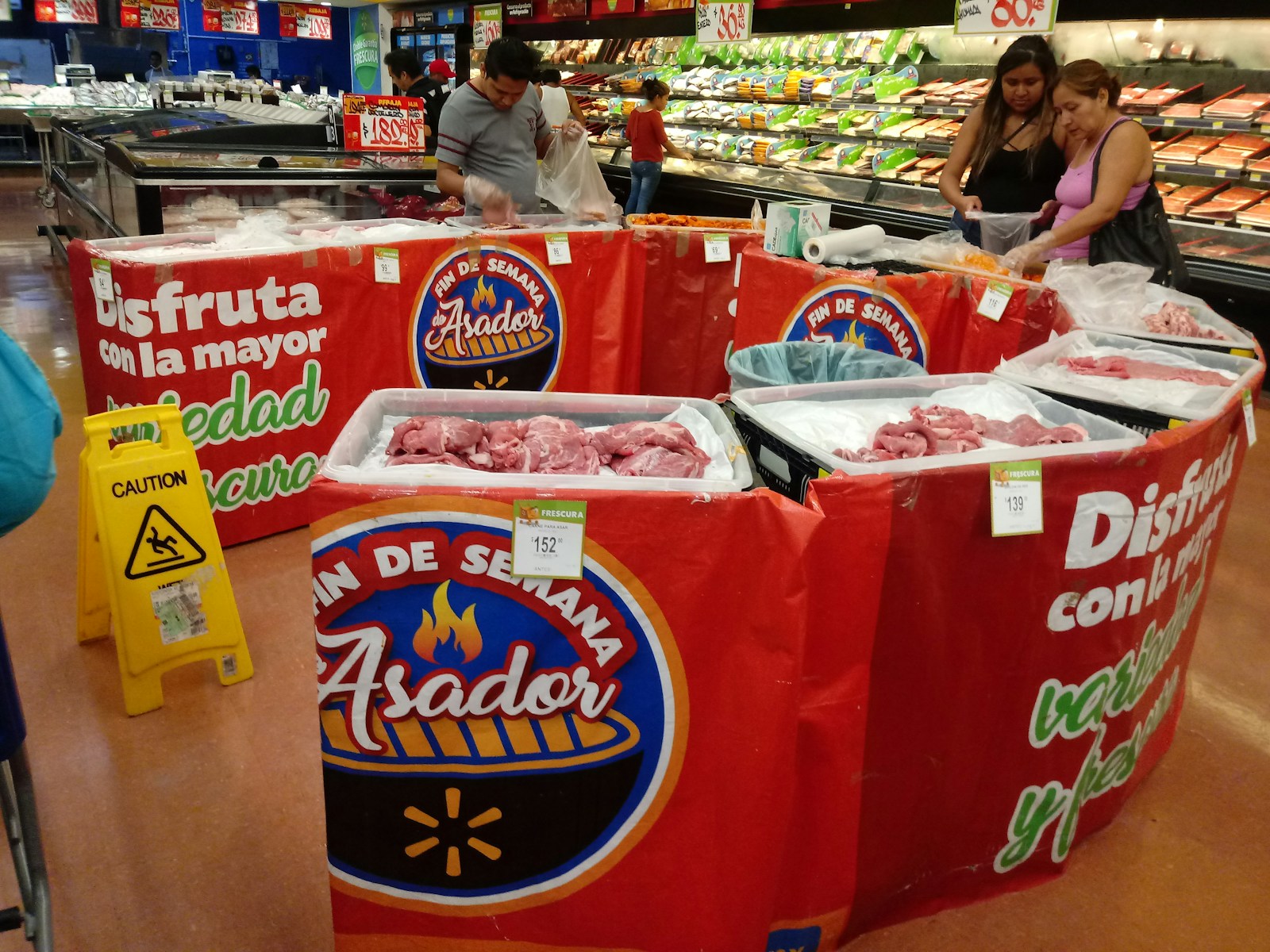
  <figcaption>Even in the supermarket version, the signs use the same cut names, so the vocabulary transfers. Photo by <a href="https://unsplash.com/photos/3EKnKYMUztI" target="_blank" rel="noopener noreferrer">Tamika Crawford on Unsplash</a>.</figcaption>
</figure>

## Translating your recipe instead of your cut name

When you get stuck, stop translating the cut and translate the dish. The butcher is a much better search engine than your phone.

| You were going to ask for | Ask for this instead |
|---|---|
| Sirloin | Bistec de res, para asar |
| Skirt or flank steak | Arrachera |
| Stewing beef | Maciza o aguja en trozos, para guisar |
| Ground beef | Molida de res |
| Pork shoulder for slow cooking | Maciza de puerco o pierna |
| Pork chop | Chuleta de puerco |
| Thin cutlet for breading | Milanesa, de res o de pollo |
| Beef shank | Chamorro de res |

And if none of that lands, use the sentence the butcher asked me on day one, in reverse:

<ul class="examples">
  <li class="example">
    <div class="es" lang="es-MX">Voy a hacer un guisado. ¿Qué me recomienda?</div>
    <div class="en" lang="en">I'm making a stew. What do you recommend?</div>
  </li>
  <li class="example">
    <div class="es" lang="es-MX">Es para el asador. ¿Cuál está más suavecita?</div>
    <div class="en" lang="en">It's for the grill. Which one is more tender?</div>
  </li>
</ul>

Nobody at a <mark lang="es-MX">carnicería</mark> expects a foreigner to know the map of the animal. What they expect is that you know what you are cooking.

You bring the plan. He brings the cut. That trade works in any language, and it is a much shorter conversation than the one where you try to explain brisket.

[^rae-carniceria]: [Diccionario de la lengua española, carnicería](https://dle.rae.es/carnicer%C3%ADa) — Real Academia Española
[^rae-bistec]: [Diccionario de la lengua española, bistec](https://dle.rae.es/bistec) — Real Academia Española
[^larousse-arrachera]: [Larousse Cocina, arrachera](https://laroussecocina.mx/palabra/arrachera/) — Diccionario enciclopédico de la Gastronomía Mexicana
[^larousse-aguja]: [Larousse Cocina, aguja](https://laroussecocina.mx/palabra/aguja-2/) — Diccionario enciclopédico de la Gastronomía Mexicana
[^larousse-chamorro]: [Larousse Cocina, chamorro](https://laroussecocina.mx/palabra/chamorro/) — Diccionario enciclopédico de la Gastronomía Mexicana
[^larousse-suadero]: [Larousse Cocina, suadero](https://laroussecocina.mx/palabra/suadero/) — Diccionario enciclopédico de la Gastronomía Mexicana
[^larousse-milanesa]: [Larousse Cocina, milanesa](https://laroussecocina.mx/palabra/milanesa/) — Larousse Cocina

FAQ:
Q: What is a carnicería?
A: A carnicería is a butcher shop. It sells fresh meat cut to order at a counter, usually beef, pork, and chicken, and often has its own naming system for cuts.

Q: How do I order meat in Mexican Spanish?
A: Say the amount, the cut, the animal, and how you will cook it: medio kilo de bistec de res, para asar. That one line covers almost everything the butcher needs.

Q: Why can't I ask for sirloin or brisket in Mexico?
A: Mexican butchers break down the animal differently, so most US and UK cut names have no exact match. Describe the cut you want by shape and cooking method instead.

Q: What is arrachera?
A: Arrachera is a long, thin cut from the belly near the ribs, common in northern Mexico and grilled over charcoal for tacos. It is the closest thing to skirt or flank steak.

Q: What is the difference between bistec and milanesa?
A: Both are thin slices. Bistec is a regular thin steak for the pan or grill. Milanesa is sliced thinner and flattened so it can be breaded and fried.

Q: Does milanesa mean beef?
A: No. Milanesa is a cut style, not an animal. You have to say milanesa de res, milanesa de puerco, or milanesa de pollo.

Q: How do I ask for ground beef in Mexico?
A: Say un kilo de carne molida de res. If you want a finer texture, add molida dos veces. Once is the default in most shops.

Q: What does para guisar mean at a butcher counter?
A: Para guisar means for stewing. It tells the butcher to give you meat in chunks that hold up to slow cooking, usually maciza or aguja rather than a grilling cut.

Q: How do turns work at a Mexican butcher counter?
A: Often there is no ticket. Notice who arrived before you, or ask ¿quién es el último? and wait for the butcher to say ¿quién sigue?

Sources:
- Diccionario de la lengua española, carnicería: https://dle.rae.es/carnicer%C3%ADa
- Diccionario de la lengua española, bistec: https://dle.rae.es/bistec
- Larousse Cocina, arrachera: https://laroussecocina.mx/palabra/arrachera/
- Larousse Cocina, aguja: https://laroussecocina.mx/palabra/aguja-2/
- Larousse Cocina, chamorro: https://laroussecocina.mx/palabra/chamorro/
- Larousse Cocina, suadero: https://laroussecocina.mx/palabra/suadero/
- Larousse Cocina, milanesa: https://laroussecocina.mx/palabra/milanesa/

Related words: sale, orale, lana, echarse-un-taco