---
title: "Catrina vs Catrín: The Skeleton Couple You See Everywhere in November"
description: "Learn Catrina vs Catrín, what the words mean, and how the elegant skeleton couple appears in Día de Muertos art and costumes."
type: "article"
category: "guides"
url: "https://consalsa.app/blog/catrina-vs-catrin"
canonical: "https://consalsa.app/blog/catrina-vs-catrin"
published: "2026-10-16"
updated: "2026-10-16"
author: "Andrey the Nomad"
site: "ConSalsa.App"
license: "https://consalsa.app/terms#ip"
---
# Catrina vs Catrín: The Skeleton Couple You See Everywhere in November
URL: https://consalsa.app/blog/catrina-vs-catrin
Date: 2026-10-16
Updated: 2026-10-16
Category: guides
Keywords: catrina vs catrin, catrin meaning, catrina meaning
Summary: Learn Catrina vs Catrín, what the words mean, and how the elegant skeleton couple appears in Día de Muertos art and costumes.
Quick answer:
- Catrina is the feminine elegant skeleton figure; catrín is the masculine form.
- Both connect to dressed-up elegance and social satire.
- You will see Catrina/Catrín couples in makeup, decorations, photos, and parades.
- Do not reduce them to random skull costumes; the words carry class and art history.
What you'll learn:
- The difference between Catrina and Catrín in gender and meaning.
- Why catrín is tied to elegance, not just a male skeleton.
- How to compliment Catrina/Catrín looks naturally.
- When to use the label and when to keep it simple.
Don't sound gringo:
Do not call every elegant skeleton La Catrina if the look is masculine. Catrín exists, and the difference is useful.
Body:
Catrina is the feminine elegant skeleton figure; catrín is the masculine form. Both connect to dressed-up elegance and social satire.[^src1]
The Catrina/Catrín distinction is small, but it is the kind of small thing that makes your Spanish feel observant. You are not only naming a skeleton look; you are noticing gender, elegance, satire, and how people present themselves in public celebration.
## Catrina is feminine; Catrín is masculine
[Catrina](/blog/who-is-la-catrina) is feminine and catrín is masculine, but the difference is not only grammar. Both words carry style. They suggest a skeleton dressed with polish, attitude, and a little social wink.[^src5]
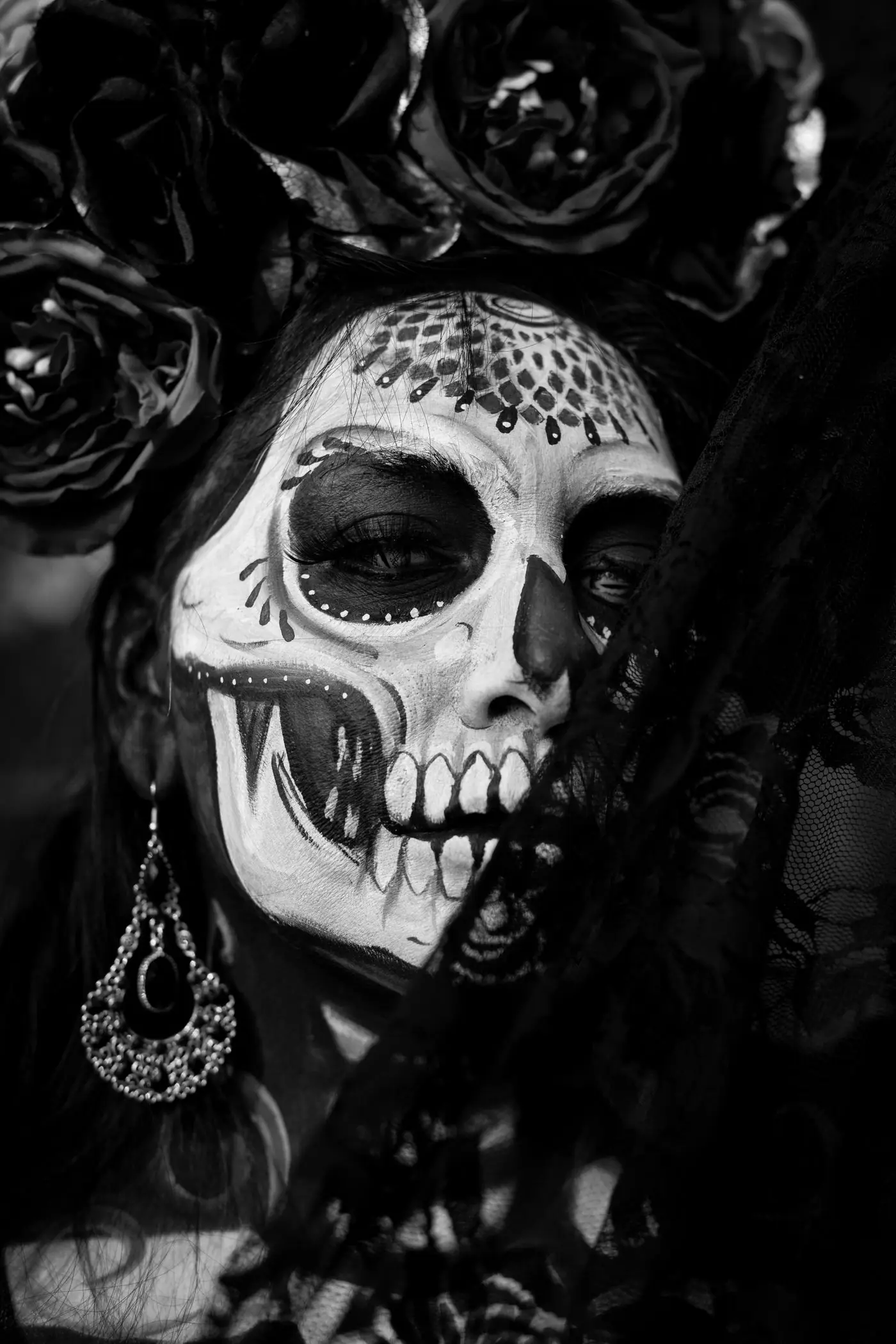
A Catrina/Catrín visual should show dressed-up elegance, not just skull imagery.
## What catrín means beyond the skeleton
A catrín is not just any male skull. The word points to elegance: the suit, hat, cane, posture, or carefully done makeup.[^src4] That is why a lazy costume with a skull T-shirt does not carry the same feeling.
## The class-satire underneath the outfit
The class-satire underneath matters. The look says, in a very Mexican visual way, that elegance and status do not save anyone from death.[^src2][^src3] That is darker and funnier than a basic "spooky couple" reading.
¿Qué significa?
What does it mean?
¿Cómo lo dicen ustedes?
How do you all say it?
Gracias, así lo digo mejor.
Thanks, now I can say it better.
## Couple costumes and compliments
Compliments should match the context. At a public event, van increíbles de Catrina y Catrín works. Talking directly to someone, qué buen maquillaje or qué elegante te ves often sounds more natural.
## Tone: elegant, not automatically sexy-spooky
La Catrina began as satire aimed at people who denied where they came from, which is why the elegance matters and the costume-shop version misses. Dressing as her is entirely normal here. Dressing as a generic sexy skeleton is a different costume with a different meaning.
Couple or parade images help readers understand the gendered pair in real public use.
| Situation | Better move | Why |
|---|---|---|
| You are unsure | ¿Qué significa? | Short and honest |
| You need local usage | ¿Cómo lo dicen ustedes? | Invites lived context |
| You might overstep | Lo digo con respeto | Lowers the temperature |
| Someone corrects you | Gracias, así lo digo mejor | Keeps connection open |
Makeup detail and styling are the story: the words point to elegance as much as skeletons.
## How the gendered words work in real compliments
Spanish makes the distinction visible. La Catrina is feminine. El Catrín is masculine. If a couple is dressed up together, people may say van de Catrina y Catrín or simply talk about las catrinas in a broader, casual way. The more specific you can be, the less touristy you sound.
If you are complimenting a woman or feminine-presenting look, te ves muy Catrina can work when the makeup is clearly in that style. For a man or masculine-presenting look, te ves muy catrín points to the elegant dressed-up idea. If you are unsure, skip the label and compliment the visible work: qué buen maquillaje, qué elegante, te quedó muy padre.
The class piece is worth keeping in mind. Catrín is connected to polished, upper-class-looking elegance, not just "male skeleton." That is why the hat, suit, dress, posture, and makeup matter. The skeleton is funny because all that status still ends in bones. That joke is sharper than a generic spooky costume.
For US learners, the practical advice is simple: use the words when the scene gives you permission. A parade, public photo setup, or costume party is fair game. A family altar or memorial context asks for less commentary. When in doubt, qué bonito is more useful than overexplaining what you learned five minutes ago.
One handy plural: catrinas may be used casually for multiple Catrina-style figures, especially in public displays. If you are describing a couple, though, una Catrina y un Catrín is cleaner and shows you noticed the distinction.
If you are choosing a caption, keep it simple. Catrina y Catrín works for a couple. Noche de catrinas works for a public event with many looks. Me encantó el detalle del maquillaje works when you are talking to a person and want the compliment to land on effort rather than stereotype.
Use Catrina and Catrín when the look calls for it, and use simpler compliments when a person matters more than the label. That balance is what keeps your Spanish sharp without making it show-offy.
For learners, the pronunciation is friendly: Catrina stresses tri, and Catrín carries the written accent at the end. Practice them as social words, not dictionary trophies: qué elegante el Catrín, qué bonita la Catrina.
[^src1]: [Diccionario de la lengua española, catrín](https://dle.rae.es/catr%C3%ADn)
[^src2]: [Secretaría de Cultura, José Guadalupe Posada](https://www.gob.mx/cultura/prensa/euforia-internacional-por-jose-guadalupe-posada)
[^src3]: [Museo Mural Diego Rivera](https://museomuraldiegorivera.inba.gob.mx/)
[^src4]: [Diccionario de la lengua española, elegante](https://dle.rae.es/elegante)
[^src5]: [Diccionario de la lengua española, calavera](https://dle.rae.es/calavera)
FAQ:
Q: What is the difference between Catrina and Catrín?
A: Catrina is the feminine elegant skeleton figure. Catrín is the masculine form tied to a dressed-up, elegant man.
Q: Does catrín just mean male Catrina?
A: Not exactly. It also carries the idea of a well-dressed, polished man.
Q: Can I say Catrinas for a group?
A: Yes, people may use catrinas casually for multiple Catrina-style figures, but Catrina y Catrín is cleaner for a couple.
Q: How do I compliment a Catrín look?
A: Say qué elegante, te quedó muy padre, or qué buen maquillaje.
Q: Is every skull costume Catrina or Catrín?
A: No. The look usually needs elegance, makeup, and the Día de Muertos visual context.
Q: Is Catrina/Catrín only for November?
A: You will see it most around Día de Muertos, though the imagery appears in art year-round.
Q: Should I use the label at a family altar?
A: Usually less is better. Use simple respectful comments unless people are talking about costumes or public displays.
Sources:
- Diccionario de la lengua española, catrín: https://dle.rae.es/catr%C3%ADn
- Secretaría de Cultura, José Guadalupe Posada: https://www.gob.mx/cultura/prensa/euforia-internacional-por-jose-guadalupe-posada
- Museo Mural Diego Rivera: https://museomuraldiegorivera.inba.gob.mx/
- Diccionario de la lengua española, elegante: https://dle.rae.es/elegante
- Diccionario de la lengua española, calavera: https://dle.rae.es/calavera
Related words: fresa, padre, neta, chido