---
title: "The CDMX First-Date Spanish Survival Guide: Drinks, Signals, and Tiny Panics"
description: "A CDMX first-date Spanish guide for confirming, arriving, ordering, reading signals, ending warmly, and texting after."
type: "article"
category: "dating"
url: "https://consalsa.app/blog/cdmx-first-date-spanish"
canonical: "https://consalsa.app/blog/cdmx-first-date-spanish"
published: "2026-06-19"
updated: "2026-06-19"
author: "Andrey the Nomad"
site: "ConSalsa.App"
license: "https://consalsa.app/about"
---

# The CDMX First-Date Spanish Survival Guide: Drinks, Signals, and Tiny Panics
URL: https://consalsa.app/blog/cdmx-first-date-spanish
Date: 2026-06-19
Updated: 2026-06-19
Category: dating
Keywords: cdmx first date spanish, mexico city dating spanish, mexican spanish date phrases, first date phrases spanish, dating in cdmx spanish
Summary: A CDMX first-date Spanish guide for confirming, arriving, ordering, reading signals, ending warmly, and texting after.

Quick answer:
- A CDMX first date is mostly logistics wearing a nice shirt. Confirm the day of, name a neighborhood, and let the venue come second.
- ¿Te late vernos en Roma y de ahí vemos? is the standard opener - it fixes an area without locking a place.
- Traffic is a real variable, not an excuse. Ya voy en camino and ya casi llego are expected updates, not stalling.
- The after-text matters more than anything you say at the table. Send it the same night, short.

What you'll learn:
- Why naming a neighbourhood beats naming a bar.
- How traffic works as a real variable rather than an excuse.
- The five moments of the night and the one phrase each needs.
- Why the after-text carries more weight than anything said at the table.

Don't sound gringo:
A CDMX date does not need a full itinerary. Confirm the place, time, and first move; let the rest breathe.

Body:

A CDMX first date is mostly logistics pretending to be romance. You need to confirm, arrive, order, pay, read the ending, and send the after-text. The Spanish is not fancy; it is a string of tiny moves like <mark lang="es-MX">¿te late?</mark>, <mark lang="es-MX">ya llegué</mark>, and <mark lang="es-MX">me la pasé muy bien</mark>.

A first date in Mexico City is mostly logistics wearing a nice shirt. Where, in a city that size, at what hour, with how much traffic sitting between the two of you. Get those right and the evening has room to be charming. Get them wrong and you spend the first half hour apologising from the back of a car.[^rae-cita][^rae-quedar]

## The first-date itinerary in Spanish

Keep each stage simple.

| Phrase | What it does | Best read |
|---|---|---|
| Before | ¿Te late este lugar? | Pick and confirm |
| Arrival | Ya llegué, estoy afuera | Find each other |
| Ordering | ¿Qué se te antoja? | Share the moment |
| Paying | ¿Cooperamos? | Avoid bill awkwardness |
| After | Me la pasé muy bien | Close warmly |

Name a neighbourhood, not a venue. <mark lang="es-MX">¿Te late vernos en Roma y de ahí vemos?</mark> fixes the half of the plan that matters - the half that decides how long you will be in traffic - and leaves the bar to be chosen once you are both standing there.[^rae-plan]

The night has five moments and each one needs a single phrase: before, arrival, ordering, paying, after. Learning them as a sequence rather than a vocabulary list is what prevents the small panics, because at any given point there is exactly one thing you need to be able to say.

<ol class="ladder">
  <li><div class="rung-card">
    <span class="rung-label">el día</span>
    <span class="rung-es" lang="es-MX">¿Seguimos para hoy?</span>
    <span class="rung-en" lang="en">Are we still on for today?</span>
    <span class="rung-note">Same-day confirmation is normal here and reads as organized, not doubtful.</span>
  </div></li>
  <li><div class="rung-card">
    <span class="rung-label">en camino</span>
    <span class="rung-es" lang="es-MX">Ya voy en camino, hay tráfico horrible</span>
    <span class="rung-en" lang="en">On my way, traffic is awful</span>
    <span class="rung-note">The most credible sentence in the city, and usually true.</span>
  </div></li>
  <li><div class="rung-card">
    <span class="rung-label">en la mesa</span>
    <span class="rung-es" lang="es-MX">¿Qué me recomiendas?</span>
    <span class="rung-en" lang="en">What do you recommend?</span>
    <span class="rung-note">Passes the decision to someone who knows the menu. Reads relaxed.</span>
  </div></li>
  <li><div class="rung-card">
    <span class="rung-label">el cierre</span>
    <span class="rung-es" lang="es-MX">Me la pasé muy bien, ¿lo repetimos?</span>
    <span class="rung-en" lang="en">I had a great time, shall we do it again?</span>
    <span class="rung-note">Closes the evening and opens the next one in six words.</span>
  </div></li>
</ol>

## CDMX-specific chaos

The entrance may be hidden, traffic may lie, and the bar may be louder than your listening skills. Send location-specific Spanish. <mark lang="es-MX">Estoy afuera del lugar</mark> beats a vague <mark lang="es-MX">aquí</mark> when every corner has three doors.

Traffic here is a real variable, not an excuse, and it is treated as one. <mark lang="es-MX">Ya voy en camino</mark> and <mark lang="es-MX">ya casi llego</mark> are expected updates rather than stalling, and sending them counts as a courtesy. Turning up twenty minutes late having sent neither is the actual offence.[^timeout-first-date-bars]

<ul class="examples">
  <li class="example">
    <div class="es" lang="es-MX">¿Te late vernos en Roma y de ahí vemos?</div>
    <div class="en" lang="en">Are you into meeting in Roma and seeing from there?</div>
  </li>
  <li class="example">
    <div class="es" lang="es-MX">Ya llegué, estoy afuera del lugar.</div>
    <div class="en" lang="en">I arrived; I am outside the place.</div>
  </li>
  <li class="example">
    <div class="es" lang="es-MX">¿Pedimos la cuenta o quieres algo más?</div>
    <div class="en" lang="en">Should we ask for the bill or do you want something else?</div>
  </li>
</ul>

<figure>
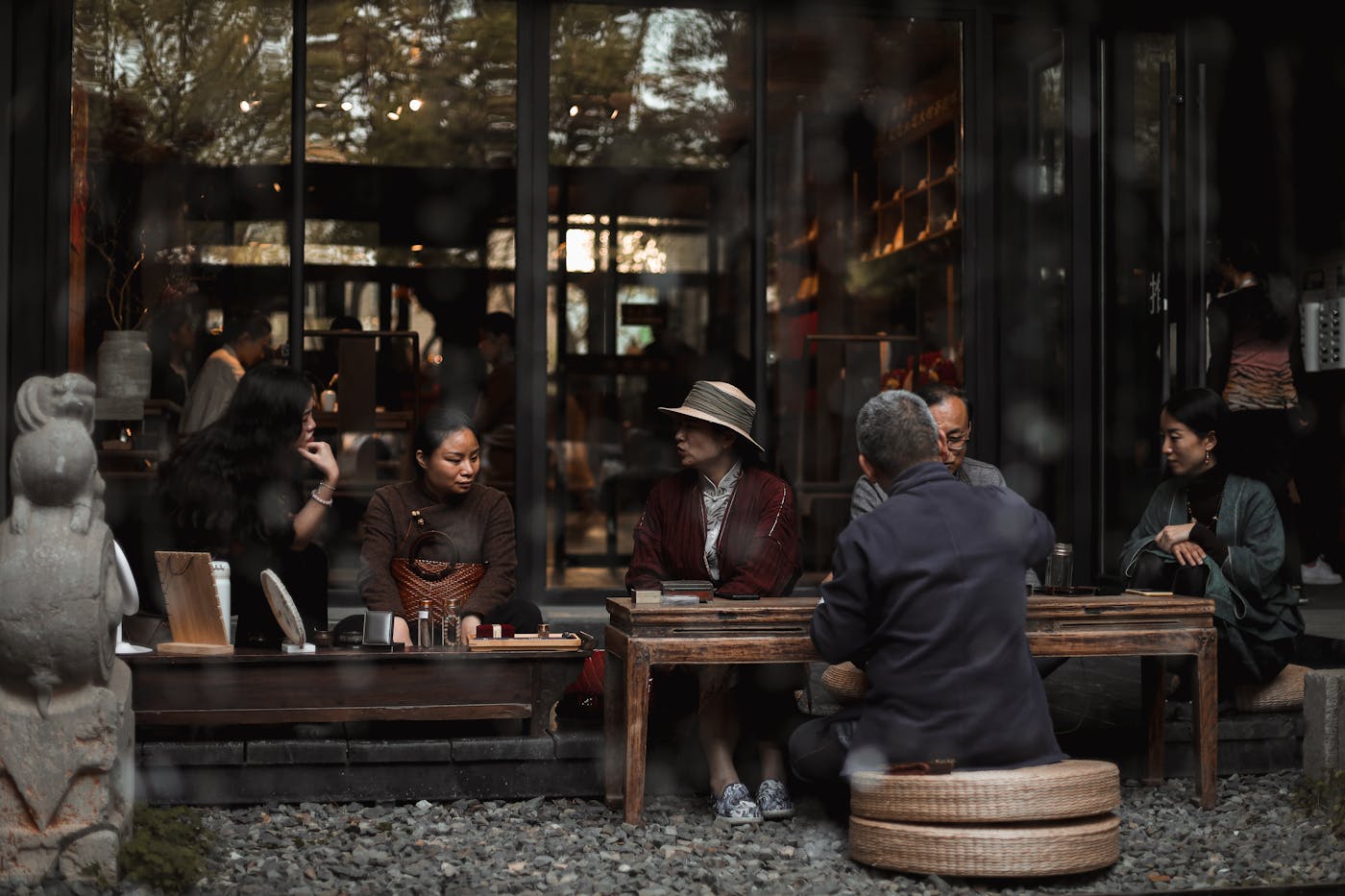
  <img src="/images/blog/outdoor-cafe-friends-talk.jpg" alt="Coffee keeps the pressure low and the language easier." loading="lazy" />
  <figcaption>Coffee keeps the pressure low and the language easier.</figcaption>
</figure>

<div id="midpost-newsletter-slot"></div>

## The after-text matters

If you had a good time, say it. <mark lang="es-MX">Me la pasé muy bien</mark> is warm without being dramatic. Add <mark lang="es-MX">si te late, repetimos</mark> only if you mean it.

The after-text carries more weight than anything said at the table. Same night, short, and about the evening rather than about the person - it confirms the date happened and that you noticed it happening. Its absence is read just as clearly, and it is read the next morning.[^cdmxsecreta-first-date]

## Tiny panic, useful phrase

| Situation | Use this | Why it works |
|---|---|---|
| Cannot find them | Estoy en la entrada | Specific location |
| Awkward pause | ¿Qué tal tu semana? | Soft reset |
| Bill arrives | ¿Pedimos la cuenta? | Normal move |
| Want second date | Si te late, repetimos | Warm follow-up |

One line per moment, and you will probably only need two or three of them.

<figure>
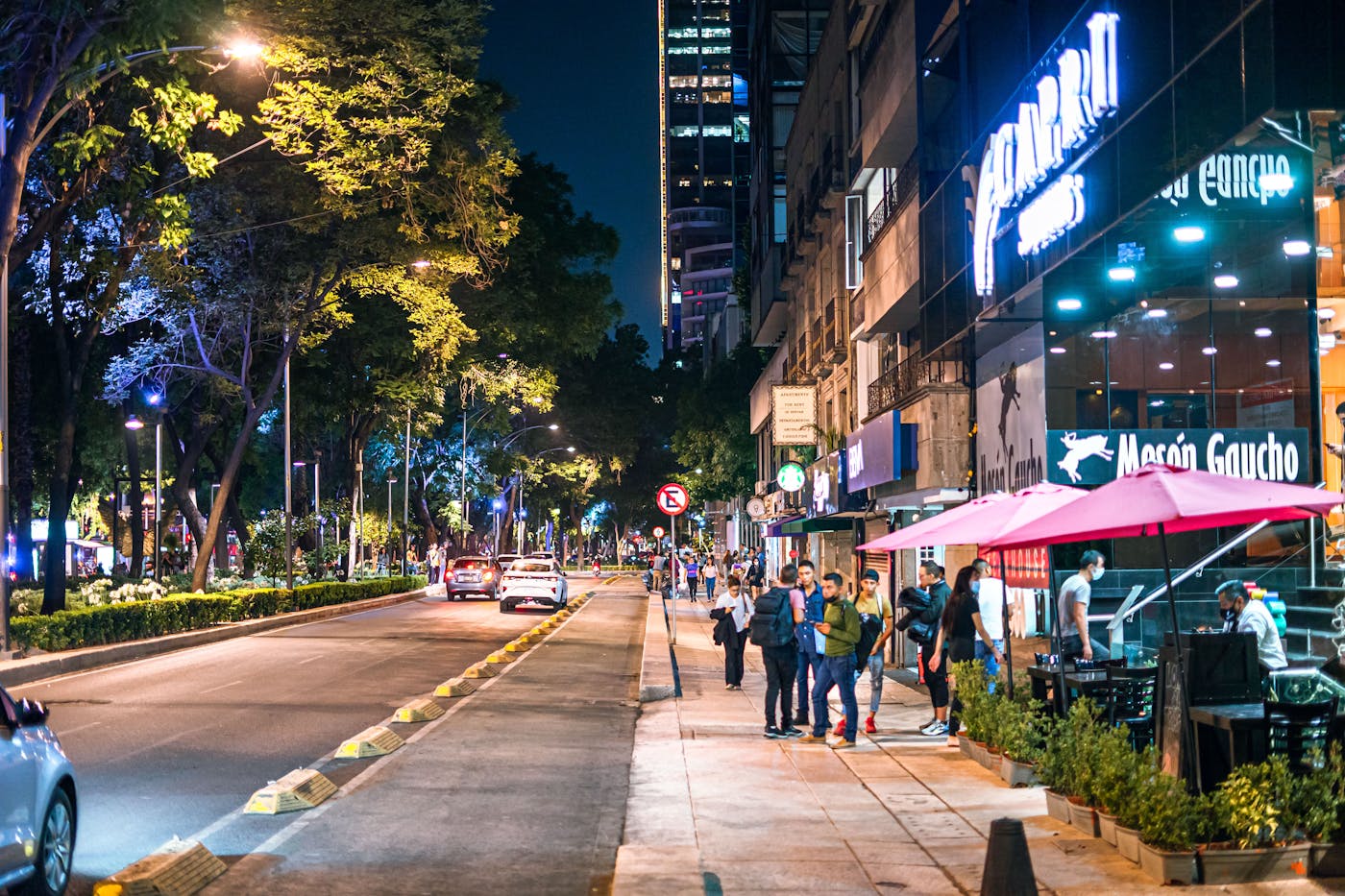
  <img src="/images/blog/cdmx-night-street-people.jpg" alt="The after-date text can be simple and still warm." loading="lazy" />
  <figcaption>The after-date text can be simple and still warm.</figcaption>
</figure>

## Lines for each part of the night

Short messages at the right moments do more than anything you say at the table.

<ul class="examples">
  <li class="example">
    <div class="es" lang="es-MX">¿Te late vernos en Roma y de ahí vemos?</div>
    <div class="en" lang="en">Are you into meeting in Roma and seeing from there?</div>
  </li>
  <li class="example">
    <div class="es" lang="es-MX">Ya llegué, estoy afuera del lugar.</div>
    <div class="en" lang="en">I arrived; I am outside the place.</div>
  </li>
  <li class="example">
    <div class="es" lang="es-MX">¿Pedimos la cuenta o quieres algo más?</div>
    <div class="en" lang="en">Should we ask for the bill or do you want something else?</div>
  </li>
  <li class="example">
    <div class="es" lang="es-MX">Me la pasé muy bien. Si te late, repetimos.</div>
    <div class="en" lang="en">I had a great time. If you are into it, we do it again.</div>
  </li>
</ul>

## Logistics are most of the romance

The best first-date Spanish keeps the date moving without turning the night into a form. Clear logistics, warm tone, graceful exit.

Logistics are most of the romance, at least on a first night. Once nobody is lost, late, or quietly negotiating a bill, there is finally room for the conversation you both turned up for.[^cdmxsecreta-roma-cafes]

[^rae-cita]: [Diccionario de la lengua española, cita](https://dle.rae.es/cita) - The RAE entry for cita covers an agreed time and place to meet, plus a meeting or encounter, which maps neatly to date logistics.
[^rae-quedar]: [Diccionario de la lengua española, quedar](https://dle.rae.es/quedar) - The RAE entry for quedar includes agreeing on something and arranging a meeting, the backbone of many dating texts.
[^rae-plan]: [Diccionario de la lengua española, plan](https://dle.rae.es/plan) - The RAE entry for plan includes both intention/project and a colloquial romantic or casual relation sense, which is why plan can feel innocent and loaded at once.
[^timeout-first-date-bars]: [Time Out México, bares para una primera cita en CDMX](https://www.timeoutmexico.mx/ciudad-de-mexico/antros-bares/bares-para-una-primera-cita-cdmx) - Time Out México frames CDMX first dates as a real local genre with bars chosen for conversation, mood, and low-pressure movement.
[^cdmxsecreta-first-date]: [CDMX Secreta, lugares para una primera cita en CDMX](https://cdmxsecreta.com/primera-cita-original-diferente/) - CDMX Secreta’s first-date guide shows how varied local date plans can be, from coffee and cinema to more playful experiences.
[^cdmxsecreta-roma-cafes]: [CDMX Secreta, cafeterías en la Roma](https://cdmxsecreta.com/cafeterias-en-la-roma-cdmx/) - CDMX Secreta’s Roma cafe guide grounds the language in a familiar expat-and-local setting where low-pressure chats happen.

FAQ:
Q: How do I confirm a date the same day?
A: ¿Seguimos para hoy? or ¿confirmamos lo de hoy? Same-day confirmation is completely normal in CDMX and is not read as doubting the plan.

Q: Why do people name a neighborhood instead of a place?
A: Because traffic decides everything. Agreeing on Roma or Condesa first lets both people pick a spot that is actually reachable once you know where you are coming from.

Q: What do I text if I am running late?
A: Ya voy en camino, hay un tráfico horrible. Perdón. Naming the traffic is not an excuse here - it is the most credible reason in the city.

Q: How do I order without freezing?
A: ¿Qué me recomiendas? works at any bar or restaurant and passes the decision to someone who knows the menu. It also reads as relaxed rather than indecisive.

Q: How do I end a first date warmly?
A: Me la pasé muy bien, ¿lo repetimos? It closes the evening and opens the next one in six words.

Q: Should I text after?
A: Yes, the same night, and keep it short. Llegué bien, gracias por la noche. The brevity is the point - a long message the same night reads as anxious.

Q: What if the conversation stalls in Spanish?
A: Say it out loud. Perdón, se me fue la palabra. Admitting it is far more charming than the silence you are trying to avoid, and most people find it endearing.

Q: Who pays on a first date in Mexico City?
A: It varies a lot and splitting is common. ¿Lo dividimos? is a completely normal question, and offering to pay is normal too - neither one is a wrong move.

Sources:
- Diccionario de la lengua española, cita: https://dle.rae.es/cita
- Diccionario de la lengua española, quedar: https://dle.rae.es/quedar
- Diccionario de la lengua española, plan: https://dle.rae.es/plan
- Time Out México, bares para una primera cita en CDMX: https://www.timeoutmexico.mx/ciudad-de-mexico/antros-bares/bares-para-una-primera-cita-cdmx
- CDMX Secreta, lugares para una primera cita en CDMX: https://cdmxsecreta.com/primera-cita-original-diferente/
- CDMX Secreta, cafeterías en la Roma: https://cdmxsecreta.com/cafeterias-en-la-roma-cdmx/

Related words: que-onda, sale, chela, antro