---
title: "CDMX Metro Spanish: Empujones, Transbordos, and Asking Before You Miss Your Stop"
description: "Learn CDMX Metro Spanish for directions, transfers, crowded cars, stop questions, permiso, se baja, transbordo, and platform panic."
type: "article"
category: "getting_around"
url: "https://consalsa.app/blog/cdmx-metro-spanish"
canonical: "https://consalsa.app/blog/cdmx-metro-spanish"
published: "2026-05-31"
updated: "2026-05-31"
author: "Andrey the Nomad"
site: "ConSalsa.App"
license: "https://consalsa.app/about"
---

# CDMX Metro Spanish: Empujones, Transbordos, and Asking Before You Miss Your Stop
URL: https://consalsa.app/blog/cdmx-metro-spanish
Date: 2026-05-31
Updated: 2026-05-31
Category: getting_around
Keywords: cdmx metro spanish, mexico city metro phrases, mexican spanish public transit, metrobus spanish cdmx, transbordo meaning spanish
Summary: Learn CDMX Metro Spanish for directions, transfers, crowded cars, stop questions, permiso, se baja, transbordo, and platform panic.

Quick answer:
- In the CDMX Metro, the most useful phrases are con permiso, ¿se baja?, voy a bajar, ¿va para...?, and ¿dónde transbordo?
- Ask short questions before the train arrives. Once the doors open, the language becomes movement.
- Transbordo means transfer, dirección means direction, and permiso is the polite word that helps you move through a crowd.
- If you are lost, ask for the next step, not the entire route: ¿para Bellas Artes es por aquí?

What you'll learn:
- How to ask where to transfer, which direction to take, and whether someone is getting off.
- What to say when you need to pass through a crowded car or doorway.
- How to read signs and listen for station announcements without freezing.
- How to keep your Metro Spanish short, polite, and useful during rush hour.

Don't sound gringo:
In the Metro, long Spanish loses. Use short survival phrases: baja, con permiso, ¿sale? Save the perfect sentence for when you're not being carried by a crowd.

Body:

The CDMX Metro does not reward fancy Spanish. It rewards useful Spanish: <mark lang="es-MX">con permiso</mark>, <mark lang="es-MX">voy a bajar</mark>, <mark lang="es-MX">¿se baja?</mark>, <mark lang="es-MX">¿dónde transbordo?</mark>.

This is the language of doors opening, people moving, and your brain trying to remember whether you needed the blue line or the brown line.

## The Metro phrase map

Start with these. They are not glamorous. They work.

| Moment | Say this | Why |
|---|---|---|
| You need to pass | Con permiso | Polite crowd language |
| Your stop is next | Voy a bajar | Explains why you are moving |
| Someone blocks the door | ¿Se baja? | Asks if they are getting off |
| You need a transfer | ¿Dónde transbordo? | Gets you to the right connection |
| You need the direction | ¿Va para Indios Verdes? | Checks the terminal direction |
| You are lost | ¿Para Bellas Artes es por aquí? | One specific question |

The word **<mark lang="es-MX">metro</mark>** itself is simple enough,[^rae-metro] but the real challenge is the speed. The official Metro map shows the network as clean colored lines.[^metro-map] Your body experiences it as stairs, signs, people, and one person eating chips with astonishing confidence.

## Ask one question, not the whole route

When you are lost, your instinct may be to explain the entire situation:

<mark lang="es-MX">Estoy tratando de llegar a Coyoacán pero creo que me equivoqué porque mi amigo me dijo que cambiara en Centro Médico...</mark>

This is understandable. It is also too much.

Ask the next step:

<ul class="examples">
  <li class="example">
    <div class="es" lang="es-MX">¿Para Centro Médico es por aquí?</div>
    <div class="en" lang="en">For Centro Médico, is it this way?</div>
  </li>
  <li class="example">
    <div class="es" lang="es-MX">¿Dónde transbordo a la línea tres?</div>
    <div class="en" lang="en">Where do I transfer to line three?</div>
  </li>
  <li class="example">
    <div class="es" lang="es-MX">¿Esta dirección va a Universidad?</div>
    <div class="en" lang="en">Does this direction go to Universidad?</div>
  </li>
</ul>

**The trick is to ask for the next move.** A stranger can answer that in three seconds.
<figure>
  <img src="/images/blog/cdmx-crowded-street.jpg" alt="People walking on a crowded Mexico City street." loading="lazy" />
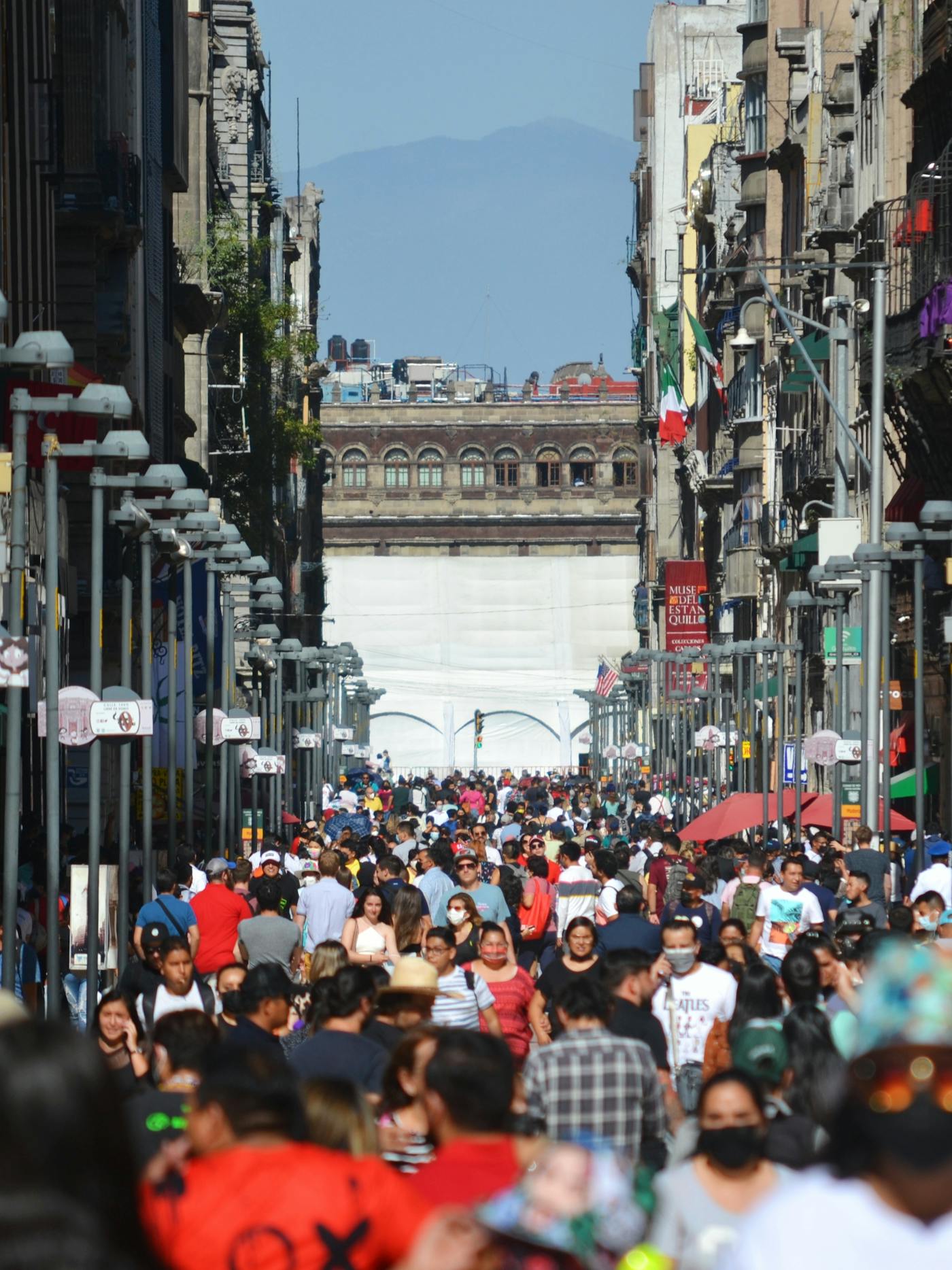
  <figcaption>Transit Spanish spills into street Spanish: movement, permission, direction, and quick confirmation. Photo from <a href="https://www.pexels.com/photo/13209758/" target="_blank" rel="noopener noreferrer">Pexels</a>.</figcaption>
</figure>

## Transbordo is the word you want

<mark lang="es-MX">Transbordo</mark> means a transfer or change between routes.[^rae-transbordo] In CDMX, you will see and hear it around Metro lines, Metrobús routes, and big stations where everyone seems to know where they are going except you.

Use it like this:

| You need | Phrase |
|---|---|
| A transfer | Necesito hacer transbordo |
| The transfer location | ¿Dónde transbordo? |
| A different line | ¿Dónde transbordo a la línea dos? |
| Confirmation | ¿Aquí es el transbordo? |

The official Metrobús pages use line maps too,[^metrobus-l1] and that matters because CDMX public transit often asks you to think in **line plus direction**, not just destination.

<div id="midpost-newsletter-slot"></div>

## Door Spanish is its own language

The door is where learners become philosophers.

You are squeezed between a backpack, a pole, and your fear of being rude. Then the train stops. You have two seconds.

Use:

<ul class="examples">
  <li class="example">
    <div class="es" lang="es-MX">Con permiso.</div>
    <div class="en" lang="en">Excuse me.</div>
  </li>
  <li class="example">
    <div class="es" lang="es-MX">Voy a bajar.</div>
    <div class="en" lang="en">I am getting off.</div>
  </li>
  <li class="example">
    <div class="es" lang="es-MX">¿Se baja?</div>
    <div class="en" lang="en">Are you getting off?</div>
  </li>
</ul>

<mark lang="es-MX">Permiso</mark> is the useful noun behind the phrase <mark lang="es-MX">con permiso</mark>.[^rae-permiso] In the Metro, it is less "pardon me, esteemed citizen" and more "please create two inches of human possibility."

## Direction beats station names

The word <mark lang="es-MX">dirección</mark> matters because signs often point toward terminal stations.[^rae-direccion] If you only know your stop, you still need the direction.

| If you see | Ask |
|---|---|
| Two platforms | ¿Cuál dirección es para...? |
| A line number | ¿Esta línea va a...? |
| A big station | ¿Aquí transbordo? |
| A crowd moving fast | ¿Para dónde va esta fila? |

This is where **textbook Spanish quietly leaves the building**. You are not writing an essay. You are choosing a platform.

<figure>
  <img src="/images/blog/cdmx-red-tram-jacarandas.jpg" alt="People on a Mexico City street beside a red tram and blooming jacaranda trees." loading="lazy" />
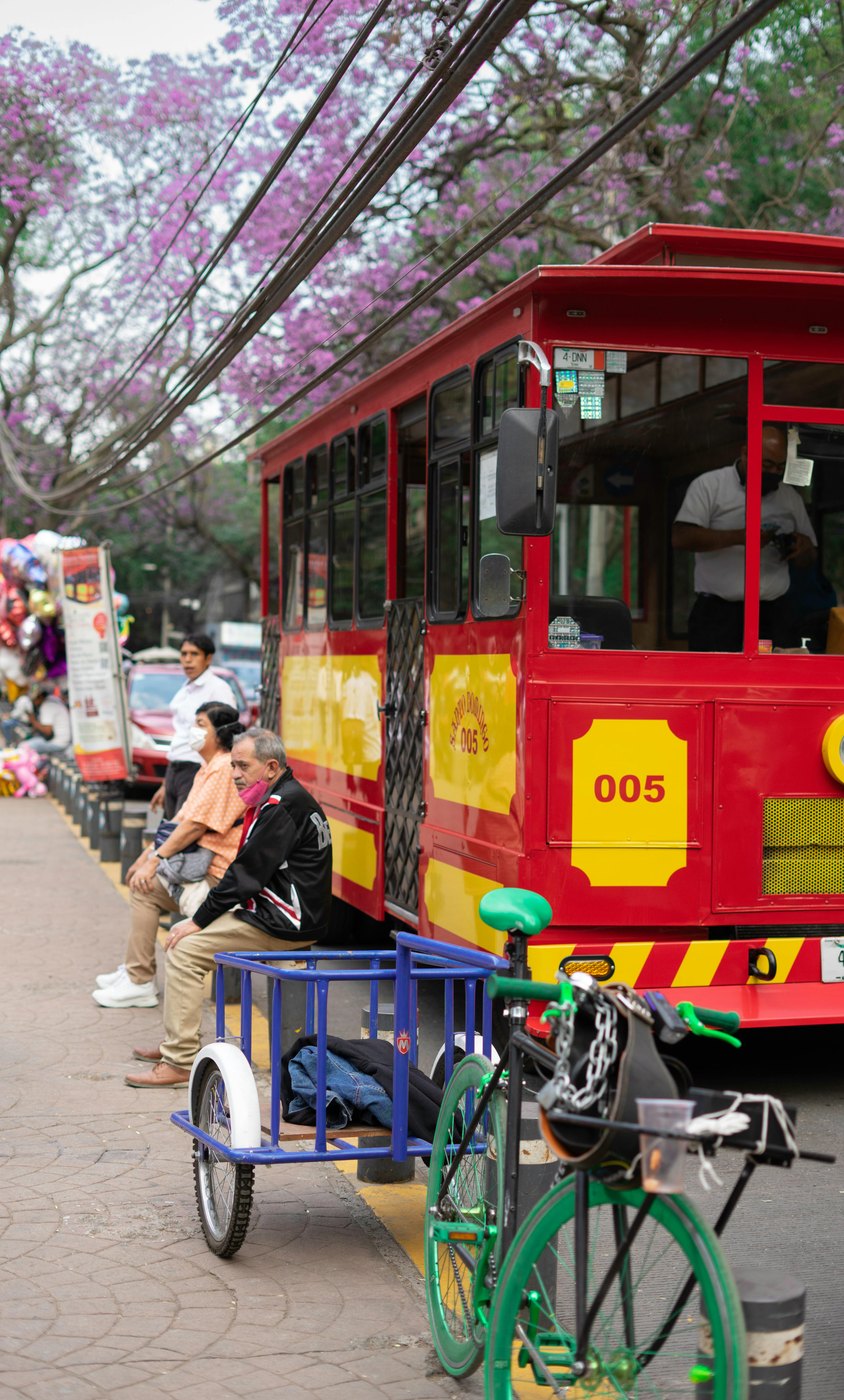
  <figcaption>Once you leave the station, the same skills keep working: direction, landmarks, and short confirmations. Photo by <a href="https://www.pexels.com/photo/tranvia-rojo-y-jacarandas-de-la-ciudad-11556726/" target="_blank" rel="noopener noreferrer">Viridiana Rivera on Pexels</a>.</figcaption>
</figure>

## Safety and tone

Use neutral, practical Spanish. Do not practice edgy slang with strangers in a packed car. Save that for friends.

Also: keep your phone close, step aside before stopping to check maps, and do not block the stairs while having a tiny crisis. CDMX has room for your learning. It does not have room for you becoming a traffic cone.

If you remember only five phrases, make them:

- Con permiso
- Voy a bajar
- ¿Se baja?
- ¿Dónde transbordo?
- ¿Para X es por aquí?

That is enough to move through the city with a little more confidence.

[^metro-map]: [Sistema de Transporte Colectivo Metro, Mapa de la Red](https://www.metro.cdmx.gob.mx/la-red/mapa-de-la-red) — Gobierno de la Ciudad de México
[^metrobus-l1]: [Metrobús CDMX, Mapa Línea 1](https://www.metrobus.cdmx.gob.mx/mapas-de-sistema/mapa-linea-1) — Gobierno de la Ciudad de México
[^rae-metro]: [Diccionario de la lengua española, metro](https://dle.rae.es/metro) — Real Academia Española
[^rae-transbordo]: [Diccionario de la lengua española, transbordo](https://dle.rae.es/transbordo) — Real Academia Española
[^rae-permiso]: [Diccionario de la lengua española, permiso](https://dle.rae.es/permiso) — Real Academia Española
[^rae-direccion]: [Diccionario de la lengua española, dirección](https://dle.rae.es/direcci%C3%B3n) — Real Academia Española

FAQ:
Q: What should I say in the CDMX Metro if I need to get off?
A: Say con permiso or voy a bajar. If someone is blocking the door, ask ¿se baja? to check whether they are also getting off.

Q: How do you ask for directions in the Mexico City Metro?
A: Ask one specific question: ¿para Tacubaya es por aquí?, ¿dónde transbordo?, or ¿esta línea va a Centro Médico?

Q: What does transbordo mean in Mexico City transit?
A: Transbordo means transfer. In the Metro or Metrobús, it points to changing lines or routes.

Q: How do you say excuse me in a crowded Metro car?
A: Say con permiso. It is short, normal, and better than pushing silently.

Q: What does dirección mean on Metro signs?
A: Dirección means direction. On transit signs, it usually points toward the line's terminal station.

Q: Is the Mexico City Metro a good place to practice Spanish?
A: Yes, but keep it practical. Practice short phrases for directions, transfers, permission, and stops.

Q: What should I avoid saying in the Metro?
A: Avoid long explanations at the door. In a crowd, short phrases like con permiso and voy a bajar work better.

Sources:
- Sistema de Transporte Colectivo Metro, Mapa de la Red: https://www.metro.cdmx.gob.mx/la-red/mapa-de-la-red
- Metrobús CDMX, Mapa Línea 1: https://www.metrobus.cdmx.gob.mx/mapas-de-sistema/mapa-linea-1
- Diccionario de la lengua española, metro: https://dle.rae.es/metro
- Diccionario de la lengua española, transbordo: https://dle.rae.es/transbordo
- Diccionario de la lengua española, permiso: https://dle.rae.es/permiso
- Diccionario de la lengua española, dirección: https://dle.rae.es/direcci%C3%B3n

Related words: sale, aguas, mande, que-onda