---
title: "Chiles en Nogada: Order It Now or Wait a Year"
description: "Chiles en nogada is a walnut-cream poblano sold only in August and September. Here's how to order it in Spanish, plus the pozole and food words locals use."
type: "article"
category: "seasonal"
url: "https://consalsa.app/blog/chiles-en-nogada-september-food"
canonical: "https://consalsa.app/blog/chiles-en-nogada-september-food"
published: "2026-09-12"
updated: "2026-09-12"
author: "Andrey the Nomad"
site: "ConSalsa.App"
license: "https://consalsa.app/terms#ip"
---
# Chiles en Nogada: Order It Now or Wait a Year
URL: https://consalsa.app/blog/chiles-en-nogada-september-food
Date: 2026-09-12
Updated: 2026-09-12
Category: seasonal
Keywords: chiles en nogada meaning, what is chiles en nogada, pozole september mexico, de temporada meaning, mexican september food, how to order chiles en nogada, antojitos meaning
Summary: Chiles en nogada is a walnut-cream poblano sold only in August and September. Here's how to order it in Spanish, plus the pozole and food words locals use.
Quick answer:
- Chiles en nogada is a stuffed poblano in walnut cream sauce, eaten mainly in August and September - the season is short, so order it while you can.
- De temporada means in season. Ask hay chiles en nogada? and the waiter knows exactly what you mean.
- Pozole is the big shared bowl people make for Independence weekend (Sept 15-16), red, green, or white.
- To compliment the food, say está buenísimo or qué rico - simple and exactly what people say.
What you'll learn:
- What chiles en nogada is and why it only shows up for about two months.
- How to ask if a dish is in season and order it without hesitating.
- The September table words: pozole, pancita, antojitos, de temporada.
- How to compliment a home cook or a fonda without sounding stiff.
Don't sound gringo:
Do not ask for chiles en nogada in March - it will mark you instantly as someone who learned the dish from a guidebook, not the calendar. The whole point is that it's de temporada. Asking when it's out of season is like ordering pumpkin pie in May.
Body:
First week of September, you're walking past a tiny fonda with the door propped open. The chalkboard out front screams ¡Ya hay chiles en nogada! with three exclamation marks, like the place just won something.
The couple at the table by the window orders it before they've even sat down. A guy at the counter calls his wife to say go now, they have it. That rush you're watching isn't for show.
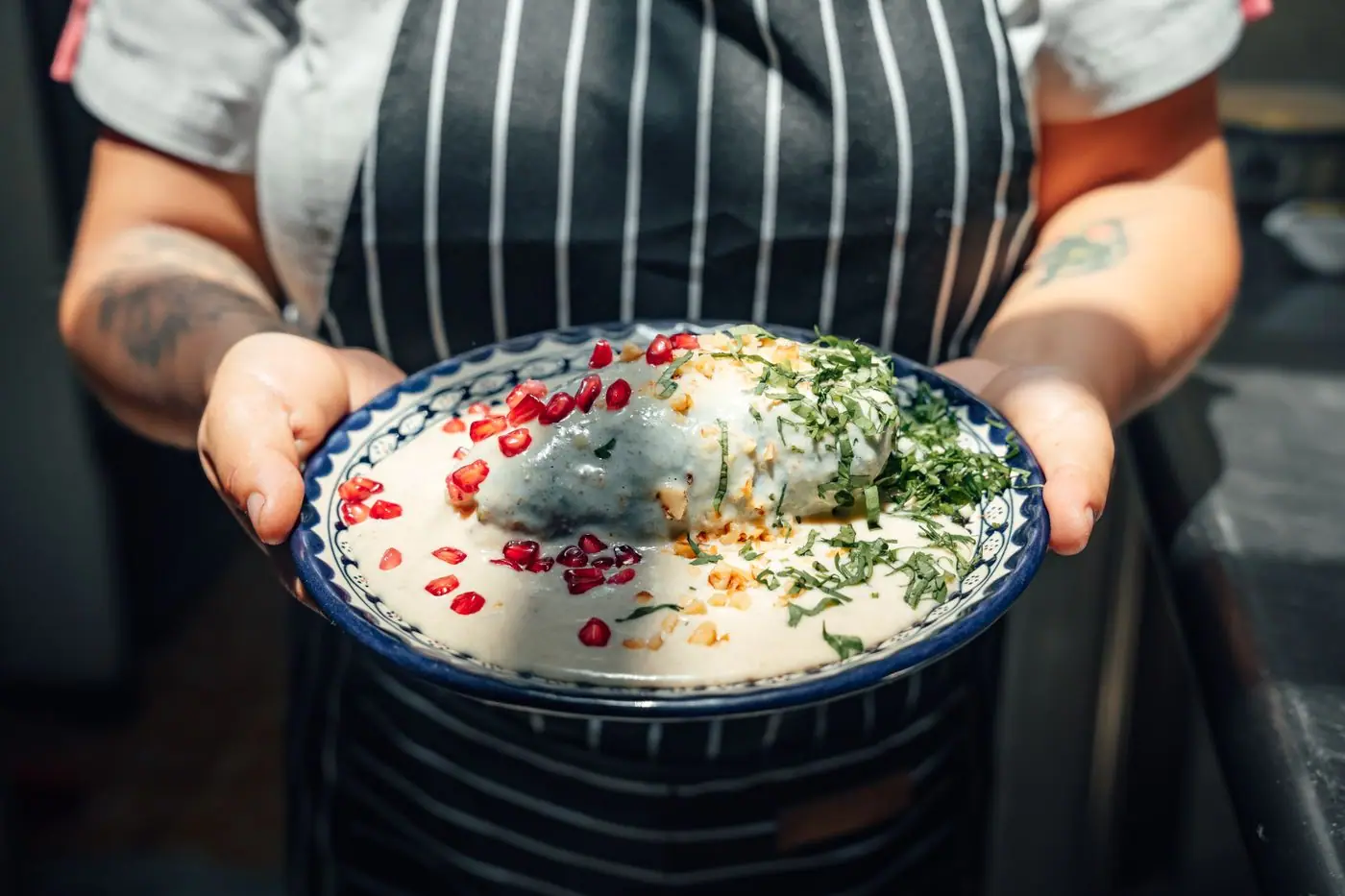
Chiles en nogada is a roasted poblano stuffed with sweet-savory picadillo, drowned in cold walnut cream, scattered with pomegranate seeds. **You can get it in August and September, and then it's gone for a year.**[^gob-nogada]
So if you want it, you order it now. The short season isn't a marketing trick. It's just the calendar doing its thing.
Here's what I wish someone had told me my first fall living here. September in Mexico isn't really a month. It's a meal schedule, and people wait all year for certain dishes.
Once you know what they are - and how to ask for them in Spanish - the whole table warms up to you a lot faster.
## The September food map
| Dish | What it is | When you eat it |
|---|---|---|
| Chiles en nogada | Poblano in walnut cream, flag colors | Aug-Sept, short window |
| Pozole | Hominy soup, red/green/white | Weekends, Independence Day |
| Pancita | Tripe and hominy in chile broth | Weekend mornings, after a long night |
| Antojitos | Corn-masa street snacks | Anytime, but heavy in fiesta season |
| Fruta de temporada | Whatever's in season | Tracks the calendar |
None of these are fancy, and that's sort of the point.
**What makes them special is timing, not technique.** A dish that's de temporada matters exactly because you can't grab it whenever you feel like it.[^rae-temporada]
## Chiles en nogada: the dish with a season
Everyone romanticizes this one, and it earns it.
Chiles en nogada is a green poblano, a white walnut sauce, and red pomegranate seeds. **The three flag colors sitting on one plate** - which is exactly how it got glued to Independence month.[^gob-nogada]
The sauce is the nogada, made from nuez de Castilla, a fresh walnut that's only good for a few weeks.[^dem-nogada]
That tiny walnut window is the real reason the dish is seasonal. Nobody decided to make it scarce. The good version needs fresh nuts and ripe pomegranate, and the two just happen to line up right about now.
Ordering it takes nothing special. Check if they have it, then order.
¿Hay chiles en nogada?
Do you have chiles en nogada?
Me da uno de chiles en nogada, por favor.
I'll have one chiles en nogada, please.
One thing worth knowing. They usually come one or two to a plate, and the price swings hard depending on where you are. A sit-down spot in Polanco and a market stall are not playing the same game - I've seen the same dish triple in price across ten blocks.
So go ahead and ask ¿cuántos vienen? (how many come with it?) and ¿a cómo está? (how much is it?). Locals ask the same thing, every time.
The green poblano, white walnut sauce, and red pomegranate are the flag on a plate - and the reason the dish belongs to September. Photo by mikegles on Pexels.
## De temporada: the phrase that opens the menu
If you take one phrase from this whole post, take de temporada. **It means in season, and it's how you eat well in Mexico all year - not just in September.**[^rae-temporada]
You'll hear it everywhere. Market vendors, fondas, waiters. When something is de temporada, it's at its best and usually the cheapest it'll be.
Drop it into a question or a request. It tells whoever's selling food that you care about what's fresh, and that buys you a lot of goodwill fast.
¿Qué fruta es de temporada ahorita?
What fruit is in season right now?
¿Tiene algo de temporada para recomendarme?
Do you have anything in season you'd recommend?
**Asking for something out of season is the quickest way to flag yourself as a tourist.** Wanting chiles en nogada in March is the classic tell - the dish is famous, but it's just not around in spring, and asking says you learned it off a list instead of living through a year here.
## Pozole: the Independence weekend bowl
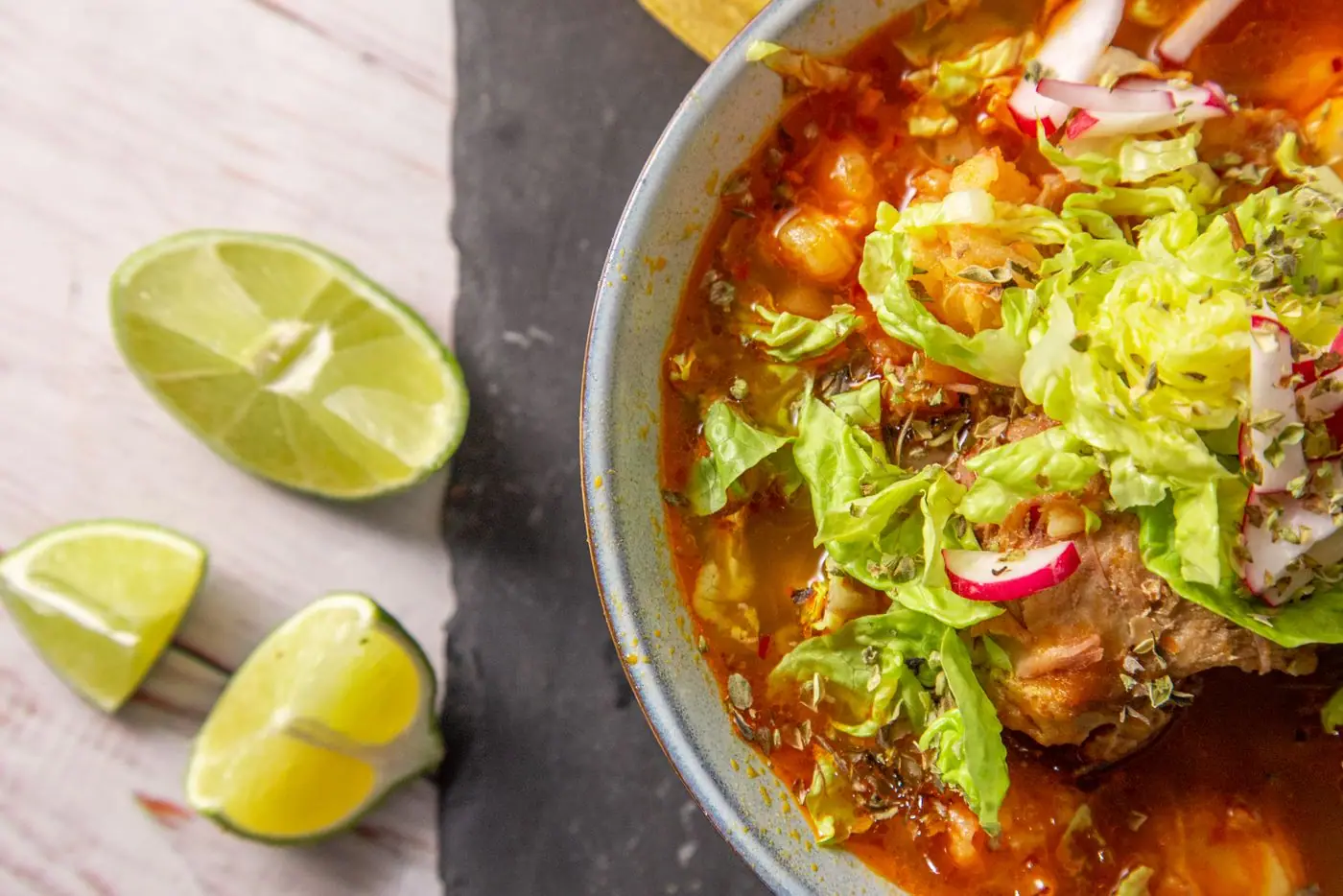
Around September 15 and 16, the dish taking over kitchens is pozole. It's a big shared hominy soup with pork or chicken, and you load your own bowl at the table - lettuce, radish, onion, oregano, lime, chile.[^dem-pozole]
There's red, green, and white. People will defend their version like it's a soccer team. This is celebration food, the kind you cook in a pot the size of a small drum when family's coming over.
Get invited to a noche mexicana on the 15th and odds are a vat of it is the centerpiece. **Being asked over for pozole is a real invitation - say yes.**
¿Lo quieres rojo, verde o blanco?
Do you want it red, green, or white?
Échale más limón y orégano, queda más rico.
Add more lime and oregano, it tastes better.
When you sit down to a bowl like that, the move is to echarse un taco with the people around you - it's as much about the table as the food.
A big pot of pozole is the centerpiece of most Independence weekend tables, with everyone building their own bowl. Photo by Gonzalo Guzmán García on Pexels.
## Pancita and antojitos: the supporting cast
Two more words finish off the September table.
Pancita is a tripe and hominy soup in red chile broth. It's a weekend-morning fixture and the cure everyone swears by after a rough night. Stay out too late for the grito and this is what's waiting for you the next morning, no judgment.
Then there's antojitos, the catch-all for corn-masa street snacks - sopes, tlacoyos, quesadillas, tostadas.[^dem-antojito] It comes from antojo, a craving.
So when someone says vamos por unos antojitos, they mean let's go grab some street food, not sit down for a three-course thing.
Ándale, vamos por unos antojitos al mercado.
Come on, let's go get some antojitos at the market.
Mañana hay pancita para la cruda.
Tomorrow there's pancita for the hangover.
## How to compliment the food without sounding stiff
This is where a lot of learners lock up. They reach for some long, careful sentence and end up sounding like a Yelp review.
Don't. **Compliments here are short and warm, not a whole speech.** The everyday line is está buenísimo (it's so good) or just qué rico (how delicious), said like you mean it.
If an actual person cooked for you - a friend, a host, somebody's abuela - point it straight at them. Te quedó padrísimo means it turned out amazing, and it lands because it gives the cook the credit.
You'll hear padre and its turbo form padrísimo all over food talk, same as calling something chido.
The best compliment is short and aimed at the cook - te quedó padrísimo does more than a long speech. Photo by cottonbro studio on Pexels.
## Tone and safety: where these words fit
| You want to | Say this | Skip this |
|---|---|---|
| Ask if a dish is available | ¿Hay chiles en nogada? | ¿Es posible obtener...? (stiff, textbook) |
| Praise the food | Está buenísimo / qué rico | Está bien (sounds lukewarm) |
| Praise the cook | Te quedó padrísimo | A formal "felicidades por la comida" |
| Order street snacks | Vamos por unos antojitos | Asking for antojitos at a fine-dining place |
| Ask what's fresh | ¿Qué es de temporada? | Demanding an out-of-season dish |
None of these words are risky or rude - it's just friendly food talk. The one thing that trips people up is tone. Saying está bien when you actually mean it's great comes off as faint praise, almost a polite no.
Once you've decided, the smoothest little word to seal it is sale - the cheerful okay, done. Sale, unos chiles en nogada y un pozole, and you're set for the season. Just don't sit on it until October.
[^gob-nogada]: [Chiles en nogada, un platillo con historia](https://www.gob.mx/agricultura/articulos/chiles-en-nogada-un-platillo-con-historia) — Gobierno de México
[^dem-nogada]: [Diccionario del español de México, nogada](https://dem.colmex.mx/ver/nogada) — El Colegio de México
[^rae-temporada]: [Diccionario de la lengua española, temporada](https://dle.rae.es/temporada) — Real Academia Española
[^dem-pozole]: [Diccionario del español de México, pozole](https://dem.colmex.mx/ver/pozole) — El Colegio de México
[^dem-antojito]: [Diccionario del español de México, antojito](https://dem.colmex.mx/ver/antojito) — El Colegio de México
FAQ:
Q: What is chiles en nogada?
A: A roasted poblano pepper stuffed with a sweet-savory picadillo of meat and fruit, covered in a cold walnut cream sauce (nogada), and topped with pomegranate seeds and parsley. The green, white, and red echo the Mexican flag.
Q: When can you eat chiles en nogada in Mexico?
A: Mainly August and September, when fresh walnuts and pomegranate are in season. Some places start late July and run into early October, but the core window is short.
Q: How do you order chiles en nogada in Spanish?
A: Ask hay chiles en nogada? (do you have it?) or just say me da unos chiles en nogada, por favor. They usually come one or two per plate, so ask cuántos vienen if you want to know.
Q: What does de temporada mean?
A: It means in season. A dish or fruit que es de temporada is only available during certain months. You'll see it on menus and hear it from waiters and market vendors.
Q: What is pozole and when do Mexicans eat it?
A: Pozole is a hearty hominy soup with pork or chicken, served with shredded lettuce, radish, onion, oregano, and lime. It's a weekend and celebration food, especially big on Independence weekend in mid-September.
Q: What does antojitos mean?
A: Antojitos are Mexican street-food snacks made mostly from corn masa - tacos, sopes, quesadillas, tlacoyos, tostadas. The word comes from antojo, a craving.
Q: What is pancita?
A: Pancita (also called menudo in the north) is a tripe and hominy soup in a red chile broth, classic for weekend mornings and the morning after a long night.
Q: How do you compliment Mexican food in Spanish?
A: Say está buenísimo (it's so good), qué rico (how delicious), or to the cook, te quedó padrísimo (it turned out amazing). Keep it short and warm - that's how people actually say it.
Sources:
- Diccionario del español de México, antojito: https://dem.colmex.mx/ver/antojito
- Diccionario del español de México, pozole: https://dem.colmex.mx/ver/pozole
- Diccionario de la lengua española, temporada: https://dle.rae.es/temporada
- Diccionario del español de México, nogada: https://dem.colmex.mx/ver/nogada
- Gobierno de México, chiles en nogada y su origen: https://www.gob.mx/agricultura/articulos/chiles-en-nogada-un-platillo-con-historia
- Academia Mexicana de la Lengua: https://www.academia.org.mx/
Related words: echarse-un-taco, padre, chido, sale