---
title: "Chingar: The Ladder From Chingón to the Line That Ends a Friendship"
description: "The same root gives you the highest compliment in Mexican Spanish and the worst thing you can say to a stranger. What moves it is the object, not the volume."
type: "article"
category: "slang"
url: "https://consalsa.app/blog/chingar-meaning"
canonical: "https://consalsa.app/blog/chingar-meaning"
published: "2026-10-22"
updated: "2026-10-22"
author: "Andrey the Nomad"
site: "ConSalsa.App"
license: "https://consalsa.app/terms#ip"
---

# Chingar: The Ladder From Chingón to the Line That Ends a Friendship
URL: https://consalsa.app/blog/chingar-meaning
Date: 2026-10-22
Updated: 2026-10-22
Category: slang
Keywords: chingar meaning, chingon meaning, chinga tu madre meaning, no me chingues meaning, mexican swear words, que chingados meaning
Summary: The same root gives you the highest compliment in Mexican Spanish and the worst thing you can say to a stranger. What moves it is the object, not the volume.

Quick answer:
- Chingar is one verb with four dictionary senses: to harm someone, to rape, to work yourself into the ground, and for a thing to break.
- Chingón, from the same root, is not marked as rude at all. It means the best at what you do.
- The grammar decides the severity. A broken object is mild, a person is an assault, and tu madre ends the conversation.
- El Colegio de México tags the verb coarse and offensive. It tags chingón only popular.

What you'll learn:
- The seven rungs between an ordinary compliment and a sentence that gets you hit.
- Why chinga tu madre is not the Mexican version of an English swear word.
- The etymology everybody repeats, and the one philologists actually argue for.
- Which two rungs a foreigner can use, and where to stop.

Don't sound gringo:
Never aim it at a person. Se me chingó el motor is a normal complaint about your car. Move the same verb onto somebody standing in front of you and you have changed the subject to whether you two are about to fight.

Body:

Somebody has told you that <mark lang="es-MX">chingar</mark> is the worst word in Mexican Spanish. Somebody else has told you that <mark lang="es-MX">chingón</mark> is a compliment. Both are correct, and the reason is not that Mexicans are being inconsistent.

The root does not carry the offense. The grammar does.

## Four senses, and only one of them is sexual

El Colegio de México lists <mark lang="es-MX">chingar</mark> as a transitive verb, marked coarse and offensive, with four numbered senses.[^dem-chingar] The four do not shade into one another. A broken gearbox and an assault share this verb and share nothing else.

| Sense | Example the dictionary gives | What is happening |
|---|---|---|
| Bother or seriously harm a person | No me chingues, necesito dinero | Irritation to real damage |
| Rape | (the reason for the marking) | Assault |
| Chingarse: sacrifice yourself | Yo me chingo trabajando día y noche | Grinding, often said with pride |
| Chingarse: fail or break | Se me chingó el motor en plena carretera | A thing stopped working |

Three of those four are things you will hear at a bus stop on a Tuesday. The one that earns the dictionary marking is the second, and it is the one that explains why the family of expressions built on a person as the object gets so heavy so fast.

<figure>
  <img src="/images/blog/optimized/pexels-lumierestudiomx-mechanic-hands-1400-c0ed8cf0.webp" alt="A mechanic's hands working on car parts spread across a workshop table." loading="lazy" />
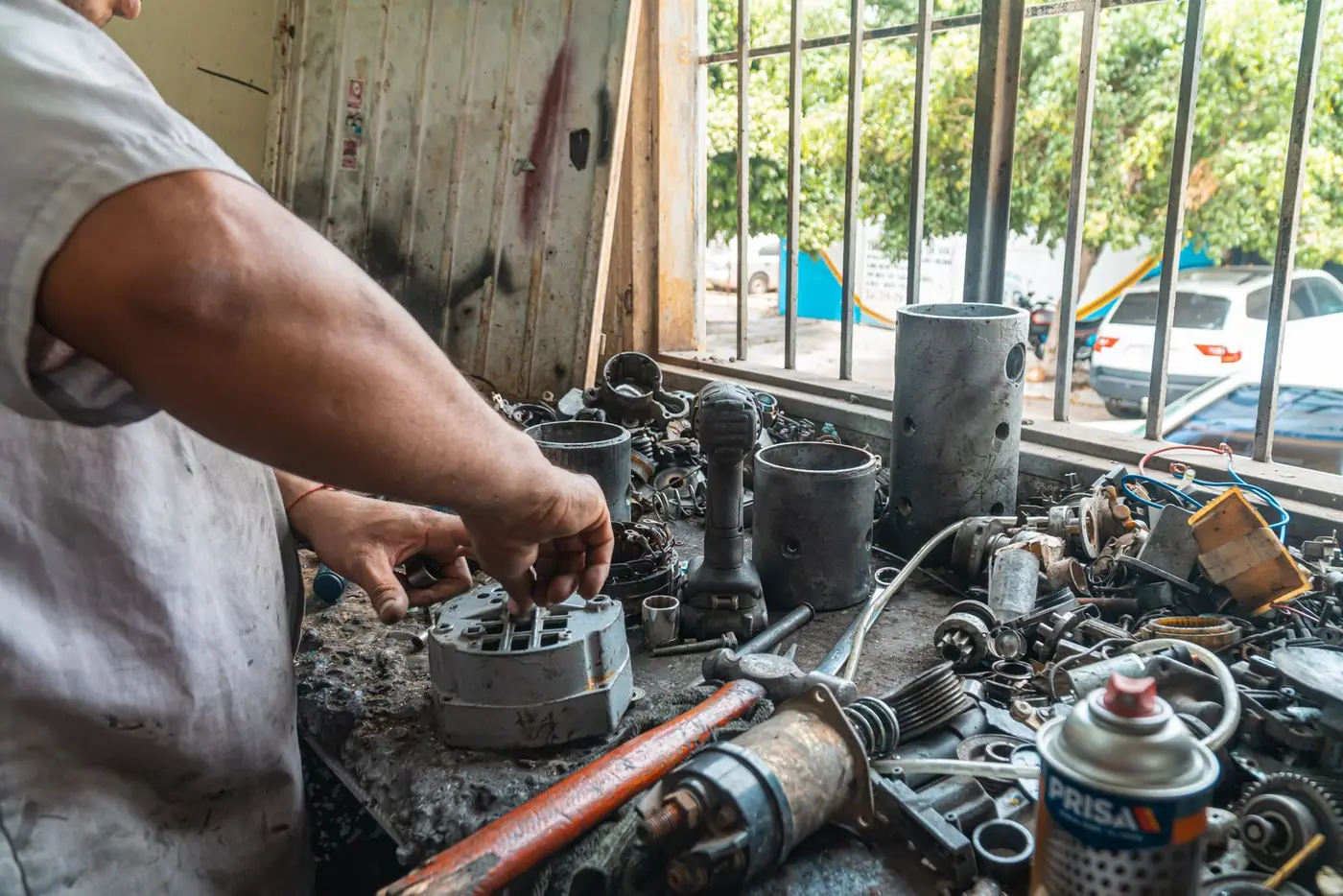
  <figcaption>Se me chingó el motor is a complaint about a machine, and nobody in this room would blink. Photo by <a href="https://www.pexels.com/photo/a-man-working-at-the-table-4116222/" target="_blank" rel="noopener noreferrer">Lumierestudiomx on Pexels</a>.</figcaption>
</figure>

Then there is the part almost nobody mentions. <mark lang="es-MX">Chingón</mark> has its own entry in the same dictionary, and that entry is marked **popular**, with no coarse label at all.[^dem-chingon] The example printed there is a physicist: somebody who is among the best in international physics. The insult marking did not survive the derivation.

It is not pure praise either. The same entry runs a second group where <mark lang="es-MX">qué chingón eres</mark> means you will not stop pestering me, and where a <mark lang="es-MX">chingón del once</mark> is a con man.[^dem-chingon] Tone and object again.

Build a different word off the same root and the register resets under you. Nobody warns learners about that part.

## The ladder

Here is the same root at seven heights. The rungs are not a matter of how loud you say them.

<ol class="ladder">
  <li>
    <div class="rung-card">
      <span class="rung-label">compliment</span>
      <span class="rung-es" lang="es-MX">Eres un chingón.</span>
      <span class="rung-en" lang="en">You are the best at this.</span>
      <span class="rung-note">Marked popular, not coarse. Said to colleagues, said about cooks, said in interviews.</span>
    </div>
  </li>
  <li>
    <div class="rung-card">
      <span class="rung-label">quantity</span>
      <span class="rung-es" lang="es-MX">Un chingo de gente.</span>
      <span class="rung-en" lang="en">A ton of people.</span>
      <span class="rung-note">The most ordinary rung. Functionally just a big number with an edge on it.</span>
    </div>
  </li>
  <li>
    <div class="rung-card">
      <span class="rung-label">workload</span>
      <span class="rung-es" lang="es-MX">Ando en chinga.</span>
      <span class="rung-en" lang="en">I am flat out.</span>
      <span class="rung-note">Nobody is being insulted. This one gets said in offices with the door open.</span>
    </div>
  </li>
  <li>
    <div class="rung-card">
      <span class="rung-label">breakage</span>
      <span class="rung-es" lang="es-MX">Se chingó el negocio.</span>
      <span class="rung-en" lang="en">The deal fell apart.</span>
      <span class="rung-note">The object is a thing, so the violence lands on the thing.</span>
    </div>
  </li>
  <li>
    <div class="rung-card">
      <span class="rung-label">irritation</span>
      <span class="rung-es" lang="es-MX">¡No me chingues!</span>
      <span class="rung-en" lang="en">Quit it, or: you cannot be serious.</span>
      <span class="rung-note">First rung with a person in it. Between friends it is often disbelief rather than anger.</span>
    </div>
  </li>
  <li>
    <div class="rung-card">
      <span class="rung-label">rupture</span>
      <span class="rung-es" lang="es-MX">Vete a la chingada.</span>
      <span class="rung-en" lang="en">Get out of my sight.</span>
      <span class="rung-note">Dismissal. Paz calls the destination a grey country that is nowhere at all.</span>
    </div>
  </li>
  <li>
    <div class="rung-card">
      <span class="rung-label">the end</span>
      <span class="rung-es" lang="es-MX">Chinga tu madre.</span>
      <span class="rung-en" lang="en">No translation does this justice.</span>
      <span class="rung-note">Not a bigger insult. A different act, and the next section is about why.</span>
    </div>
  </li>
</ol>

Notice what changes as you climb. Rungs one to four aim at a quality, a quantity, your own week or an object, and nobody is on the receiving end. Rung five puts a second person in the sentence. Rungs six and seven aim at the person and then at his mother, and that is where Mexican Spanish stops treating this as language and starts treating it as an event.

<div id="midpost-newsletter-slot"></div>

## Why the top rung is a different category

English speakers reach for an equivalence here and there is not a clean one. <mark lang="es-MX">Chinga tu madre</mark> is not the Mexican way of saying a familiar English two-word phrase, and treating it that way is how foreigners get themselves into rooms they cannot get out of.

Octavio Paz spent a chunk of <mark lang="es-MX">El laberinto de la soledad</mark> on precisely this, and the comparison he draws is the useful part. Spanish <mark lang="es-MX">hijo de puta</mark> and Mexican <mark lang="es-MX">hijo de la chingada</mark> look like the same insult and are not: one accuses a mother of choosing, the other says she was taken by force.[^paz] One is about her conduct. The other is about something done to her.

That is why the mother expressions in the dictionary read the way they do. <mark lang="es-MX">Chingar a su madre</mark>, as El Colegio de México lists it, has two lives: the violation itself, and a flatly ordinary sense where a bottle or a car has simply had it.[^dem-madre] And <mark lang="es-MX">llevarse la chingada</mark> is glossed as taking damage you will not recover from.[^dem-chingada] Paz describes the place itself: a far, vague nowhere, the country of broken and used-up things, grey and empty.[^paz]

<figure>
  <img src="/images/blog/optimized/pexels-magaly-taboada-cdmx-independence-crowd-1400-a2d9ecea.webp" alt="A crowd waving Mexican flags in the street during Independence Day celebrations in Mexico City." loading="lazy" />
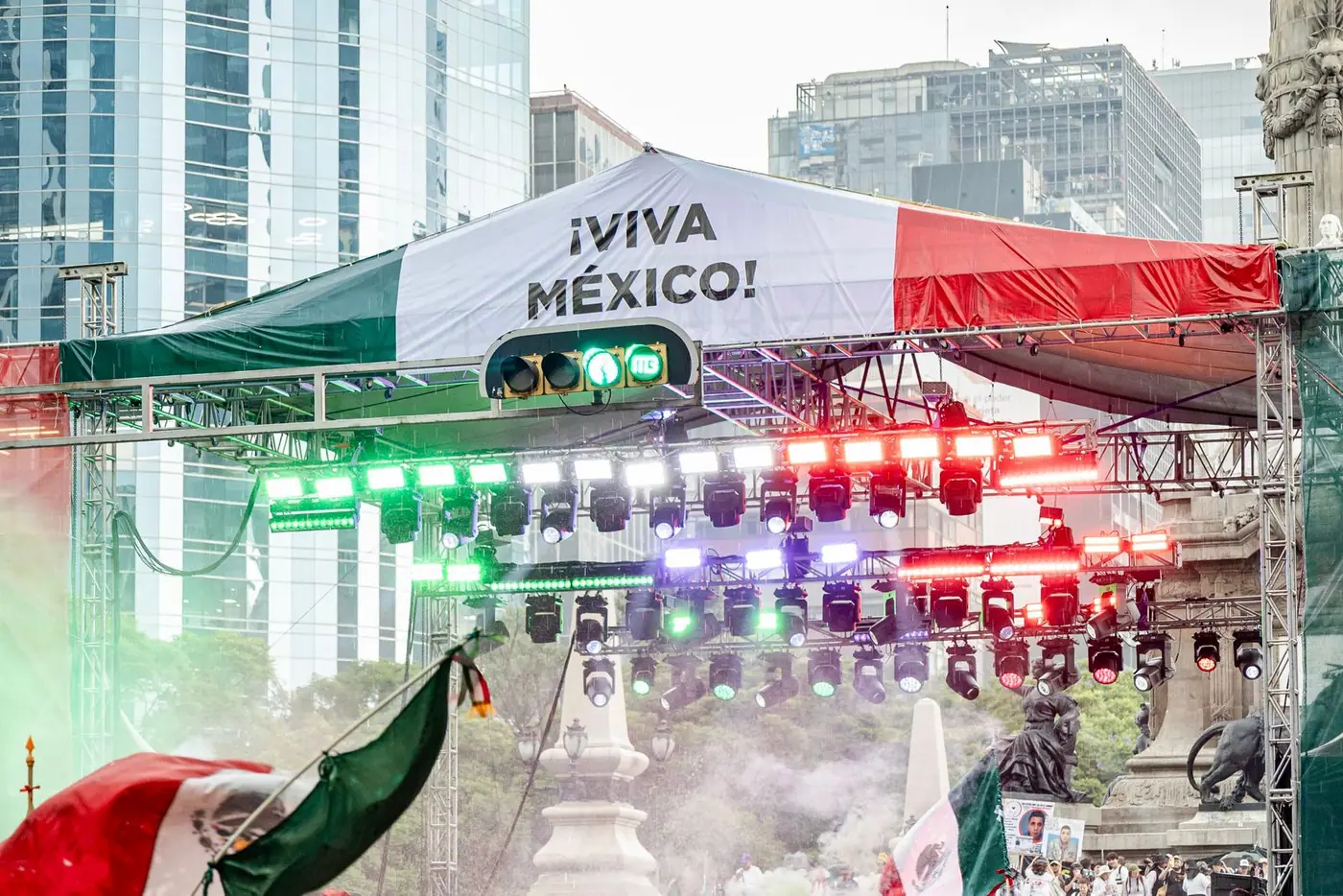
  <figcaption>Mexico City on the night of the fifteenth, which is the one night a year the phrase gets shouted in public on purpose. Photo by <a href="https://www.pexels.com/photo/crowd-celebrates-mexican-independence-day-in-cdmx-38225899/" target="_blank" rel="noopener noreferrer">Magaly Taboada on Pexels</a>.</figcaption>
</figure>

Paz makes one more observation that is easy to walk past. The phrase is normally private, and the exception is the night of 15 September, when a crowd yells it at an imaginary enemy and it works as a declaration of belonging rather than an attack.[^paz] A whole plaza shouting the heaviest sentence in the language at nobody, once a year, as a form of patriotism.

## The etymology everybody repeats, and the one that holds up

Search for where <mark lang="es-MX">chingar</mark> comes from and you will be told it is Nahuatl. That version comes from Paz, who was passing along Darío Rubio and who hedged it himself: a probable Aztec origin, from <mark lang="es-MX">xinachtli</mark>, garden seed, or <mark lang="es-MX">xinaxtli</mark>, fermented aguamiel.[^paz]

Corominas went the other way. He reads it as jargon, with an original sense of fighting or scolding, sliding to bothering and then to ruining, and he traces it most likely to caló <mark lang="es-MX">chingarár</mark>, to fight, of Indic origin. He also says outright that the earlier Quechua etymology has to be abandoned.[^corominas]

<div class="note-card is-tip">
  <span class="note-label">Worth knowing</span>
  <p>Corominas adds a caveat that gets dropped when this gets repeated: not every Spanish word starting <b lang="es-MX">ching-</b> comes from this verb, because in the Americas the family mixed with unrelated native roots. So the Nahuatl story is not pure invention. It is just attached to the wrong word.</p>
</div>

## What to actually do with all this

The honest answer is that most of this page is for listening, not for speaking. The two bottom rungs are yours. The rest you want to recognize instantly, because the difference between somebody venting about a broken washing machine and somebody starting something is a distinction you need in real time.
<ul class="examples">
  <li class="example">
    <div class="es" lang="es-MX">Está bien chingón tu trabajo, en serio.</div>
    <div class="en" lang="en">Your work is genuinely excellent.</div>
  </li>
  <li class="example">
    <div class="es" lang="es-MX">Perdón, ando en chinga, te marco al rato.</div>
    <div class="en" lang="en">Sorry, I am swamped, I will call you later.</div>
  </li>
  <li class="example">
    <div class="es" lang="es-MX">Se chingó la licuadora otra vez.</div>
    <div class="en" lang="en">The blender broke again.</div>
  </li>
</ul>

<figure>
  <img src="/images/blog/optimized/pexels-ericka-sanchez-cdmx-market-interior-1400-d4f5abb6.webp" alt="Vendors and shoppers among stacked produce inside a covered market in Mexico City." loading="lazy" />
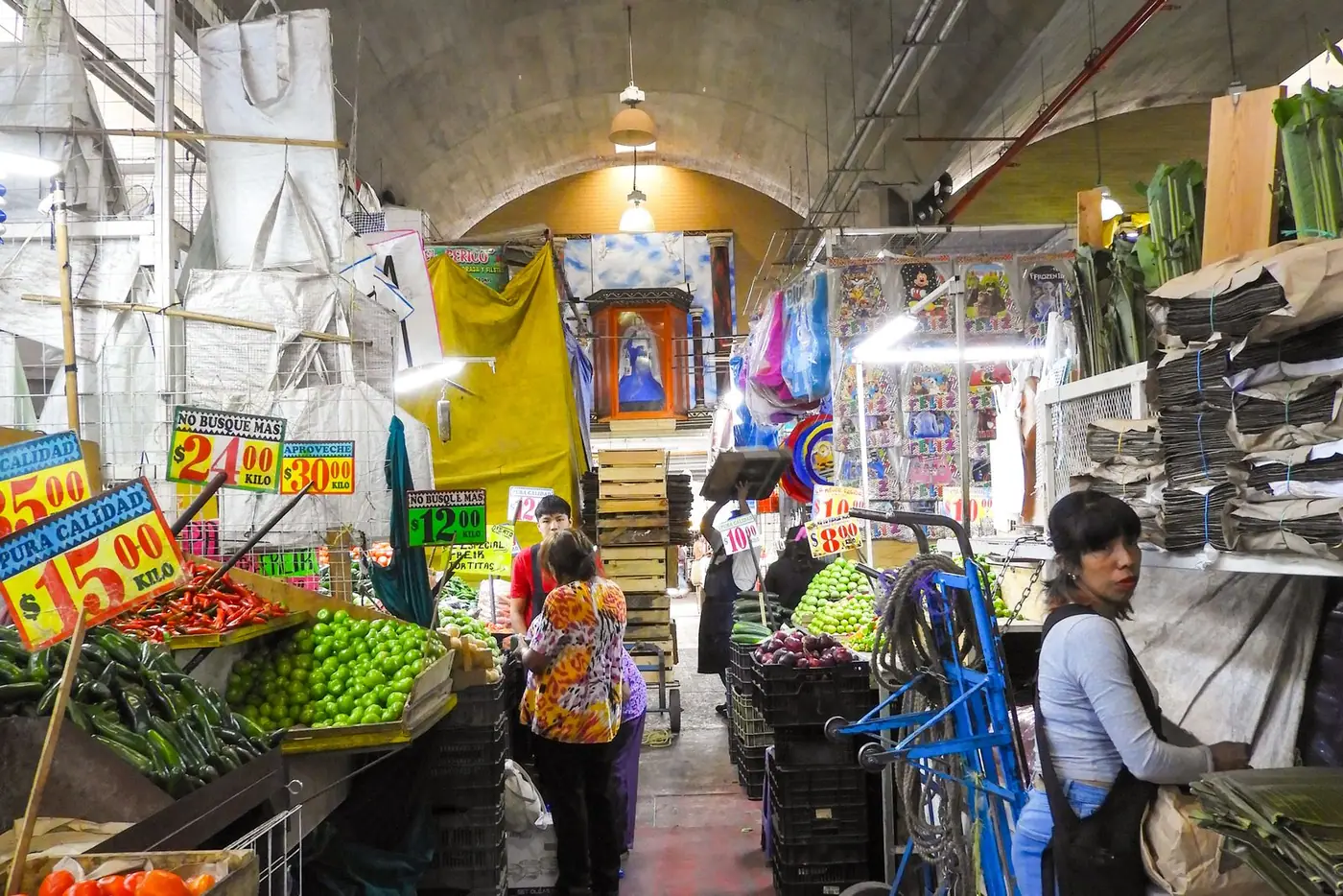
  <figcaption>A covered market in Mexico City, where you will hear four of the seven rungs before you finish your shopping. Photo by <a href="https://www.pexels.com/photo/vibrant-indoor-market-in-mexico-city-37881191/" target="_blank" rel="noopener noreferrer">Ericka Sanchez on Pexels</a>.</figcaption>
</figure>

<div class="do-dont">
  <div class="dd-col dd-do"><p class="dd-title">Fine once you have friends</p><ul>
    <li><b lang="es-MX">Chingón</b> about work, food, music</li>
    <li><b lang="es-MX">Un chingo de</b> for quantities</li>
    <li><b lang="es-MX">Ando en chinga</b> about your week</li>
    <li><b lang="es-MX">Se chingó</b> about an object</li>
  </ul></div>
  <div class="dd-col dd-dont"><p class="dd-title">Recognize, do not deploy</p><ul>
    <li>Anything with a person as the object</li>
    <li><b lang="es-MX">Vete a la chingada</b></li>
    <li>Anything containing <b lang="es-MX">madre</b></li>
    <li>All of it at work, with strangers, or in front of somebody's parents</li>
  </ul></div>
</div>

One version of this word turns up in job interviews and another one ends friendships, and the volume will not tell you which arrived. Listen to what sits after the verb. Get that habit and the rest of the family sorts itself out behind you.

The rest of the coarse vocabulary follows a similar logic, and [the Mexican swear words with clean substitutes](/blog/mexican-swear-words) covers where the safe versions are.

[^dem-chingar]: [Diccionario del español de México, chingar](https://dem.colmex.mx/ver/chingar) - El Colegio de México.
[^dem-chingon]: [Diccionario del español de México, chingón](https://dem.colmex.mx/ver/chingon) - El Colegio de México.
[^dem-chingada]: [Diccionario del español de México, chingada](https://dem.colmex.mx/ver/chingada) - El Colegio de México.
[^dem-madre]: [Diccionario del español de México, madre](https://dem.colmex.mx/ver/madre) - El Colegio de México.
[^corominas]: [Diccionario crítico etimológico de la lengua castellana, chingar](https://bibliamedieval.es/bibliateca.es/corominas/DATA/HTML/chingar.html) - Joan Corominas.
[^paz]: [Los hijos de la Malinche, fragmento](https://www.uv.mx/celulaode/leta-2024/descargas/modulo-3/M3-Act-11-Paz-2020.pdf) - Octavio Paz, reader hosted by the Universidad Veracruzana.

FAQ:
Q: What does chingar mean in Mexican Spanish?
A: Four things, per El Colegio de México: to seriously bother or harm someone, to rape, to sacrifice yourself working, and reflexively for a thing to break or a plan to fail.

Q: Is chingón a bad word?
A: Less than you would expect. The Mexican dictionary marks chingar as coarse and offensive but marks chingón only as popular. It means somebody is excellent at what they do.

Q: How rude is chinga tu madre?
A: It is the top of the scale. It is not a stronger version of a normal insult, it is a different move, and Mexicans treat it as the point where a conversation stops being a conversation.

Q: What is the difference between chingar and joder?
A: Joder covers the same annoyance territory and lands softer in Mexico. The dictionary marks both as coarse, but only chingar also gets tagged offensive, and only chingar carries the rape sense.

Q: Does chingar come from Nahuatl?
A: Probably not. Octavio Paz repeated an Aztec origin, but Corominas traces it to jargon and most likely to caló chingarár, meaning to fight, of Indic origin.

Q: Can a foreigner say chingón?
A: Yes, among friends, and it lands well. Está chingón is a normal thing to say about a taco, a song or somebody else's work.

Q: What does no me chingues mean?
A: Two things depending on tone: stop bothering me, or you have got to be kidding. Same words, and the face doing the work.

Q: What does me lleva la chingada mean?
A: It is a groan about your own bad luck, roughly this is a disaster. The dictionary lists it as receiving damage you will not recover from.

Sources:
- Diccionario del español de México, chingar - El Colegio de México: https://dem.colmex.mx/ver/chingar
- Diccionario del español de México, chingón - El Colegio de México: https://dem.colmex.mx/ver/chingon
- Diccionario del español de México, chingada - El Colegio de México: https://dem.colmex.mx/ver/chingada
- Diccionario del español de México, madre - El Colegio de México: https://dem.colmex.mx/ver/madre
- Joan Corominas, Diccionario crítico etimológico, entrada chingar: https://bibliamedieval.es/bibliateca.es/corominas/DATA/HTML/chingar.html
- Octavio Paz, Los hijos de la Malinche (fragmento) - Universidad Veracruzana: https://www.uv.mx/celulaode/leta-2024/descargas/modulo-3/M3-Act-11-Paz-2020.pdf

Related words: chingar, chingon, pinche, estar-en-chinga