---
title: "How Mexicans Say \"Come Over\" Without Actually Saying \"Come Over\""
description: "Decode cáele, vente, caes, aquí ando, mi depa, and soft invitations in Mexican Spanish while keeping boundaries clear."
type: "article"
category: "dating"
url: "https://consalsa.app/blog/come-over-mexican-spanish"
canonical: "https://consalsa.app/blog/come-over-mexican-spanish"
published: "2026-06-20"
updated: "2026-06-20"
author: "Andrey the Nomad"
site: "ConSalsa.App"
license: "https://consalsa.app/about"
---

# How Mexicans Say "Come Over" Without Actually Saying "Come Over"
URL: https://consalsa.app/blog/come-over-mexican-spanish
Date: 2026-06-20
Updated: 2026-06-20
Category: dating
Keywords: come over in mexican spanish, caile meaning, vente meaning mexico, mexican spanish invitations, dating spanish mexico
Summary: Decode cáele, vente, caes, aquí ando, mi depa, and soft invitations in Mexican Spanish while keeping boundaries clear.

Quick answer:
- Cáele means drop by. It is an invitation to arrive, not a coded proposition.
- The spectrum runs from cáele al depa to vente para acá to aquí ando - increasingly casual, and increasingly ambiguous.
- The hour does most of the interpreting. The same words at four and at midnight are not the same invitation.
- Consent is never hidden inside slang. If you need to know the plan, ask - ¿cáele tipo un rato o cuál es el plan?

What you'll learn:
- Why cáele is ordinary language and not a coded proposition.
- How the hour does most of the interpreting for you.
- The spectrum from cáele al depa to aquí ando, read as specificity.
- How to ask what the plan is without killing the chemistry.

Don't sound gringo:
Cáele is casual, not consent to every possible subtext. If the place changes the vibe, ask what the plan is.

Body:

<mark lang="es-MX">Cáele</mark> is an invitation to arrive, not permission for assumptions. Mexican Spanish can make invitations sound softer: <mark lang="es-MX">vente</mark>, <mark lang="es-MX">cáele</mark>, <mark lang="es-MX">aquí ando</mark>, <mark lang="es-MX">vemos una peli</mark>. The softness is useful, but you still get to clarify what the plan is.

<mark lang="es-MX">Cáele</mark> confuses learners because it is genuinely two things at once. It is the ordinary word for drop by - people use it about lunch, about football, about helping shift a sofa. It is also what somebody texts at midnight. The word never changes. The hour does.[^dem-caer][^rae-quedar]

## The come-over spectrum

Location, time, and relationship change everything.

| Phrase | What it does | Best read |
|---|---|---|
| Cáele | Pull up / come by | Casual, context-heavy |
| Vente | Come here | More direct |
| Aquí ando | I am around | Invitation-adjacent |
| Vemos una peli | Movie plan | May be intimate |
| En mi depa | At my apartment | Clarify comfort |

Read the spectrum as decreasing specificity rather than rising heat. <mark lang="es-MX">Cáele al depa</mark> names a place. <mark lang="es-MX">Vente para acá</mark> names a direction. <mark lang="es-MX">Aquí ando</mark> names nothing at all and leaves the whole thing to you, which is what makes it the most ambiguous of the three.[^rae-plan]

Every reply in the second column does one job: it converts an invitation into a plan. <mark lang="es-MX">¿Cáele tipo un rato o cuál es el plan?</mark> is not suspicious and it is not uncool. It is the normal way to find out whether you are going to somebody’s flat for a film or for something else.

<ul class="meter-list">
  <li class="meter-head"><span>the invitation</span><span>how much it is actually asking</span><span></span></li>
  <li data-tone="soft" style="--fill:15%">
    <span class="meter-es" lang="es-MX">Aquí ando<span class="meter-en" lang="en">I'm around</span></span>
    <span class="meter-track"><span class="meter-fill"></span></span>
    <span class="meter-val">no ask</span>
  </li>
  <li data-tone="soft" style="--fill:38%">
    <span class="meter-es" lang="es-MX">Cáele si andas por acá<span class="meter-en" lang="en">Drop by if you're nearby</span></span>
    <span class="meter-track"><span class="meter-fill"></span></span>
    <span class="meter-val">open door</span>
  </li>
  <li data-tone="mid" style="--fill:60%">
    <span class="meter-es" lang="es-MX">Vente, hay chelas<span class="meter-en" lang="en">Come over, there's beer</span></span>
    <span class="meter-track"><span class="meter-fill"></span></span>
    <span class="meter-val">a plan</span>
  </li>
  <li data-tone="hot" style="--fill:88%">
    <span class="meter-es" lang="es-MX">Cáele al depa, ya es tarde<span class="meter-en" lang="en">Come to mine, it's late</span></span>
    <span class="meter-track"><span class="meter-fill"></span></span>
    <span class="meter-val">read the hour</span>
  </li>
</ul>

## Soft invitation, clear boundary

If you want to go, ask for address and timing. If you are unsure, suggest a public first stop. <mark lang="es-MX">me late verte, pero prefiero afuera primero</mark> is not rude; it is clear.

You can accept the warmth and decline the venue in a single message. <mark lang="es-MX">Me late verte, pero prefiero afuera primero</mark> keeps every bit of the interest and moves the location, and nobody in Mexico City will think it strange.[^grindr-guidelines]

<ul class="examples">
  <li class="example">
    <div class="es" lang="es-MX">¿Cáele tipo un rato o cuál es el plan?</div>
    <div class="en" lang="en">Come by for a bit, or what is the plan?</div>
  </li>
  <li class="example">
    <div class="es" lang="es-MX">Me late verte, pero prefiero afuera primero.</div>
    <div class="en" lang="en">I am into seeing you, but I prefer outside first.</div>
  </li>
  <li class="example">
    <div class="es" lang="es-MX">¿Me mandas la dirección y te aviso cuando llegue?</div>
    <div class="en" lang="en">Send me the address and I will tell you when I arrive?</div>
  </li>
</ul>

<figure>
  <img src="/images/blog/two-men-shadow.jpg" alt="Late-night context can change a simple verb." loading="lazy" />
  <figcaption>Late-night context can change a simple verb.</figcaption>
</figure>

<div id="midpost-newsletter-slot"></div>

## Consent is not hidden in slang

Do not let slang make the night blurry. <mark lang="es-MX">cáele</mark> can be friendly, flirty, or intimate, but consent still happens in plain behavior and plain words.

Slang never carries consent. Casual phrasing describes the tone of an invitation, not its contents, and a relaxed word does not pre-agree to anything that happens after you arrive. Anyone worth visiting already understands that.[^cdmxsecreta-rainy-date]

## Clarifying without killing chemistry

| Situation | Use this | Why it works |
|---|---|---|
| ¿Cáele tipo un rato o cuál es el plan? | Playful clarity | Good if chemistry exists |
| Prefiero vernos afuera primero | Boundary | Clear and respectful |
| ¿Quién va a estar? | Safety/context | Useful for parties |
| Te aviso cuando llegue | Logistics | Arrival text |

Use your own wording; the part that matters is asking before you are already in a taxi.

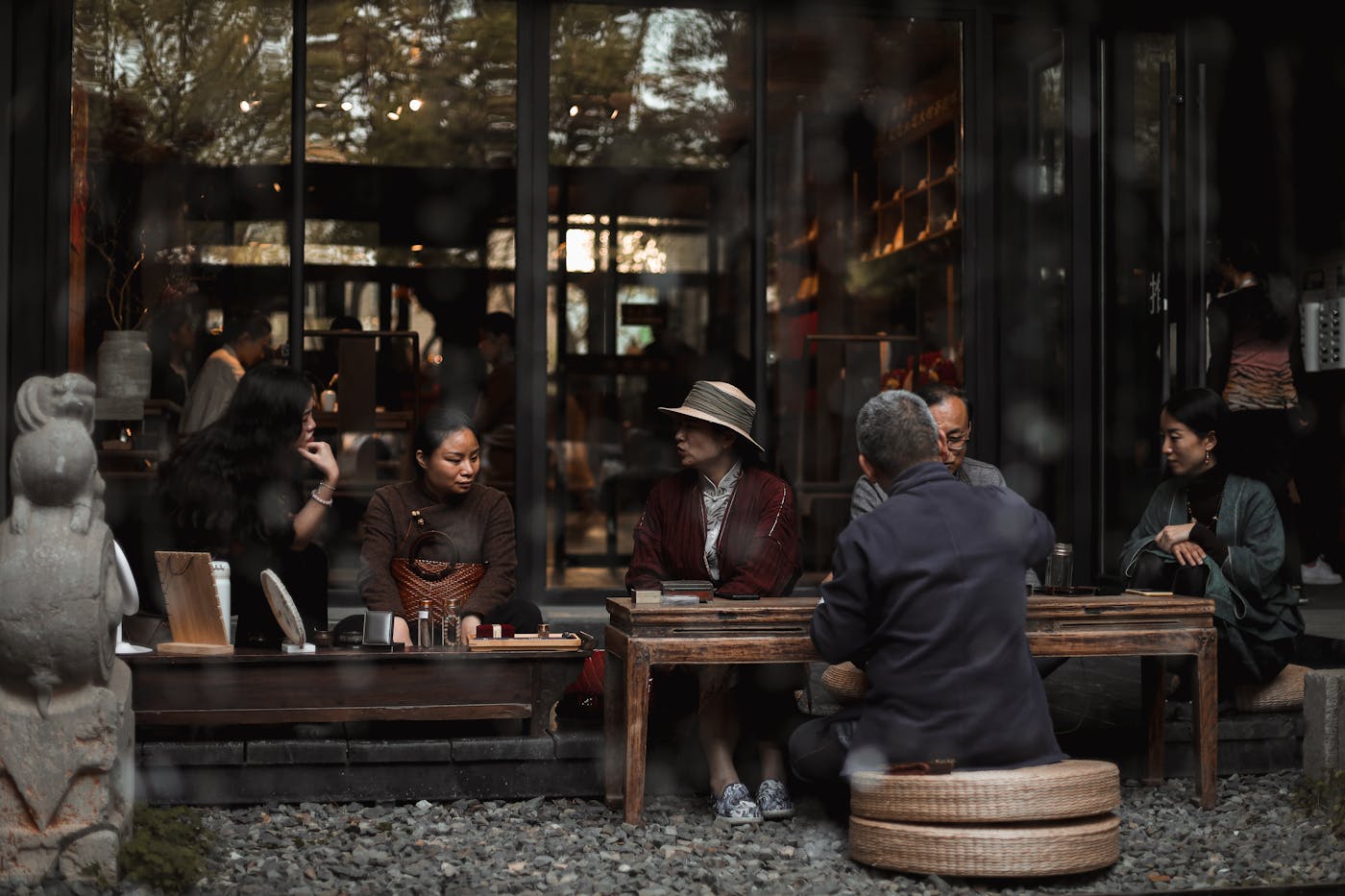
<figure>
  <img src="/images/blog/outdoor-cafe-friends-talk.jpg" alt="A public counteroffer is normal if you want clarity." loading="lazy" />
  <figcaption>A public counteroffer is normal if you want clarity.</figcaption>
</figure>

## Invitations you can send as they are

Keep it short and let the answer carry the detail.

<ul class="examples">
  <li class="example">
    <div class="es" lang="es-MX">¿Cáele tipo un rato o cuál es el plan?</div>
    <div class="en" lang="en">Come by for a bit, or what is the plan?</div>
  </li>
  <li class="example">
    <div class="es" lang="es-MX">Me late verte, pero prefiero afuera primero.</div>
    <div class="en" lang="en">I am into seeing you, but I prefer outside first.</div>
  </li>
  <li class="example">
    <div class="es" lang="es-MX">¿Me mandas la dirección y te aviso cuando llegue?</div>
    <div class="en" lang="en">Send me the address and I will tell you when I arrive?</div>
  </li>
  <li class="example">
    <div class="es" lang="es-MX">Hoy no me late depa; mejor otro plan.</div>
    <div class="en" lang="en">I am not into an apartment plan today; better another plan.</div>
  </li>
</ul>

## Ambiguity is fine; assumptions are not

The sexiest Spanish is often the clearest Spanish. It lets both people choose the same night.

Ambiguity in the invitation is normal and often deliberate - it saves both people from having to be explicit too early. Ambiguity inside your own head is the problem. Ask the small question, take the small answer, then go or do not go.[^spanishandgo-politeness]

[^dem-caer]: [Diccionario del español de México, caer](https://dem.colmex.mx/ver/caer) - The Diccionario del español de México includes popular uses of caer for arriving or showing up, which explains cáele and caigo.
[^rae-quedar]: [Diccionario de la lengua española, quedar](https://dle.rae.es/quedar) - The RAE entry for quedar includes agreeing on something and arranging a meeting, the backbone of many dating texts.
[^rae-plan]: [Diccionario de la lengua española, plan](https://dle.rae.es/plan) - The RAE entry for plan includes both intention/project and a colloquial romantic or casual relation sense, which is why plan can feel innocent and loaded at once.
[^grindr-guidelines]: [Grindr Community Guidelines](https://www.grindr.com/community-guidelines) - Grindr’s community guidelines foreground safety, authenticity, privacy, and adults-only use, essential context for app-language posts.
[^cdmxsecreta-rainy-date]: [CDMX Secreta, citas en un día lluvioso](https://cdmxsecreta.com/donde-tener-cita-dia-lluvioso-cdmx/) - CDMX Secreta’s rainy-date guide is useful context for cancellations, rescheduling, and indoor fallback plans in Mexico City.
[^spanishandgo-politeness]: [Spanish and Go, alternatives to me gustaría](https://spanishandgo.com/learn/alternatives-to-me-gustaria/) - Spanish and Go’s Mexico-focused politeness examples are useful for showing that natural Spanish often chooses a social formula over literal translation.

FAQ:
Q: What does cáele mean?
A: Drop by, come over. It is the imperative of caer, so it literally says fall by - and it is one of the most common casual invitations in Mexican Spanish.

Q: Is cáele a sexual invitation?
A: Not inherently. It is used between friends constantly. The hour, the context and what came before it in the conversation carry that meaning, not the word.

Q: What does aquí ando mean?
A: I am around, I am here. It is the softest possible invitation - it states availability without asking for anything, which leaves the next move entirely to you.

Q: How do I ask what the plan actually is?
A: ¿Cáele tipo un rato o cuál es el plan? It reads as curiosity rather than suspicion, and it gets a straight answer most of the time.

Q: How do I accept but set a boundary?
A: Va, cáigo un rato pero no me puedo quedar tarde. Accepting and naming the limit in the same sentence keeps the warmth and removes the ambiguity.

Q: What is the difference between vente and cáele?
A: Vente is come, and it is slightly more direct. Cáele is drop by, and it is more casual - it implies a short, unplanned visit rather than an arranged one.

Q: How do I decline without making it weird?
A: Hoy no, pero gracias. Al rato te escribo. It is short, warm and does not treat the invitation as an accusation.

Q: Does cáele work in the plural?
A: Yes - cáiganle is used for a group, and you will hear it for parties, carne asadas and anything where more people are welcome.

Sources:
- Diccionario del español de México, caer: https://dem.colmex.mx/ver/caer
- Diccionario de la lengua española, quedar: https://dle.rae.es/quedar
- Diccionario de la lengua española, plan: https://dle.rae.es/plan
- Grindr Community Guidelines: https://www.grindr.com/community-guidelines
- CDMX Secreta, citas en un día lluvioso: https://cdmxsecreta.com/donde-tener-cita-dia-lluvioso-cdmx/
- Spanish and Go, alternatives to me gustaría: https://spanishandgo.com/learn/alternatives-to-me-gustaria/

Related words: que-onda, sale, ahorita, guey