---
title: "How to Order Comida Corrida: 4 Courses, One Chalkboard, No Menu"
description: "Comida corrida is Mexico's fixed set lunch: soup, rice, a guisado, agua fresca. Learn the courses, the chalkboard words, and what to say."
type: "article"
category: "food"
url: "https://consalsa.app/blog/comida-corrida-spanish"
canonical: "https://consalsa.app/blog/comida-corrida-spanish"
published: "2026-08-19"
updated: "2026-08-19"
author: "Andrey the Nomad"
site: "ConSalsa.App"
license: "https://consalsa.app/about"
---
# How to Order Comida Corrida: 4 Courses, One Chalkboard, No Menu
URL: https://consalsa.app/blog/comida-corrida-spanish
Date: 2026-08-19
Updated: 2026-08-19
Category: food
Keywords: comida corrida, comida corrida meaning, how to order comida corrida, fonda mexico spanish, menu del dia mexico, sopa aguada sopa seca, cocina economica mexico
Summary: Comida corrida is Mexico's fixed set lunch: soup, rice, a guisado, agua fresca. Learn the courses, the chalkboard words, and what to say.
Quick answer:
- Comida corrida is a fixed-price set lunch served in fondas: soup, rice or pasta, a main guisado, agua fresca, and often dessert.
- You do not order dishes one by one. You pick one option per course, usually from a chalkboard or a fast spoken list.
- The two phrases that carry the whole meal are ¿qué guisados hay? and el de..., por favor.
- In CDMX it usually runs somewhere between 80 and 150 pesos, drink included.
What you'll learn:
- The fixed course structure and why a plate of rice counts as soup.
- How to decode a handwritten menu or chalkboard in about ten seconds.
- What to say when the waiter recites six guisados in one breath.
- How a fonda differs from a restaurant, and what that changes about ordering.
Don't sound gringo:
Don't ask for a menu and then order à la carte off it. In a fonda, the correct move is ¿qué guisados hay? and then el de..., por favor. Asking for the carta can turn a 90-peso lunch into a 300-peso one.
Body:
The first time a bowl of soup landed in front of me that I had not ordered, I assumed somebody had made a mistake. I said perdón, yo no pedí esto to a woman who had been feeding that block for twenty years. She smiled the way you smile at a lost tourist and said sí, sí pediste.
I had. That soup was course one of a comida corrida: a fixed-price set lunch that runs soup, rice or pasta, a main dish, a drink, and often dessert, for less than two coffees in Roma Norte.
It is the best-value meal in Mexico, and it hides in plain sight behind a plastic chair and a hand-painted sign.
## What a comida corrida actually is
It is not a discount. It is a structure. You are not choosing dishes, you are choosing one option per course, and the courses arrive whether you brace for them or not.
| Course | What arrives | Typical options |
|---|---|---|
| Sopa aguada | The liquid soup | Consomé, sopa de fideos, caldo de verduras |
| Sopa seca | The "dry soup" | Arroz, espagueti, fideos secos |
| Guisado / plato fuerte | The main event | Tinga, milanesa, bistec, albóndigas, mole |
| Agua fresca | The included drink | Jamaica, horchata, limón, tamarindo |
| Postre | Sometimes included | Gelatina, arroz con leche, flan |
Corrida here comes from correr, to run.[^rae-correr] The lunch runs straight through. You sit, and it happens to you in order.
The part that confuses everyone at first: **the rice is technically soup**. Mexican cooking tradition splits the soup course into sopa aguada, the watery one, and sopa seca, the dry one, which is why a plate of rice or spaghetti shows up in the soup slot.[^larousse-sopaseca] Sopa is the base word for both.[^rae-sopa]
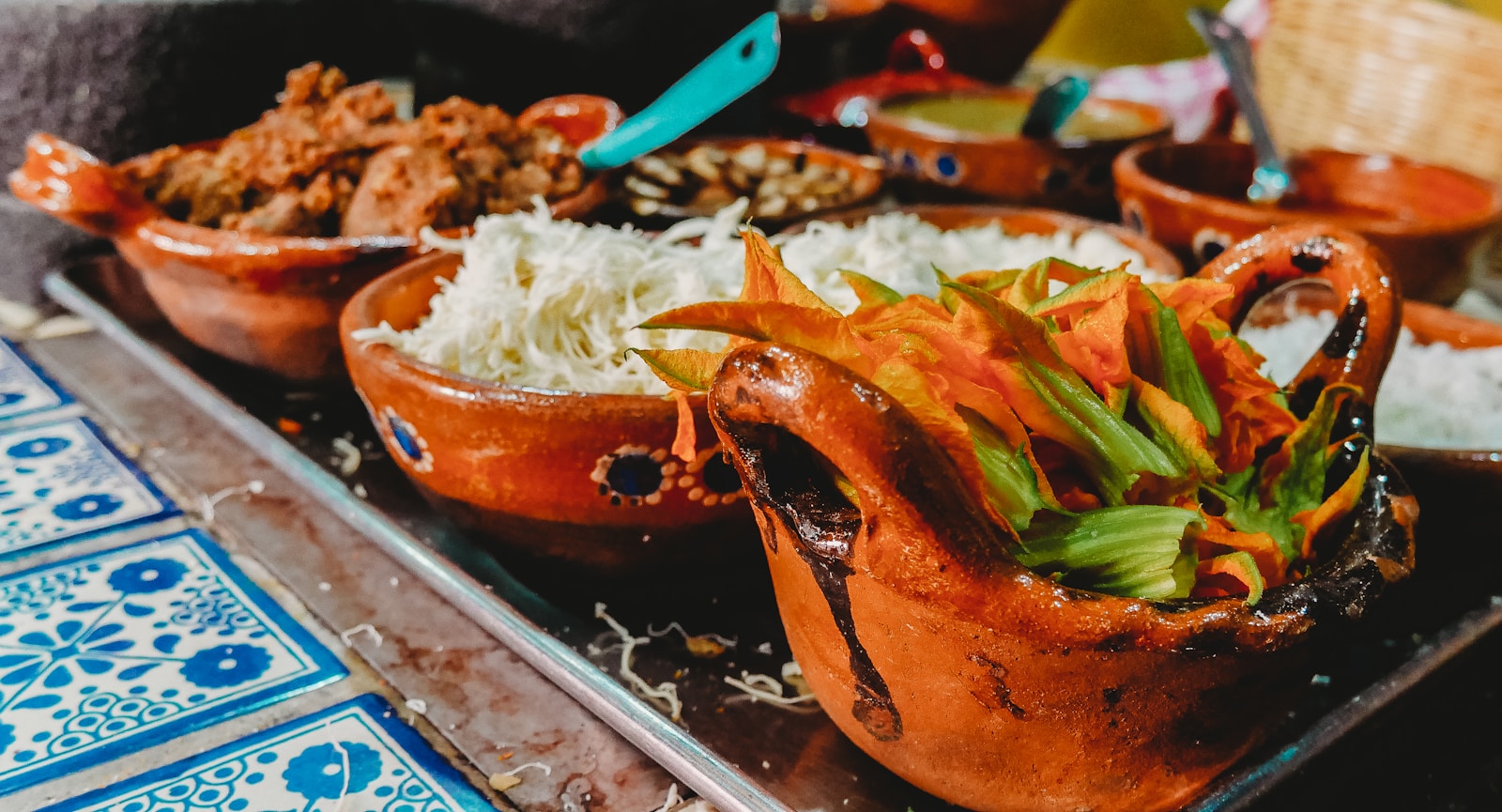
Courses arrive one at a time, in a fixed order, without you ordering each one. Photo by Roberto Carlos Roman Don on Unsplash.
## Fonda, cocina económica, restaurante
The place matters more than the menu, because the place tells you how to order.
| Place | What it is | How you order |
|---|---|---|
| Fonda | Small family kitchen, lunch-focused | Ask what the guisados are |
| Cocina económica | Same idea, often even simpler | Chalkboard or spoken list |
| Comedor | Canteen-style, often inside a market | Point and pick |
| Restaurante | Printed menu, à la carte | Read the carta, order dishes |
A fonda is, in dictionary terms, a modest establishment serving meals.[^rae-fonda] In practice it is somebody's kitchen with tables in front of it, open roughly from 1 to 5 in the afternoon, feeding office workers, taxi drivers, students, and the occasional confused foreigner.
**If a place has a chalkboard and no printed menu, you are in a fonda.** Behave accordingly: do not ask for la carta.
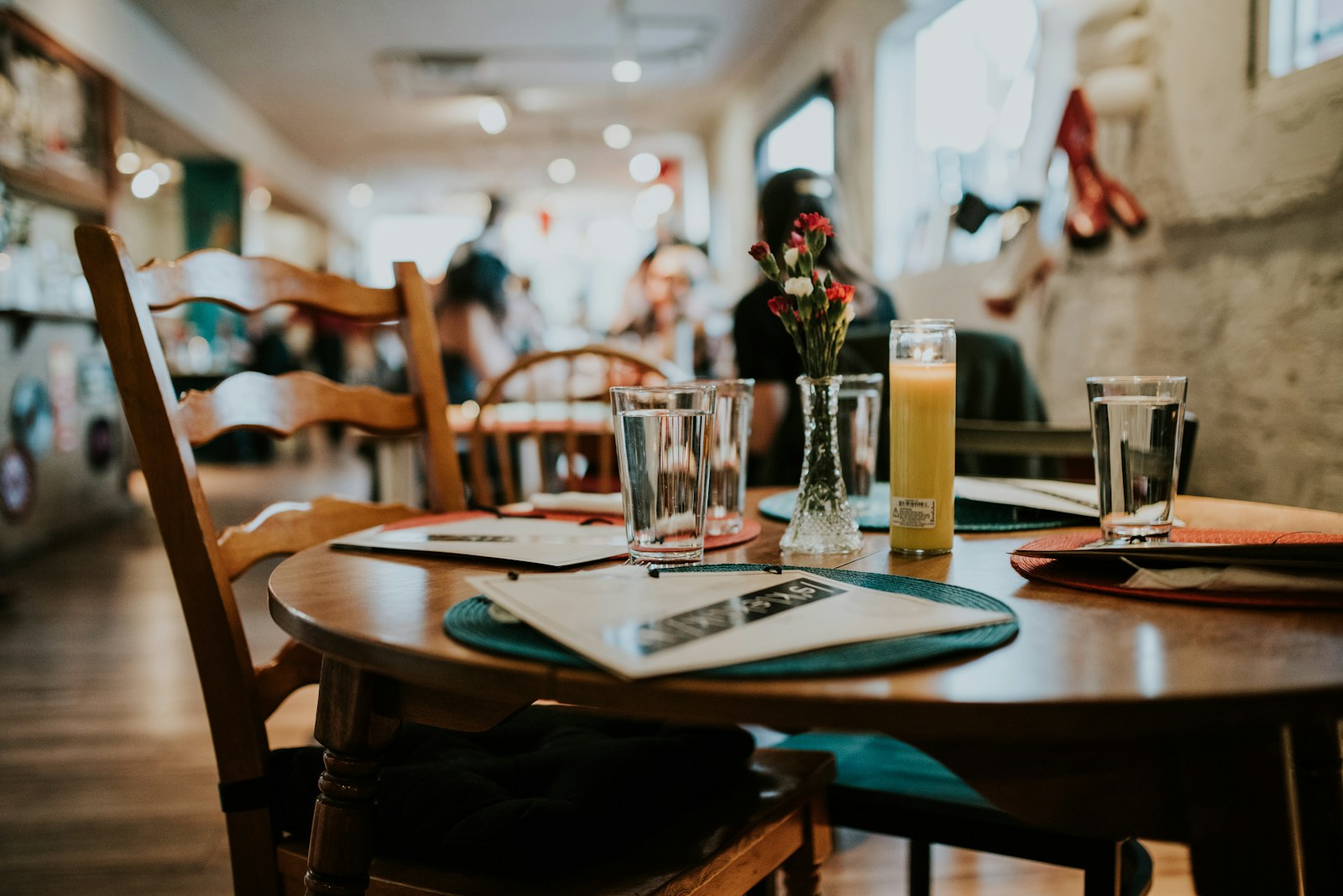
No tablecloth, no printed menu, four plastic chairs. This is the room where the best-value lunch in Mexico happens. Photo by Sandra Seitamaa on Unsplash.
## How to read the chalkboard
The board is usually one column of handwriting, no prices except one number at the top, and a lot of assumed knowledge. Here is the whole code.
| On the board | What it means |
|---|---|
| Comida corrida $110 | The full set lunch, that price |
| Menú del día | Same thing, different name |
| Incluye | Includes |
| Sopa del día | Soup of the day, no choice |
| Arroz o espagueti | Pick one |
| A elegir | To choose from |
| Guisado a elegir | Pick your main |
| Agua de sabor | Flavored water included |
| Postre | Dessert |
| Para llevar | To go |
Two words do most of the work. Incluye tells you what the single price covers, and a elegir tells you where you actually get a decision.
Everything not marked a elegir is simply what you are having today.
## The guisado is the whole decision
Guisado is the word the whole meal turns on. RAE defines it around stewed food,[^rae-guisado] and in Mexican Spanish it means the dish itself, the thing in the pot, not the act of cooking it.[^dem-guisado]
So the question is not "what's on the menu". The question is:
¿Qué guisados hay?
What mains are there?
¿Qué tiene de guisado?
What do you have as a main?
¿Cuál está bueno hoy?
Which one is good today?
That last one is not small talk. In a fonda, whoever cooked it is roughly four meters away, and the answer is usually honest.
Common guisados you will hear on repeat: tinga, milanesa, bistec encebollado, albóndigas, chicharrón en salsa verde, picadillo, mole, chiles rellenos.
You do not need to know all of them. You need to know that they will be said fast, and that you get to pick one.
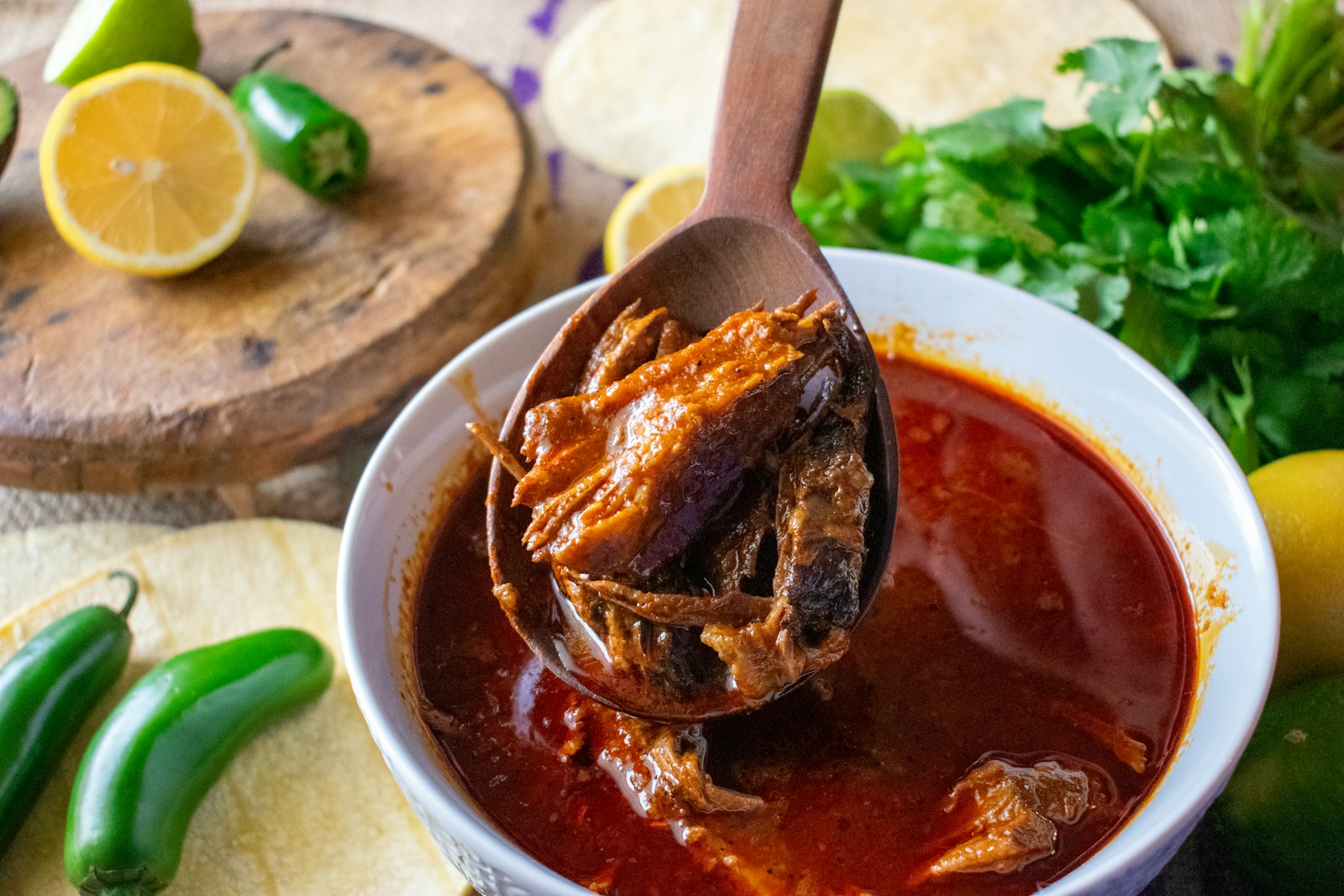
The guisado is the one real choice in the whole meal. Everything else is decided for you. Photo by Kelsey Todd on Unsplash.
## When the waiter recites six options in one breath
This is the moment that breaks people. Nobody hands you anything. Someone walks up and says a list at conversational Mexican speed, and then waits.
You have three legal moves.
¿Me repite, por favor?
Can you repeat that, please?
¿Más despacio, por favor?
A bit slower, please?
¿Cuál me recomienda?
Which one do you recommend?
**Catch one name you recognize and take it.** You are not choosing a career. If you heard milanesa and nothing else, order the milanesa.
Then confirm with the smallest possible sentence:
El de milanesa, por favor.
The milanesa one, please.
That el de... construction is the single most useful shape in the whole meal. It works for every guisado, every soup, every water.
## The phrases that carry the whole meal
Five phrases and you are through lunch without a single moment of confusion.
Buenas, ¿hay comida corrida?
Hi, do you have the set lunch?
¿Qué guisados hay?
What mains are there?
El de tinga, por favor.
The tinga one, please.
¿De qué es el agua?
What flavor is the water?
De jamaica, porfa.
Jamaica, please.
¿De qué es el agua? is worth memorizing on its own. The agua fresca changes daily and is a real part of the cooking, not an afterthought poured from a bottle.[^larousse-aguas]
And if you want to skip a course, say so plainly:
Sin sopa, por favor.
No soup, please.
Nada más el guisado.
Just the main, thanks.
The price usually stays the same. That is fine. Nobody is keeping score.
## What it costs, and what that price means
In Mexico City in 2026, a neighborhood comida corrida generally lands between 80 and 150 pesos, drink included. Under 100 in most of the city, higher in Roma, Condesa, Juárez, and Polanco, where the same structure gets a nicer chair and a 200-peso number.
| What you see | What it usually includes |
|---|---|
| One price on the board | Every course listed under Incluye |
| Refresco or cerveza | Almost always extra |
| Extra tortillas | Usually free, sometimes not |
| Postre | Included when the board says so |
**The single number on the board is the whole meal.** If you order a bottled drink or a beer instead of the agua fresca, that comes off the fixed price and gets added separately.
Ask if you want to be sure:
¿Incluye postre?
Does it include dessert?
¿La cerveza es aparte?
Is the beer separate?
## Fonda manners, and where foreigners go wrong
None of this is formal, but it has a rhythm, and the rhythm is worth respecting.
| Move | Why it lands well |
|---|---|
| Greet before ordering | Buenas or buenas tardes, always |
| Order fast | The kitchen is cooking for the whole street |
| Skip the carta request | There isn't one, and asking reads as tourist |
| Take the recommendation | It is genuinely the best dish that day |
| Don't linger at 3 pm | Peak hour, people are waiting for tables |
The one real mistake is treating a fonda like a restaurant: asking for a menu, ordering à la carte, requesting substitutions, running a long negotiation about the meal. That is how a cheap, generous lunch turns awkward.
**Say hello, ask what the guisados are, pick one, drink the water, leave.** Nothing else is asked of you.
I walked past those places for two months in CDMX because I could not read the sign and assumed they were closed, private, or somehow not for me. They were open, public, and about a third the price of everywhere I was eating instead.
The Spanish that fixes that is four words long: ¿qué guisados hay?
[^rae-fonda]: [Diccionario de la lengua española, fonda](https://dle.rae.es/fonda) — Real Academia Española
[^rae-guisado]: [Diccionario de la lengua española, guisado](https://dle.rae.es/guisado) — Real Academia Española
[^rae-sopa]: [Diccionario de la lengua española, sopa](https://dle.rae.es/sopa) — Real Academia Española
[^rae-correr]: [Diccionario de la lengua española, correr](https://dle.rae.es/correr) — Real Academia Española
[^dem-guisado]: [Diccionario del español de México, guisado](https://dem.colmex.mx/ver/guisado) — El Colegio de México
[^larousse-sopaseca]: [Larousse Cocina, sopa seca](https://laroussecocina.mx/palabra/sopa-seca/) — Diccionario enciclopédico de la Gastronomía Mexicana
[^larousse-aguas]: [Larousse Cocina, aguas frescas](https://laroussecocina.mx/palabra/aguas-frescas/) — Diccionario enciclopédico de la Gastronomía Mexicana
FAQ:
Q: What is comida corrida in Mexico?
A: Comida corrida is a fixed-price set lunch served mostly in small family kitchens called fondas. It usually includes soup, rice or pasta, a main dish, a drink, and sometimes dessert.
Q: What does comida corrida literally mean?
A: Roughly, a lunch that runs straight through. Corrida comes from correr, to run, and points at courses arriving one after another without you ordering each one.
Q: How much does comida corrida cost?
A: In Mexico City it typically runs between 80 and 150 pesos, drink included. Neighborhood fondas are cheaper than places in Roma, Condesa, or Polanco.
Q: What is a fonda?
A: A fonda is a small, usually family-run kitchen serving home-style Mexican food at lunchtime. It is simpler than a restaurant, often has no printed menu, and lives or dies on the comida corrida.
Q: What is the difference between sopa aguada and sopa seca?
A: Sopa aguada is the liquid soup. Sopa seca is the dry course that follows it, usually rice, pasta, or fideos. Both count as soup in the traditional Mexican meal structure.
Q: How do I ask what the main dishes are?
A: Say ¿qué guisados hay? or ¿qué tiene de guisado? The guisado is the main course you get to choose.
Q: What is agua fresca in a comida corrida?
A: It is the flavored water included with the meal, usually jamaica, horchata, limón, or whatever fruit was cheap that morning. Ask ¿de qué es el agua?
Q: Can I skip a course in a comida corrida?
A: Yes. Say sin sopa or nada más el guisado. The price rarely changes, but nobody will be offended.
Q: Is comida corrida served all day?
A: No. It is a lunch thing, usually from around 1 to 5 in the afternoon. Show up at 8 pm and the fonda is likely closed.
Sources:
- Diccionario de la lengua española, fonda: https://dle.rae.es/fonda
- Diccionario de la lengua española, guisado: https://dle.rae.es/guisado
- Diccionario de la lengua española, sopa: https://dle.rae.es/sopa
- Diccionario de la lengua española, correr: https://dle.rae.es/correr
- Diccionario del español de México, guisado: https://dem.colmex.mx/ver/guisado
- Larousse Cocina, sopa seca: https://laroussecocina.mx/palabra/sopa-seca/
- Larousse Cocina, aguas frescas: https://laroussecocina.mx/palabra/aguas-frescas/
Related words: sale, ahorita, va, lana