---
title: "How to Compliment a Mexican Guy Without Accidentally Turning the Heat Way Up"
description: "Compliment a Mexican guy naturally with te ves bien, qué guapo, me gusta tu estilo, buena onda, and context-aware flirting."
type: "article"
category: "dating"
url: "https://consalsa.app/blog/compliment-mexican-guy"
canonical: "https://consalsa.app/blog/compliment-mexican-guy"
published: "2026-06-22"
updated: "2026-06-22"
author: "Andrey the Nomad"
site: "ConSalsa.App"
license: "https://consalsa.app/about"
---

# How to Compliment a Mexican Guy Without Accidentally Turning the Heat Way Up
URL: https://consalsa.app/blog/compliment-mexican-guy
Date: 2026-06-22
Updated: 2026-06-22
Category: dating
Keywords: compliment mexican guy spanish, how to compliment a man in spanish, te ves bien meaning, guapo meaning mexican spanish, mexican dating compliments
Summary: Compliment a Mexican guy naturally with te ves bien, qué guapo, me gusta tu estilo, buena onda, and context-aware flirting.

Quick answer:
- Compliment something he chose rather than something he was born with. Style, taste and effort land better than face and body.
- Te ves bien, la neta is the reliable default - warm, specific enough, and impossible to misread.
- Specificity beats intensity. Me gusta cómo te queda esa chamarra does more work than a bigger adjective.
- Turn the heat up only after he has turned it up first. Matching is safer than leading.

What you'll learn:
- Why complimenting a choice lands better than complimenting a face.
- What te ves bien is doing grammatically that guapo is not.
- How much more a photo reply can carry than a first meeting.
- When to raise the temperature, and why matching beats leading.

Don't sound gringo:
Compliment the look, not the fantasy you are writing in your head. Te ves bien is smooth because it does not overpromise.

Body:

Compliment the guy in front of you, not the fantasy trailer in your head. For Mexican men, the safest compliments are often about look, style, haircut, or vibe: <mark lang="es-MX">te ves bien</mark>, <mark lang="es-MX">qué guapo</mark>, <mark lang="es-MX">me gusta tu estilo</mark>. Body comments can work, but they heat the room fast.

The English reflex is to compliment the face. <mark lang="es-MX">Guapo</mark> is right there, it is easy to say, and it is not wrong. But it comments on something he had no hand in, which limits where the conversation can go next. Complimenting a choice opens a door; complimenting bone structure closes one.[^rae-guapo][^rae-lindo]

## Compliments by situation

Choose the phrase for the moment, not just the dictionary meaning.

| Phrase | What it does | Best read |
|---|---|---|
| Photo reply | Qué guapo saliste | Flirty and normal |
| First date | Te ves muy bien | Safe in person |
| Haircut | Te queda bien el corte | Specific |
| Outfit | Me gusta tu estilo | Personal |
| Body | Estás muy bueno | High heat |

The situations in that table are not interchangeable. A photo reply carries more than a first meeting does, because a photo was posted on purpose. What you are really reading is how much he has already put forward.[^rae-rico]

Every strong line in that column names something concrete: <mark lang="es-MX">esa camisa</mark>, <mark lang="es-MX">ese corte</mark>, <mark lang="es-MX">tu estilo en esa foto</mark>. That is what makes them usable where a bare adjective would be too much. The detail does the flirting, and it keeps the sentence deniable at the same time.

<div class="do-dont">
  <div class="dd-col dd-do"><p class="dd-title">Aterriza en algo concreto</p><ul>
    <li><b lang="es-MX">Me gusta cómo te queda esa chamarra</b> — a choice he made</li>
    <li><b lang="es-MX">Te ves bien, la neta</b> — la neta makes it read as sincere</li>
    <li><b lang="es-MX">Buen gusto para la música</b> — attention, not appraisal</li>
    <li>Matching his heat rather than leading it</li>
  </ul></div>
  <div class="dd-col dd-dont"><p class="dd-title">Sube la temperatura sola</p><ul>
    <li><b lang="es-MX">Papacito</b> — a proposition, not a warm-up</li>
    <li><b lang="es-MX">Qué rico estás</b> — explicitly physical</li>
    <li>Anything about his body before he has said much</li>
    <li>A compliment so big it needs a reply he does not have</li>
  </ul></div>
</div>

## Why te ves bien works

<mark lang="es-MX">Te ves bien</mark> is smooth because it notices without grabbing. It does not force the other person to decide whether you meant cute, hot, serious, or sexual.

<mark lang="es-MX">Te ves bien</mark> works because of the verb. <mark lang="es-MX">Verse</mark> is about how somebody comes across right now, not what they are, so it compliments the moment rather than the man. It is also why <mark lang="es-MX">la neta</mark> strengthens it so neatly: it adds sincerity without adding heat.[^grindr-profile]

<ul class="examples">
  <li class="example">
    <div class="es" lang="es-MX">Te ves muy bien, la neta.</div>
    <div class="en" lang="en">You look really good, honestly.</div>
  </li>
  <li class="example">
    <div class="es" lang="es-MX">Me gusta tu estilo en esa foto.</div>
    <div class="en" lang="en">I like your style in that photo.</div>
  </li>
  <li class="example">
    <div class="es" lang="es-MX">Ese corte te queda muy bien.</div>
    <div class="en" lang="en">That haircut suits you really well.</div>
  </li>
</ul>

<figure>
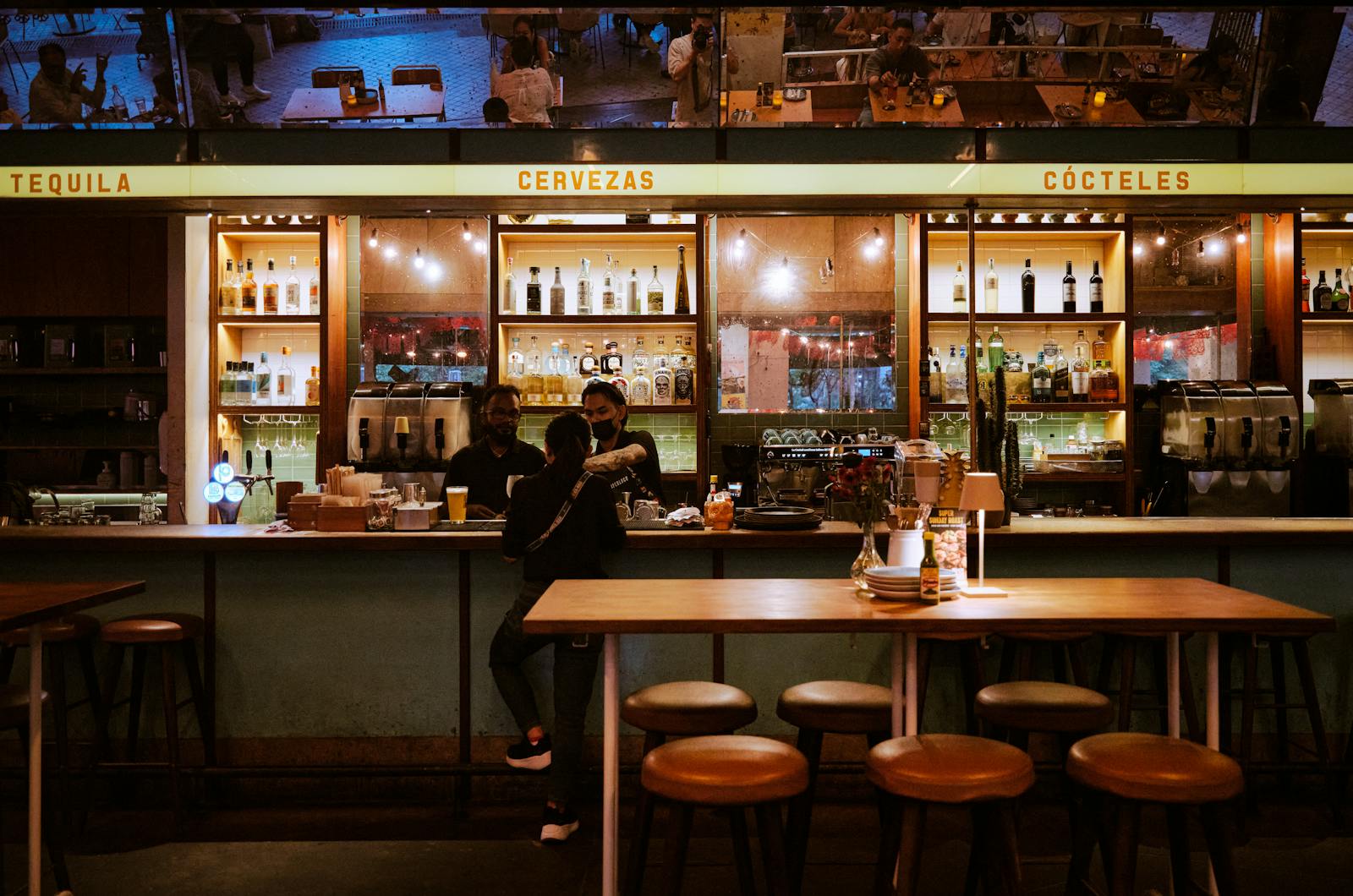
  <img src="/images/blog/mexican-bar-nightlife-cozy.jpg" alt="Nightlife raises the volume, but the phrase still needs timing." loading="lazy" />
  <figcaption>Nightlife raises the volume, but the phrase still needs timing.</figcaption>
</figure>

<div id="midpost-newsletter-slot"></div>

## Make it specific

Specific compliments feel more human: shirt, haircut, photo, smile, style. <mark lang="es-MX">me gusta tu estilo</mark> often lands better than a generic flood of fire emojis.

If you want to move up, move up after he does. Matching a rise in temperature reads as interest; leading one reads as a proposition, and the same sentence can be either depending on who said it second.[^grindr-bio]

## From safe to spicy

| Situation | Use this | Why it works |
|---|---|---|
| Te queda bien esa chamarra | Safe | Outfit |
| Qué guapo | Flirty | Good photo/date |
| Te ves muy sexy | Spicy | Needs vibe |
| Papacito | Campy/spicy | Close or playful |

Swap the noun for whatever he is actually wearing or doing and the line keeps working.

<figure>
  <img src="/images/blog/outdoor-cafe-friends-talk.jpg" alt="Style compliments are safer than body-only compliments." loading="lazy" />
  <figcaption>Style compliments are safer than body-only compliments.</figcaption>
</figure>

## Compliments that land

Keep it to one detail. Specific is what makes it sound like you were paying attention.

<ul class="examples">
  <li class="example">
    <div class="es" lang="es-MX">Te ves muy bien, la neta.</div>
    <div class="en" lang="en">You look really good, honestly.</div>
  </li>
  <li class="example">
    <div class="es" lang="es-MX">Me gusta tu estilo en esa foto.</div>
    <div class="en" lang="en">I like your style in that photo.</div>
  </li>
  <li class="example">
    <div class="es" lang="es-MX">Ese corte te queda muy bien.</div>
    <div class="en" lang="en">That haircut suits you really well.</div>
  </li>
  <li class="example">
    <div class="es" lang="es-MX">Qué guapo, pero ya no te voy a inflar tanto.</div>
    <div class="en" lang="en">How handsome, but I am not going to hype you up too much.</div>
  </li>
</ul>

## Specific beats strong

The best compliment gives him something to smile at, not something to manage.

None of this needs better adjectives. It needs one true detail, said plainly - easier than it sounds, and considerably more effective than the strongest word you know.[^glaad-guia]

[^rae-guapo]: [Diccionario de la lengua española, guapo](https://dle.rae.es/guapo) - The RAE entry for guapo covers good-looking and graceful, a safer compliment anchor than more charged slang.
[^rae-lindo]: [Diccionario de la lengua española, lindo](https://dle.rae.es/lindo) - The RAE entry for lindo supports its cute, pretty, pleasant range, which often feels softer than hot.
[^rae-rico]: [Diccionario de la lengua española, rico](https://dle.rae.es/rico) - The RAE entry for rico includes pleasant or tasty senses, but in compliments it can become much more charged by context.
[^grindr-profile]: [Grindr, dating app profile pictures](https://www.grindr.com/blog/dating-app-profile-pictures) - Grindr’s own profile guidance emphasizes showing personality and being genuine, a useful reminder that profile words do social work too.
[^grindr-bio]: [Grindr, how to describe yourself on dating apps](https://www.grindr.com/blog/dating-app-bio-ideas) - Grindr’s bio guide frames dating-app language as short, flirty, and personality-driven, which matches why tiny phrases matter.
[^glaad-guia]: [GLAAD, guía de términos y definiciones para los medios](https://glaad.org/publications/guia-de-glaad/) - GLAAD’s Spanish-language guide is a reminder to cover LGBTQ people and language with accuracy, respect, and real-world nuance.

FAQ:
Q: What is a safe compliment for a Mexican guy?
A: Te ves bien, la neta. Adding la neta makes it read as sincere rather than polite, and the whole phrase stays well below flirting temperature if you want it to.

Q: Should I compliment his looks or his style?
A: Style, at least first. Complimenting a choice - the jacket, the haircut, the music he put on - reads as attention rather than assessment, and attention is the more attractive signal.

Q: Is qué guapo too strong?
A: Not too strong, but it is unmistakably flirty. If you want to leave ambiguity, te ves bien does the same job with an escape hatch built in.

Q: How do I compliment him in front of his friends?
A: Keep it about something external and let the group hear it. Me gusta tu estilo lands well publicly; anything about his body will get him teased rather than flattered.

Q: What compliments should I avoid early?
A: Anything using rico, papacito or mamacito energy. They are not warm-ups - they read as a proposition, and if he is not there yet it lands as a lot.

Q: How do I know if the compliment landed?
A: Watch whether he returns one. Mexican conversational warmth means a polite gracias tells you almost nothing; a compliment coming back is the actual signal.

Q: Is it strange for a woman to compliment first in Mexico?
A: No, and it is often welcome precisely because it is less expected. The register matters more than who goes first - warm and specific beats bold.

Q: What if my Spanish comes out wrong mid-compliment?
A: Say so and keep going. Perdón, se me trabó, pero ya sabes lo que quise decir. The recovery is usually more charming than the sentence would have been.

Sources:
- Diccionario de la lengua española, guapo: https://dle.rae.es/guapo
- Diccionario de la lengua española, lindo: https://dle.rae.es/lindo
- Diccionario de la lengua española, rico: https://dle.rae.es/rico
- Grindr, dating app profile pictures: https://www.grindr.com/blog/dating-app-profile-pictures
- Grindr, how to describe yourself on dating apps: https://www.grindr.com/blog/dating-app-bio-ideas
- GLAAD, guía de términos y definiciones para los medios: https://glaad.org/publications/guia-de-glaad/

Related words: chido, que-onda, neta, sale