---
title: "Con Permiso in Mexico: How to Move Through Crowds Without Freezing"
description: "Learn con permiso, perdón, me paso, se baja, and aguas for moving through Mexico's Metro cars, markets, bars, and tight sidewalks."
type: "article"
category: "manners"
url: "https://consalsa.app/blog/con-permiso-moving-through-crowds"
canonical: "https://consalsa.app/blog/con-permiso-moving-through-crowds"
published: "2026-07-12"
updated: "2026-07-12"
author: "Andrey the Nomad"
site: "ConSalsa.App"
license: "https://consalsa.app/about"
---
# Con Permiso in Mexico: How to Move Through Crowds Without Freezing
URL: https://consalsa.app/blog/con-permiso-moving-through-crowds
Date: 2026-07-12
Updated: 2026-07-12
Category: manners
Keywords: con permiso meaning, mexican spanish crowds, me paso spanish, metro spanish mexico, perdon disculpa mexico
Summary: Learn con permiso, perdón, me paso, se baja, and aguas for moving through Mexico's Metro cars, markets, bars, and tight sidewalks.
Quick answer:
- Con permiso is the safest phrase for politely moving past someone in Mexico.
- Perdón works when you bump, interrupt, or need a quick apology in a crowd.
- Me paso means I am coming through, and se baja asks whether someone is getting off.
- Aguas is a quick warning when someone might trip, spill, or collide.
What you'll learn:
- Which phrase to use in markets, Metro cars, bars, narrow sidewalks, and restaurant aisles.
- How con permiso differs from perdón, disculpa, me paso, and aguas.
- What to say when you need to get off public transit without sounding rude.
- How to move firmly but politely through crowded Mexican spaces.
Don't sound gringo:
Do not translate excuse me as one phrase forever. In Mexico, con permiso moves you through space; perdón repairs contact; disculpa gets attention.
Body:
Con permiso is the phrase that gets you through Mexico without turning your elbows into a personality. It means "excuse me" in the physical, polite, I-need-to-pass sense.
This matters the first time you are wedged into a Metro car, carrying a backpack through a market aisle, or trying to leave a packed bar without doing silent panic choreography. Use perdón when you bump someone. Use disculpa when you need attention. Use me paso when the space is tight and everyone knows it.
## Crowd phrase map
| Phrase | Best use | Tone |
|---|---|---|
| Con permiso | Passing through | Polite and safe |
| Perdón | Bump or small mistake | Quick repair |
| Disculpa | Getting attention | Polite opener |
| Me paso | Coming through | Direct, practical |
| ¿Se baja? | Are you getting off? | Transit-specific |
| Aguas | Watch out | Fast warning |
RAE defines permiso as permission or license, which explains why con permiso feels like "with your permission" rather than just noise.[^rae-permiso] It is small, but it respects the other person's space.
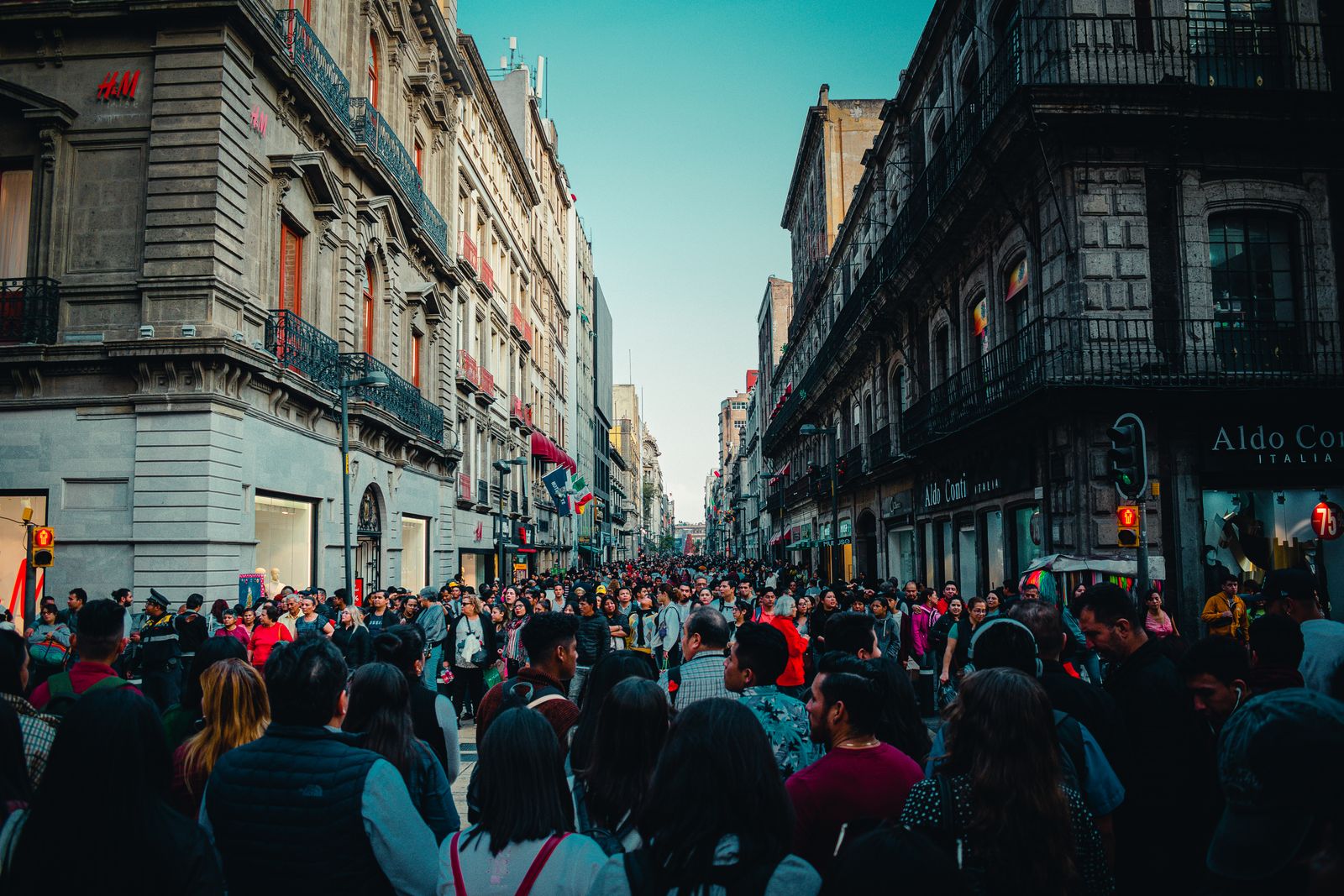
In a crowded street, the phrase does half the work and your body language does the rest. Photo by Yago de Oliveira on Pexels.
## Con permiso vs perdón
Think of con permiso as prevention and perdón as repair.
You say con permiso before you pass behind someone at a restaurant, squeeze through a market aisle, or step between people near a bar. You say perdón after contact, after interrupting, or after realizing your backpack just slapped a stranger's arm with the confidence of a separate person.
Con permiso, voy a pasar.
Excuse me, I am going to pass.
Ay, perdón, no te vi.
Oh, sorry, I did not see you.
RAE connects perdón with forgiveness and apology, so it carries a little more repair energy than con permiso.[^rae-perdon] That is why perdón is right after a bump but a little odd if you are simply walking past.
## Disculpa is for attention
Disculpa works when you need someone to notice you before a request. At a counter, in a shop, in a cafe, or with someone blocking the exact shelf you need, it is a polite opener.
Disculpa, ¿sabes dónde se paga?
Excuse me, do you know where you pay?
Disculpa, ¿me puedes dar chance?
Excuse me, can you give me a second/space?
RAE defines disculpa around apology or excuse, but in daily use it also opens the little human transaction before the request.[^rae-disculpa] **That tiny opener keeps your request from sounding like a command.**
## Metro, bars, markets, and sidewalks
In tight public spaces, Mexico has a whole physical grammar. You do not need long sentences. You need the right short phrase at the right second, plus a body that is clearly moving in the direction your words announce.
| Place | What you say | Why |
|---|---|---|
| Metro door | ¿Se baja? | Checks if they are exiting |
| Market aisle | Con permiso | Soft pass-through |
| Packed bar | Me paso, perdón | Direct but polite |
| Narrow sidewalk | Con permiso | Signals movement |
| Someone about to trip | ¡Aguas! | Warns fast |
Pasar is the base verb behind me paso, and RAE gives it the broad sense of moving through or from one place to another.[^rae-pasar] In crowded speech, me paso is practical: "I am coming through."
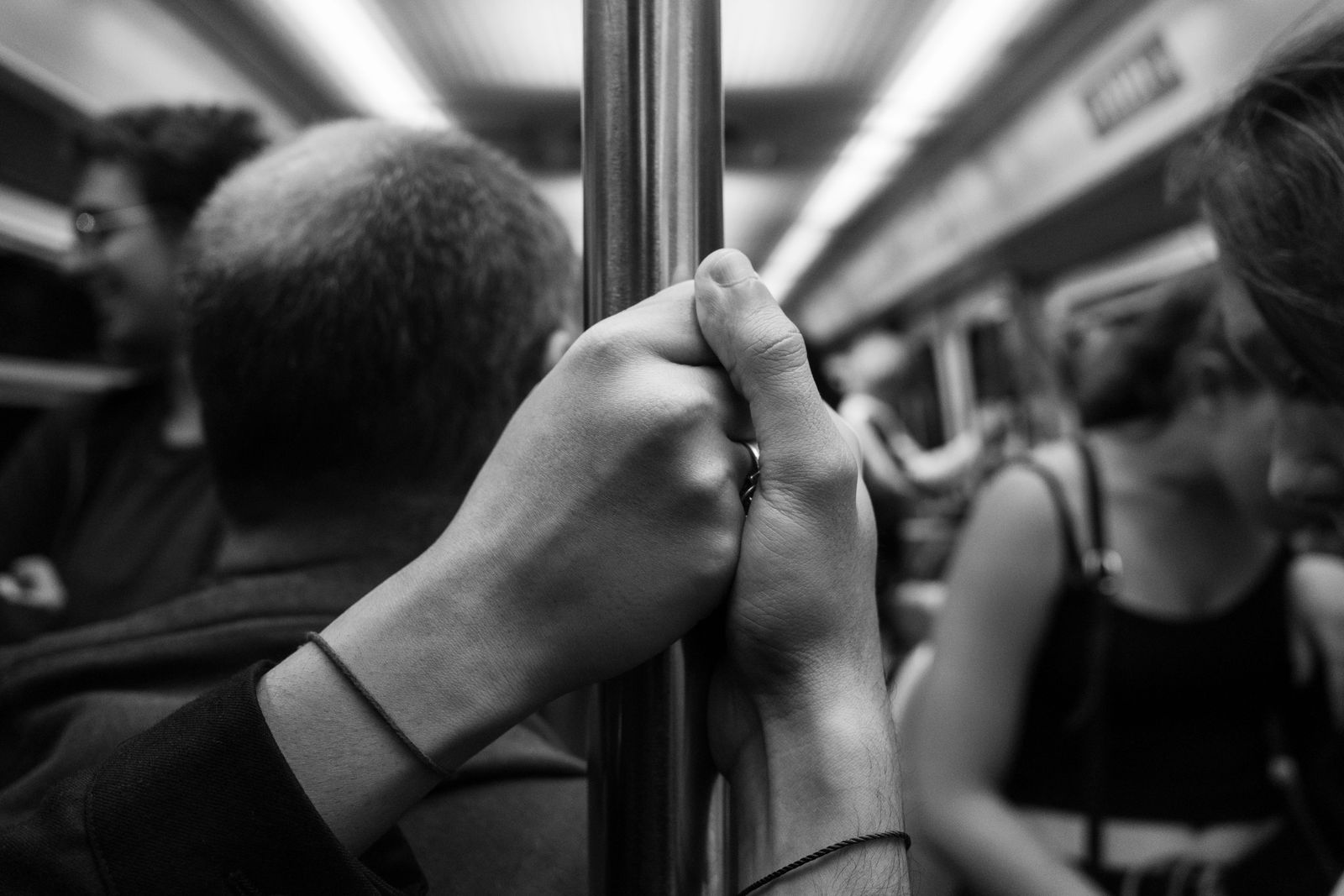
In public transit, short phrases beat long grammar. Photo by David Kouakou on Pexels.
## Aguas is not about water
In this context, aguas means "watch out" or "heads up." The DEM records this Mexican warning use, which is why learners hear it for stairs, spills, traffic, cables, dogs, and bad decisions.[^dem-aguas]
¡Aguas con el escalón!
Watch out for the step!
Aguas, está mojado.
Careful, it is wet.
Do not overthink it. If the warning needs to be fast, aguas is useful. If the moment is not urgent, use cuidado or a full sentence. A quick warning is one of the easiest ways to sound kind without making a whole announcement.
## Tone and body language
Crowd Spanish is half phrase, half timing. Say it early enough. Keep moving gently. Do not hover behind someone silently until they feel your breath. Also, do not weaponize politeness by saying con permiso while shoving like a shopping cart with anxiety.
The Metro CDMX exists for millions of daily trips, and public transit etiquette is really about flow: people enter, exit, adjust, and negotiate space quickly.[^metro] Your Spanish should help that flow, not stop it for a grammar performance.
When the city is moving, short polite phrases become survival gear. Photo by Mario Alvarado on Pexels.
One more small thing: volume matters. A low con permiso behind someone in a loud market may vanish completely. Say it clearly, early, and with a face that says "I am passing," not "I am judging your spatial awareness." This is useful for travelers, short-term residents, queer nightlife exits, family visits, and any moment when your body needs to move but you do not want your Spanish to sound like a shove. People usually adjust when the signal is easy to read.
Your safest default is this: **con permiso before passing, perdón after contact, disculpa before a request, aguas for warnings.** That is enough to move through a lot of Mexico without becoming the foreigner-shaped traffic jam.
[^rae-permiso]: [Diccionario de la lengua española, permiso](https://dle.rae.es/permiso) - Real Academia Española.
[^rae-perdon]: [Diccionario de la lengua española, perdón](https://dle.rae.es/perd%C3%B3n) - Real Academia Española.
[^rae-disculpa]: [Diccionario de la lengua española, disculpa](https://dle.rae.es/disculpa) - Real Academia Española.
[^rae-pasar]: [Diccionario de la lengua española, pasar](https://dle.rae.es/pasar) - Real Academia Española.
[^dem-aguas]: [Diccionario del español de México, aguas](https://dem.colmex.mx/ver/aguas) - El Colegio de México.
[^metro]: [Metro CDMX](https://www.metro.cdmx.gob.mx/) - Sistema de Transporte Colectivo Metro.
FAQ:
Q: What does con permiso mean?
A: Con permiso means excuse me or with your permission. It is the safest polite phrase for passing through.
Q: Should I say perdón or con permiso in a crowd?
A: Use con permiso before passing. Use perdón if you bump someone or interrupt.
Q: What does me paso mean?
A: Me paso means I am coming through or let me pass. It is direct but normal in tight spaces.
Q: What does se baja mean in the Metro?
A: Se baja means are you getting off? It is used when someone is blocking the exit.
Q: Is aguas rude?
A: No. Aguas is a quick warning, like heads up or watch out, but tone matters.
Q: How do I ask people to move in Mexico?
A: Say con permiso, me paso, or perdón. Keep your tone calm and your body language clear.
Q: Can I say disculpa in a crowd?
A: Yes, but disculpa is often better for getting attention or starting a small request.
Sources:
- Diccionario de la lengua española, permiso: https://dle.rae.es/permiso
- Diccionario de la lengua española, perdón: https://dle.rae.es/perd%C3%B3n
- Diccionario de la lengua española, disculpa: https://dle.rae.es/disculpa
- Diccionario de la lengua española, pasar: https://dle.rae.es/pasar
- Diccionario del español de México, aguas: https://dem.colmex.mx/ver/aguas
- Metro CDMX: https://www.metro.cdmx.gob.mx/
Related words: aguas, mande, sale, va