---
title: "Dog-Park Spanish in Condesa: What to Say Before You Pet or Greet"
description: "Learn easy dog-park Spanish for Condesa and CDMX: names, breeds, behavior, permission, safety, friendly follow-ups, and graceful exits."
type: "article"
category: "going_out"
url: "https://consalsa.app/blog/condesa-dog-park-spanish"
canonical: "https://consalsa.app/blog/condesa-dog-park-spanish"
published: "2026-07-29"
updated: "2026-07-29"
author: "Andrey the Nomad"
site: "ConSalsa.App"
license: "https://consalsa.app/about"
---
# Dog-Park Spanish in Condesa: What to Say Before You Pet or Greet
URL: https://consalsa.app/blog/condesa-dog-park-spanish
Date: 2026-07-29
Updated: 2026-07-29
Category: going_out
Keywords: dog park spanish, condesa spanish, mexico city dog phrases, small talk in mexican spanish, dog walking spanish, pet spanish vocabulary
Summary: Learn easy dog-park Spanish for Condesa and CDMX: names, breeds, behavior, permission, safety, friendly follow-ups, and graceful exits.
Quick answer:
- Start with the dog: ¿cómo se llama?, ¿cuántos años tiene?, or qué bonito. The human can decide how far the conversation goes.
- Ask before touching, feeding, or letting dogs greet: ¿lo puedo acariciar?, ¿le puedo dar?, and ¿se lleva bien con otros perros?
- Use está nervioso, no le gusta, and mejor con correa to prevent awkwardness without labeling a dog as bad.
- Exit with bueno, seguimos caminando; que estén bien; or nos vemos. Dog-park friendliness does not require exchanging life stories.
What you'll learn:
- A six-question small-talk ladder that begins with the dog and stops before accidental intimacy.
- Permission and behavior phrases for greetings, treats, leashes, play, and giving an animal space.
- How to describe a tense moment neutrally so owners can solve it without a public blame spiral.
- Warm exit lines for continuing the walk, ending play, or leaving when either dog has had enough.
Don't sound gringo:
Do not reach first and ask later. ¿Lo puedo acariciar? takes two seconds and lets the owner tell you if the dog is nervous, training, elderly, or simply not taking meetings.
Body:
In Condesa, a dog can introduce you to three people before you have ordered breakfast. The opening is easy—qué bonito, ¿cómo se llama?—and the human conversation is allowed to remain pleasantly tiny.
**Let the dog carry the first minute.** Ask permission, describe behavior without blame, and leave before a nice park chat somehow becomes an investigation into rent, visas, and why you are still single.
## The dog-first small-talk ladder
| Step | Phrase | What it opens |
|---|---|---|
| Notice | Qué bonito / bonita | A simple warm hello |
| Name | ¿Cómo se llama? | The easiest answer |
| Age | ¿Cuántos años tiene? | Puppy, senior, rescue story |
| Breed | ¿Qué raza es? | Appearance and background |
| Routine | ¿Vienen seguido? | Neighborhood-level chat |
| Exit | Bueno, seguimos caminando | A clean goodbye |
You do not have to climb every step. This is a menu, not a small-talk obstacle course. If the owner answers with one word and looks back at the dog, stop at name. If they tell you a whole adoption story, follow that thread.
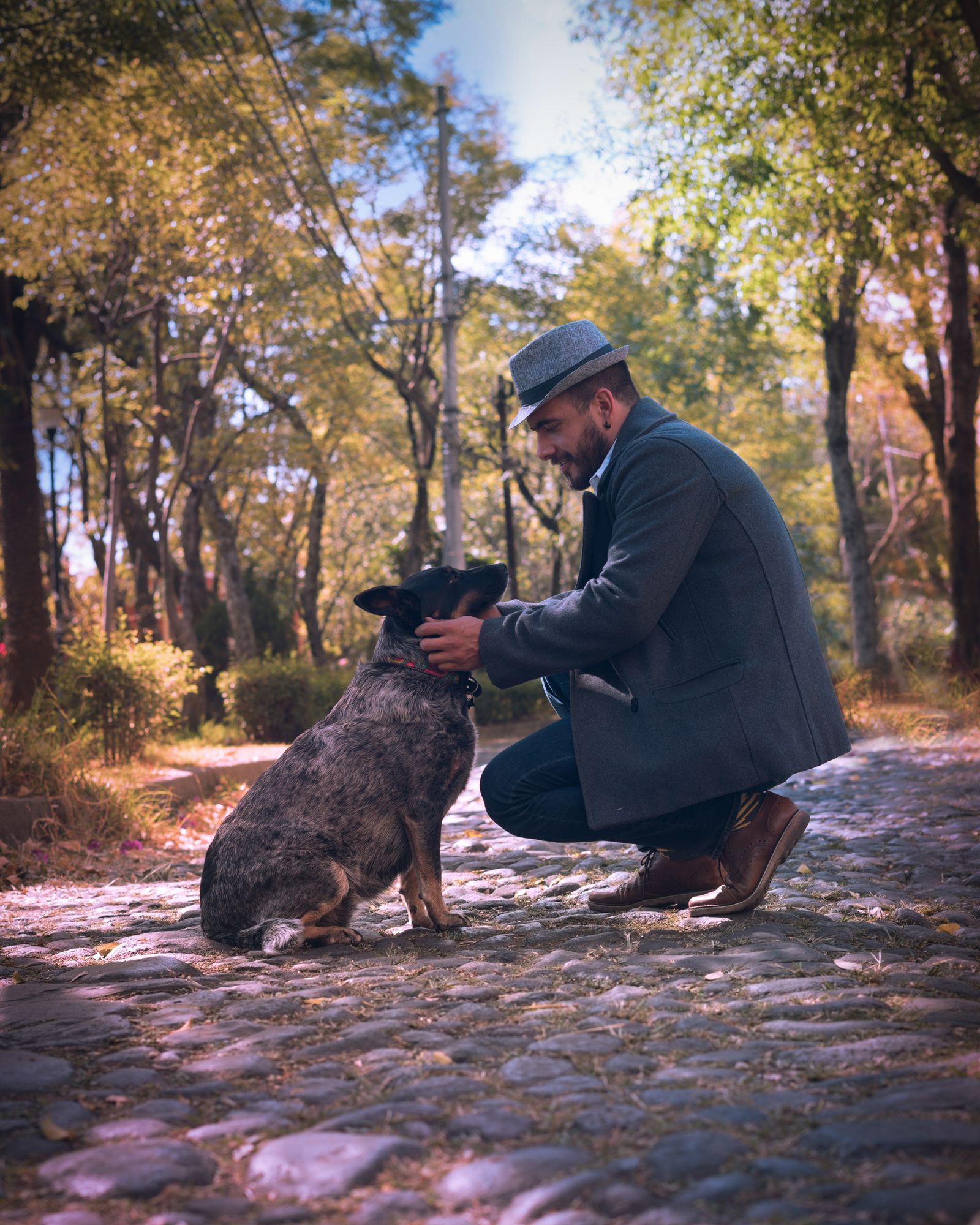
The animal’s comfort matters more than completing your planned conversation. Photo by Sandibel Aguilar on Pexels.
## Ask before hands, snacks, and greetings
Acariciar means to stroke or caress with the hand,[^rae-acariciar] which gives you the useful question ¿lo puedo acariciar?. Use lo for a male dog and la for a female dog.
Permission also applies to food and dog-to-dog contact.
¿Le puedo dar un premio?
Can I give them a treat?
¿Se lleva bien con otros perros?
Do they get along with other dogs?
Mejor no; está un poco nervioso.
Better not; he's a little nervous.
The answer is not a rejection of you. A dog may be training, recovering, elderly, fearful, protective of food, or gloriously uninterested in making your morning more social.
## Let the name solve the pronoun
If you are unsure whether to say bonito or bonita, skip the guess and ask ¿cómo se llama?. Once you hear the name—or the owner says él or ella—you can follow their wording.
For several dogs, use ¿cómo se llaman? and ¿son tuyos?. If gender is still unclear, repeat the name: ¿Lola viene seguido? sounds completely natural and keeps the attention where it belongs.
## Describe behavior, not character
RAE includes agitation or a lack of calm in nervioso,[^rae-nervioso] which makes it a useful neutral description. Compare:
| Blaming label | Useful description |
|---|---|
| Es malo | Está nervioso |
| Es agresivo | No le gusta que se acerquen |
| Está loco | Se emociona mucho |
| No sabe portarse | Todavía está aprendiendo |
**Describe what is happening and what would help.** Necesita espacio, mejor con correa, or no le gusta que lo toquen gives the other person an action.
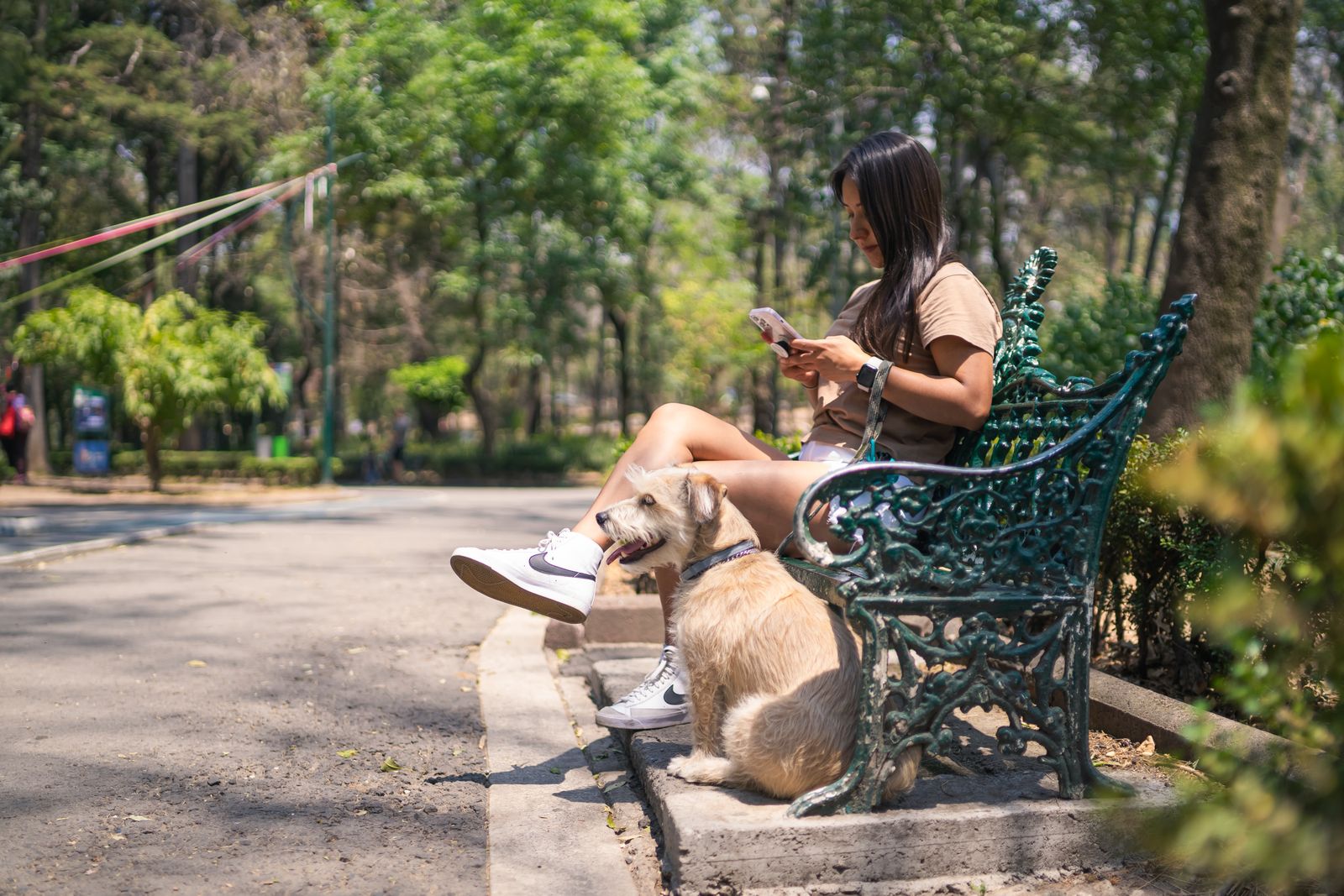
Not every quiet dog—or person—is asking for company. Photo by Julio Lopez on Pexels.
## The leash is also a sentence
RAE defines correa broadly as a leather or other resistant strap,[^rae-correa] and in this scene it is the leash. CDMX animal-protection law says the responsible person must use one when walking a dog on public streets.[^paot-law] Follow signs and designated-area rules inside parks as well.
Useful lines:
- Se soltó.
- ¿Me ayudas a detenerlo?
- Mejor le pongo la correa.
- Cuidado, está abierta la puerta.
These are safety phrases. Say them clearly, without adding five softeners while the dog is heading toward traffic.
## Keep the human questions light
The dog creates natural topics: walks, parks, weather, training, neighborhood routes, and veterinarians. It does not create automatic permission to ask where someone lives exactly, how much they pay, or whether they live alone.
| Low-pressure | More personal—wait for rapport |
|---|---|
| ¿Vienen seguido? | ¿En qué calle vives? |
| ¿Le gusta este parque? | ¿Vives solo? |
| ¿Dónde lo adoptaste? | ¿Cuánto te costó? |
| ¿Conoces otro parque bueno? | ¿Me pasas tu número? |
Cervantes’ work on conversation emphasizes social fit, turn-taking, and context.[^cervantes-conversation] At a dog park, a short pleasant exchange is a complete success. It does not need conversion into friendship.
¿Vienen seguido a este parque?
Do you come to this park often?
Sí, casi siempre en la mañana. Está más tranquilo.
Yes, almost always in the morning. It's calmer.
## Do not make the dog a prop
RAE’s sense of mascota includes an animal kept for companionship,[^rae-mascota] but owners have different relationships, training choices, and boundaries. Do not stage photos, lift a small dog, test commands, or offer training advice without being invited.
If something goes wrong, lower the temperature:
No pasa nada. Mejor les damos espacio.
It's okay. Let's give them some space.
¿Está bien? ¿Necesitas ayuda?
Are they okay? Do you need help?
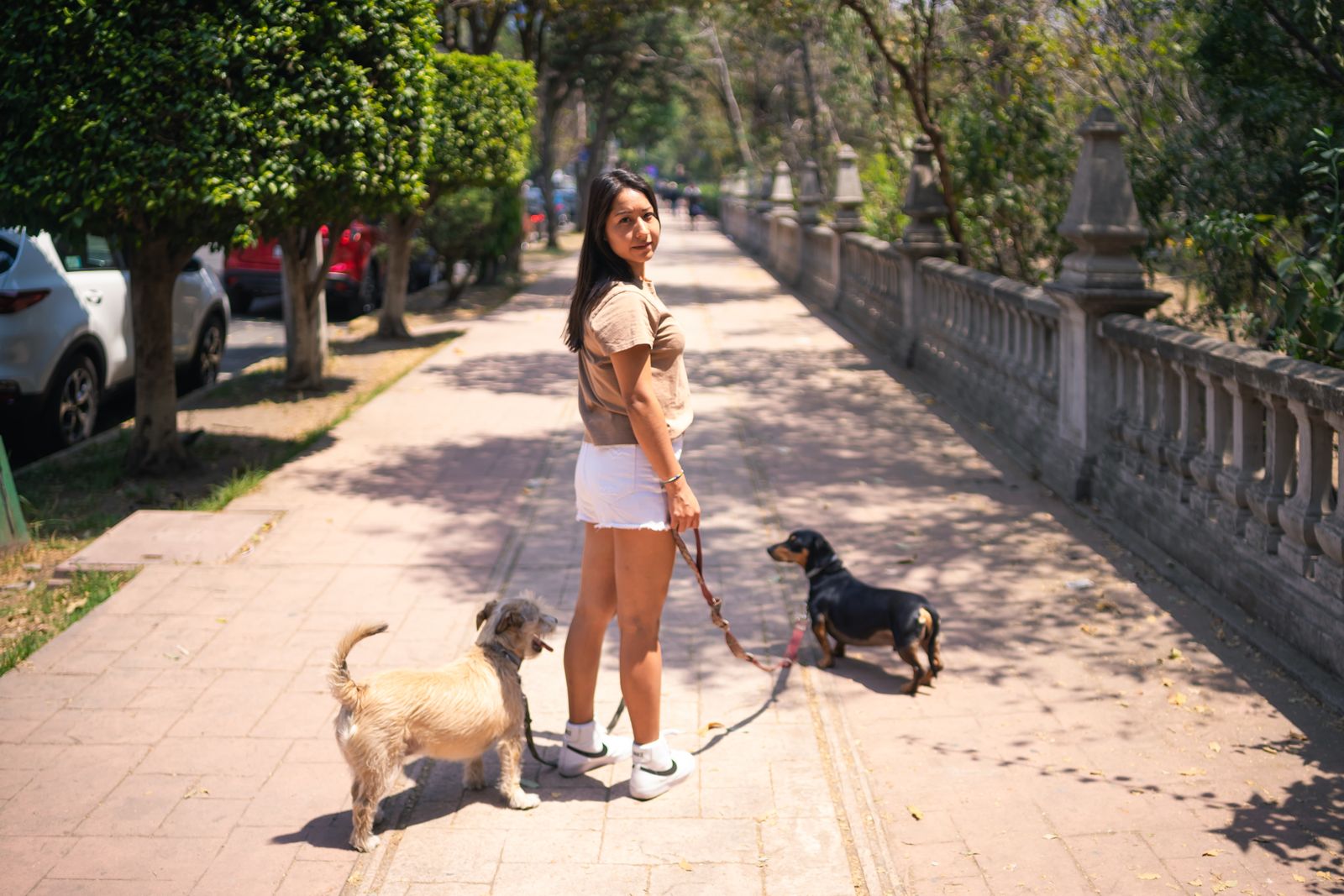
Clear leashes, clear space, clear questions: the easy social version. Photo by Julio Lopez on Pexels.
## Let the walk end the conversation
The natural exit is already attached to your hand, possibly pulling toward a squirrel.
Try bueno, seguimos caminando, ya nos vamos, or que estén bien. If you genuinely expect to cross paths again, nos vemos por aquí is warm without becoming a contract.
On your next walk, ask one name and one permission question. Then watch the dog and the person. If both dogs keep walking calmly and nobody has had to yank a leash, the conversation went fine.
[^rae-acariciar]: [Diccionario de la lengua española, acariciar](https://dle.rae.es/acariciar) — RAE and ASALE.
[^rae-nervioso]: [Diccionario de la lengua española, nervioso](https://dle.rae.es/nervioso) — RAE and ASALE.
[^rae-correa]: [Diccionario de la lengua española, correa](https://dle.rae.es/correa) — RAE and ASALE.
[^paot-law]: [Ley de Protección y Bienestar de los Animales de la Ciudad de México](https://paot.org.mx/centro/leyes-normas-htmls/ley-de-protecci-n-489.html) — PAOT.
[^cervantes-conversation]: [La conversación en la enseñanza/aprendizaje de ELE](https://cvc.cervantes.es/ensenanza/biblioteca_ELE/publicaciones_centros/PDF/napoles_2012/02_pascual.pdf) — Instituto Cervantes.
[^rae-mascota]: [Diccionario de la lengua española, mascota](https://dle.rae.es/mascota) — RAE and ASALE.
FAQ:
Q: How do I ask a dog’s name in Spanish?
A: Say ¿cómo se llama? You can follow with ¿cuántos años tiene? if the owner seems open to chatting.
Q: How do I ask to pet a dog?
A: Say ¿lo puedo acariciar? for a male dog or ¿la puedo acariciar? for a female dog. Wait for the answer and the dog's body language.
Q: How do I ask if a dog is friendly?
A: Ask ¿es amigable? or, more specifically, ¿se lleva bien con otros perros? The second question is more useful for a dog-to-dog greeting.
Q: What does está nervioso mean?
A: It means the dog is nervous or on edge. It is a neutral way to ask for space without calling the animal aggressive.
Q: Do dogs need a leash in Mexico City?
A: CDMX animal-protection law requires a responsible person to use a leash with a dog in public streets. Follow posted rules in designated areas too.
Q: How do I stop dog-park small talk?
A: Say bueno, seguimos caminando; ya nos vamos; or que estén bien. A smile and movement make the exit clear.
Q: Can I give someone else’s dog a treat?
A: Ask first: ¿le puedo dar un premio? Dogs may have allergies, dietary restrictions, training rules, or guarding behavior.
Sources:
- PAOT, Ley de Protección y Bienestar de los Animales de la Ciudad de México: https://paot.org.mx/centro/leyes-normas-htmls/ley-de-protecci-n-489.html
- Diccionario de la lengua española, correa: https://dle.rae.es/correa
- Diccionario de la lengua española, acariciar: https://dle.rae.es/acariciar
- Diccionario de la lengua española, nervioso: https://dle.rae.es/nervioso
- Diccionario de la lengua española, mascota: https://dle.rae.es/mascota
- Instituto Cervantes, la conversación en ELE: https://cvc.cervantes.es/ensenanza/biblioteca_ELE/publicaciones_centros/PDF/napoles_2012/02_pascual.pdf
Related words: que-onda, tranquilo, padre, sale