---
title: "Mi Más Sentido Pésame Is Not What Mexicans Text"
description: "The phrase every phrasebook hands you belongs on a printed card. What people actually send is three words and a plan, and the plan is the part that counts."
type: "article"
category: "manners"
url: "https://consalsa.app/blog/condolences-mexican-spanish"
canonical: "https://consalsa.app/blog/condolences-mexican-spanish"
published: "2026-11-03"
updated: "2026-11-03"
author: "Andrey the Nomad"
site: "ConSalsa.App"
license: "https://consalsa.app/terms#ip"
---
# Mi Más Sentido Pésame Is Not What Mexicans Text
URL: https://consalsa.app/blog/condolences-mexican-spanish
Date: 2026-11-03
Updated: 2026-11-03
Category: manners
Keywords: condolences in spanish, sorry for your loss in spanish, mi mas sentido pesame meaning, te acompano en tu sentimiento, mexican funeral customs, what to say when someone dies in mexico
Summary: The phrase every phrasebook hands you belongs on a printed card. What people actually send is three words and a plan, and the plan is the part that counts.
Quick answer:
- Mi más sentido pésame is correct and formal. It fits a card, an email or a work message, not a text to a close friend.
- Te acompaño en tu sentimiento is the standard spoken line at a wake, and it is safe with anyone.
- Lo siento mucho plus a specific offer is what friends actually send.
- Attendance outranks wording. The velorio runs a day or two and the novenario runs nine.
What you'll learn:
- Five condolence lines ranked by how formal they sound, and who each one is for.
- What a velorio and a novenario are, and when you are expected to appear at each.
- Why Mexican colleagues cover for each other instead of taking leave.
- What to say back when somebody offers you the pésame.
Don't sound gringo:
Do not open with a question about how the person died. In Mexico the visit itself is the message, so lead with te acompaño en tu sentimiento, then stand there. Silence at a velorio is not awkward, it is the point.
Body:
Every phrasebook gives you mi más sentido pésame, and it is a real sentence that real Mexicans write. Almost none of them are typing it into WhatsApp at eleven at night.
Formality reads as distance here. On a printed card that is exactly right. In a friend's phone it lands like a form letter.
## The word names an act, not a sentence
El Colegio de México defines pésame as the expression of sorrow at somebody's death, and prints it inside the phrase dar el pésame: to give it.[^dem-pesame] That framing is the whole difference between this and the English version. You do not say condolences in Mexico so much as you deliver them, in person if you possibly can.
Which means the choice of line matters less than people fear, and the choice of whether to show up matters more.
the linehow far away it stands
Un abrazo fuerte.A big hug.close
Lo siento mucho.I am so sorry.neutral
Te acompaño en tu sentimiento.I am with you in this.standard
Le envío mis condolencias.I send you my condolences.formal
Mi más sentido pésame.My deepest condolences.card
Te acompaño en tu sentimiento is the one to memorize. It is unimpeachable in a doorway, in a text, to a colleague, to your partner's aunt. **The verb inside it is the whole architecture**: acompañar, to go along with. Not to fix, not to explain.
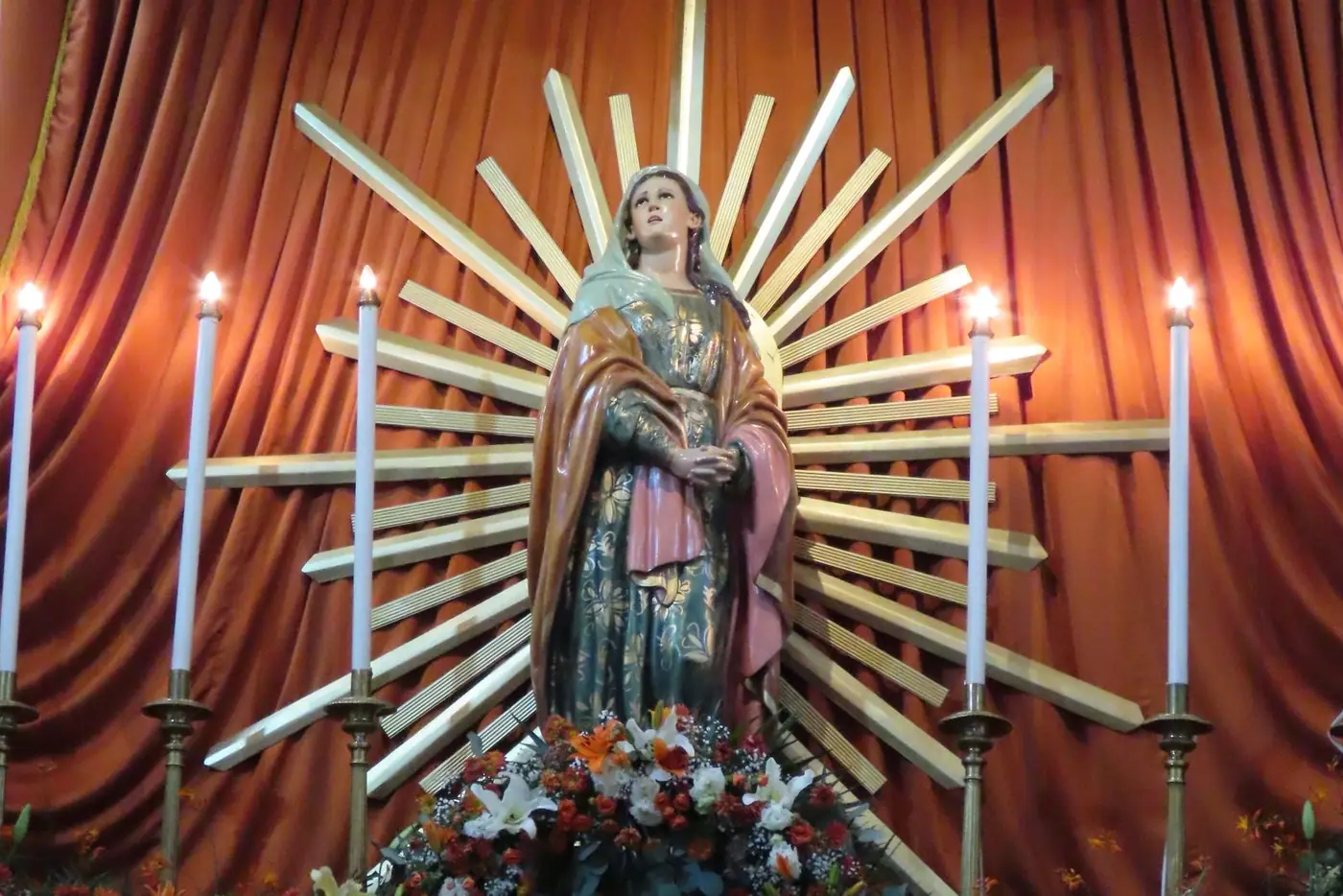
Votive candles in a Mexican church. Photo by Jimmy Elizarraras on Pexels.
## The calendar you are being invited into
Three words shape the fortnight after a death, and a foreigner who knows them stops guessing about when to appear.
| Word | What it is | What is expected of you |
|---|---|---|
| Velorio | The gathering that sits with the body, at a funeral home or the house | Come at some point, stay a while, do not make a speech |
| Novenario | Nine days of prayers after the death | One evening is plenty unless you are family |
| Luto | The social mourning period, marked by dress and by skipping parties | Do not invite them to anything loud for a while |
| Cabo de año | The one-year mark | A message on the date lands harder than you expect |
The dictionary is dry about all three. A velorio is a gathering of people keeping vigil over the dead.[^dem-velorio] A novenario is nine days of ceremonies and prayers.[^dem-novenario] Luto is defined partly by its social signals, including staying away from celebrations, and the dictionary even gives the length as a variable thing: fifteen days here, three days there.[^dem-luto]
What the definitions leave out is the catering. Mexico's Memórica project, run by the Secretaría de Cultura, describes neighbors and relatives arriving at the wake with food and drink as part of the rite itself, and notes that in some places those offerings settle old quarrels with the person who died.[^memorica] In some places the coffee you carry through the door is the rite, not a kindness laid on top of it.
## Why nobody takes the week off
Here is the piece that explains a lot of what a foreigner notices at a Mexican workplace. There is no legally required bereavement leave in the private sector. The Ley Federal del Trabajo simply does not provide one, and a March 2025 initiative to add it to article 132, proposing five paid days for the death of a parent, child, sibling or spouse and three for a grandparent or a parent-in-law, went to committee and stopped.[^sil-lft] It was not the first attempt and it was not the last.
So the team absorbs it. Somebody covers the shift, somebody takes the calls, and the group chat organizes a vaquita for the flowers. When your Mexican colleague is back at a desk on Thursday after burying his mother on Tuesday, that is not stoicism on display. It is an employment arrangement.
Marigolds and chrysanthemums on a grave. Photo by Jimmy Elizarraras on Pexels.
## The message, badly and then well
Almost nobody gets the word wrong. They get the length wrong. English condolence writing reaches for a paragraph, and a paragraph in Spanish reads as a performance.
what not to sendtranslated from English
No tengo palabras. No puedo imaginar por lo que estás pasando en este momento tan difícil, pero quiero que sepas que estoy pensando en ti y en toda tu familia y que si necesitas cualquier cosa, lo que sea, no dudes en decirme.A wall of text that asks them to reply.
Every clause is kind and the whole thing is work. It ends by handing a grieving person a decision to make.
what to sendtwo messages, ten seconds apart
Me acabo de enterar. Te acompaño en tu sentimiento.I just heard. I am with you in this.
Paso mañana al velorio. Llevo café, no te preocupes por nada.I will come by the wake tomorrow. I will bring coffee, do not worry about anything.
Gracias, de verdad.Thank you, really.
Short, then a specific action they did not have to request. Name the task yourself. Cualquier cosa, avísame puts the work back on them.
## Three things to leave out
Lands
Te acompaño en tu sentimiento.
Qué gran persona era tu papá. — a specific memory, if you have one
Paso el jueves. — a time, not an offer
Standing there saying nothing
Leave out
¿De qué murió? — the answer is not owed to you
Sé cómo te sientes.
Está en un mejor lugar. — assumes a belief they may not hold
Todo pasa por algo.
On the abbreviations
You will see QEPD and DEP under photos on social media, for que en paz descanse and descanse en paz. Both are addressed to the person who died, not to the family. If you post one, add a line aimed at the people who are still here.
## When it is aimed at you
If you are the one being given the pésame, you are not expected to produce anything. Gracias is a complete answer.
Gracias, muy amable.
Thank you, that is kind.
Gracias por acompañarnos.
Thank you for being here with us.
Te lo agradezco mucho, en serio.
I really appreciate it.
Nopala de Villagrán, Hidalgo. Photo by Andrea Sofia Torres on Pexels.
Foreigners tend to arrive at a Mexican wake braced for an emotional register they will not be able to match, and then find a room where people are drinking coffee, telling stories about the dead man and occasionally laughing. You do not have to rise to anything. You have to come, say six words, and stay longer than feels necessary.
If the family visit is new territory in general, [the first visit to a Mexican family](/blog/mexican-family-visit-spanish) covers the rest of the room.
[^dem-pesame]: [Diccionario del español de México, pésame](https://dem.colmex.mx/ver/pesame) - El Colegio de México.
[^dem-velorio]: [Diccionario del español de México, velorio](https://dem.colmex.mx/ver/velorio) - El Colegio de México.
[^dem-novenario]: [Diccionario del español de México, novenario](https://dem.colmex.mx/ver/novenario) - El Colegio de México.
[^dem-luto]: [Diccionario del español de México, luto](https://dem.colmex.mx/ver/luto) - El Colegio de México.
[^memorica]: [La tradición de despedir a los muertos](https://memoricamexico.gob.mx/es/memorica/Temas?ctId=6&cId=ZTY0NGViZWEtZjRjZS00YjAxLTk0OTAtMzZkMzljODQ2YTlj&cd=false) - Memórica, Secretaría de Cultura.
[^sil-lft]: [Iniciativa que adiciona el artículo 132 de la Ley Federal del Trabajo, marzo de 2025](https://sil.gobernacion.gob.mx/Archivos/Documentos/2025/03/asun_4847227_20250304_1740702523.pdf) - Sistema de Información Legislativa, Segob.
FAQ:
Q: How do you say sorry for your loss in Mexican Spanish?
A: Lo siento mucho for anyone, te acompaño en tu sentimiento at a wake or in a message to someone you know, and mi más sentido pésame when it needs to be formal.
Q: What does pésame actually mean?
A: El Colegio de México defines it as the expression of sorrow at somebody's death, in the phrase dar el pésame. It names the act of offering condolences, not one fixed sentence.
Q: Is te acompaño en tu sentimiento too formal for a text?
A: No. It is the most reliable line in the language for this, and it works spoken at the wake or typed at midnight.
Q: What is a velorio?
A: The gathering that sits with the body, usually at a funeral home or the family house. It commonly runs a day to two, and people come and go the whole time.
Q: What is the novenario?
A: Nine days of prayers after the death, Catholic in origin, held so the family is not alone. You are not expected at all nine, but showing up once matters.
Q: Should I bring anything to a velorio?
A: Coffee, bread, or food if you are close to the family. Mexico's Secretaría de Cultura describes food and drink brought by neighbors as part of the ritual itself.
Q: How much time off do Mexicans get when a relative dies?
A: Legally, none in the private sector. The Ley Federal del Trabajo does not require bereavement leave. A 2025 initiative to add it stalled in committee, as earlier attempts had.
Q: What do I say when someone gives me the pésame?
A: Gracias, or gracias por acompañarnos if they came in person. Nothing longer is required of you.
Q: Is it okay to say que en paz descanse?
A: Yes, and you will see it abbreviated as QEPD or DEP online. It is about the person who died rather than to the family, so pair it with something addressed to them.
Sources:
- Diccionario del español de México, pésame - El Colegio de México: https://dem.colmex.mx/ver/pesame
- Diccionario del español de México, velorio - El Colegio de México: https://dem.colmex.mx/ver/velorio
- Diccionario del español de México, novenario - El Colegio de México: https://dem.colmex.mx/ver/novenario
- Diccionario del español de México, luto - El Colegio de México: https://dem.colmex.mx/ver/luto
- La tradición de despedir a los muertos - Memórica, Secretaría de Cultura: https://memoricamexico.gob.mx/es/memorica/Temas?ctId=6&cId=ZTY0NGViZWEtZjRjZS00YjAxLTk0OTAtMzZkMzljODQ2YTlj&cd=false
- Iniciativa que adiciona el artículo 132 de la Ley Federal del Trabajo, 2025 - Sistema de Información Legislativa, Segob: https://sil.gobernacion.gob.mx/Archivos/Documentos/2025/03/asun_4847227_20250304_1740702523.pdf
Related words: apapachar, ni-modo, hacer-el-paro, compadre