---
title: "Coyoacán Date Spanish: Cafés, Churros, Museums, and Soft Plans"
description: "Mexican date Spanish asks about desire, not agreement. Learn te late, se me antoja and cómo ves - and why Coyoacán is built for a walking date."
type: "article"
category: "going_out"
url: "https://consalsa.app/blog/coyoacan-date-spanish"
canonical: "https://consalsa.app/blog/coyoacan-date-spanish"
published: "2026-06-08"
updated: "2026-08-20"
author: "Andrey the Nomad"
site: "ConSalsa.App"
license: "https://consalsa.app/about"
---

# Coyoacán Date Spanish: Cafés, Churros, Museums, and Soft Plans
URL: https://consalsa.app/blog/coyoacan-date-spanish
Date: 2026-06-08
Updated: 2026-08-20
Category: going_out
Keywords: coyoacan date spanish, mexican dating spanish, te late meaning mexico, se me antoja meaning, me la pase bien meaning, coyoacan history
Summary: Mexican date Spanish asks about desire, not agreement. Learn te late, se me antoja and cómo ves - and why Coyoacán is built for a walking date.

Quick answer:
- Mexican date proposals ask about desire rather than agreement: ¿te late?, ¿se te antoja?, ¿cómo ves? all ask how something feels to you.
- Latir means to beat, as in a heartbeat - ¿te late? is literally asking whether something resonates, which is why it is so easy to answer.
- Coyoacán works for this because it was a separate village, not a district: two plazas, a market, and streets that reward walking without a plan.
- For the follow-up, me la pasé bien is warm, specific enough, and does not ask anyone to manage a confession.

What you'll learn:
- Why ¿te late? gets a better answer than ¿quieres?, and when to use each.
- The soft-proposal set: te late, se me antoja, cómo ves, vamos por algo, caminamos tantito.
- What Coyoacán actually is, and why its layout does the work of a date plan.
- How to follow up afterward without over- or under-shooting.

Don't sound gringo:
Stop asking ¿quieres ir por un café? and start asking ¿te late un café? One asks for a decision, the other asks how it sounds - and only one of them is easy to say yes to.

Body:

There is a small grammatical difference between how English speakers and Mexicans propose a date, and it does more work than any amount of vocabulary.

English asks for a **decision**: do you want to get coffee? Mexican Spanish asks about a **feeling**: <mark lang="es-MX">¿te late un café?</mark>

That's not a stylistic preference. It changes what the other person has to do with your question.

## Latir means to beat, like a heart

<mark lang="es-MX">Latir</mark> is the verb for a heartbeat. The Academia Mexicana de la Lengua's dictionary of mexicanismos records the idiom <mark lang="es-MX">latirle a uno algo</mark> - to have a hunch, a feeling about something.[^aml-latir]

So <mark lang="es-MX">¿te late?</mark> is asking, more or less: *does this resonate with you?* You're not requesting agreement. You're asking about an internal state - and internal states are much easier to answer honestly in both directions.

The whole soft-proposal family works the same way:

| Phrase | What it literally asks | Why it works on a date |
|---|---|---|
| ¿Te late? | does it beat for you | asks about resonance, not consent |
| ¿Se te antoja? | do you have a craving | a craving happens to you, so no is blameless |
| ¿Cómo ves? | how do you see it | hands over room to counter-propose |
| ¿Vamos por algo? | shall we go for something | deliberately unspecified |
| ¿Caminamos tantito? | shall we walk a tiny bit | promises almost nothing |

<mark lang="es-MX">Antojo</mark> is worth a note of its own: it's the craving word, recorded as a mexicanismo in its own right,[^aml-antojo] and it's grammatically brilliant for this purpose. <mark lang="es-MX">Se me antojó</mark> puts the craving in charge - it happened *to* you. Nobody has to take responsibility for a craving, which is why it's the easiest possible thing to agree with.

Compare that with the decision-questions - <mark lang="es-MX">¿quieres?</mark>, <mark lang="es-MX">¿podemos?</mark>, <mark lang="es-MX">¿te parece bien si...?</mark> They're perfectly correct Spanish and nobody will think less of you. They're just heavier, because refusing them means refusing *you* rather than declining an idea.

<div class="do-dont">
  <div class="dd-col dd-do">
    <p class="dd-title">Easy to say yes to</p>
    <ul>
      <li><b lang="es-MX">¿Te late un café?</b> — asks about the feeling</li>
      <li><b lang="es-MX">Se me antojó algo dulce, ¿a ti?</b> — you go first, they follow</li>
      <li><b lang="es-MX">¿Caminamos tantito?</b> — the <i lang="es-MX">tantito</i> does everything</li>
      <li><b lang="es-MX">¿Cómo ves? Tú dime.</b> — invites their idea</li>
    </ul>
  </div>
  <div class="dd-col dd-dont">
    <p class="dd-title">Heavier than you meant</p>
    <ul>
      <li><b lang="es-MX">¿Quieres ir a tomar un café conmigo?</b> — asks for a decision</li>
      <li>A four-stop itinerary announced up front</li>
      <li><b lang="es-MX">¿Aceptarías acompañarme?</b> — telenovela register</li>
      <li>Three time-slot options in one message</li>
    </ul>
  </div>
</div>

<figure>
  <img src="/images/blog/coyoacan-1.jpg" alt="People gathered near a fountain in a shaded public square." loading="lazy" />
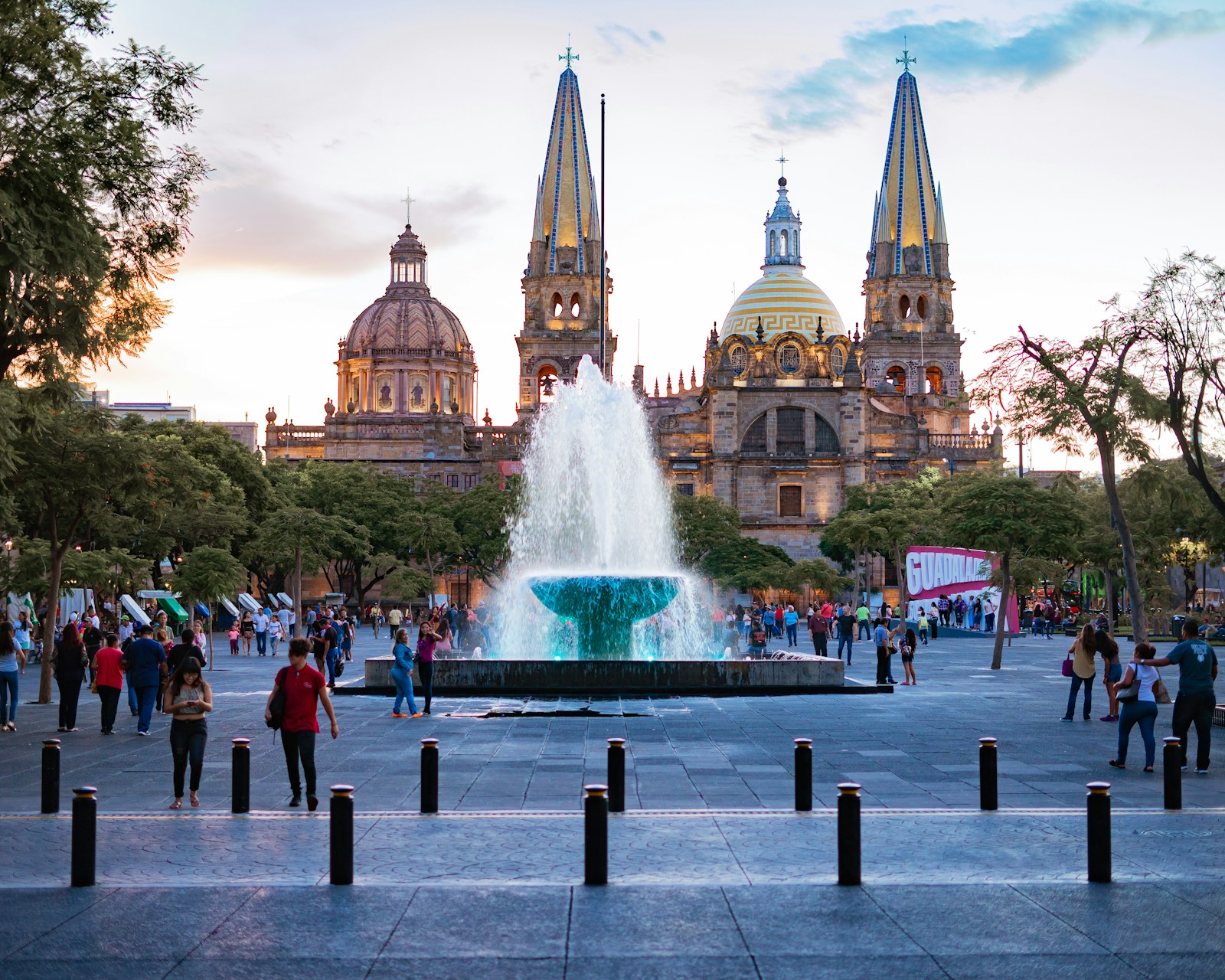
  <figcaption>The square supplies the plan. All you have to bring is one soft question at a time. Photo by <a href="https://unsplash.com/photos/cGOkS_UvttU" target="_blank" rel="noopener noreferrer">Roman Lopez on Unsplash</a>.</figcaption>
</figure>

## Why Coyoacán specifically

Because it isn't a neighborhood. It's a town that Mexico City eventually reached.

<mark lang="es-MX">Coyohuacan</mark> is Nahuatl for *place of coyotes* - there's a fountain of two of them in the main garden.[^inah-coyoacan] After Tenochtitlan fell in 1521, Cortés based himself here; the first <mark lang="es-MX">ayuntamiento</mark> of the Valley of Mexico was founded in Coyoacán, and it served as the seat of the new colonial government until 1524, when the capital moved to the rebuilt city.[^inah-coyoacan][^elhistoriador]

It stayed a distinct town for centuries after that, which is why it still has the anatomy of one: two adjoining plazas, a parish church, a covered market, and streets that wander instead of running in a grid. Its historic core was recognized as a protected zone in the twentieth century precisely because that layout survived.[^inah-coyoacan][^cdmx-coyoacan]

**That's why it's such a good date.** The geography already contains a sequence - garden, church, market, churros, a bench - so you never have to produce an itinerary. You just have to keep asking small questions as things appear.

<div class="chat-thread">
  <div class="chat-head"><span class="chat-avatar"></span><span>how the afternoon actually goes</span><span class="chat-meta">one question at a time</span></div>
  <ul class="chat-msgs">
    <li class="out"><span class="es" lang="es-MX">¿Te late si nos vemos en el Jardín Centenario?</span><span class="en">Feel like meeting at Jardín Centenario?</span></li>
    <li class="in"><span class="es" lang="es-MX">Va, ¿como a las cinco?</span><span class="en">Cool, around five?</span></li>
    <li class="out"><span class="es" lang="es-MX">Sale. Y ya de ahí vemos</span><span class="en">Great. We'll figure the rest out there</span></li>
  </ul>
  <p class="chat-read">One place, one time, and an explicit promise not to plan the rest. <strong>"Ya de ahí vemos" is the most Coyoacán sentence there is.</strong></p>
</div>

<div id="midpost-newsletter-slot"></div>

## The in-person set

You need about five phrases for the whole afternoon, and they're all small.

<ol class="ladder">
  <li>
    <div class="rung-card">
      <span class="rung-label">arriving</span>
      <span class="rung-es" lang="es-MX">¿Caminamos tantito y de ahí vemos?</span>
      <span class="rung-en" lang="en">Shall we walk a bit and see from there?</span>
      <span class="rung-note">Commits to movement and nothing else, which is exactly the right amount for the first twenty minutes.</span>
    </div>
  </li>
  <li>
    <div class="rung-card">
      <span class="rung-label">the market</span>
      <span class="rung-es" lang="es-MX">¿Le entras a una tostada?</span>
      <span class="rung-en" lang="en">You up for a tostada?</span>
      <span class="rung-note"><i lang="es-MX">Entrarle a algo</i> is very Mexican and very casual. The Mercado de Coyoacán is where this one belongs.</span>
    </div>
  </li>
  <li>
    <div class="rung-card">
      <span class="rung-label">the craving move</span>
      <span class="rung-es" lang="es-MX">Se me antojaron unos churros, ¿a ti?</span>
      <span class="rung-en" lang="en">I've got a craving for churros - you?</span>
      <span class="rung-note">Announce your own craving first. It gives them something to agree with instead of something to decide.</span>
    </div>
  </li>
  <li>
    <div class="rung-card">
      <span class="rung-label">extending the evening</span>
      <span class="rung-es" lang="es-MX">¿Te late una chela por aquí o ya la dejamos?</span>
      <span class="rung-en" lang="en">Feel like a beer around here, or shall we leave it?</span>
      <span class="rung-note">Offers the exit in the same sentence. That's what makes it comfortable to answer either way.</span>
    </div>
  </li>
</ol>

<figure>
  <img src="/images/blog/coyoacan-2.jpg" alt="A crowded market aisle with colorful goods on display." loading="lazy" />
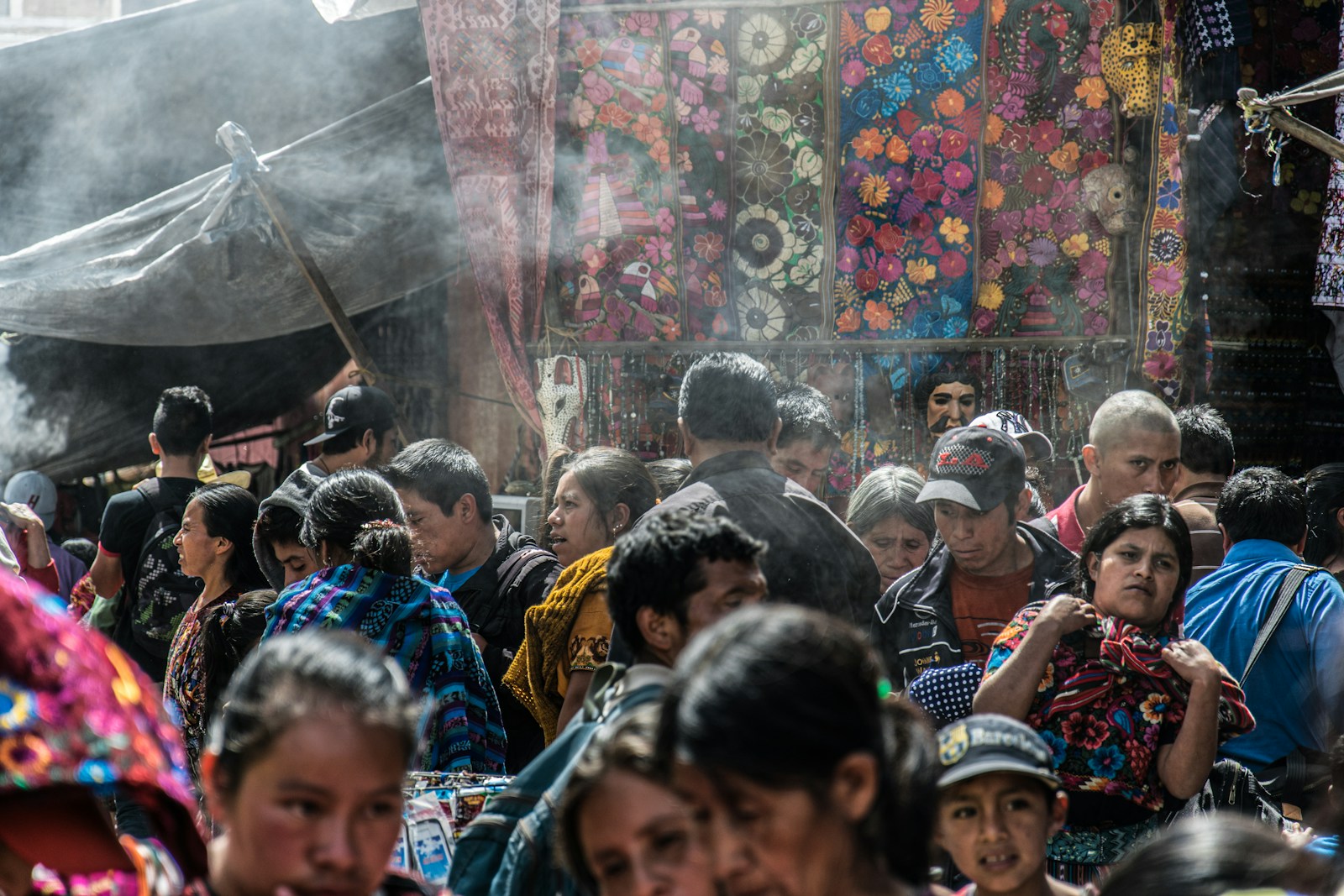
  <figcaption>The market is the easiest stop on the walk: loud enough to fill silences, cheap enough not to be a statement. Photo by <a href="https://unsplash.com/photos/9Y0Ib8kCGLg" target="_blank" rel="noopener noreferrer">Natasha Ruf on Unsplash</a>.</figcaption>
</figure>

## Afterward

The register stays small here, and matching it reads as confident rather than cold.

<ul class="examples">
  <li class="example">
    <div class="es" lang="es-MX">Me la pasé muy bien. ¿Te late repetir pronto?</div>
    <div class="en" lang="en">I had a really good time. Feel like doing it again soon?</div>
  </li>
  <li class="example">
    <div class="es" lang="es-MX">Me gustó mucho caminar contigo.</div>
    <div class="en" lang="en">I really liked walking with you.</div>
  </li>
</ul>

If the walk turns into sitting down somewhere, Coyoacán has no shortage of small cafés around the two plazas and down the side streets to do it in.[^cdmxsecreta-coyoacan-cafes]

That second one is the upgrade worth knowing: naming a **specific** thing you liked is warmer than a general compliment, and it still doesn't ask the other person to match a big feeling.

<div class="note-card is-tip">
  <span class="note-label">The shape of the whole thing</span>
  <p>One meeting point. One small question at a time. Your own craving announced before you ask about theirs. An exit offered in the same breath as the invitation.</p>
  <p>Do that in a town-shaped neighborhood with a market and a churro stand, and the plan mostly builds itself - which was always the point of coming to Coyoacán instead of booking somewhere.</p>
</div>

<figure>
  <img src="/images/blog/coyoacan-3.jpg" alt="A close-up of freshly fried churros." loading="lazy" />
  <figcaption>"Se me antojaron unos churros" has ended more comfortable silences than any conversation topic ever written down. Photo by <a href="https://unsplash.com/photos/G4MEd5IeDO4" target="_blank" rel="noopener noreferrer">Joseph Cortez on Unsplash</a>.</figcaption>
</figure>

[^aml-latir]: [latir, Diccionario breve de mexicanismos de Guido Gómez de Silva](https://academia.org.mx/consultas/obras-de-consulta-en-linea/diccionario-breve-de-mexicanismos-de-guido-gomez-de-silva/item/latir) — Academia Mexicana de la Lengua
[^aml-antojo]: [antojo, Diccionario breve de mexicanismos de Guido Gómez de Silva](https://academia.org.mx/consultas/obras-de-consulta-en-linea/diccionario-breve-de-mexicanismos-de-guido-gomez-de-silva/item/antojo) — Academia Mexicana de la Lengua
[^inah-coyoacan]: [Coyoacán](https://lugares.inah.gob.mx/en/node/4791) — Lugares INAH, Instituto Nacional de Antropología e Historia
[^elhistoriador]: [Coyoacán](https://www.elhistoriador.mx/post/coyoac%C3%A1n) — El Historiador
[^cdmx-coyoacan]: [Coyoacán](https://mexicocity.cdmx.gob.mx/colonias/coyoacan/) — Gobierno de la Ciudad de México
[^cdmxsecreta-coyoacan-cafes]: [Cafeterías en Coyoacán](https://cdmxsecreta.com/cafeterias-en-coyoacan/) — CDMX Secreta

FAQ:
Q: What does te late mean in Mexico?
A: Does that appeal to you, does that sound good. It comes from latir, to beat, so it literally asks whether something resonates - and the Academia Mexicana's dictionary of mexicanismos records the related sense of having a feeling or hunch about something.

Q: What's the difference between te late and quieres?
A: ¿Quieres? asks for a decision. ¿Te late? asks about a feeling. On a first date the second is easier to accept and much easier to decline gracefully, which is exactly why Mexicans reach for it.

Q: What does se me antoja mean?
A: I have a craving for it. It's used constantly and it's softer than saying you want something, because a craving is something that happens to you rather than a demand you're making.

Q: What does cómo ves mean?
A: How does that look to you, what do you think. It's the most open of the three and it hands the other person room to counter-propose.

Q: How do I suggest a walk in Spanish?
A: ¿Caminamos tantito? The tantito is doing the work - it promises a small, low-commitment amount of walking, which is a far easier yes than proposing a route.

Q: How do I say I had a good time after a date?
A: Me la pasé bien, or me la pasé muy bien for a little more warmth. It's clear, it's not overwhelming, and it doesn't ask the other person to match a big declaration.

Q: Why is Coyoacán good for a first date?
A: Because it was a town before it was a neighborhood, so it has a plaza, a church, a market and walkable streets rather than a grid of avenues. The geography supplies the plan, which means you don't have to.

Q: What does Coyoacán mean?
A: Place of coyotes, from the Nahuatl Coyohuacan. There's a fountain of two coyotes in the main garden that makes the point.

Q: Was Coyoacán ever the capital of Mexico?
A: Briefly. After Tenochtitlan fell in 1521, Cortés based himself in Coyoacán and it served as the seat of the new colonial government until 1524, when the capital moved to the rebuilt city.

Q: What should I avoid saying on a first date in Mexican Spanish?
A: Big declarations and full itineraries. Announcing a four-stop plan or making a strong romantic statement early reads as intense here - the register is warm and small, and it stays that way for a while.

Sources:
- INAH, Coyoacán (Lugares INAH): https://lugares.inah.gob.mx/en/node/4791
- Academia Mexicana de la Lengua, latir (Diccionario breve de mexicanismos): https://academia.org.mx/consultas/obras-de-consulta-en-linea/diccionario-breve-de-mexicanismos-de-guido-gomez-de-silva/item/latir
- El Historiador, Coyoacán: https://www.elhistoriador.mx/post/coyoac%C3%A1n
- Mexico City official guide, Coyoacán: https://mexicocity.cdmx.gob.mx/colonias/coyoacan/
- Academia Mexicana de la Lengua, antojo (Diccionario breve de mexicanismos): https://academia.org.mx/consultas/obras-de-consulta-en-linea/diccionario-breve-de-mexicanismos-de-guido-gomez-de-silva/item/antojo
- CDMX Secreta, cafeterías en Coyoacán: https://cdmxsecreta.com/cafeterias-en-coyoacan/

Related words: ahorita, chido, sale, que-onda