---
title: "Cuffing Season in Mexico: How to Say You Want Something Real for the Holidays"
description: "Learn Mexican Spanish for cuffing season, qué somos, algo serio, plan tranquilo, and saying you want closeness without pressure."
type: "article"
category: "dating"
url: "https://consalsa.app/blog/cuffing-season-mexico"
canonical: "https://consalsa.app/blog/cuffing-season-mexico"
published: "2026-10-15"
updated: "2026-10-15"
author: "Andrey the Nomad"
site: "ConSalsa.App"
license: "https://consalsa.app/terms#ip"
---
# Cuffing Season in Mexico: How to Say You Want Something Real for the Holidays
URL: https://consalsa.app/blog/cuffing-season-mexico
Date: 2026-10-15
Updated: 2026-10-15
Category: dating
Keywords: cuffing season mexico, que somos meaning dating, algo serio spanish dating
Summary: Learn Mexican Spanish for cuffing season, qué somos, algo serio, plan tranquilo, and saying you want closeness without pressure.
Quick answer:
- Cuffing season is not a fixed Mexican phrase, but the feeling exists: wanting warmth, plans, and clarity as holidays approach.
- Qué somos means what are we, and it can feel serious in dating.
- Algo serio means something serious; algo tranqui means something low-pressure.
- Say what you want without turning the first cozy date into a contract negotiation.
What you'll learn:
- Why cuffing season is not a clean Spanish translation problem.
- How to say algo serio, algo tranqui, exclusividad, and ¿qué somos?
- How holiday plans can change the emotional stakes in Mexico.
- Text examples for asking clearly without sounding intense.
Don't sound gringo:
Do not translate cuffing season literally. Say what you actually want: algo serio, algo tranqui, exclusividad, or ir con calma.
Body:
Cuffing season is not a fixed Mexican phrase, but the feeling exists: wanting warmth, plans, and clarity as holidays approach. Qué somos means what are we, and it can feel serious in dating.[^src1]
Imagine a date in late November: the weather finally cools down, December plans start appearing, and suddenly "casual" feels suspiciously like a sweater with commitment issues. This post is for saying what you want without sounding like you brought a contract to coffee.
## Cuffing season is a vibe, not a translation
Cuffing season is English internet language, so do not hunt for a perfect one-word Mexican translation. In Spanish, the useful move is to say the actual relationship need: algo serio, algo tranqui, exclusividad, or ir con calma.
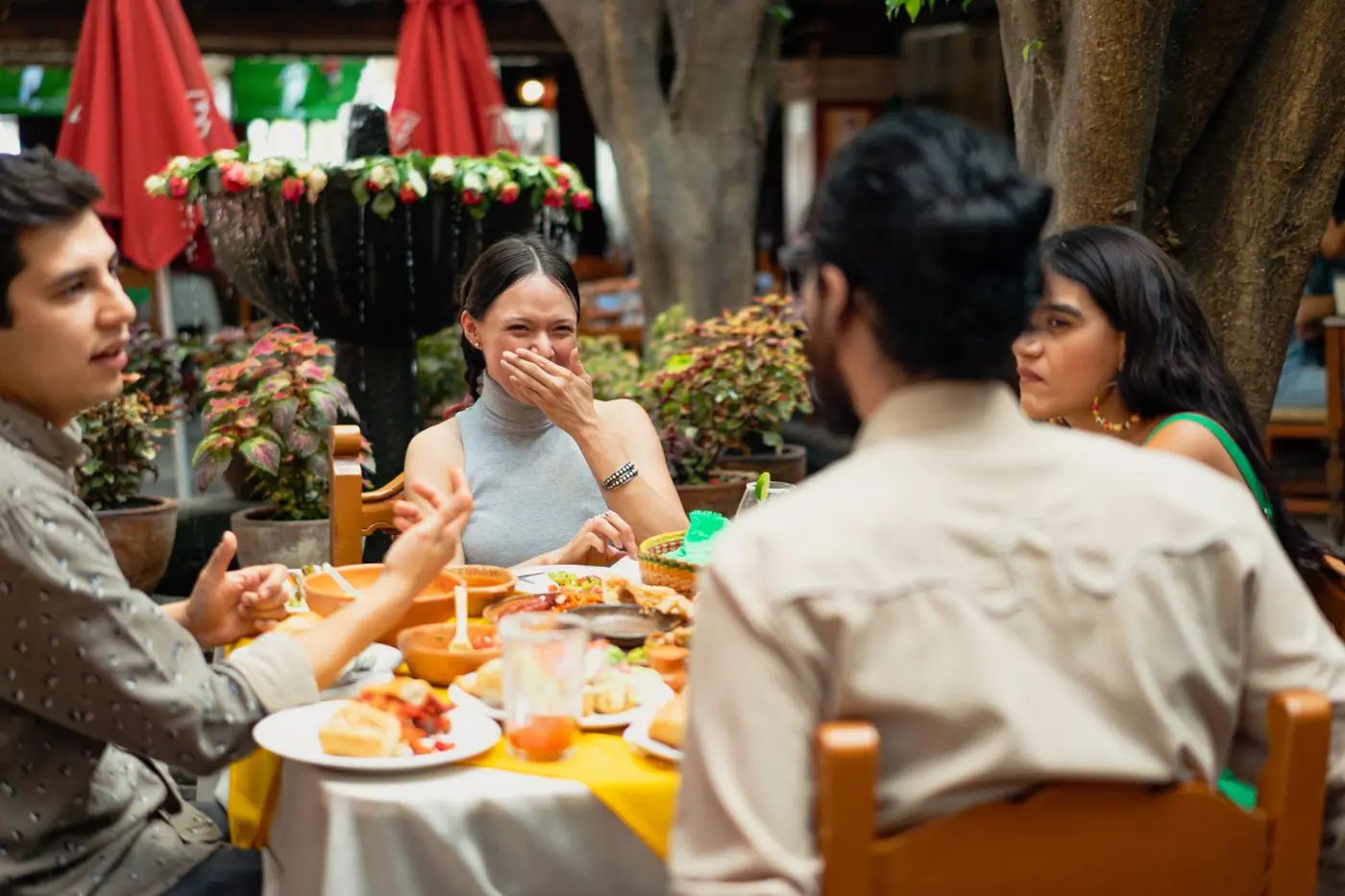
Choose dating images that feel like real conversation: coffee, walking, texting, or a casual holiday plan.
## Qué somos has weight
¿Qué somos? is powerful because it asks for a definition.[^src2] That can be romantic, necessary, or way too much depending on timing. If you have only had two dates, soften it: me gustaría entender qué estás buscando. If you have been acting like a couple for months, direct may be kinder.
## Algo serio vs algo tranqui
Algo serio does not always mean marriage-level intensity. It can simply mean no games, clearer effort, and not dating five people at once.[^src3] Algo tranqui does not always mean careless. It can mean slow, calm, and low-pressure.[^src5] Ask follow-up questions instead of assuming.
¿Qué significa?
What does it mean?
¿Cómo lo dicen ustedes?
How do you all say it?
Gracias, así lo digo mejor.
Thanks, now I can say it better.
## Texts that ask for clarity without pressure
The holiday calendar adds pressure because invitations carry signals. A posada with friends is one thing. Christmas dinner with family is another. If you are not sure, ask: ¿va a ser plan de amigos o más familiar? That question is direct enough to help and soft enough not to corner anyone.[^src4]
## When holiday plans raise the stakes
From late October the calendar starts doing the asking for you. Posadas, Navidad and Año Nuevo all arrive with an implied plus-one, and that is what turns a casual thing into a conversation neither of you planned to have.
A two-person image works better here than seasonal decoration because the topic is clarity between people.
| Situation | Better move | Why |
|---|---|---|
| You are unsure | ¿Qué significa? | Short and honest |
| You need local usage | ¿Cómo lo dicen ustedes? | Invites lived context |
| You might overstep | Lo digo con respeto | Lowers the temperature |
| Someone corrects you | Gracias, así lo digo mejor | Keeps connection open |
Warm, ordinary moments fit the article better than romance-cliche visuals.
## The December text that does not sound like a contract
This topic needs normal human softness. You are not translating "cuffing season" into one magic Mexican phrase. You are trying to say that the holidays make casual dating feel less casual, and you want to know where you stand. In Mexican Spanish, that usually means choosing between algo serio, algo tranqui, exclusividad, and the very direct ¿qué somos?.
If you are still early, try me gusta pasar tiempo contigo, pero quiero ir con calma. That gives warmth and pace in the same sentence. If you want clarity, say me gustaría saber si estamos saliendo en serio o más casual. It is less dramatic than ¿qué somos?, but it gets to the same room.
Holiday invitations raise the stakes because family is involved. ¿vienes a la posada? may be friendly, romantic, or family-coded depending on who is asking and how long you have been dating. If you are unsure, ask lightly: ¿va a ser plan de amigos o más familiar? That question can save you from showing up emotionally underdressed.
Also, do not import the whole English internet joke into Spanish. Cuffing season sounds like a meme, and it may land funny with bilingual friends, but it is not the phrase you use when you want emotional clarity. Say the real thing. [Me gustas](/blog/me-gustas-te-quiero-me-caes-bien). Quiero algo claro. No quiero confundirme. That is the language people can answer.
If the answer you get is vague, you can still [stay kind](/blog/soft-rejection-mexican-spanish). Gracias por decírmelo works whether the news is good or awkward. Clear Spanish is useful, but emotional steadiness is what keeps the conversation from turning into a courtroom scene.
There is no perfect Spanish clone for cuffing season, and that is good news. You do not need a meme. You need clear, kind phrases for pace, exclusivity, family plans, and expectations, because that is what the other person can actually respond to.
[^src1]: [Diccionario de la lengua española, serio](https://dle.rae.es/serio)
[^src2]: [Diccionario de la lengua española, relación](https://dle.rae.es/relaci%C3%B3n)
[^src3]: [Diccionario de la lengua española, exclusivo](https://dle.rae.es/exclusivo)
[^src4]: [Instituto Cervantes, cortesía](https://cvc.cervantes.es/ensenanza/biblioteca_ele/marco_complementario/capitulo_05.htm)
[^src5]: [Diccionario del español de México, tranquilo](https://dem.colmex.mx/ver/tranquilo)
FAQ:
Q: How do you say cuffing season in Mexican Spanish?
A: There is no standard Mexican Spanish equivalent. Explain what you mean with phrases like querer algo serio, buscar algo tranqui, or hablar de exclusividad.
Q: What does algo serio mean in dating?
A: Something serious. It usually points to clearer commitment rather than a casual thing.
Q: What does algo tranqui mean?
A: Something chill or low-pressure. In dating, it can mean moving slowly or keeping things casual.
Q: Is ¿qué somos? too intense?
A: It can be direct. Use it when the relationship already has enough weight for a clear definition talk.
Q: How do I ask about exclusivity?
A: Try ¿estamos saliendo solo tú y yo? or ¿quieres algo exclusivo?
Q: How do holiday plans change things?
A: Posadas, family dinners, and New Year plans can make casual dating feel more defined.
Q: Can I use cuffing season with bilingual friends?
A: Yes as a joke or meme, but not as your main phrase when you need real clarity.
Sources:
- Diccionario de la lengua española, serio: https://dle.rae.es/serio
- Diccionario de la lengua española, relación: https://dle.rae.es/relaci%C3%B3n
- Diccionario de la lengua española, exclusivo: https://dle.rae.es/exclusivo
- Instituto Cervantes, cortesía: https://cvc.cervantes.es/ensenanza/biblioteca_ele/marco_complementario/capitulo_05.htm
- Diccionario del español de México, tranquilo: https://dem.colmex.mx/ver/tranquilo
Related words: ligar, tirar-la-onda, buena-onda, me-cae-bien