---
title: "7 Day of the Dead Foods That Aren't Pan de Muerto"
description: "Learn Día de Muertos foods beyond pan de muerto: mole, tamales, calabaza, atole, fruit, favorite dishes, and what food does on an ofrenda."
type: "article"
category: "food"
url: "https://consalsa.app/blog/day-of-the-dead-foods"
canonical: "https://consalsa.app/blog/day-of-the-dead-foods"
published: "2026-10-21"
updated: "2026-10-21"
author: "Andrey the Nomad"
site: "ConSalsa.App"
license: "https://consalsa.app/terms#ip"
---
# 7 Day of the Dead Foods That Aren't Pan de Muerto
URL: https://consalsa.app/blog/day-of-the-dead-foods
Date: 2026-10-21
Updated: 2026-10-21
Category: food
Keywords: day of the dead foods, dia de muertos foods, foods on ofrenda
Summary: Learn Día de Muertos foods beyond pan de muerto: mole, tamales, calabaza, atole, fruit, favorite dishes, and what food does on an ofrenda.
Quick answer:
- Día de Muertos food is not only pan de muerto; families may place favorite dishes, fruit, mole, tamales, calabaza, atole, or drinks on the ofrenda.
- The food welcomes and honors the dead, often through what they loved in life.
- Regional and family variation matters more than a universal checklist.
- As a visitor, ask what the dish meant to the person being remembered before grabbing a photo.
What you'll learn:
- Seven foods and drinks you may see beyond pan de muerto.
- How food on an ofrenda connects to personal memory.
- Useful Spanish for asking about dishes respectfully.
- How to avoid treating an altar like a buffet.
Don't sound gringo:
Do not treat an ofrenda like a tasting table. Ask what the dish meant to the person being remembered before you ask to try it.
Body:
Día de Muertos food is not only pan de muerto; families may place favorite dishes, fruit, mole, tamales, calabaza, atole, or drinks on the ofrenda. The food welcomes and honors the dead, often through what they loved in life.[^src1]
Food vocabulary feels easy until the dish is tied to someone's memory. Around Día de Muertos, the Spanish you want is not only mole and tamales; it is also the softer language for asking why that food is on that table.
## Food on an ofrenda is personal
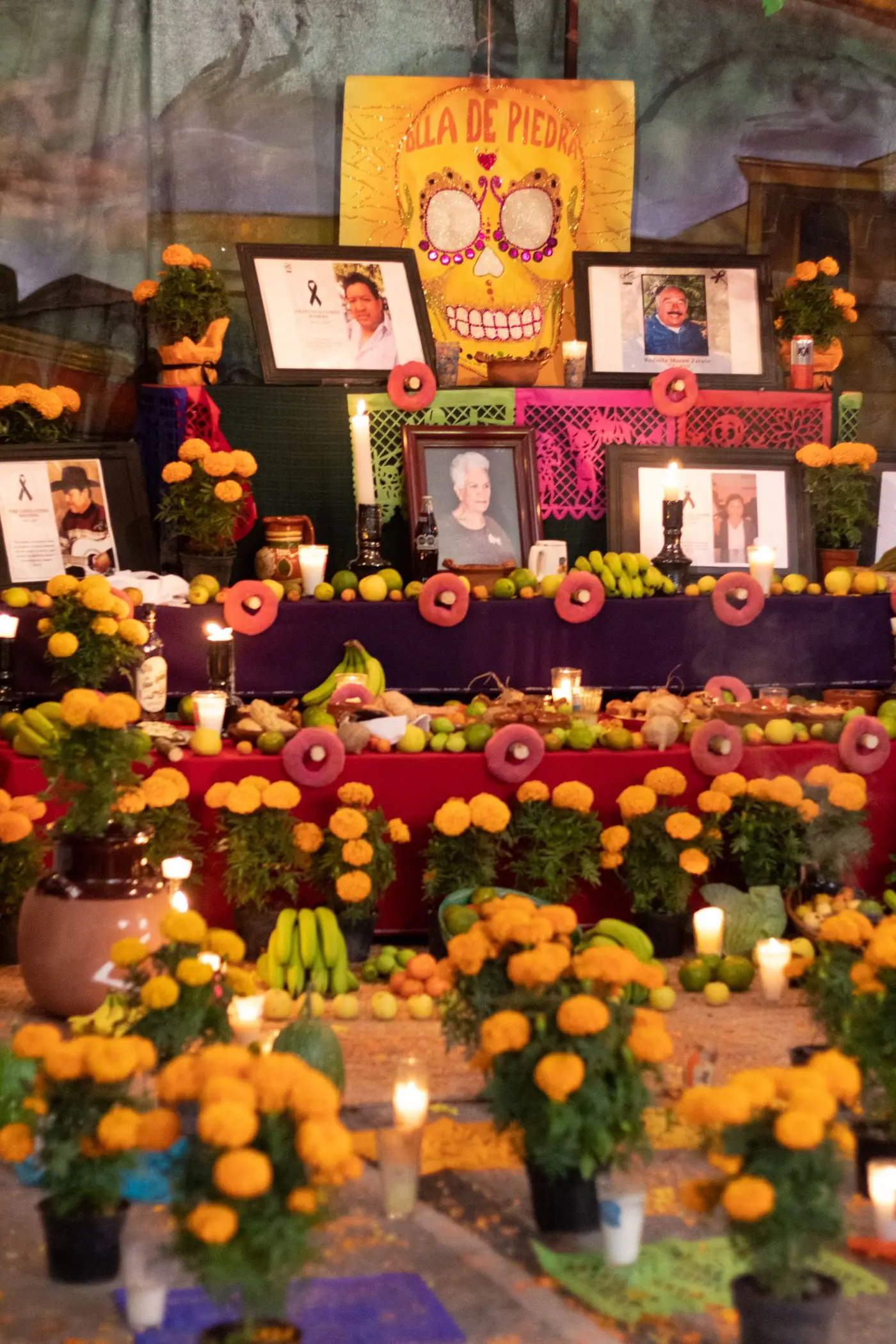
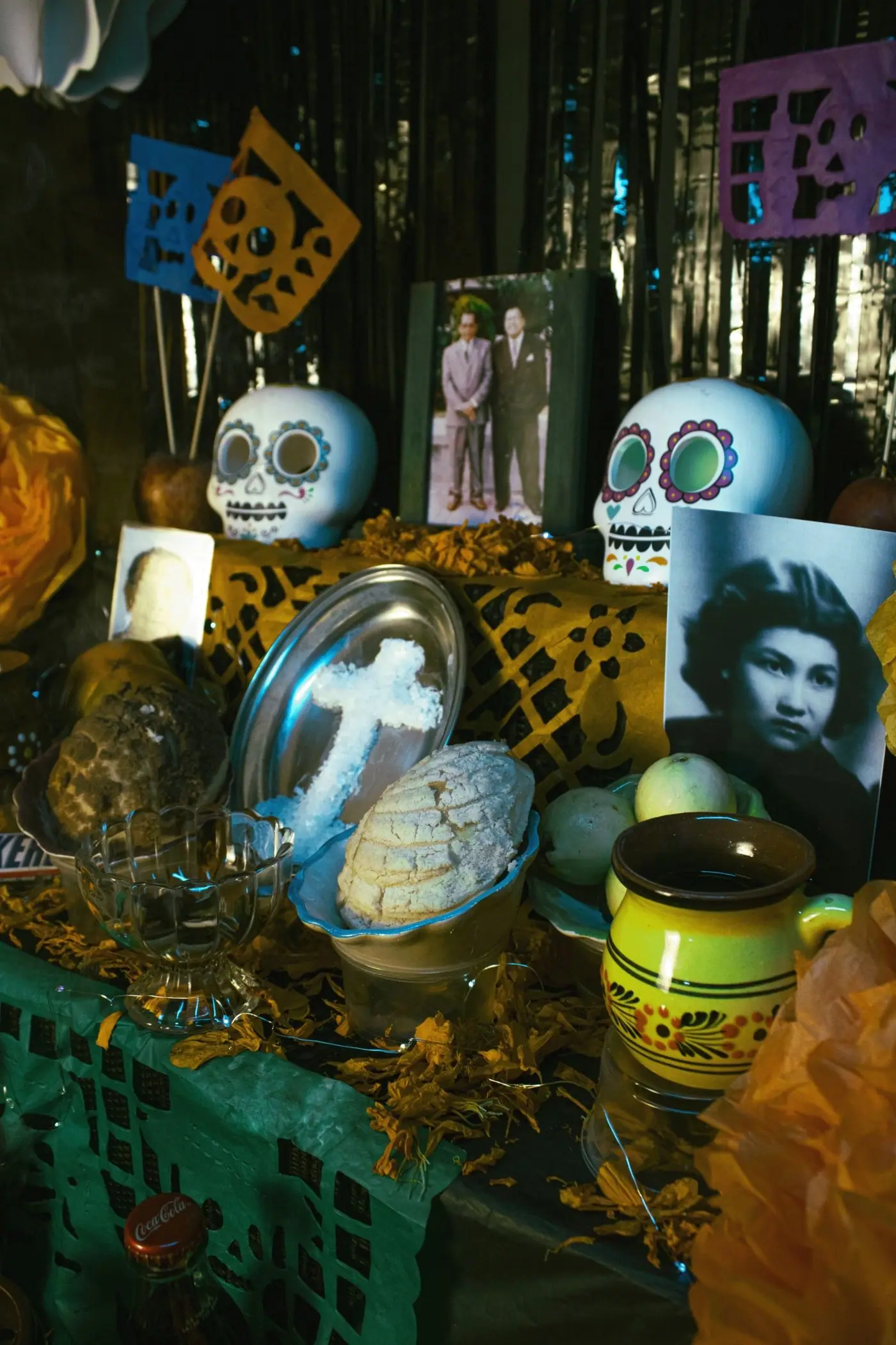
Here is the quick payoff: beyond [pan de muerto](/blog/pan-de-muerto-explained), you may see mole, tamales, atole, calabaza en tacha, fruit, water, coffee, tequila, beer, candy, or the remembered person's favorite snack.[^src3][^src4][^src5] The last category is the most important one because it makes the altar personal.
A table of food works when it feels shared and personal, not like a buffet stock photo.
## Seven foods and drinks you may see
Mole and tamales feel festive and family-scale. Atole and coffee bring warmth. Fruit and water can speak to refreshment for the returning dead. Calabaza en tacha adds seasonal sweetness. But none of these is more meaningful than the food someone actually loved.
## Mole, tamales, atole, calabaza, fruit, water, favorites
Ask about dishes gently. ¿Cómo se llama? is simple. ¿Quién lo preparó? opens a family story. ¿Le gustaba mucho? asks about the person being remembered, not just the food on display.
¿Qué significa?
What does it mean?
¿Cómo lo dicen ustedes?
How do you all say it?
Gracias, así lo digo mejor.
Thanks, now I can say it better.
## How to ask about a dish
The rule for visitors is basic manners with extra care. If food is on [an ofrenda](/blog/day-of-the-dead-altar-objects), do not treat it like a snack table.[^src2] Ask ¿esto se comparte después? or wait until someone offers. The Spanish is easy; the respect is the point.
## Tone: it is not a buffet for visitors
Most of this food sits on an altar before anybody eats it. Asking about a dish is welcome; treating the season as a tasting menu is the part that reads badly, and it reads badly fast.
Warm drinks and handmade dishes help show why food vocabulary belongs to family memory.
| Situation | Better move | Why |
|---|---|---|
| You are unsure | ¿Qué significa? | Short and honest |
| You need local usage | ¿Cómo lo dicen ustedes? | Invites lived context |
| You might overstep | Lo digo con respeto | Lowers the temperature |
| Someone corrects you | Gracias, así lo digo mejor | Keeps connection open |
The strongest food image is one that suggests preparation, offering, and care.
## How to ask about food when memory is part of the meal
Food is one of the easiest ways into Spanish conversation, but on Día de Muertos it is also one of the easiest ways to sound careless. The dish may not be there because it is "traditional" in the abstract. It may be there because a grandfather loved it, an aunt always made it, or someone remembers a very specific brand of soda. That is why ¿qué comida le gustaba? can be a better question than ¿qué significa este platillo?.
If someone offers you food after an ofrenda visit, accept or decline like a normal guest: sí, gracias, poquito, por favor, or ahorita no, gracias. If the food is still on the altar, do not assume it is ready to eat. Ask ¿esto se comparte después? That one sentence shows you understand there is timing and meaning involved.
The seven foods in this post are a starting point, not a checklist. You might see mole, tamales, atole, fruit, calabaza en tacha, water, coffee, tequila, beer, candy, or one person's favorite snack. The local answer matters more than the list. Ask ¿qué ponen ustedes? and you will learn more than any infographic can teach.
For learners living in the US, this is also a good chance to practice not translating culture into a performance. You do not need to host a perfect Día de Muertos dinner after reading one article. You can start smaller: learn the dish names, ask people where they buy ingredients, and say se ve delicioso when someone shares food with you. Warmth counts.
The food lesson is simple: names help, manners matter more. Learn the dishes, ask ¿qué ponen ustedes?, and remember that the most meaningful item on an ofrenda may be the one that looks least "traditional" from the outside.
One more useful phrase: era su favorito, "it was their favorite." If someone says that about a dish on an ofrenda, you have just learned why it is there. Answer gently: qué bonito detalle or gracias por contarme.
[^src1]: [UNESCO, traditional Mexican cuisine](https://ich.unesco.org/en/RL/traditional-mexican-cuisine-ancestral-ongoing-community-culture-the-michoacan-paradigm-00400)
[^src2]: [El País México, ofrenda elements](https://elpais.com/mexico/2025-11-01/ofrenda-de-dia-de-muertos-cuando-se-pone-el-origen-de-la-tradicion-y-el-significado-de-sus-elementos.html)
[^src3]: [Larousse Cocina, mole](https://laroussecocina.mx/palabra/mole/)
[^src4]: [Diccionario de la lengua española, tamal](https://dle.rae.es/tamal)
[^src5]: [Diccionario de la lengua española, atole](https://dle.rae.es/atole)
FAQ:
Q: What foods go on a Day of the Dead altar?
A: Common items include mole, tamales, atole, calabaza en tacha, fruit, water, coffee, tequila, beer, and favorite foods of the person remembered.
Q: Is pan de muerto the only traditional food?
A: No. It is iconic, but ofrendas often include many other foods and drinks.
Q: Why put favorite foods on an ofrenda?
A: They remember the person as a real individual, not just a symbol.
Q: Can visitors eat food from an ofrenda?
A: Do not assume. Ask whether it will be shared later.
Q: How do I ask what a dish is?
A: Say ¿qué es este platillo? or ¿cómo se llama?
Q: What does calabaza en tacha mean?
A: It is candied pumpkin, often cooked with piloncillo and spices.
Q: What is a respectful food compliment?
A: Say se ve delicioso, huele buenísimo, or gracias por compartir.
Sources:
- UNESCO, traditional Mexican cuisine: https://ich.unesco.org/en/RL/traditional-mexican-cuisine-ancestral-ongoing-community-culture-the-michoacan-paradigm-00400
- El País México, ofrenda elements: https://elpais.com/mexico/2025-11-01/ofrenda-de-dia-de-muertos-cuando-se-pone-el-origen-de-la-tradicion-y-el-significado-de-sus-elementos.html
- Larousse Cocina, mole: https://laroussecocina.mx/palabra/mole/
- Diccionario de la lengua española, tamal: https://dle.rae.es/tamal
- Diccionario de la lengua española, atole: https://dle.rae.es/atole
Related words: echarse-un-taco, mande, jefa