---
title: "Día de los Muertos or Día de Muertos: Which One Do Mexicans Actually Say?"
description: "Learn Día de Muertos vs Día de los Muertos, why both appear, which one sounds more Mexican, and how to use the phrase respectfully."
type: "article"
category: "guides"
url: "https://consalsa.app/blog/dia-de-los-muertos-or-dia-de-muertos"
canonical: "https://consalsa.app/blog/dia-de-los-muertos-or-dia-de-muertos"
published: "2026-10-10"
updated: "2026-10-10"
author: "Andrey the Nomad"
site: "ConSalsa.App"
license: "https://consalsa.app/terms#ip"
---
# Día de los Muertos or Día de Muertos: Which One Do Mexicans Actually Say?
URL: https://consalsa.app/blog/dia-de-los-muertos-or-dia-de-muertos
Date: 2026-10-10
Updated: 2026-10-10
Category: guides
Keywords: dia de los muertos vs dia de muertos, is it dia de muertos or dia de los muertos, day of the dead spanish
Summary: Learn Día de Muertos vs Día de los Muertos, why both appear, which one sounds more Mexican, and how to use the phrase respectfully.
Quick answer:
- In Mexico, Día de Muertos is very common and often preferred in official and everyday usage.
- Día de los Muertos is understandable and common in English-facing contexts.
- The los is grammatically possible, but Día de Muertos sounds more locally Mexican.
- Use Día de Muertos when writing for Mexico or talking about the Mexican tradition.
What you'll learn:
- Why both Día de Muertos and Día de los Muertos appear in English-language spaces.
- Why Día de Muertos is the cleaner Mexican default for your own writing.
- How to ask about ofrendas, panteones, and family traditions without correcting people.
- How to stop over-focusing on grammar and start sounding natural.
Don't sound gringo:
Do not become the altar grammar police. Use Día de Muertos yourself, but do not correct someone mid-memory.
Body:
In Mexico, Día de Muertos is very common and often preferred in official and everyday usage. Día de los Muertos is understandable and common in English-facing contexts.[^src1]
This is the kind of detail Spanish learners obsess over because it feels like there must be one correct answer. The real skill is more relaxed: learn the Mexican form you want to use in your own writing, then stop treating every variation as a mistake to police.
## Why both forms exist
In Mexico, Día de Muertos is the phrase you will see again and again in cultural programming, museum text, city events, and everyday conversation.[^src3] That does not mean every other form is criminal. It means this is the form that should live at the front of your brain if you are trying to sound close to Mexican usage.
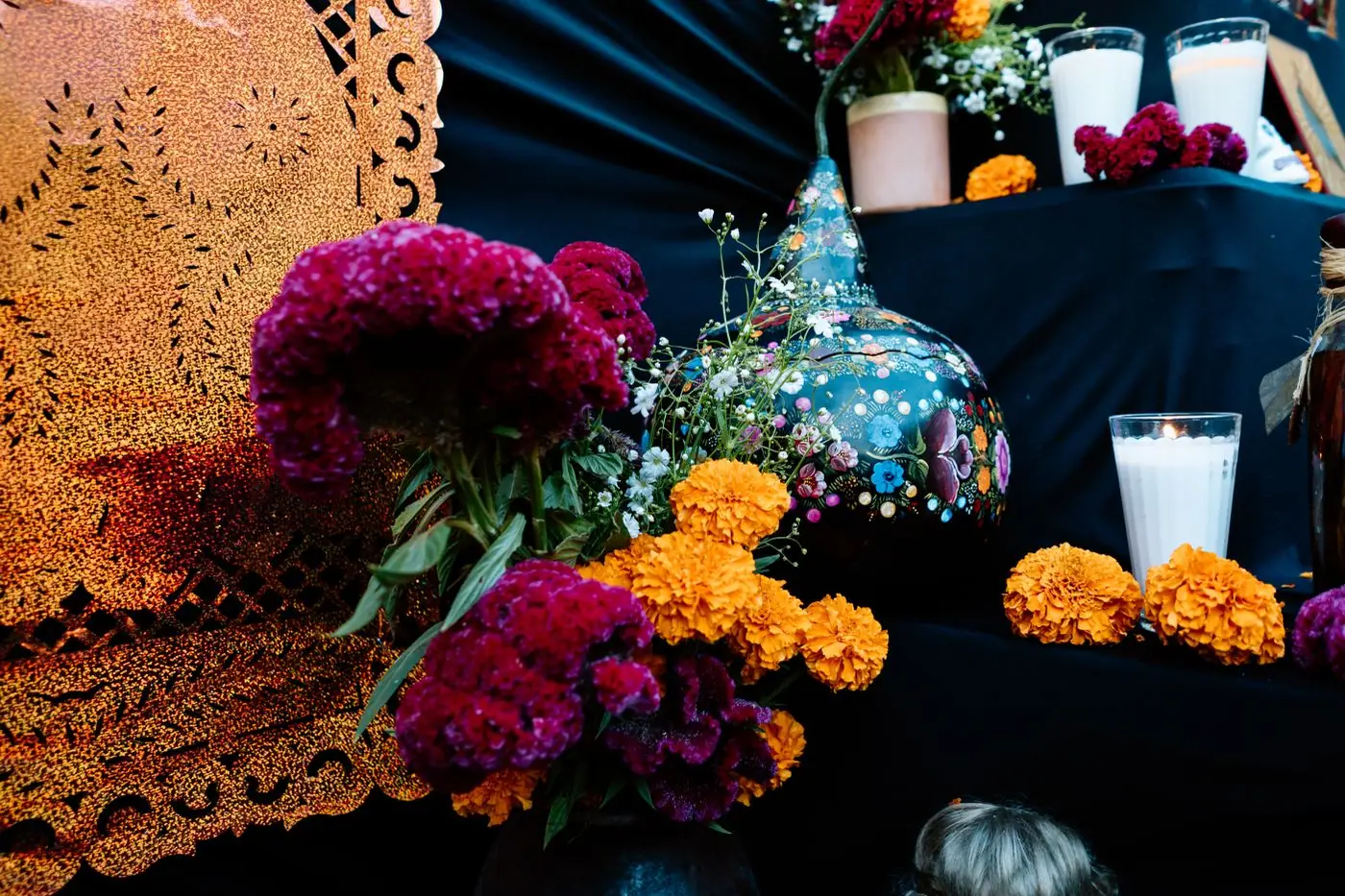
A Día de Muertos ofrenda up close: marigolds, cockscomb, and glasses of milk left out for the dead.
## What los does grammatically
The los question is grammar, but it is also influence from English. English says "the dead," so learners often rebuild the Spanish as los muertos. Spanish does not need to follow that path. The name works as a set expression, and set expressions do not owe English a perfect mirror.[^src4][^src5]
## Which one sounds Mexican
If you want to ask about real practice, skip the article debate and ask better questions: ¿ustedes ponen ofrenda?, ¿van al panteón?, ¿qué comida preparan?. Those questions get you closer to lived Spanish than a mini-lecture about los.
¿Qué significa?
What does it mean?
¿Cómo lo dicen ustedes?
How do you all say it?
Gracias, así lo digo mejor.
Thanks, now I can say it better.
## How to correct yourself, not everyone else
When you catch yourself saying the longer version, just adjust next time. A smooth self-correction sounds like perdón, Día de Muertos, then keep talking. You do not need to announce that you learned a new rule. Natural Spanish is often quiet Spanish.
## Related words: ofrenda, calaverita, cempasúchil
These three come up more than any other words once the season starts, and knowing them saves a great deal of pointing. If you want to go deeper, we break down [the objects on a Day of the Dead altar](/blog/day-of-the-dead-altar-objects), [why cempasúchil is the flower of the season](/blog/cempasuchil-marigold), and [how to order pan de muerto](/blog/pan-de-muerto-explained).
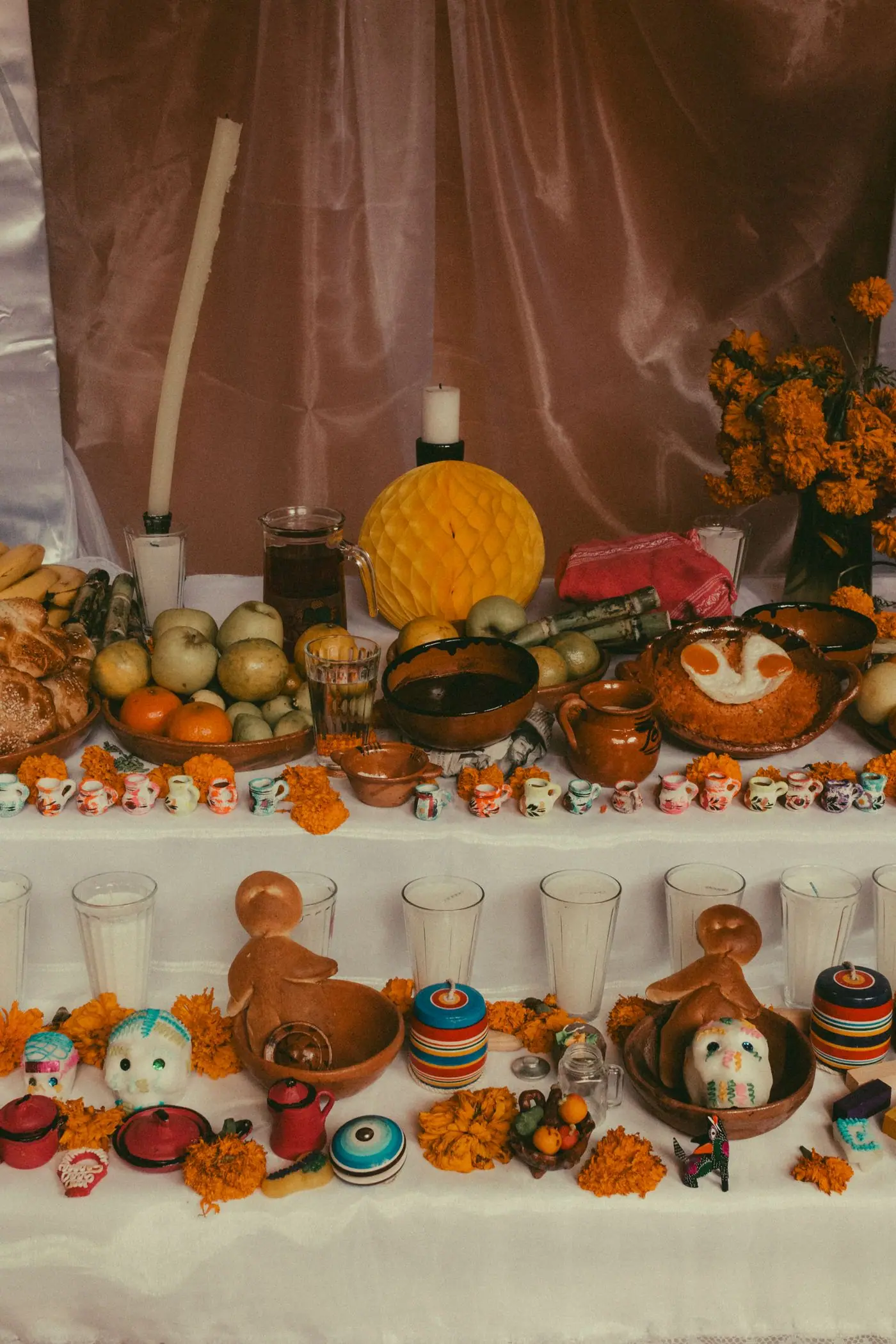
A family ofrenda stacked with bread, fruit, and marigolds - the lived version of the phrase.
| Situation | Better move | Why |
|---|---|---|
| You are unsure | ¿Qué significa? | Short and honest |
| You need local usage | ¿Cómo lo dicen ustedes? | Invites lived context |
| You might overstep | Lo digo con respeto | Lowers the temperature |
| Someone corrects you | Gracias, así lo digo mejor | Keeps connection open |
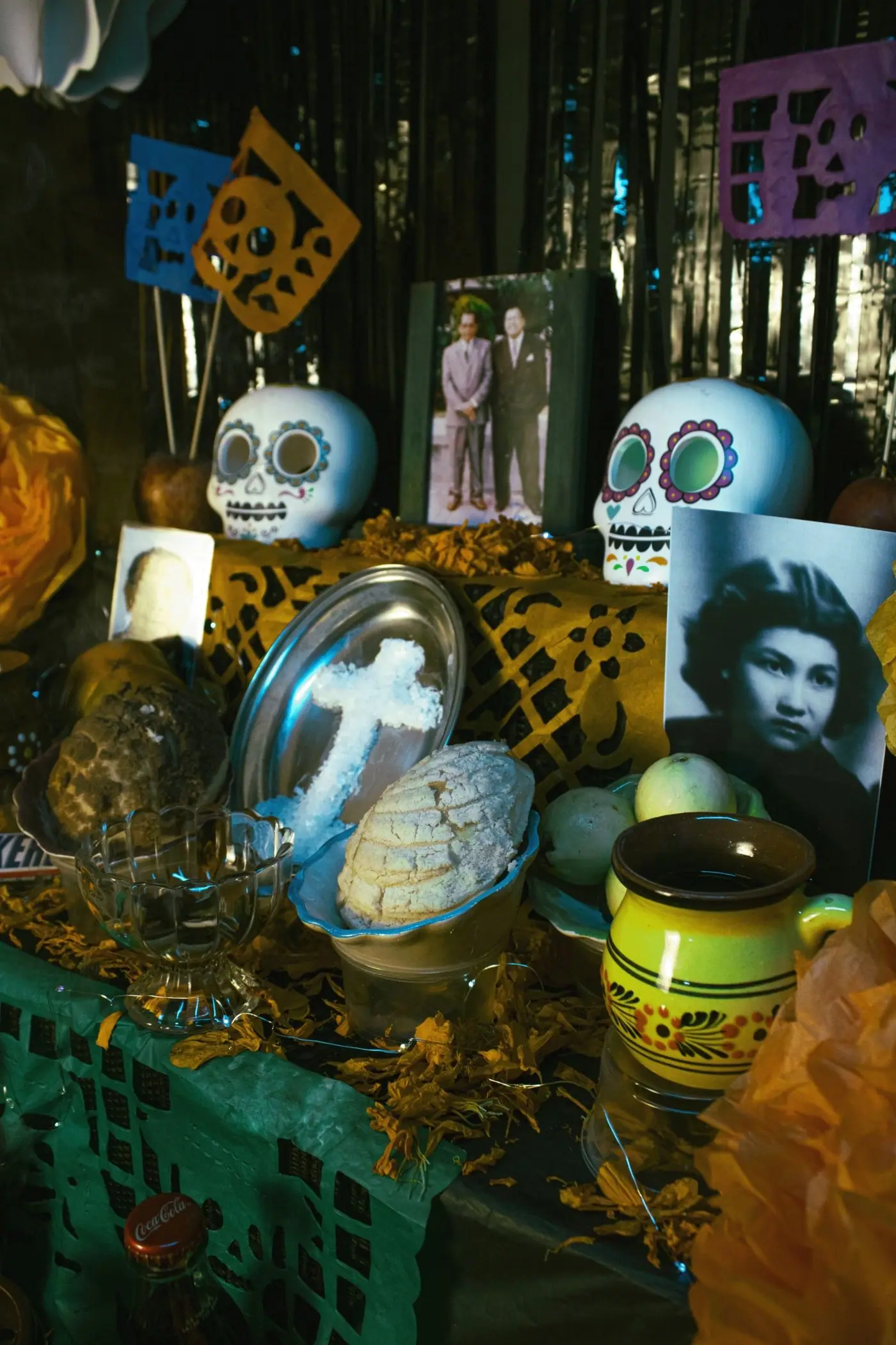
Sugar skulls beside photographs of the people being remembered - memory, not decoration.
## What to say when your Spanish brain wants one official answer
Here is the annoying but useful answer: you will hear both. Día de Muertos is extremely common in Mexico and is the form you will see in many official cultural references.[^src2] Día de los Muertos also exists and will not make you impossible to understand. The mistake is treating the article los like a moral emergency.
If you are writing a caption, article, or invite and want to sound closer to Mexican usage, choose Día de Muertos. If you are talking with someone who says Día de los Muertos, do not jump in with a correction. The better move is to mirror the person in the conversation and save your grammar note for your own writing later.
Think of it like ordering food with someone's family. You do not win connection by stopping the table to explain definite articles. You win it by asking, ¿ustedes ponen ofrenda?, ¿van al panteón?, or ¿qué comida preparan? Those questions show more respect than proving you know which version appears in a title.
For learners, this is also a good reminder that Spanish names are not always word-for-word translations. English speakers often say "Day of the Dead," then build Spanish backward from English. Mexican usage has its own rhythm. Let it be a phrase you learn as a phrase: Día de Muertos. Say it cleanly, keep the accent on Día, and move on to the human part of the conversation.
One quick pronunciation note helps too. Día is two syllables, and Muertos carries the normal stress on muer. Say it slowly once, then naturally. The phrase should feel like a date on the calendar, not like a vocabulary performance.
Use Día de Muertos when you want the clean Mexican default, understand Día de los Muertos when you hear it, and spend your social energy on the questions that invite people to share how they actually mark the date.
[^src1]: [INAH, Día de Muertos](https://www.inah.gob.mx/boletines/dia-de-muertos-una-tradicion-mexicana-que-trasciende-en-el-tiempo)
[^src2]: [UNESCO, Indigenous festivity dedicated to the dead](https://ich.unesco.org/en/RL/indigenous-festivity-dedicated-to-the-dead-00054)
[^src3]: [Secretaría de Cultura, Día de Muertos](https://www.gob.mx/cultura)
[^src4]: [Diccionario de la lengua española, día](https://dle.rae.es/d%C3%ADa)
[^src5]: [Diccionario de la lengua española, muerto](https://dle.rae.es/muerto)
FAQ:
Q: Which is more common in Mexico, Día de Muertos or Día de los Muertos?
A: Día de Muertos is the cleaner Mexican default and appears widely in cultural and official contexts. Día de los Muertos is understandable, but it sounds more English-influenced to many learners.
Q: Is Día de los Muertos wrong?
A: Not automatically. People will understand it, and you may hear it, especially in the US. For Mexican usage in your own writing, Día de Muertos is usually the safer choice.
Q: Should I correct someone who says Día de los Muertos?
A: No. In conversation, mirror the person or keep going. Save the grammar note for your own writing unless someone asks.
Q: Why is there no los in Día de Muertos?
A: Spanish holiday names do not always map word-for-word from English. Treat Día de Muertos as a set phrase.
Q: What questions can I ask about the holiday?
A: Try ¿ustedes ponen ofrenda?, ¿van al panteón?, or ¿qué comida preparan? These invite real context.
Q: How do I pronounce Día de Muertos?
A: Día is two syllables, and Muertos is stressed naturally on muer. Say it like a date, not a performance.
Q: Is this the same as Halloween?
A: No. Día de Muertos has its own Mexican family, religious, regional, and public traditions.
Sources:
- INAH, Día de Muertos: https://www.inah.gob.mx/boletines/dia-de-muertos-una-tradicion-mexicana-que-trasciende-en-el-tiempo
- UNESCO, Indigenous festivity dedicated to the dead: https://ich.unesco.org/en/RL/indigenous-festivity-dedicated-to-the-dead-00054
- Secretaría de Cultura, Día de Muertos: https://www.gob.mx/cultura
- Diccionario de la lengua española, día: https://dle.rae.es/d%C3%ADa
- Diccionario de la lengua española, muerto: https://dle.rae.es/muerto
Related words: neta, mande, sale, padre