---
title: "Dos a Cero: The USA vs Mexico Taunt You Need to Understand"
description: "Learn what dos a cero means, why USA and Mexico fans use it, and how to read the rivalry without stepping on the mood."
type: "article"
category: "guides"
url: "https://consalsa.app/blog/dos-a-cero"
canonical: "https://consalsa.app/blog/dos-a-cero"
published: "2026-07-29"
updated: "2026-07-29"
author: "Andrey the Nomad"
site: "ConSalsa.App"
license: "https://consalsa.app/about"
---

# Dos a Cero: The USA vs Mexico Taunt You Need to Understand
URL: https://consalsa.app/blog/dos-a-cero
Date: 2026-07-29
Updated: 2026-07-29
Category: guides
Keywords: dos a cero meaning, dos a cero mexico usa, usa mexico soccer rivalry, mexican soccer spanish, soccer score in spanish
Summary: Learn what dos a cero means, why USA and Mexico fans use it, and how to read the rivalry without stepping on the mood.

Quick answer:
- Dos a cero means two to zero, or 2-0, in Spanish.
- In USA vs Mexico soccer, Dos a Cero became a famous taunt tied to repeated U.S. wins by that scoreline.
- Mexican fans understand the phrase, but it can be spicy depending on the room.
- Use it carefully: it is rivalry language, not neutral small talk.

What you'll learn:
- How Spanish soccer scores work in everyday speech.
- Why Dos a Cero became loaded in the USA-Mexico rivalry.
- When the phrase is playful and when it sounds like you are trying to provoke.
- Safer ways to talk about rivalry scores in mixed fan groups.

Don't sound gringo:
Don't walk into a Mexico-heavy room yelling Dos a Cero as your opener. That is not Spanish practice; that is poking the table with a stick.

Body:

<mark lang="es-MX">Dos a cero</mark> literally means 2-0. In normal Spanish, it is just a score. In USA vs Mexico soccer, it is a tiny phrase with a whole rivalry packed inside it.

That is why you should understand it before you use it. Said in the right group chat, <mark lang="es-MX">dos a cero</mark> is teasing. Said in the wrong room, it sounds like you came looking for smoke. If you are still new to fan Spanish, it helps to [start with El Tri](/blog/el-tri-meaning) before you wade into rivalry lines.

## How scores work in Spanish

| Score | Spanish | English |
|---|---|---|
| 1-0 | uno a cero | one-nil / one to zero |
| 2-0 | dos a cero | two to zero |
| 2-1 | dos a uno | two to one |
| 1-1 | uno a uno | one-one |
| 3-2 | tres a dos | three to two |

The word <mark lang="es-MX">cero</mark> is zero.[^rae-cero] <mark lang="es-MX">Dos</mark> is two.[^rae-dos] The little <mark lang="es-MX">a</mark> between them is how scores get read aloud. Easy grammar. Complicated feelings.

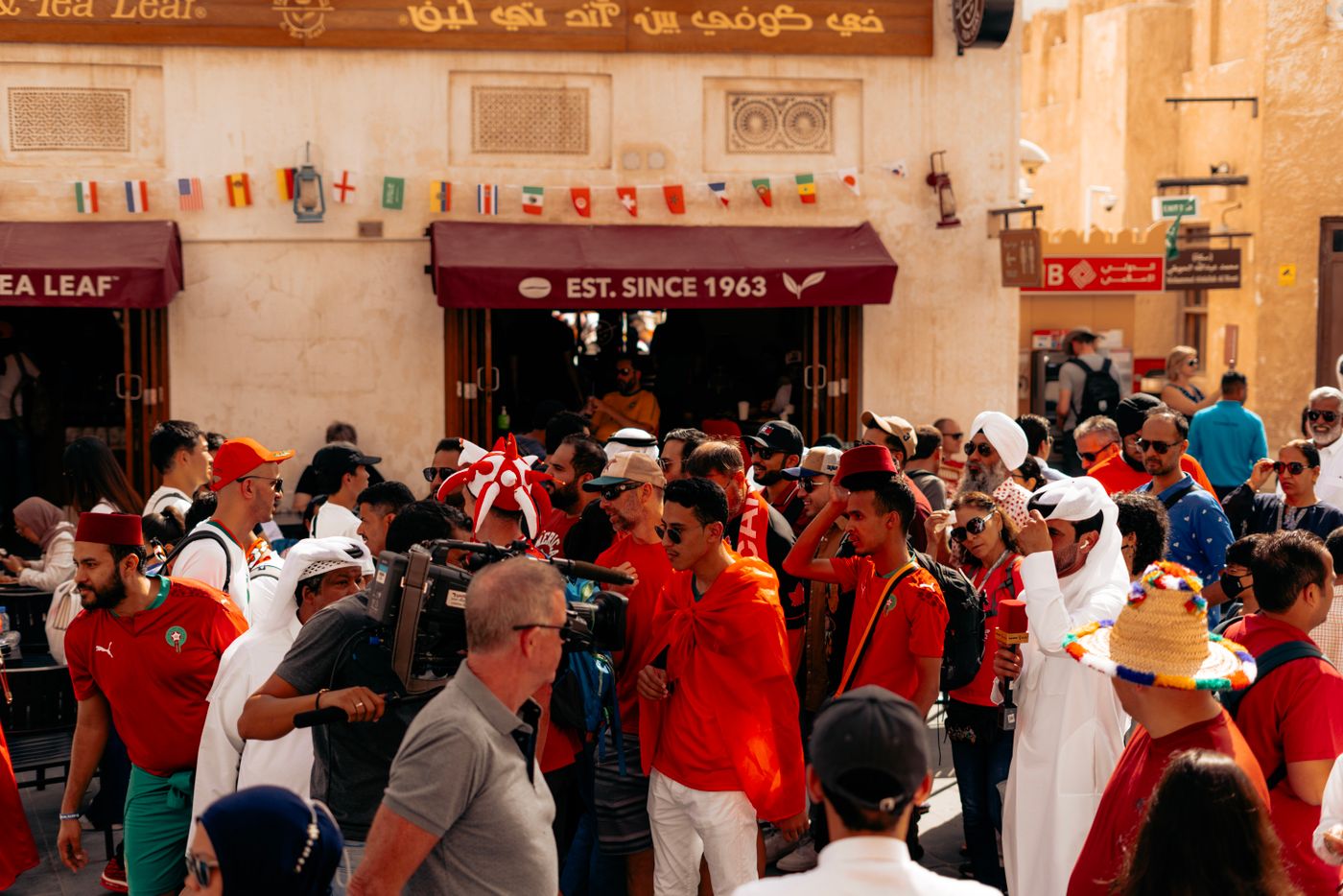
<figure>
  <img src="/images/blog/dos-a-cero-1.jpg" alt="Fans watching an international soccer match together." loading="lazy" />
  <figcaption>A score can be neutral on paper and spicy in the room. Photo from Pexels.</figcaption>
</figure>

## Why Dos a Cero became a taunt

The United States and Mexico have one of the most emotionally loaded rivalries in North American soccer. Both federations list their national teams in the official, boring way: U.S. Soccer has the USMNT, and FIFA's Mexico profile simply identifies the national side as Mexico.[^us-soccer][^fifa-mexico] Fans do not live in the official, boring way.

<mark lang="es-MX">Dos a cero</mark> became famous because U.S. fans used the repeated 2-0 scoreline against Mexico as a chant and taunt. You do not need to memorize every match to understand the social point: the phrase is not just "a result." It says, "remember that thing that hurt?"

<ul class="examples">
  <li class="example">
    <div class="es" lang="es-MX">Quedo dos a cero.</div>
    <div class="en" lang="en">It ended 2-0.</div>
  </li>
  <li class="example">
    <div class="es" lang="es-MX">Nos ganaron dos a cero.</div>
    <div class="en" lang="en">They beat us 2-0.</div>
  </li>
  <li class="example">
    <div class="es" lang="es-MX">Otra vez con el dos a cero.</div>
    <div class="en" lang="en">Here we go with the 2-0 thing again.</div>
  </li>
</ul>

## When it is playful and when it is too much

If you are with close friends who already tease each other about the rivalry, <mark lang="es-MX">dos a cero</mark> can be part of the bit. If you are in a Mexico-heavy bar, at a family gathering, or talking to someone you just met, it can feel like you skipped hello and went straight to poking a bruise. The same read-the-room rule runs through [Mexican soccer jokes](/blog/mexican-soccer-jokes): match the tone before you push it.

CONCACAF is the regional frame where the rivalry often lives.[^concacaf] For more of that rivalry vocabulary, see [Mexican fútbol trash talk](/blog/mexican-futbol-trash-talk). But the emotional frame is personal: family, migration, language, pride, and years of games that people remember with their whole chest.

<div id="midpost-newsletter-slot"></div>

## Safer rivalry Spanish

| Instead of opening with... | Try... | Why it works |
|---|---|---|
| Dos a cero | ¿Vas a ver el partido? | Starts human |
| Ya valieron | Va a estar bueno | Keeps it friendly |
| Mexico siempre pierde | Esta pesada la rivalidad | Names the tension |
| USA owns you | Buen partido | Does not make it personal |
| Trash talk in English | Light Spanish reactions | Matches the room |

<figure>
  <img src="/images/blog/dos-a-cero-2.jpg" alt="Soccer fans reacting with mixed emotions during a match." loading="lazy" />
  <figcaption>Rivalry language needs timing, not just vocabulary. Photo from Pexels.</figcaption>
</figure>

## Copy-ready lines for mixed fan groups

These lines let you participate without turning the table into a courtroom.

<ul class="examples">
  <li class="example">
    <div class="es" lang="es-MX">Va a estar intenso.</div>
    <div class="en" lang="en">It is going to be intense.</div>
  </li>
  <li class="example">
    <div class="es" lang="es-MX">Esta rivalidad siempre se prende.</div>
    <div class="en" lang="en">This rivalry always heats up.</div>
  </li>
  <li class="example">
    <div class="es" lang="es-MX">Buen partido, estuvo cerrado.</div>
    <div class="en" lang="en">Good game, it was tight.</div>
  </li>
  <li class="example">
    <div class="es" lang="es-MX">Hoy si nos toco sufrir.</div>
    <div class="en" lang="en">Today it was our turn to suffer.</div>
  </li>
</ul>

## The tone rule

If someone else says <mark lang="es-MX">dos a cero</mark> first and everyone laughs, you can probably laugh too. If the room goes quiet, do not explain the history louder. Just pivot: <mark lang="es-MX">bueno, estuvo bueno el partido</mark>.

<figure>
  <img src="/images/blog/dos-a-cero-3.jpg" alt="People watching soccer together in a lively fan setting." loading="lazy" />
  <figcaption>The best rivalry Spanish lets you stay invited for the next game. Photo from Pexels.</figcaption>
</figure>

Sports Spanish is not only words. It is timing, who you are with, and how much trust is already in the room. Learn <mark lang="es-MX">dos a cero</mark>. Respect the charge it carries. Then choose whether the joke is worth spending.

For US learners, the quiet flex is knowing the phrase and still choosing the warmer line when the room calls for it. That is how you move from "I know a chant" to "I can hang here."

[^us-soccer]: [U.S. Soccer, Men's National Team](https://www.ussoccer.com/teams/usmnt)
[^fifa-mexico]: [FIFA, Mexico national team profile](https://www.fifa.com/en/teams/mens/mexico)
[^rae-cero]: [Diccionario de la lengua española, cero](https://dle.rae.es/cero) - Real Academia Española
[^rae-dos]: [Diccionario de la lengua española, dos](https://dle.rae.es/dos) - Real Academia Española
[^concacaf]: [CONCACAF](https://www.concacaf.com/)

FAQ:
Q: What does Dos a Cero mean?
A: Dos a cero means two to zero, or 2-0, in Spanish.

Q: Why is Dos a Cero famous?
A: It became famous as a USA vs Mexico soccer taunt after several U.S. wins over Mexico by a 2-0 scoreline.

Q: Is Dos a Cero rude?
A: It is not a swear word, but it is provocative rivalry language. Use it only when the context is clearly playful.

Q: How do you say a soccer score in Spanish?
A: Say the first number, a, then the second number: dos a cero, tres a uno, uno a uno.

Q: Can Mexican fans say Dos a Cero too?
A: Yes, but it is most associated with U.S. fans teasing Mexico in the rivalry.

Q: What is a safer phrase after a close game?
A: Say buen partido or estuvo cerrado. Those keep the conversation friendly.

Q: Should learners use sports taunts?
A: Only after reading the room. Rivalry jokes need trust, timing, and an exit plan.

Sources:
- U.S. Soccer, Men's National Team: https://www.ussoccer.com/teams/usmnt
- FIFA, Mexico national team profile: https://www.fifa.com/en/teams/mens/mexico
- Diccionario de la lengua española, cero: https://dle.rae.es/cero
- Diccionario de la lengua española, dos: https://dle.rae.es/dos
- CONCACAF, competitions: https://www.concacaf.com/

Related words: no-manches, ni-modo, a-huevo, guey