---
title: "El Grito: The One Word to Shout at Midnight on Sept 15"
description: "El Grito is the call-and-response shout that opens Mexican Independence night on Sept 15. Here is what each viva means and the exact moment to yell so you fit right in."
type: "article"
category: "seasonal"
url: "https://consalsa.app/blog/el-grito-explained"
canonical: "https://consalsa.app/blog/el-grito-explained"
published: "2026-09-15"
updated: "2026-09-15"
author: "Andrey the Nomad"
site: "ConSalsa.App"
license: "https://consalsa.app/terms#ip"
---

# El Grito: The One Word to Shout at Midnight on Sept 15
URL: https://consalsa.app/blog/el-grito-explained
Date: 2026-09-15
Updated: 2026-09-15
Category: seasonal
Keywords: el grito meaning, viva mexico meaning, el grito de independencia, september 15 mexico, what is el grito, mexican independence shout
Summary: El Grito is the call-and-response shout that opens Mexican Independence night on Sept 15. Here is what each viva means and the exact moment to yell so you fit right in.

Quick answer:
- El Grito is the call-and-response shout that opens Mexican Independence night on September 15, led by an official from a balcony.
- The leader calls out heroes' names and each line ends with the crowd roaring back '¡Viva!'
- It closes with three big rounds of '¡Viva México!' as bells ring and fireworks start.
- You join in by shouting '¡Viva!' after every line - that is the whole job, and it is enough.

What you'll learn:
- What El Grito is and why it happens at night on September 15, not on the 16th.
- The actual call-and-response, line by line, so you know when to shout.
- What ¡Viva!, ¡Viva México!, héroes, and mexicanos really mean in the moment.
- How to join in naturally instead of mumbling along half a beat late.

Don't sound gringo:
Do not yell '¡Viva México!' on every single line. The crowd answers most lines with just '¡Viva!' - the full '¡Viva México!' is saved for the three big ones at the very end. Shouting it the whole time marks you instantly.

Body:

It is five to midnight on September 15. You are on a friend's rooftop in CDMX, beer sweating in your hand, someone flipping carne on a tiny grill, and the TV is showing a plaza packed wall to wall.

Then a voice on screen yells one word, and the whole rooftop roars something back at the exact same instant.

Everyone around you is shouting. You are mouthing along half a second late, hoping nobody looks over.

I have been that person. The good news is you stop being lost fast.

That moment is El Grito. It is a call-and-response shout that opens Mexican Independence night. One person leads, everyone answers, and it builds to three thunderous rounds of <mark lang="es-MX">¡Viva México!</mark> at the end.

**Your only real job is to shout <mark lang="es-MX">¡Viva!</mark> at the right moments.** That is it.

Once you catch the pattern, the nerves go away. And honestly, joining in beats filming the whole thing from the back row.

## El Grito at a glance

Here is the whole night laid out, so the rest of this makes sense.

| Spanish | What it literally is | What you do |
|---|---|---|
| El Grito | The shout that opens Independence night | Listen for the rhythm, then answer |
| ¡Viva! | "Hooray / long live" | Shout it back after each line |
| ¡Viva México! | "Long live Mexico" | Save it for the three big rounds at the end |
| Héroes | The independence heroes named one by one | Answer each with ¡Viva! |
| Mexicanos | "Mexicans" - how the leader opens | Just listen, this is the greeting |

The word <mark lang="es-MX">grito</mark> just means a shout or a cry.[^rae-grito]

What makes this one land is the history under it, plus the fact that a whole country does it at the same hour, the same night, every year. The first time I felt a whole street do it together, I got it.

## Why it happens at night on the 15th, not the 16th

This trips up almost every visitor. The official Independence Day is September 16, with the big military parade. **But the famous shouting happens the night before, on the 15th.**[^history]

If you show up on the 16th expecting the shout, you already missed it.

The reason is in the original event. In the early hours of September 16, 1810, a priest named Miguel Hidalgo rang the church bell in the town of Dolores and called people to rise up against Spanish rule.[^inehrm] That late-night call is what the modern <mark lang="es-MX">grito</mark> reenacts.

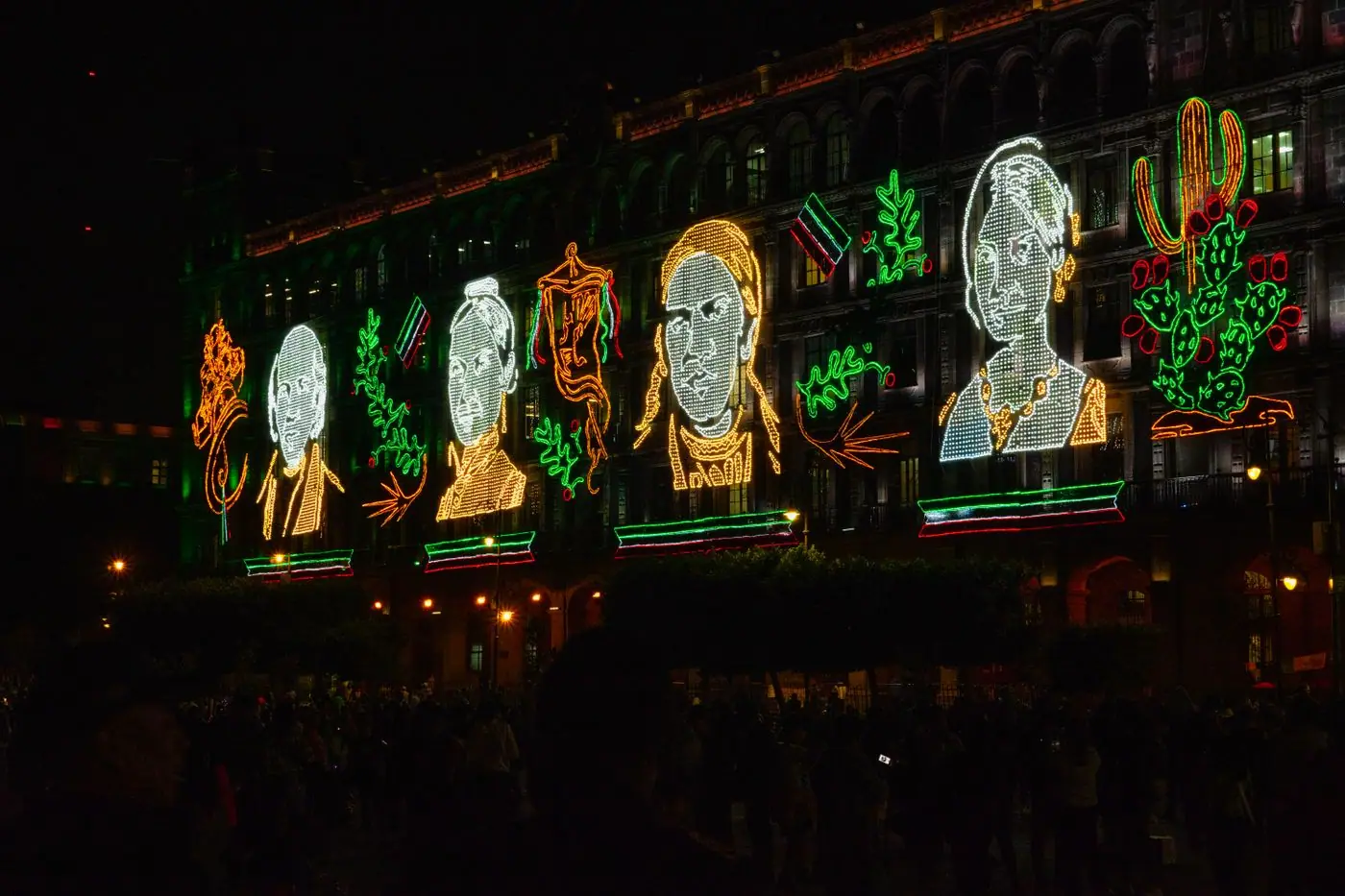
So every year, just before midnight on the 15th, leaders ring a bell and shout to the crowd. The president does it from the balcony of the National Palace over the packed Zócalo, and the original Dolores bell hangs right above him.[^britannica]

In every other town a governor or mayor leads the same thing from the local balcony. Same script, smaller plaza. And in bars and on rooftops, somebody just grabs the moment and plays leader.

When it starts, you feel the energy change. People stop talking mid-sentence and turn to face the balcony or the TV.

The whole room goes quiet for a second. Then it really does not.

<figure>
  <img src="/images/blog/optimized/el-grito-explained-1-1400-3a392963.webp" alt="A crowd in a Mexican plaza at night waving flags and looking up toward a lit balcony during El Grito." loading="lazy" />
  <figcaption>The Zócalo fills up hours before midnight, and the whole crowd faces the balcony when the shout starts. Photo by Israyosoy S. on <a href="https://www.pexels.com/photo/nighttime-led-display-celebrating-mexican-independence-28409828/" target="_blank" rel="noopener noreferrer">Pexels</a>.</figcaption>
</figure>

## The call-and-response, line by line

This is the part people fake their way through. You do not have to.

The leader calls, the crowd answers, and the answer is almost always the single word <mark lang="es-MX">¡Viva!</mark> That is the whole rhythm.

It usually opens with a greeting to the crowd:

<ul class="examples">
  <li class="example">
    <div class="es" lang="es-MX">¡Mexicanos!</div>
    <div class="en" lang="en">Mexicans!</div>
  </li>
</ul>

That line, <mark lang="es-MX">¡Mexicanos!</mark>, is just the greeting. You do not answer it, you just listen.

Then the leader starts naming the <mark lang="es-MX">héroes</mark>, the independence heroes, one at a time. The leader calls <mark lang="es-MX">¡Viva!</mark> plus a name, and after each one the crowd roars back.

<ul class="examples">
  <li class="example">
    <div class="es" lang="es-MX">¡Viva Hidalgo!</div>
    <div class="en" lang="en">Long live Hidalgo!</div>
  </li>
  <li class="example">
    <div class="es" lang="es-MX">¡Viva! (responde la gente)</div>
    <div class="en" lang="en">Hooray! (the crowd answers)</div>
  </li>
  <li class="example">
    <div class="es" lang="es-MX">¡Viva Josefa Ortiz de Domínguez!</div>
    <div class="en" lang="en">Long live Josefa Ortiz de Domínguez!</div>
  </li>
  <li class="example">
    <div class="es" lang="es-MX">¡Viva! (responde la gente)</div>
    <div class="en" lang="en">Hooray! (the crowd answers)</div>
  </li>
</ul>

So the rule is short: **when the leader shouts a name and ends on <mark lang="es-MX">¡Viva!</mark>, you shout <mark lang="es-MX">¡Viva!</mark> right back.** Do not repeat the name. Do not tack on <mark lang="es-MX">México</mark>. Just the one word, loud, in time with everyone else.
The word <mark lang="es-MX">viva</mark> is the celebratory cheer. It comes from the verb "to live," so it lands as something like "long live."[^rae-viva]

You hear it at weddings, at the fútbol, anywhere people are cheering hard for something. During El Grito, it is doing its oldest job.

<div id="midpost-newsletter-slot"></div>

## The big finish: three rounds of ¡Viva México!

After the names, the leader builds to the climax.

This is the one part where the crowd shouts the full <mark lang="es-MX">¡Viva México!</mark> - three times in a row, each one louder than the last. Up to here it was just <mark lang="es-MX">¡Viva!</mark> after each name. Now the whole phrase comes out at full volume, and good luck not getting goosebumps.

<ul class="examples">
  <li class="example">
    <div class="es" lang="es-MX">¡Viva México! ¡Viva México! ¡Viva México!</div>
    <div class="en" lang="en">Long live Mexico! Long live Mexico! Long live Mexico!</div>
  </li>
</ul>

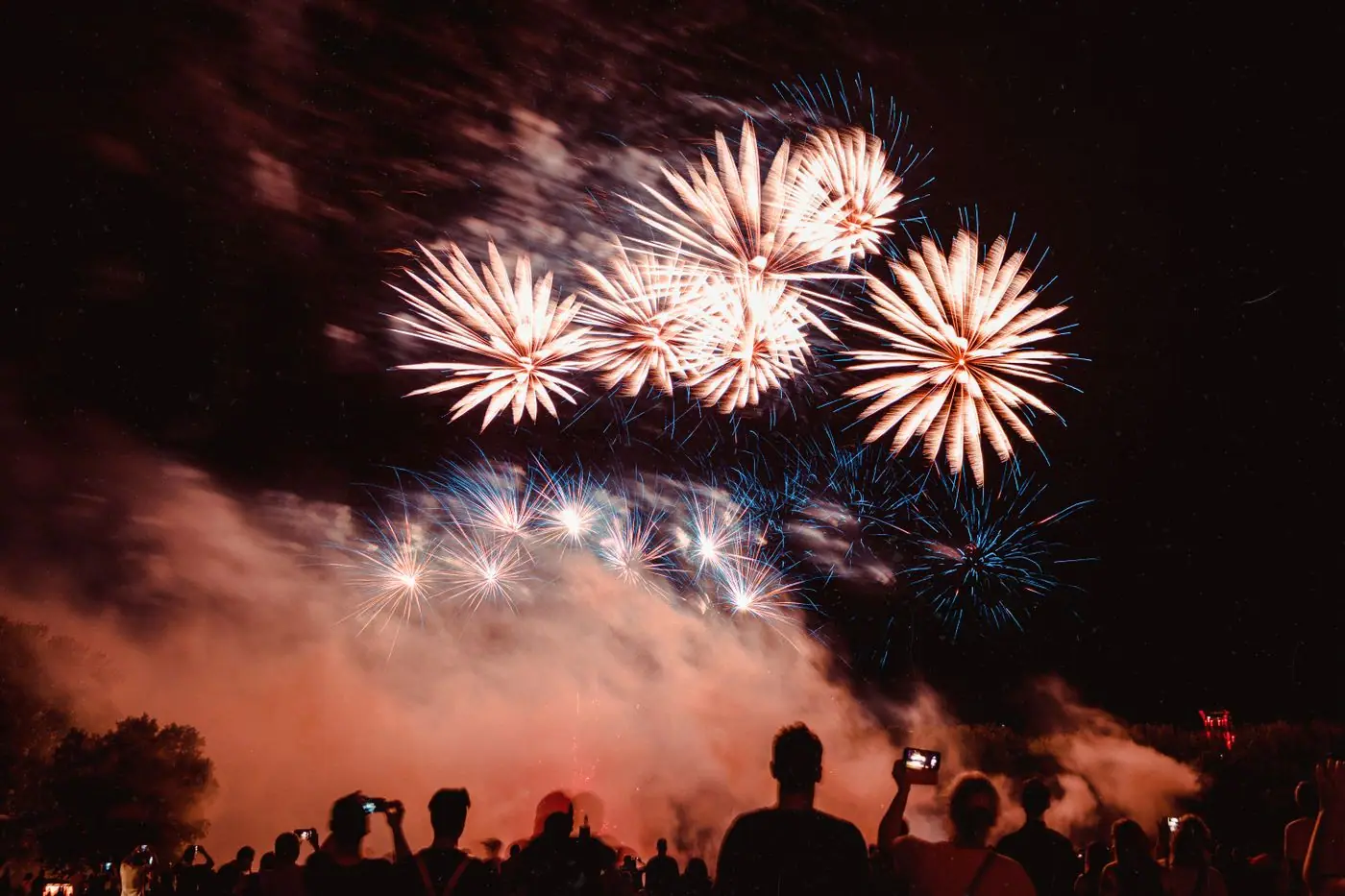
Then the bell rings, the flag waves, the national anthem starts, and the fireworks go off. The whole plaza turns into one big <mark lang="es-MX">¡Viva!</mark>

Right after, the move is to hug whoever is next to you and shout it one more time.

That is the moment. Nobody is grading your accent in there, I can promise you that.

A solid, honest reaction once it is over is just:

<ul class="examples">
  <li class="example">
    <div class="es" lang="es-MX">Qué padre estuvo, neta.</div>
    <div class="en" lang="en">That was so cool, honestly.</div>
  </li>
</ul>

If a Mexican friend asks whether you are coming to do the grito with them, the natural yes is short. <a href="/words/va">Va</a> works, or <a href="/words/orale-pues">órale pues</a> if you want to sound fully in. If you are genuinely surprised by how big it feels, <a href="/words/neta">neta</a> is the word that carries it, and <a href="/words/padre">padre</a> is the easy way to say it was great.

<figure>
  <img src="/images/blog/optimized/el-grito-explained-2-1400-9806deef.webp" alt="Fireworks exploding over a Mexican plaza right after the El Grito shout ends." loading="lazy" />
  <figcaption>The bell, the anthem, and the fireworks all land in the same minute, right after the third ¡Viva México! Photo by Jonas Von Werne on <a href="https://www.pexels.com/photo/people-watching-fireworks-display-during-nighttime-2893330/" target="_blank" rel="noopener noreferrer">Pexels</a>.</figcaption>
</figure>

## What not to do (so you do not out yourself)

Most mistakes here are small and easy to skip once you know them.

| Mistake | What it sounds like | Do this instead |
|---|---|---|
| Shouting ¡Viva México! every line | Trying too hard, off-rhythm | Answer most lines with just ¡Viva! |
| Repeating the hero's name | "¡Viva Hidalgo!" echoed back | Just shout ¡Viva! |
| Starting half a beat early | You alone, ahead of the crowd | Wait for the leader to finish the line |
| Calling it Cinco de Mayo | Pure tourist | It is Independence, September 15-16 |
| Doing it on the 16th | You missed the actual moment | The shout is the night of the 15th |

The biggest one is the rhythm. **The shout only works because everyone lands on <mark lang="es-MX">¡Viva!</mark> at the same instant.** Jump early or trail late and you stick out more than if you had just stayed quiet. So the whole skill is this: wait for the leader to finish, then hit the word with everyone else.

And please do not mix it up with Cinco de Mayo. Different date, and inside Mexico it is a pretty minor one. Bring it up at a September party and you have outed yourself in a single sentence.

## Who shouts it, and where

El Grito is for everyone. No age limit, no insider club. Kids do it, abuelitas do it, and the foreigner who learned the pattern an hour ago does it too. When the bell rings, the only word that matters is <mark lang="es-MX">¡Viva!</mark>

Where you do it changes the feel a lot.

The Zócalo version is huge and formal, the president up on the balcony and a sea of flags below. A neighborhood plaza is warmer, and you can actually see the balcony from where you stand. The rooftop or bar version is the loosest one - someone yells <mark lang="es-MX">¡Mexicanos!</mark> half as a joke, everyone plays along, and then you toast.

In any of them, the thing that reads as respect is simple. **Take it seriously enough to shout with real volume, and loose enough to actually enjoy it.** People clock the visitor who joins in instead of filming the whole thing from behind a phone. The video can wait one minute.

<figure>
  <img src="/images/blog/optimized/el-grito-explained-3-1400-6c043da6.webp" alt="A small family group on a rooftop in Mexico City raising glasses and shouting together during a home version of El Grito." loading="lazy" />
  <figcaption>The home version is looser - someone plays leader, everyone shouts ¡Viva!, and then comes the toast. Photo by fauxels on <a href="https://www.pexels.com/photo/group-of-people-making-toast-3184183/" target="_blank" rel="noopener noreferrer">Pexels</a>.</figcaption>
</figure>

That is the whole thing. One leader, one crowd, the names of the héroes, and three big rounds of <mark lang="es-MX">¡Viva México!</mark> at the end.

Catch the rhythm, save the full shout for the finish, and let yourself actually yell. Every <mark lang="es-MX">¡Viva!</mark> has a reason behind it, and now you know what it is.

[^rae-viva]: [Diccionario de la lengua española, viva](https://dle.rae.es/viva) - Real Academia Española
[^rae-grito]: [Diccionario de la lengua española, grito](https://dle.rae.es/grito) - Real Academia Española
[^inehrm]: [Grito de Dolores](https://inehrm.gob.mx/) - Instituto Nacional de Estudios Históricos de las Revoluciones de México
[^history]: [Mexican Independence Day](https://www.history.com/topics/mexico/mexican-independence-day) - History.com
[^britannica]: [Independence of Mexico](https://www.britannica.com/place/Mexico) - Britannica

FAQ:
Q: What does El Grito mean?
A: El Grito means 'the shout' or 'the cry.' It refers to el Grito de Independencia, the patriotic call-and-response that opens Mexican Independence celebrations on the night of September 15.

Q: What does ¡Viva México! mean?
A: ¡Viva México! means 'Long live Mexico!' Viva is a cheer of celebration. During El Grito the crowd shouts it three times at the end, after the leader honors the independence heroes.

Q: What do you shout during El Grito?
A: You shout '¡Viva!' after each line the leader calls. At the end you join three big rounds of '¡Viva México!' That is all you need to do.

Q: Is El Grito on September 15 or 16?
A: El Grito happens late on the night of September 15. September 16 is the official Independence Day with the military parade, but the famous shout is on the 15th.

Q: Who leads El Grito?
A: The president leads the national El Grito from the National Palace balcony in Mexico City. In every other town a governor or mayor leads a local version from the municipal balcony.

Q: What are the héroes mentioned in El Grito?
A: Héroes are the independence heroes: figures like Miguel Hidalgo, Josefa Ortiz de Domínguez, Ignacio Allende, and José María Morelos. The leader calls their names and the crowd answers '¡Viva!'

Q: Why do people ring a bell during El Grito?
A: The leader rings a bell to echo Miguel Hidalgo, who rang the church bell in Dolores in 1810 to call people to fight. The president rings the original Dolores bell, kept at the National Palace.

Q: Do families do El Grito at home?
A: Yes. Many families and bars do their own version, with someone playing the leader, everyone shouting '¡Viva!', and a toast right after. It is casual and fun, not formal.

Sources:
- Diccionario de la lengua española - viva, Real Academia Española: https://dle.rae.es/viva
- Diccionario de la lengua española - grito, Real Academia Española: https://dle.rae.es/grito
- Grito de Dolores, Instituto Nacional de Estudios Históricos de las Revoluciones de México: https://inehrm.gob.mx/
- Independence of Mexico, Britannica: https://www.britannica.com/place/Mexico
- Mexican Independence Day, History.com: https://www.history.com/topics/mexico/mexican-independence-day

Related words: orale-pues, padre, neta, va