---
title: "El Jefe: Why Mexicans Call Their Boss and Their Dad the Same Thing"
description: "Learn why jefe means boss and can mean dad in Mexican Spanish, plus jefa, mi jefe, work tone, family tone, and what not to say."
type: "article"
category: "slang"
url: "https://consalsa.app/blog/el-jefe-boss-dad"
canonical: "https://consalsa.app/blog/el-jefe-boss-dad"
published: "2026-11-08"
updated: "2026-11-08"
author: "Andrey the Nomad"
site: "ConSalsa.App"
license: "https://consalsa.app/terms#ip"
---
# El Jefe: Why Mexicans Call Their Boss and Their Dad the Same Thing
URL: https://consalsa.app/blog/el-jefe-boss-dad
Date: 2026-11-08
Updated: 2026-11-08
Category: slang
Keywords: el jefe meaning mexican spanish, jefe dad boss mexico, mi jefe meaning dad, jefa meaning mom boss
Summary: Learn why jefe means boss and can mean dad in Mexican Spanish, plus jefa, mi jefe, work tone, family tone, and what not to say.
Quick answer:
- Jefe literally means boss or chief, but in Mexican Spanish mi jefe can also mean my dad.
- Jefa works the same way for a female boss or, casually, mom.
- The meaning comes from context: office, family, introductions, or joking address.
- Do not call a stranger's dad jefe unless the tone is clearly casual or someone else uses it first.
What you'll learn:
- How jefe shifts between boss, dad, and casual address.
- When mi jefe means my father, not my manager.
- How jefa, jefita, and jefecita soften the family meaning.
- What to avoid in office and family conversations.
Don't sound gringo:
Don't panic if someone says 'mi jefe' at dinner. They probably mean their dad, not that their manager is joining dessert.
Body:
[El jefe](/words/jefe) means the boss. In Mexico, mi jefe can also mean my dad. That is the joke and the trap: the same word can point to your manager, your father, or a casual "boss" address depending on the room.
The feminine version, [jefa](/words/jefa), can mean female boss or mom. Context does almost all the work.
## The meaning map
| Phrase | Likely meaning | Context |
|---|---|---|
| el jefe | the boss | work |
| mi jefe | my dad | family / casual talk |
| mi jefa | my mom | family / casual talk |
| la jefa | the boss / the mom | depends who is speaking |
| jefita | mom, affectionate | warm family tone |
The dictionary base is straightforward: jefe is a person in charge.[^jefe] Mexican usage adds the family layer.[^mexicanismos]
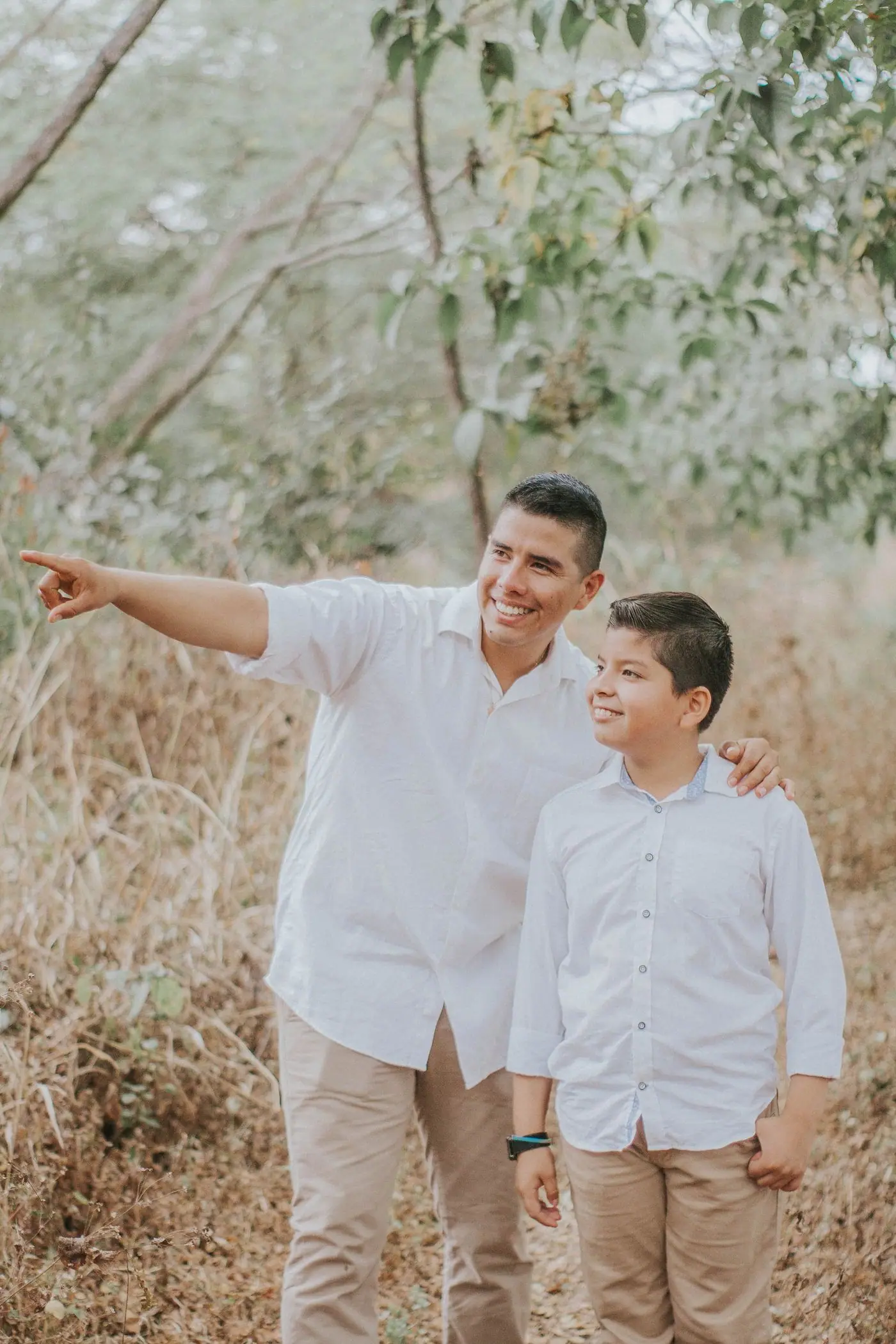
A father-and-son image anchors the family side of mi jefe.
## When jefe means dad
If someone says voy a ver a mi jefe on a Sunday, they probably mean they are going to see their dad. If they say mi jefe me pidió el reporte on a Tuesday at the office, that is probably the work boss. Same words, different life.
Voy a comer con mis jefes.
I'm going to eat with my parents.
Mi jefe no vino hoy.
My boss / my dad didn't come today, depending on context.
Mi jefa cocina increíble.
My mom cooks amazingly.
## When jefe means boss
At work, el jefe usually means the boss, and it sits next to the rest of the [work and money slang](/blog/work-money-slang) you will hear at the office. SpanishDictionary also notes colloquial address uses like "boss," similar to English service-counter talk.[^spanishdict] But that does not mean you should call every authority figure jefe on day one.
If the office is formal, ask ¿cómo prefiere que le diga? If everyone uses first names, use first names. If everyone says jefe, then you can follow.
A meeting image anchors the literal workplace meaning of el jefe.
## Jefa, jefita, and the mom version
Mi jefa can mean my mom. Jefita or jefecita sounds softer and more affectionate. You may hear mis jefes for "my parents," which is very Mexican and very confusing the first time.
| You hear | It may mean | Safer English feel |
|---|---|---|
| mis jefes | my parents | casual |
| mi jefita | my mom | affectionate |
| la jefa | the boss / mom | context decides |
| jefe directo | direct manager | workplace |
The words padre and madre are the standard family terms.[^padre][^madre] Jefe and jefa add local flavor.
## What not to do
Do not meet your partner's dad and immediately say [qué onda](/words/que-onda), jefe, unless everyone is already joking that way. Start with mucho gusto, señor, or his name if offered. Let the family set the tone.
A warm family scene helps explain why the slang can sound affectionate, not corporate.
In practice, context does most of the translation. Office first, jefe means boss. Family story, mi jefe probably means dad. If you are meeting your partner's family, start with señor, señora, or their name if offered. Let them invite the casual tone.
## The funny ambiguity is useful
The ambiguity can actually help you connect. If someone says mi jefe and you genuinely cannot tell, ask ¿tu papá o tu jefe del trabajo? with a smile. Mexicans know the double meaning, so the question usually lands as charming, not clueless.
Do not overuse the family version just because you learned it. Mi papá and mi mamá are still normal. Mi jefe and mi jefa add flavor when the speaker's family style allows it. Some people say it all the time. Some people never would. Let your friends' Spanish teach you their family tone.
## Related words you will hear
For dad, you may hear papá, apá, pa, mi jefe, or mi viejo. For mom, mamá, amá, ma, mi jefa, or mi jefita. Do not treat them as exact synonyms; they carry age, region, intimacy, and family personality. For the wider set of ways Mexicans name people, see [what to call people in Mexico](/blog/what-to-call-people-mexico).
## How to introduce your own parents
If you are introducing your dad to Mexican friends, mi papá is always safe. Mi jefe can be funny if your Spanish already has that casual tone, but it can sound borrowed if you drop it too early. Same with mi jefa for your mom.
At work, the same caution helps. A waiter may call you jefe in a friendly service way, but that does not mean your manager wants the same nickname from you in a meeting. Mexican Spanish can be warm and playful without removing hierarchy. Listen for how other people address the person first.
A natural middle ground is to understand the phrase before you perform it. If a friend says mis jefes vienen de visita, meaning their parents are coming to stay, you can answer [qué padre](/words/padre), ¿cuánto tiempo se quedan? The same phrases show up again in [family-visit Spanish](/blog/mexican-family-visit-spanish) when relatives come to town. You are using the meaning without forcing the slang back at them. That is often how you graduate into local Spanish: first you understand it, then you use it when it fits.
[^jefe]: [Diccionario de la lengua española, jefe](https://dle.rae.es/jefe)
[^spanishdict]: [SpanishDictionary, jefe colloquial uses](https://www.spanishdict.com/translate/jefe)
[^mexicanismos]: [Diccionario de mexicanismos, Academia Mexicana de la Lengua](https://www.academia.org.mx/obras/obras-de-consulta-en-linea/diccionario-de-mexicanismos)
[^padre]: [Diccionario de la lengua española, padre](https://dle.rae.es/padre)
[^madre]: [Diccionario de la lengua española, madre](https://dle.rae.es/madre)
FAQ:
Q: What does el jefe mean?
A: El jefe means the boss or chief. In Mexican Spanish, mi jefe can also mean my dad.
Q: Does jefa mean mom?
A: It can. Jefa literally means female boss, but mi jefa often means my mom in Mexican family slang.
Q: Is jefe rude for dad?
A: Usually no among people who use it. It can sound casual, barrio, affectionate, or joking depending on family style.
Q: Can I call my boss jefe?
A: Yes in many workplaces, but match the office tone. Licenciado, ingeniera, or a first name may be expected in formal contexts.
Q: Can I call a waiter jefe?
A: Some people do as a casual 'boss,' but it can sound overly familiar. Señor or joven may be safer.
Q: What is jefita or jefecita?
A: A softer, affectionate form for mom or a mother figure.
Q: How do I know which meaning is intended?
A: Listen for context: mi jefe at home usually means dad; el jefe at work usually means the boss.
Sources:
- DLE, jefe: https://dle.rae.es/jefe
- SpanishDictionary, jefe colloquial uses: https://www.spanishdict.com/translate/jefe
- Diccionario de mexicanismos, Academia Mexicana de la Lengua: https://www.academia.org.mx/obras/obras-de-consulta-en-linea/diccionario-de-mexicanismos
- DLE, padre: https://dle.rae.es/padre
- DLE, madre: https://dle.rae.es/madre
Related words: jefe, jefa, mande, que-onda