---
title: "Estoy Abajo: Mexican Spanish for Gates, Intercoms, and Getting Let In"
description: "An intercom wants three things in a fixed order, and one question that stumps everyone. Plus the right you have at a CDMX gate that almost no foreign resident knows about."
type: "article"
category: "getting_around"
url: "https://consalsa.app/blog/estoy-abajo-gates-intercoms"
canonical: "https://consalsa.app/blog/estoy-abajo-gates-intercoms"
published: "2026-06-05"
updated: "2026-08-20"
author: "Andrey the Nomad"
site: "ConSalsa.App"
license: "https://consalsa.app/about"
---

# Estoy Abajo: Mexican Spanish for Gates, Intercoms, and Getting Let In
URL: https://consalsa.app/blog/estoy-abajo-gates-intercoms
Date: 2026-06-05
Updated: 2026-08-20
Category: getting_around
Keywords: estoy abajo meaning, de parte de quien meaning, mexican spanish intercom, portero conserje vigilante difference, me abre por favor, cdmx apartment spanish
Summary: An intercom wants three things in a fixed order, and one question that stumps everyone. Plus the right you have at a CDMX gate that almost no foreign resident knows about.

Quick answer:
- An intercom wants three things in one breath and in this order: who you are, which unit, why you are there.
- The question that catches everyone is ¿de parte de quién? - who shall I say is calling. Answer with your own name, not the resident's.
- Abajo does not really mean downstairs. It means at street level, at the entrance - it works for houses with no stairs at all.
- Portero, conserje, vigilante and administrador are four different roles. The administrador is a legal position under CDMX condominium law.

What you'll learn:
- The fixed three-part order that gets a gate opened without follow-up questions.
- How to answer ¿de parte de quién? and ¿lo esperan?
- Who you are actually talking to, and the register each one expects.
- The anti-discrimination rule in CDMX condominium law, and who enforces it.

Don't sound gringo:
Answer ¿de parte de quién? with your own name. It means who shall I say is calling, and half of foreigners answer with the name of the person they came to see - which restarts the whole conversation.

Body:

An intercom is a security checkpoint with terrible audio. It wants three pieces of information, in a fixed order, and it wants them before it wants anything else.

Get the order right and the gate opens. Get it wrong and you get questions, which through a crackling speaker in your second language is exactly the situation you were hoping to avoid.

## Who, where, why - in that order

<ul class="examples">
  <li class="example">
    <div class="es" lang="es-MX">Buenas, soy Andrey, vengo a ver a Ana del 302.</div>
    <div class="en" lang="en">Hi, I'm Andrey, here to see Ana in 302.</div>
  </li>
</ul>

That single sentence contains all three: your name, the unit, the purpose. Nothing else is needed and nothing else helps.

The instinct most people have is to lead with the purpose - *I'm here to see someone* - which is the least useful of the three, because it prompts an immediate follow-up. Leading with your own name does something small and social: it makes you a person rather than a voice.

<ol class="ladder">
  <li><div class="rung-card">
    <span class="rung-label">quién</span>
    <span class="rung-es" lang="es-MX">Buenas, soy Andrey</span>
    <span class="rung-en" lang="en">Hi, I'm Andrey</span>
    <span class="rung-note">Buenas alone is a full greeting at any hour. No need for buenos días.</span>
  </div></li>
  <li><div class="rung-card">
    <span class="rung-label">dónde</span>
    <span class="rung-es" lang="es-MX">Del 302 / vengo al 302</span>
    <span class="rung-en" lang="en">From 302 / I'm coming to 302</span>
    <span class="rung-note">The number is the single most useful word in the sentence.</span>
  </div></li>
  <li><div class="rung-card">
    <span class="rung-label">por qué</span>
    <span class="rung-es" lang="es-MX">Vengo a ver a Ana</span>
    <span class="rung-en" lang="en">I'm here to see Ana</span>
    <span class="rung-note">A name, not a relationship. Nobody needs to know how you know them.</span>
  </div></li>
  <li><div class="rung-card">
    <span class="rung-label">si hace falta</span>
    <span class="rung-es" lang="es-MX">¿Le puede marcar, por favor?</span>
    <span class="rung-en" lang="en">Could you call up, please?</span>
    <span class="rung-note">Offering the call ends almost every standoff.</span>
  </div></li>
</ol>

<figure>
  <img src="/images/blog/estoy-abajo-1.jpg" alt="A green metal gate with an intercom keypad panel and a posted notice beside it." loading="lazy" />
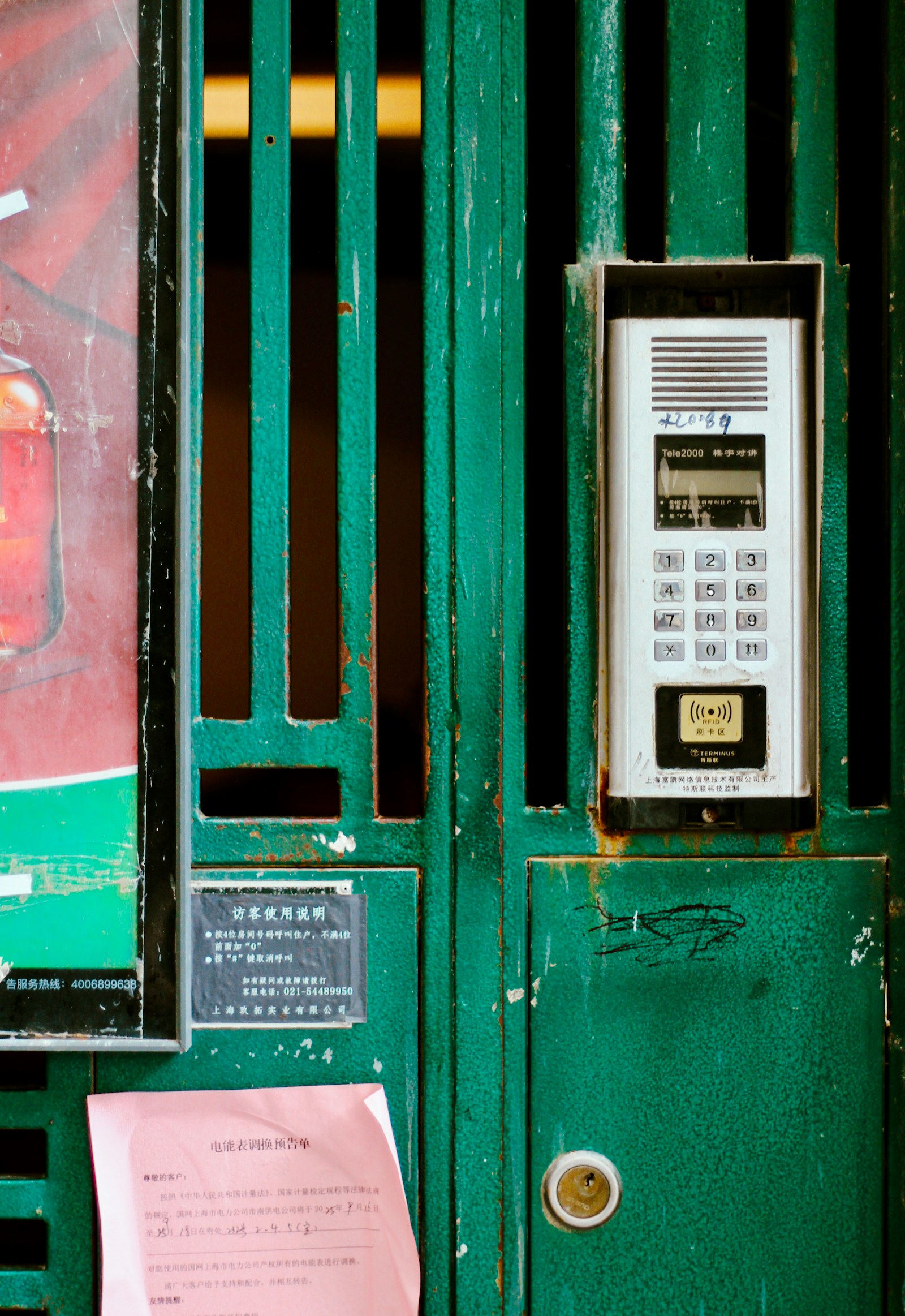
  <figcaption>Three data points, one breath, before the audio gets worse. Photo by <a href="https://unsplash.com/photos/06nHHMyhl4w" target="_blank" rel="noopener noreferrer">DOKYUNG KIM on Unsplash</a>.</figcaption>
</figure>

<div id="midpost-newsletter-slot"></div>

## The question that stumps everybody

<mark lang="es-MX">¿De parte de quién?</mark>

It means *who shall I say is calling*. The answer is **your own name**.

Roughly half of foreign residents answer with the name of the person they came to see, because the sentence sounds like it is asking who you are looking for. It is not. <mark lang="es-MX">De parte de</mark> means *on behalf of* or *from* - it is asking for the sender, and you are the sender.

<ul class="examples">
  <li class="example">
    <div class="es" lang="es-MX">De parte de Andrey.</div>
    <div class="en" lang="en">It's Andrey.</div>
  </li>
  <li class="example">
    <div class="es" lang="es-MX">De parte de Andrey, del 302.</div>
    <div class="en" lang="en">It's Andrey, from 302.</div>
  </li>
</ul>

Its companion question is <mark lang="es-MX">¿lo esperan?</mark> or <mark lang="es-MX">¿la esperan?</mark> - *are they expecting you*. Answer honestly and offer the fix in the same breath:

<ul class="examples">
  <li class="example">
    <div class="es" lang="es-MX">Sí, ya sabe que vengo.</div>
    <div class="en" lang="en">Yes, they know I'm coming.</div>
  </li>
  <li class="example">
    <div class="es" lang="es-MX">No, pero ¿le puede marcar, por favor?</div>
    <div class="en" lang="en">No, but could you call up, please?</div>
  </li>
</ul>

<div class="note-card is-tip">
  <span class="note-label">Las dos preguntas del interfón</span>
  <p><b lang="es-MX">¿De parte de quién?</b> → your name.</p>
  <p><b lang="es-MX">¿Lo esperan?</b> → sí / no, pero ¿le puede marcar?</p>
</div>

## Abajo does not mean downstairs

<mark lang="es-MX">Estoy abajo</mark> is used at buildings with no stairs, houses with one floor, and gates on flat streets. It is not really describing vertical position - it means **at street level, outside, at the entrance**.

That is why it works everywhere and why it is the single most-sent arrival message in the country.

| Se dice | Cuándo |
|---|---|
| Estoy abajo | You've arrived. Works anywhere |
| Ya llegué | Same, slightly less specific about where |
| Estoy en el portón | At the big street gate specifically |
| Estoy afuera | Outside, for a house or a bar |
| Ya estoy aquí, tómate tu tiempo | Arrived, no rush - the kind version |
| Toqué el timbre | I rang the bell, in case it doesn't work |

That last one matters more than it should. Intercoms in Mexico City fail constantly, so <mark lang="es-MX">toqué el timbre pero creo que no sirve</mark> is a completely routine message.

<figure>
  <img src="/images/blog/estoy-abajo-2.jpg" alt="A cream-colored intercom speaker and button unit mounted on a textured painted wall." loading="lazy" />
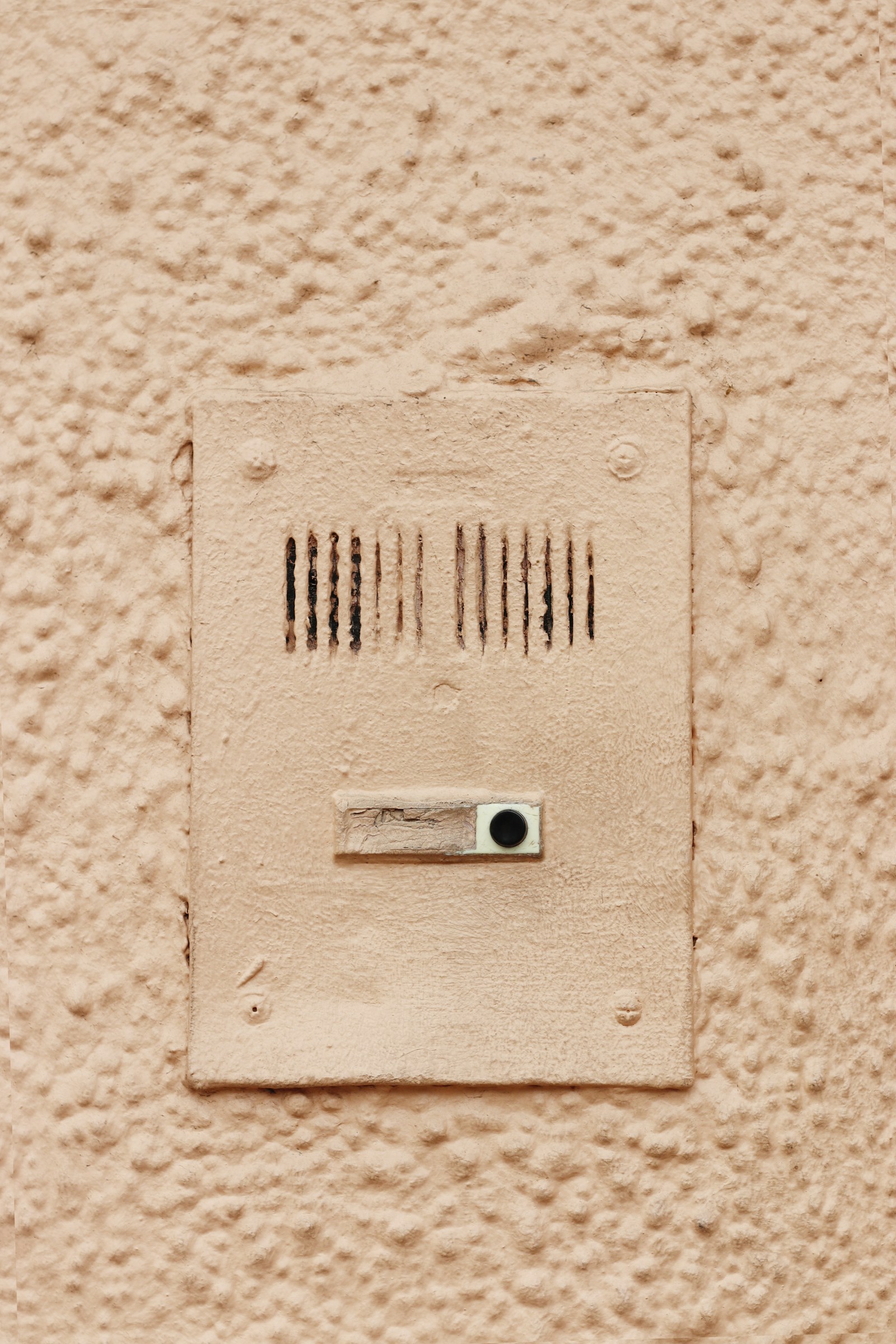
  <figcaption>Half of these do not work. <span lang="es-MX">Toqué el timbre pero creo que no sirve</span> is a normal thing to text. Photo by <a href="https://unsplash.com/photos/FNk2EErYxgg" target="_blank" rel="noopener noreferrer">Rodrigo Araya on Unsplash</a>.</figcaption>
</figure>

## Who you are actually talking to

Four different roles, four different registers. Using the right word signals that you live here.

| La persona | Qué hace |
|---|---|
| Portero / portera | Looks after the building day to day, minds the entrance |
| Conserje | Much the same, slightly more formal word |
| Vigilante | Security specifically, often a contracted service |
| Administrador | The building's manager - a legal role, rarely at the door |
| Vecino | A neighbor who happened to answer the intercom |

The <mark lang="es-MX">portero</mark> is the one you will deal with most, and the role has more texture to it than the word suggests - it is part caretaker, part gatekeeper, part institutional memory of the building.[^mija-porteros] The <mark lang="es-MX">administrador</mark> is worth understanding properly, because it is not a job title someone invented. Under Mexico City's condominium law, buildings run under a registered régimen with an <mark lang="es-MX">administrador</mark> and an internal set of rules, and PROSOC - the city's Procuraduría Social - is the authority that registers those rules, handles condominium complaints and runs the arbitration.[^prosoc-sub][^prosoc-ley]

Which brings us to a right almost no foreign resident knows they have.

<div class="note-card is-safety">
  <span class="note-label">En la caseta también hay reglas</span>
  <p>The Mexico City condominium law requires a discrimination-free environment and <b>prohibits imposing discriminatory conditions on visitors, guests or employees</b> - on grounds including ethnic or national origin, appearance, skin color, language, gender, age, disability, social condition, religion, migratory status and sexual orientation.</p>
  <p>Complaints about how a building is run go to <b>PROSOC</b>, not to the guard.</p>
</div>

In practice you will rarely need it, and it is not a sentence to deploy at a gate at eleven at night. But it is worth knowing that the internal rules are a registered document with an authority behind them, rather than whatever the person at the door decides today.[^congreso-condominio]

## Deliveries rewrote the gate

The most-spoken sentence at CDMX gates now is not a visitor's. It is a courier's.

<div class="do-dont">
  <div class="dd-col dd-do"><p class="dd-title">Funciona</p><ul>
    <li><b lang="es-MX">Traigo un pedido para el 302.</b> - unit first, always</li>
    <li><b lang="es-MX">¿Lo dejo en recepción?</b> - usually yes, and faster for everyone</li>
    <li><b lang="es-MX">¿Me firma de recibido?</b> - what you'll be asked downstairs</li>
    <li><b lang="es-MX">Me lo dejaron en la caseta.</b> - where your parcel actually is</li>
  </ul></div>
  <div class="dd-col dd-dont"><p class="dd-title">Genera preguntas</p><ul>
    <li><b lang="es-MX">Vengo a entregar algo.</b> - to whom?</li>
    <li><b lang="es-MX">Es para una persona del edificio.</b> - which one?</li>
    <li><b lang="es-MX">Ahorita subo.</b> - many buildings will not allow it</li>
    <li>Reading out the full address you already typed into the app</li>
  </ul></div>
</div>

If a parcel has gone missing, <mark lang="es-MX">¿no me dejaron un paquete en la caseta?</mark> solves it about eighty percent of the time. The guard post is where things live.

<div class="chat-thread">
  <div class="chat-head"><span class="chat-avatar"></span><span>viernes, 9:05 pm</span><span class="chat-meta">registro completo en dos líneas</span></div>
  <ul class="chat-msgs">
    <li class="in"><span class="es" lang="es-MX">¿De parte de quién?</span><span class="en">Who shall I say is calling?</span></li>
    <li class="out"><span class="es" lang="es-MX">De parte de Andrey, vengo a ver a Ana del 302</span><span class="en">It's Andrey, here to see Ana in 302</span></li>
    <li class="in"><span class="es" lang="es-MX">¿Lo espera?</span><span class="en">Is she expecting you?</span></li>
    <li class="out"><span class="es" lang="es-MX">Sí, ya sabe que vengo. Si quiere, márquele</span><span class="en">Yes, she knows. Call up if you like</span></li>
  </ul>
  <p class="chat-read">Offering the phone call is the move. <strong>It hands the decision to the resident, which is what the guard wanted anyway.</strong></p>
</div>

<figure>
  <img src="/images/blog/estoy-abajo-3.jpg" alt="A bank of metal utility meter boxes mounted on a concrete building wall." loading="lazy" />
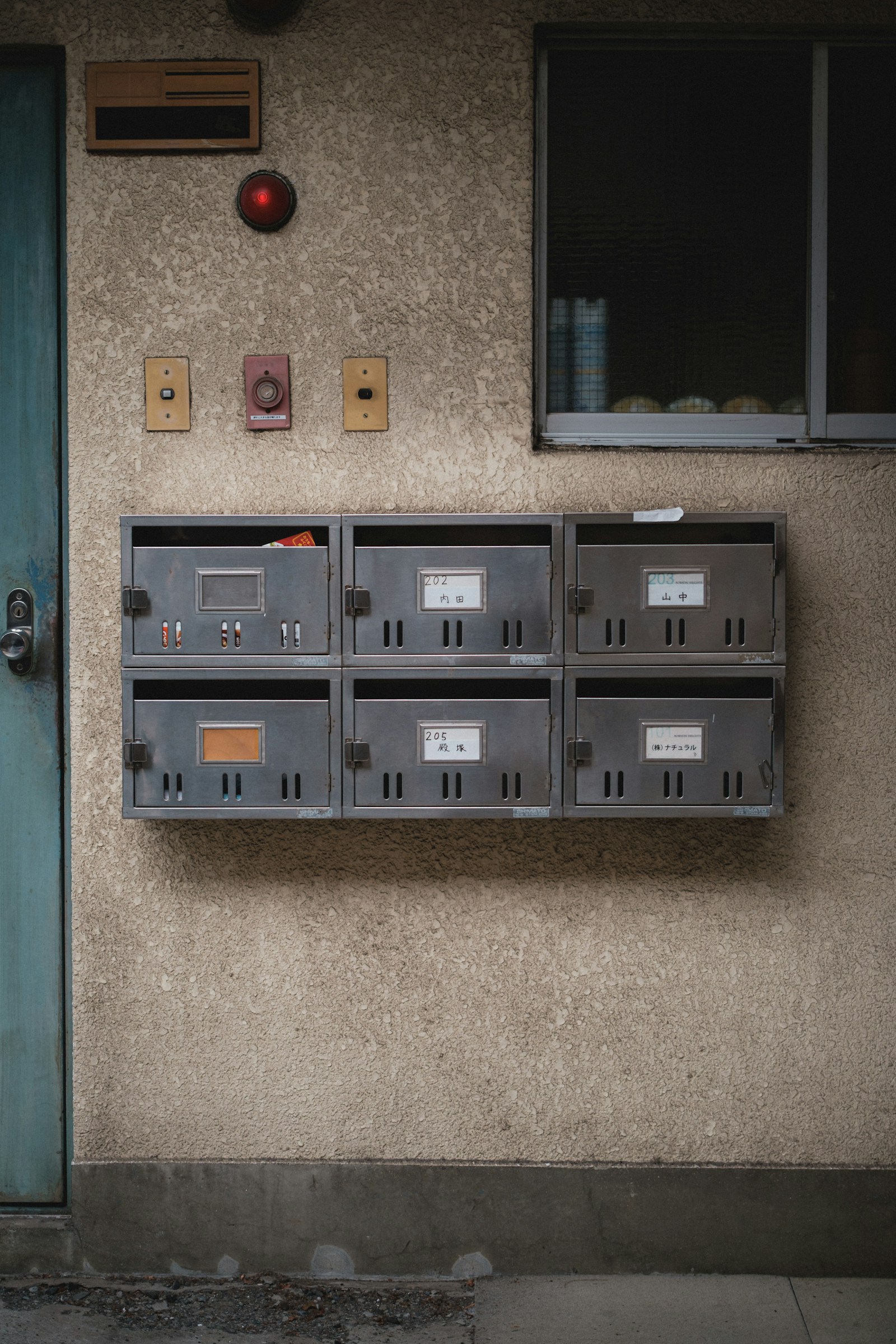
  <figcaption>Older buildings, newer intercoms, and a guard post where half the neighborhood's parcels are waiting. Photo by <a href="https://unsplash.com/photos/E6TeGKgaUEk" target="_blank" rel="noopener noreferrer">Jinsui Hu on Unsplash</a>.</figcaption>
</figure>

## The short version

<mark lang="es-MX">Estoy abajo, ¿me abres?</mark> for friends. For everyone else, three things in one breath:

<ul class="examples">
  <li class="example">
    <div class="es" lang="es-MX">Buenas, soy Andrey, vengo a ver a Ana del 302. ¿Le puede marcar, por favor?</div>
    <div class="en" lang="en">Hi, I'm Andrey, here to see Ana in 302. Could you call up, please?</div>
  </li>
</ul>

Name, unit, purpose, and an offer to let someone else confirm it. That sentence has never failed at a gate, which is more than can be said for most intercoms.

[^prosoc-sub]: [PROSOC, Subprocuraduría de Derechos y Obligaciones de Propiedad en Condominio](https://prosoc.cdmx.gob.mx/subprocuradurias-y-coordinaciones/subprocuraduria-de-derechos-y-obligaciones-de-propiedad-en-condominio) — Procuraduría Social de la Ciudad de México
[^prosoc-ley]: [PROSOC, Ley Condominal](https://prosoc.cdmx.gob.mx/ley-condominal) — Procuraduría Social de la Ciudad de México
[^congreso-condominio]: [Ley de Propiedad en Condominio de Inmuebles para el Distrito Federal](https://www.congresocdmx.gob.mx/media/documentos/3b5e5877053512f273886e1609b8280eefd61f8c.pdf) — Congreso de la Ciudad de México
[^mija-porteros]: [The Mija Chronicles, The strange world of Mexican doormen](https://www.themijachronicles.com/2009/04/the-strange-world-of-mexican-doormen/) — Lesley Tellez

FAQ:
Q: What does estoy abajo mean?
A: I'm downstairs - but functionally it means I'm at the entrance. It works even for a one-storey house, because abajo here means street level.

Q: How do I ask someone to open the gate?
A: ¿Me abres? with a friend, ¿me puede abrir? with staff or someone you do not know.

Q: What does ¿de parte de quién? mean?
A: Who shall I say is calling. Answer with your own name - that is the question, and it trips up almost every learner.

Q: What does ¿lo esperan? mean?
A: Are they expecting you. Answer sí, ya sabe que vengo or no, pero le puede marcar, por favor.

Q: What is the difference between portero and vigilante?
A: A portero or conserje looks after the building day to day. A vigilante is security. An administrador is the legally registered manager, not someone at the door.

Q: What does portón mean?
A: The large street gate of a building or garage, as opposed to the door of an individual apartment.

Q: How do I announce a delivery?
A: Traigo un pedido para el 302. Then ¿lo dejo en recepción? if you cannot go up.

Q: What if the guard will not let me in?
A: Ask them to call the resident: ¿le puede marcar, por favor? A phone call resolves nearly all of it.

Q: Do I say depa or departamento?
A: Departamento with staff and strangers, depa with friends. Depa is casual, not rude, but clarity wins at a gate.

Q: Can a building refuse me entry because of how I look?
A: Mexico City condominium law explicitly bars discriminatory conditions against visitors on grounds including national origin, appearance, skin color and language. Complaints go to PROSOC.

Sources:
- Ley de Propiedad en Condominio de Inmuebles para el Distrito Federal, Congreso de la Ciudad de México: https://www.congresocdmx.gob.mx/media/documentos/3b5e5877053512f273886e1609b8280eefd61f8c.pdf
- PROSOC, Subprocuraduría de Derechos y Obligaciones de Propiedad en Condominio: https://prosoc.cdmx.gob.mx/subprocuradurias-y-coordinaciones/subprocuraduria-de-derechos-y-obligaciones-de-propiedad-en-condominio
- PROSOC, Ley Condominal: https://prosoc.cdmx.gob.mx/ley-condominal
- The Mija Chronicles, The strange world of Mexican doormen: https://www.themijachronicles.com/2009/04/the-strange-world-of-mexican-doormen/

Related words: mande, sale, que-onda, chamba