---
title: "Is 'Feliz Día de Muertos' Okay? What to Say Instead"
description: "Learn whether Feliz Día de Muertos is appropriate, what Mexicans may say instead, and Spanish phrases for respectful remembrance."
type: "article"
category: "manners"
url: "https://consalsa.app/blog/feliz-dia-de-muertos"
canonical: "https://consalsa.app/blog/feliz-dia-de-muertos"
published: "2026-11-01"
updated: "2026-11-01"
author: "Andrey the Nomad"
site: "ConSalsa.App"
license: "https://consalsa.app/terms#ip"
---
# Is 'Feliz Día de Muertos' Okay? What to Say Instead
URL: https://consalsa.app/blog/feliz-dia-de-muertos
Date: 2026-11-01
Updated: 2026-11-01
Category: manners
Keywords: feliz dia de muertos, is feliz dia de muertos okay, what to say on day of the dead spanish, dia de muertos greeting
Summary: Learn whether Feliz Día de Muertos is appropriate, what Mexicans may say instead, and Spanish phrases for respectful remembrance.
Quick answer:
- Feliz Día de Muertos can be heard, especially in public or social-media contexts, but it is not always the warmest phrase.
- For personal or family remembrance, respectful phrases like qué bonita ofrenda or los recuerdo con cariño may fit better.
- Avoid treating Día de Muertos like a generic party greeting.
- When unsure, comment on the altar, memory, or care rather than forcing feliz.
What you'll learn:
- When feliz sounds fine and when it can feel too bright.
- Alternatives for ofrendas, cemetery visits, captions, and messages.
- How to respond when someone shares a family memory.
- Why translation from Happy Day of the Dead can be awkward.
Don't sound gringo:
Don't assume every holiday greeting needs feliz. In Spanish, con cariño, qué bonita ofrenda, or gracias por compartir can be warmer than a literal 'happy.'
Body:
Feliz Día de Muertos is not automatically wrong. You will see it in public posts, event graphics, school activities, and casual messages. But it is not always the phrase you want when someone is talking about their grandmother, their family ofrenda, or a cemetery visit.
The better question is not "is it correct?" The better question is "does feliz fit this exact moment?"
## The tone map
| Situation | Safer phrase | Why |
|---|---|---|
| Public event post | Feliz Día de Muertos | Common enough |
| Family altar | Qué bonita ofrenda | Warmer |
| Shared memory | Gracias por contarme | Human |
| Caption with photos | Los recuerdo con cariño | Tender |
| Recent grief | Lo siento mucho | Only if appropriate |
Feliz means happy or fortunate.[^feliz] Día de Muertos can be joyful, but it is also remembrance. That mix is why one greeting cannot cover every room.
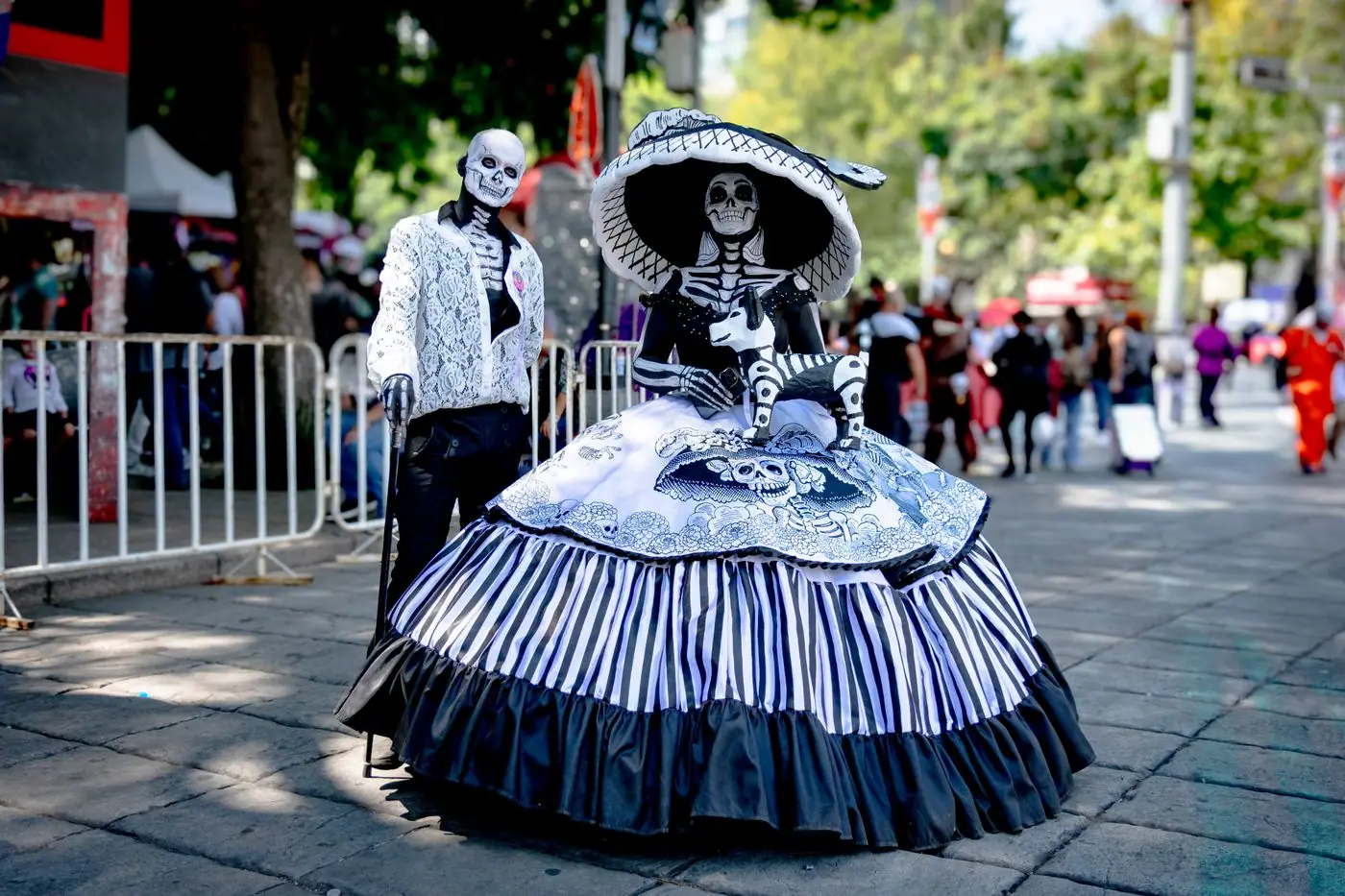
A public city celebration supports the "feliz can work publicly" side of the answer.
## When feliz sounds fine
At a public desfile, school event, museum activity, or brand post, Feliz Día de Muertos can sound normal. The mood is civic and celebratory.[^cultura] You are not standing inside one family's private memory.
If you use it online, add language that shows you understand the holiday is more than a party. Feliz Día de Muertos, recordando con cariño a quienes ya no están is much better than a skeleton selfie with "happy dead day." If the line between Halloween and this holiday still feels blurry, [the Halloween vs Día de Muertos breakdown](/blog/halloween-vs-dia-de-muertos) sorts it out.
Feliz Día de Muertos.
Happy Day of the Dead.
Los recordamos con cariño.
We remember them with love.
Qué bonita ofrenda.
What a beautiful altar.
## When it sounds too bright
If someone is showing you an ofrenda for a specific loved one, do not lead with feliz. Say qué bonita ofrenda, qué bonito detalle, or gracias por compartir. Those phrases respond to care instead of forcing cheer.
UNESCO's description of the festivity centers on honoring and welcoming the dead.[^unesco] That does not make the holiday gloomy. It makes it emotionally layered.
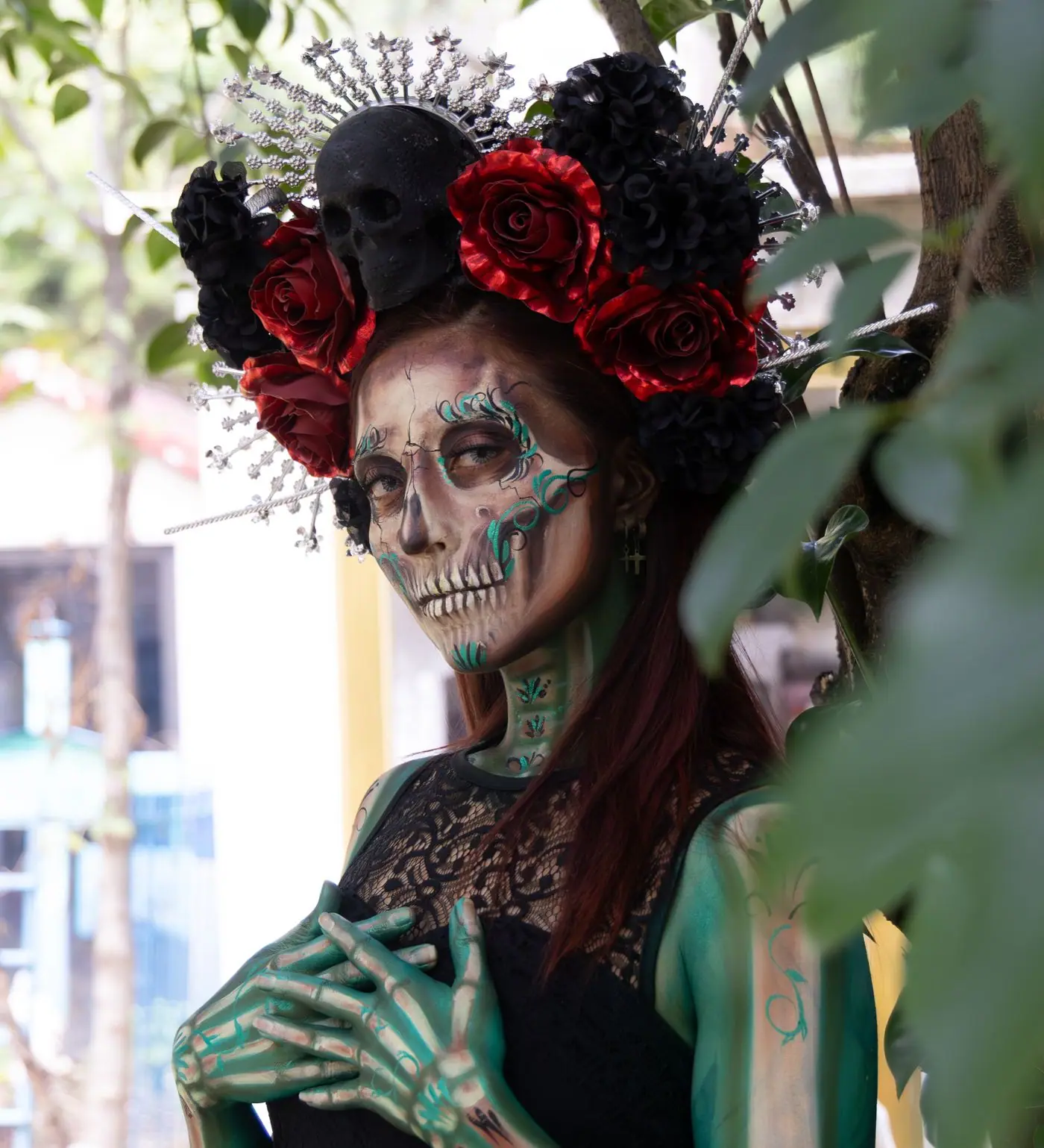
A portrait image keeps the tone personal and careful rather than party-only.
## Better phrases by situation
| You want to say... | Spanish | Feel |
|---|---|---|
| Nice altar | Qué bonita ofrenda | respectful |
| Thank you | Gracias por compartir | gentle |
| Remembering them | Los recuerdo con cariño | tender |
| Beautiful detail | Qué bonito detalle | safe |
| Public greeting | Feliz Día de Muertos | festive |
Recordar means to remember, and conmemorar means to commemorate.[^recordar][^conmemorar] Those two verbs often fit the holiday better than trying to make everything "happy."
## What to say in person
If you are at someone's home, keep it small: gracias por invitarme, qué bonita está, ¿me cuentas quiénes son? if they seem open. If they do not elaborate, do not push.
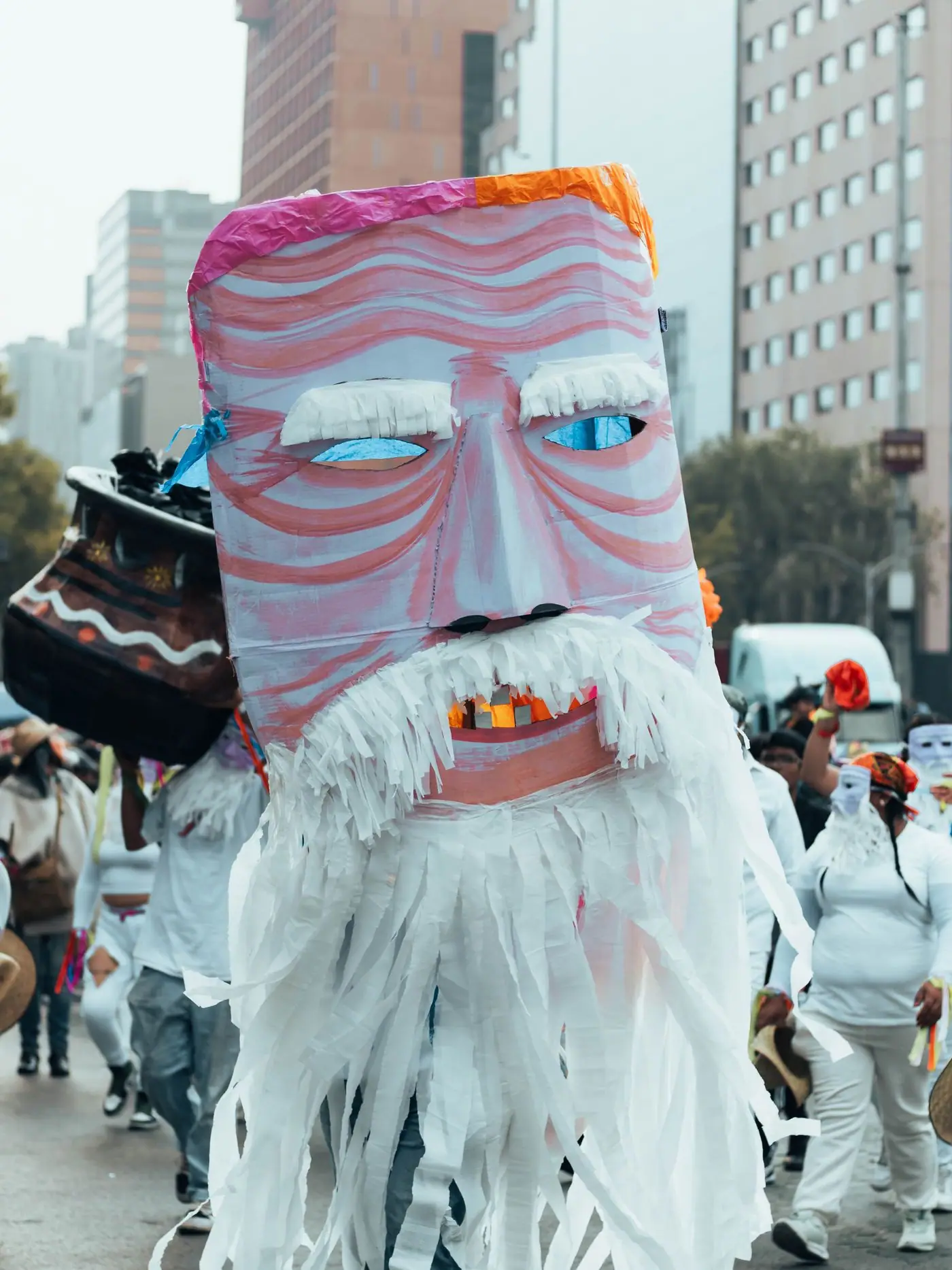
A public parade scene helps separate civic celebration from private remembrance.
The problem is not feliz. The problem is using it like a stamp when the situation asks for attention. Feliz Día de Muertos can be okay; the better move is choosing the phrase that matches the room.
## A caption formula that works
If you want an Instagram caption, combine a public greeting with a respectful second line. For example: Feliz Día de Muertos. Hoy recordamos con cariño a quienes ya no están. That second sentence changes everything because it moves the post from "look at my skull photo" to "I understand this day is about memory."
For a message to a Mexican friend, mirror their tone. If they post a funny public parade photo, [qué padre](/words/padre) or se ve increíble is fine. If they post a photo of a relative on an ofrenda, choose qué bonito detalle or gracias por compartir. Same holiday, different emotional temperature.
## The word feliz is not the enemy
The problem is not feliz. The problem is using it like a stamp when the situation asks for attention. Mexicans can absolutely celebrate Día de Muertos with music, color, jokes, food, and joy. Your job as a learner is to notice whether this exact conversation is celebration, remembrance, grief, public culture, or a mix.
## What to answer when someone says it to you
If someone tells you Feliz Día de Muertos, you do not need to freeze. You can answer igualmente, "same to you," in a public context. If the mood is softer, answer gracias, que sea un día bonito para recordar. That phrase sounds a little more thoughtful than just throwing feliz back.
For learners, the biggest upgrade is noticing verbs. Celebrar, recordar, and conmemorar each carry a different emotional shape. If you are not sure which one fits, choose recordar. It is usually the safest bridge between joy and tenderness, and it is the same verb behind [what "Recuérdame" really means](/blog/recuerdame-meaning).
[^unesco]: [UNESCO, Indigenous festivity dedicated to the dead](https://ich.unesco.org/en/RL/indigenous-festivity-dedicated-to-the-dead-00054)
[^feliz]: [Diccionario de la lengua española, feliz](https://dle.rae.es/feliz)
[^recordar]: [Diccionario de la lengua española, recordar](https://dle.rae.es/recordar)
[^conmemorar]: [Diccionario de la lengua española, conmemorar](https://dle.rae.es/conmemorar)
[^cultura]: [Secretaría de Cultura, Día de Muertos as a fundamental Mexican celebration](https://www.gob.mx/cultura/prensa/dia-de-muertos-una-de-las-celebraciones-fundamentales-de-la-cultura-mexicana?state=published)
FAQ:
Q: Is Feliz Día de Muertos correct?
A: It is understandable and used in some public contexts, but it can feel too cheerful in intimate remembrance settings.
Q: What should I say instead?
A: Try qué bonita ofrenda, gracias por compartir, or los recuerdo con cariño depending on the situation.
Q: Can I write Feliz Día de Muertos on Instagram?
A: Yes, especially for public or educational posts, but use a caption that shows respect rather than party energy.
Q: Is Día de Muertos sad or happy?
A: It can be tender, festive, funny, and sad at once. That mix is why tone matters.
Q: What do I say to someone remembering a relative?
A: Say qué bonito que lo recuerden or gracias por contarme. Keep it simple.
Q: Should I say condolences?
A: Only if the conversation is specifically about grief or a recent death. Día de Muertos is remembrance, not automatically a condolence moment.
Q: Is Happy Day of the Dead a bad translation?
A: It can be too blunt. Spanish and English holiday greetings do not always match word-for-word.
Sources:
- UNESCO, Indigenous festivity dedicated to the dead: https://ich.unesco.org/en/RL/indigenous-festivity-dedicated-to-the-dead-00054
- DLE, feliz: https://dle.rae.es/feliz
- DLE, recordar: https://dle.rae.es/recordar
- DLE, conmemorar: https://dle.rae.es/conmemorar
- Secretaría de Cultura, Día de Muertos as a fundamental Mexican celebration: https://www.gob.mx/cultura/prensa/dia-de-muertos-una-de-las-celebraciones-fundamentales-de-la-cultura-mexicana?state=published
Related words: mande, sale, neta, chido