---
title: "Survive a Mexican September: 8 Words You'll Actually Hear"
description: "Fiestas Patrias is Mexico's September run-up to Independence. Here are the 8 food, party, and flag words you'll hear all month - and how to use each one right."
type: "article"
category: "seasonal"
url: "https://consalsa.app/blog/fiestas-patrias-spanish"
canonical: "https://consalsa.app/blog/fiestas-patrias-spanish"
published: "2026-09-09"
updated: "2026-09-09"
author: "Andrey the Nomad"
site: "ConSalsa.App"
license: "https://consalsa.app/terms#ip"
---
# Survive a Mexican September: 8 Words You'll Actually Hear
URL: https://consalsa.app/blog/fiestas-patrias-spanish
Date: 2026-09-09
Updated: 2026-09-09
Category: seasonal
Keywords: fiestas patrias meaning, fiestas patrias spanish, mes patrio meaning, antojitos mexicanos, pozole verde, mexican independence day food, verbena popular
Summary: Fiestas Patrias is Mexico's September run-up to Independence. Here are the 8 food, party, and flag words you'll hear all month - and how to use each one right.
Quick answer:
- Fiestas Patrias means the patriotic holidays - the September stretch around Mexican Independence, peaking the night of the 15th.
- El mes patrio is the whole month of September, when flags, lights, and green-white-red everything take over.
- The food you'll hear about most: pozole, antojitos (small classic snacks like tostadas and sopes), and chiles en nogada.
- A verbena is the neighborhood street party - food stalls, music, dancing, and El Grito at night.
What you'll learn:
- What Fiestas Patrias and el mes patrio actually refer to, and when they happen.
- The food words that show up on every September table, and how to talk about them.
- How to talk about the parties - the verbena, the rooftop, the Zocalo.
- What sounds natural versus what gives you away as a tourist in September.
Don't sound gringo:
Do not call pozole a soup and stop there, and never skip the garnishes. Loading your bowl with lettuce, radish, onion, oregano, and lime is half the ritual. Eating it plain is the move that makes a table go quiet.
Body:
It's September 2nd and you pop into the corner store for eggs. Overnight the place has gone full carnival - little paper flags taped to the shelves, a wall of tricolor streamers, and a guy out front spinning rehiletes for the kids.
Your neighbor catches your face and says ya empezaron las fiestas patrias, like that explains the whole thing.
It kind of does. September is here, and the entire country is about to go green, white, and red for a month.
**Fiestas patrias are the patriotic holidays around Independence, and they peak the night of the 15th.** My first September in Mexico, I knew none of this.
I walked into a place, ordered pozole, and got handed a bowl of plain broth with a side plate of raw vegetables. I sat there genuinely confused, wondering if they'd forgotten to finish my food. Don't be me.
So here's the vocabulary that shows up every September - the food, the flags, and the handful of words that quietly tell people you actually live here.
## The September phrase map
| Spanish | What it literally means | What it actually does in September |
|---|---|---|
| fiestas patrias | patriotic holidays | The whole Independence celebration |
| el mes patrio | the patriotic month | September, start to finish |
| el Grito | the shout | The Viva Mexico call on the night of the 15th |
| verbena | popular festival | The neighborhood street party |
| antojitos | little cravings | Classic Mexican street snacks |
| pozole | (hominy stew) | The big celebration dish |
| chiles en nogada | chiles in walnut sauce | The seasonal dish in the flag colors |
| de temporada | in season | Only available this time of year |
## El mes patrio: the whole month, not just one night
People outside Mexico picture Independence as one day on the calendar. Here it's more of a mood, and it quietly takes over all of September.
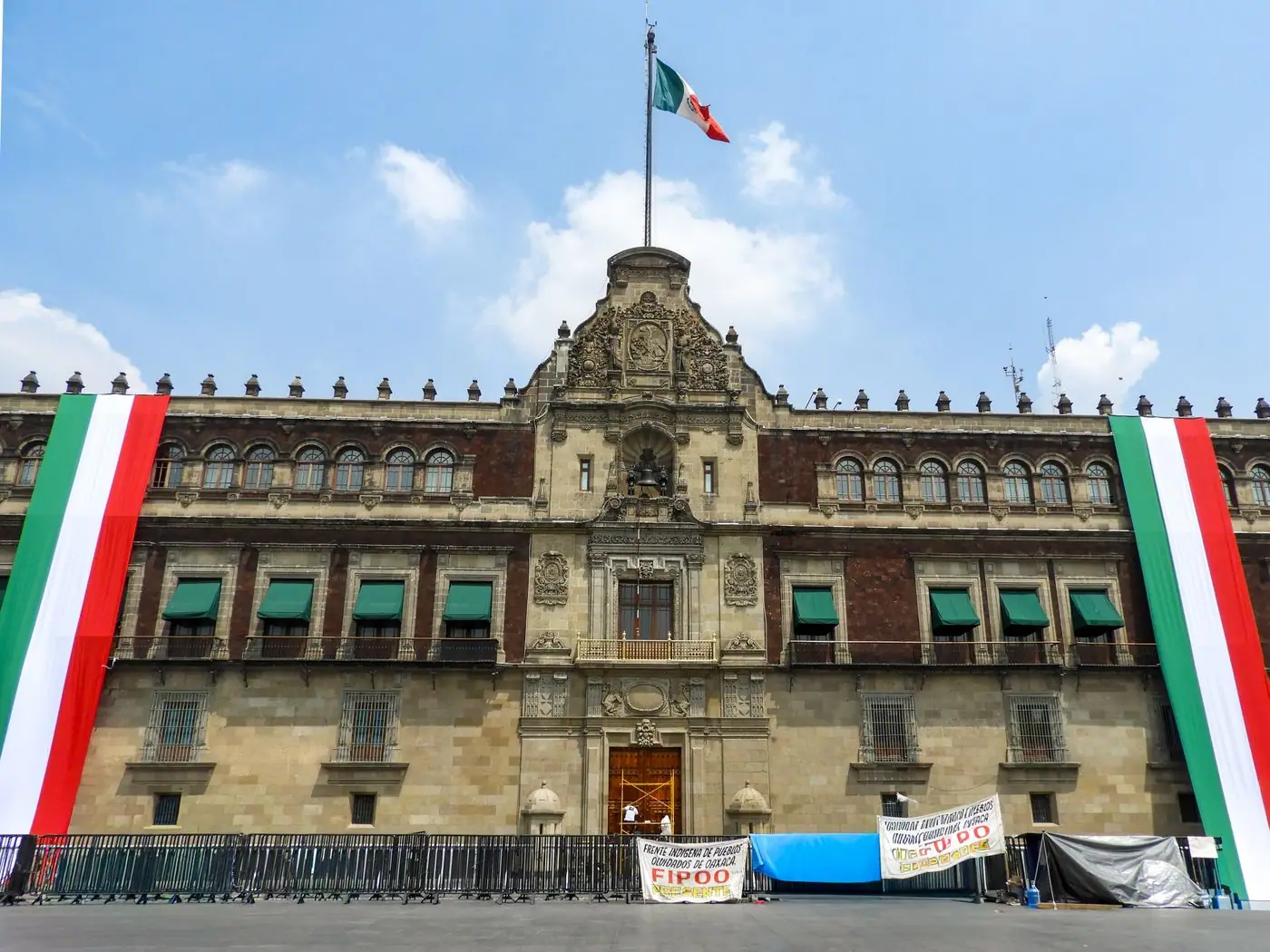
That's why everyone calls it el mes patrio.[^gob-indep] Flags go up on balconies. Government buildings get strung with green-white-red lights.
By the second week the whole city is dressed up, and there's really no missing it.
Here's a small detail that catches people off guard. When a friend says ya huele a fiestas patrias - "it already smells like the patriotic holidays" - they don't mean a literal smell.
They mean you can feel it coming. It's just a warm, normal way to talk about a season here, so don't take it at face value.
Todo septiembre es el mes patrio, no nada más el 15.
All of September is the patriotic month, not just the 15th.
Ya pusieron las luces tricolor en el centro.
They already put up the tricolor lights downtown.
By the second week of September, whole streets get dressed in green, white, and red. Photo by Ericka Sanchez on Pexels.
## The food words: antojitos, pozole, and the seasonal stuff
This is where September really lives - the table. If you only take a few words from this whole post, take these.
**Antojitos are the small classic Mexican snacks** - tostadas, sopes, tlacoyos, quesadillas, pambazos.[^rae-antojito] The word literally means "little cravings."
On a Fiestas Patrias table you'll see a whole spread of them. Someone will wave you over with agarra un antojito, "grab a snack."
Don't translate it as "appetizer" though - it's its own thing, and that word misses the point.
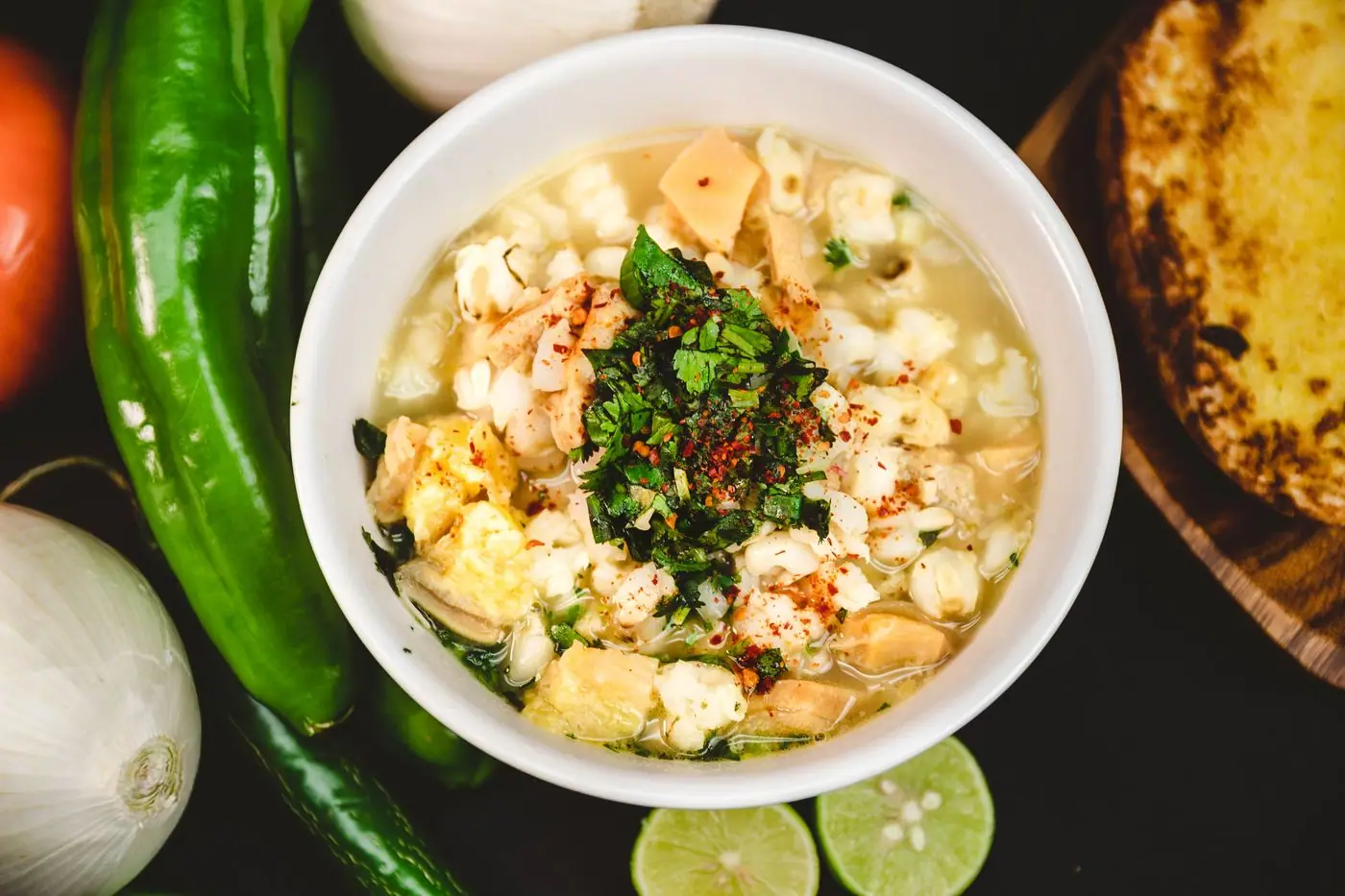
**Pozole is the dish that screams celebration.**[^rae-pozole] It's a stew of hominy and meat, or a veggie version, and it comes in three colors depending on the region: pozole rojo, verde, or blanco.
Now the part nobody warns you about. The bowl shows up basically naked, and you build it yourself.
Lettuce, radish, onion, oregano, lime, a hit of chile - all that stuff is the garnitura. **Eat the pozole plain and the whole table clocks you instantly.** Trust me on this one.
¿De cuál quieres? Hay pozole verde y rojo.
Which one do you want? There's green and red pozole.
Ponle harta garnitura, no seas tímido.
Load it up with toppings, don't be shy.
**Chiles en nogada are the fancy seasonal dish** - a stuffed poblano chile in a creamy walnut sauce, topped with pomegranate seeds and parsley. Green, white, and red, on purpose. People say they're de temporada, in season, because you really only get them in late August and September.[^mxd-nogada] If a restaurant has them, ordering them is a very chido September move.
## The party words: la verbena, el Grito, and the rooftop
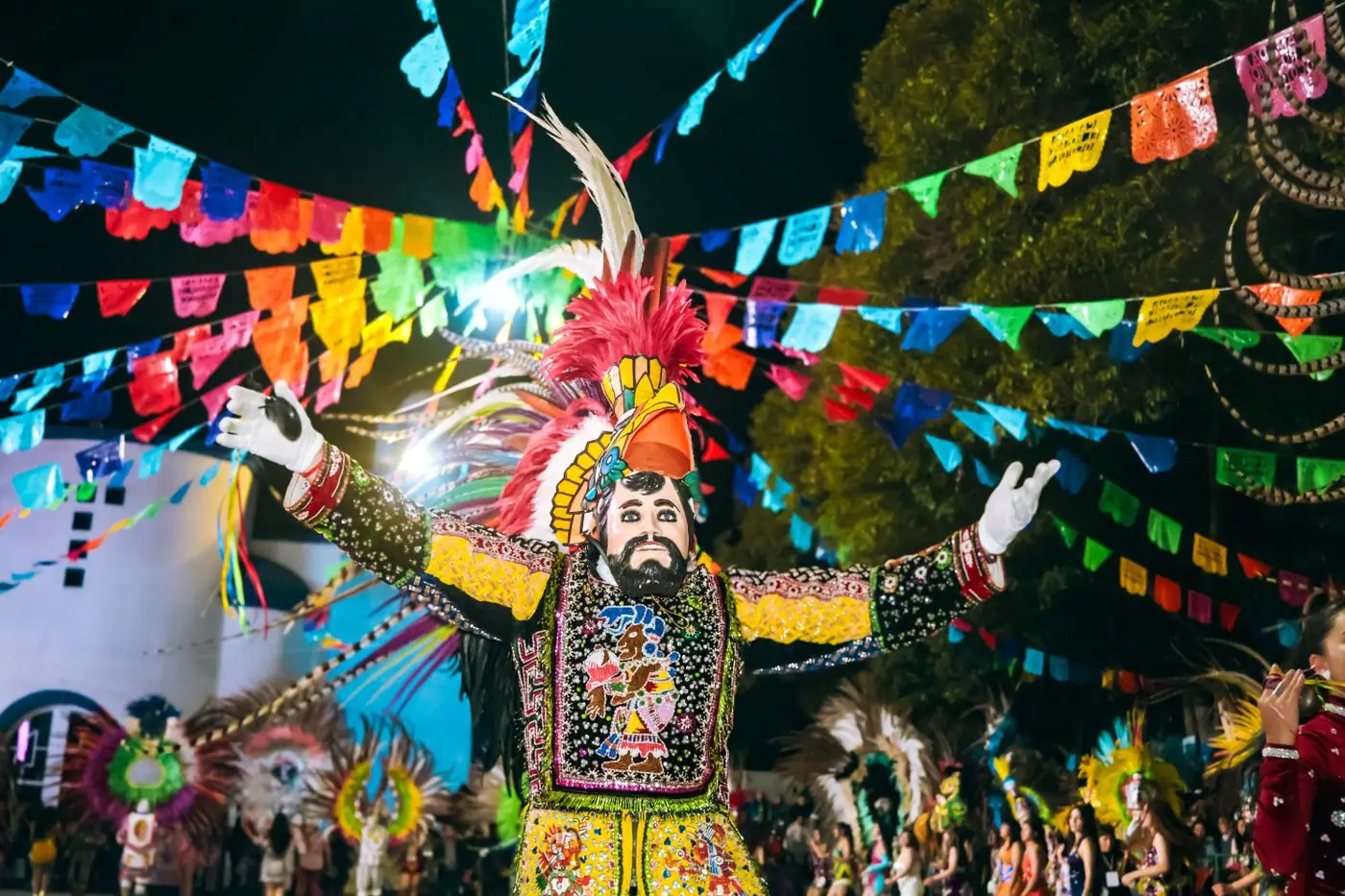
**A verbena is the neighborhood street party**, and for most families it's the actual soul of Fiestas Patrias.[^rae-verbena] The local government blocks off a street or fills a plaza with food stalls, loud music, and games for the kids.
At night the mayor leads the local version of El Grito. No ticket, no list - you just show up.
If a neighbor says ¿vienes a la verbena?, the right answer is sale or órale, pues - both mean "sure, let's do it." Say one of those and you sound like you've been to a hundred of these.
Hay verbena en la plaza, ¿te apuntas?
There's a street party in the plaza, you in?
Sale, nos vemos ahí como a las nueve.
Cool, see you there around nine.
The other classic is the rooftop or backyard hangout with friends. Someone streams the president's Grito from the Zocalo on a phone propped up against a tequila bottle, volume all the way up.
When the shouting starts, everyone yells ¡Viva Mexico! right back. If the night turns out great, the word you'll hear on repeat is padre - estuvo bien padre, "it was really great."
Pozole arrives plain - the garnishes around it are half the meal. Photo by Miguel Galaz on Pexels.
## How to actually talk about it
Here's the good news: almost all of it is casual and warm. Nobody's giving speeches at the taco stand. Lean into the everyday words and you'll be fine.
Like something? Say chido or padrísimo. Agreeing to a plan? sale. Food's good? Just say está buenísimo and go back for seconds.
That's pretty much the whole register.
And when someone asks if you're celebrating, the honest answer is plenty. Voy a una verbena con unos amigos - "I'm going to a street party with some friends" - already tells them you get it.
## Tone and safety: what gives you away
| You might say | What sounds more local | Why |
|---|---|---|
| "Happy Cinco de Mayo!" in September | Feliz Independencia / Viva Mexico | Cinco de Mayo is a different, smaller holiday. Mixing them up is the classic tourist error |
| "I'll have the pozole soup" | ¿Me das un pozole? | Calling it soup and leaving it plain marks you instantly |
| "appetizers" | antojitos | Antojitos are their own category, not starters |
| Shouting Viva Mexico randomly all day | Viva on the beat during El Grito | The shout has a moment - the night of the 15th |
The biggest trap is **Cinco de Mayo**. In the US it's the big "Mexican" party. In most of Mexico it's a pretty minor date, and the real one is Independence in September.
Wish someone a happy Cinco de Mayo in September and you'll get a polite, slightly confused smile - plus a quiet mental note that you're not from around here.
The other one is **respect during El Grito**. Join in for real and people genuinely love it.
But treat it like a costume bit - fake mustache, ironic viva, filming everyone like it's a zoo - and a warm crowd goes cold on you fast.
The verbena is open to everyone - showing up sincerely is the whole point. Photo by Eden FC on Pexels.
## Quick recap
September is el mes patrio, and the whole month builds toward Independence night. The food words to know are antojitos, pozole, and chiles en nogada. The party words are verbena and el Grito.
Agree to plans with sale, react with chido or padre, and whatever you do, don't bring up Cinco de Mayo.
Learn that handful of words, pile the garnitura on your pozole, and a Mexican September will feel like something you've done a dozen times before.
[^gob-indep]: [Independencia de Mexico](https://www.gob.mx/independencia) - Gobierno de Mexico
[^rae-antojito]: [Diccionario de la lengua española, antojito](https://dle.rae.es/antojito) - Real Academia Española
[^rae-pozole]: [Diccionario de la lengua española, pozole](https://dle.rae.es/pozole) - Real Academia Española
[^rae-verbena]: [Diccionario de la lengua española, verbena](https://dle.rae.es/verbena) - Real Academia Española
[^mxd-nogada]: [Chiles en nogada, historia y origen](https://www.mexicodesconocido.com.mx/chiles-en-nogada.html) - Mexico Desconocido
FAQ:
Q: What does Fiestas Patrias mean?
A: Fiestas Patrias means the patriotic holidays. In Mexico it refers to the September celebrations of Independence, centered on the night of September 15 (El Grito) and the holiday on September 16.
Q: What is el mes patrio?
A: El mes patrio means the patriotic month - September. It's when flags go up, buildings get green-white-red lights, and the whole country builds toward Independence night.
Q: What food do Mexicans eat for Fiestas Patrias?
A: The classics are pozole (a hominy stew with toppings), antojitos like tostadas, sopes and pambazos, and chiles en nogada, a seasonal stuffed-chile dish in the national colors.
Q: What are antojitos?
A: Antojitos are small, classic Mexican street snacks - tostadas, sopes, tlacoyos, quesadillas, pambazos. The word literally means little cravings. They're the heart of any September party table.
Q: What is a verbena?
A: A verbena (or verbena popular) is a neighborhood street party. For Fiestas Patrias it means food stalls, music, dancing, games for kids, and the local El Grito at night.
Q: Is Mexican Independence Day on the 15th or 16th?
A: Both. El Grito happens the night of the 15th, and the 16th is the official holiday with the parade. The big party night is the 15th.
Q: What is pozole and why is it eaten in September?
A: Pozole is a stew of hominy and meat (or vegetarian versions) topped with lettuce, radish, onion, oregano, and lime. It's a celebration dish, so it shows up constantly around Independence Day.
Q: How do I say happy Independence Day in Mexican Spanish?
A: The most natural thing is to shout Viva Mexico on the night of the 15th. In writing or in person you can say Feliz Independencia or Felices Fiestas Patrias.
Sources:
- Diccionario de la lengua española - fiesta (Real Academia Española): https://dle.rae.es/fiesta
- Diccionario de la lengua española - antojito: https://dle.rae.es/antojito
- Diccionario de la lengua española - pozole: https://dle.rae.es/pozole
- Diccionario de la lengua española - verbena: https://dle.rae.es/verbena
- Gobierno de Mexico - Independencia de Mexico: https://www.gob.mx/independencia
- Mexico Desconocido - Chiles en nogada, historia y origen: https://www.mexicodesconocido.com.mx/chiles-en-nogada.html
Related words: padre, chido, sale, orale-pues