---
title: "Flirting at Día de Muertos Without Making It Weird"
description: "Flirty Spanish for Día de Muertos events: respectful openers, compliments for makeup, photo etiquette, and when an ofrenda is not the place."
type: "article"
category: "dating"
url: "https://consalsa.app/blog/flirting-day-of-the-dead"
canonical: "https://consalsa.app/blog/flirting-day-of-the-dead"
published: "2026-10-29"
updated: "2026-10-29"
author: "Andrey the Nomad"
site: "ConSalsa.App"
license: "https://consalsa.app/terms#ip"
---
# Flirting at Día de Muertos Without Making It Weird
URL: https://consalsa.app/blog/flirting-day-of-the-dead
Date: 2026-10-29
Updated: 2026-10-29
Category: dating
Keywords: flirting day of the dead spanish, dia de muertos flirting, catrina compliment spanish, mexican spanish event openers
Summary: Flirty Spanish for Día de Muertos events: respectful openers, compliments for makeup, photo etiquette, and when an ofrenda is not the place.
Quick answer:
- You can flirt at public Día de Muertos events, but the setting controls the tone.
- Compliment effort and artistry: makeup, outfit, flowers, or photo idea.
- Do not flirt over someone's family altar, cemetery grief, or private remembrance.
- Short Mexican Spanish openers work better than dramatic lines.
What you'll learn:
- Openers for a parade, bar, museum line, or public altar display.
- How to compliment Catrina makeup without sounding creepy.
- How to ask for a photo or Instagram without pressuring someone.
- When to stop because the moment is about memory, not flirting.
Don't sound gringo:
Don't use death as your pickup line. 'Me muero por ti' may be a joke, but at a Día de Muertos event it can land painfully corny or just plain wrong.
Body:
You can flirt at a public Día de Muertos event. You just cannot make the whole tradition your pickup line. The setting decides the tone: parade, bar, museum line, public ofrenda, or cemetery are not the same room.
The safest flirting gives the other person an easy out: one situational question, one respectful compliment, then read the room. Compliment the work, ask about the event, and do not turn death into your personality for the night.
## The flirting map
| Setting | Opener | Risk level |
|---|---|---|
| Parade crowd | ¿Sabes por dónde pasa el desfile? | Low |
| Public altar | Qué bonita ofrenda | Medium |
| Bar after event | ¿Vienes del desfile? | Low |
| Cemetery | Avoid flirting | High |
| Makeup line | ¿Quién te hizo el maquillaje? | Low |
Coquetear means to flirt.[^coquetear] At Día de Muertos, good flirting respects that the holiday is connected to remembrance, not only nightlife.[^unesco]
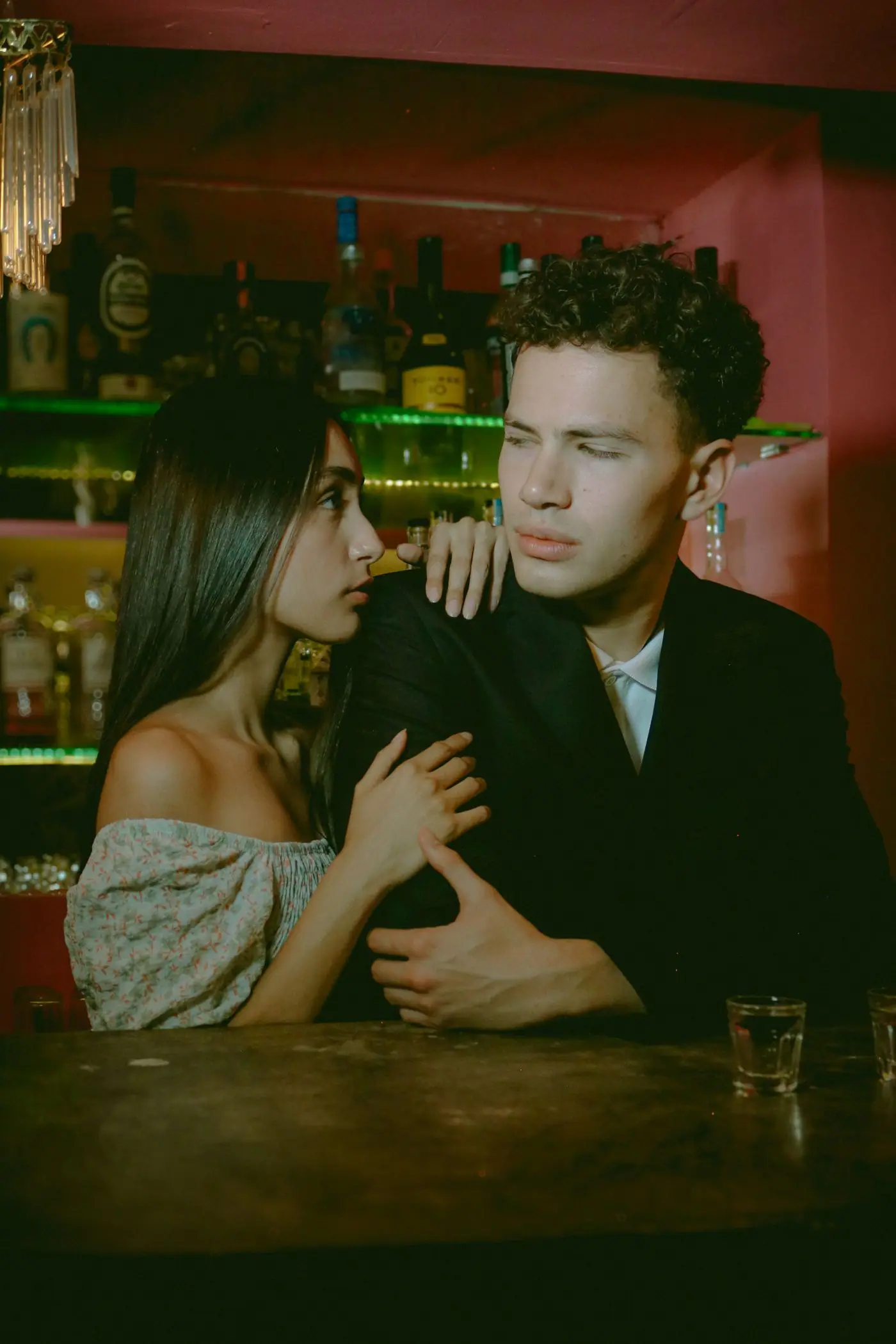
A CDMX bar couple image fits the social side of flirting better than private altar imagery.
## Compliment the artistry
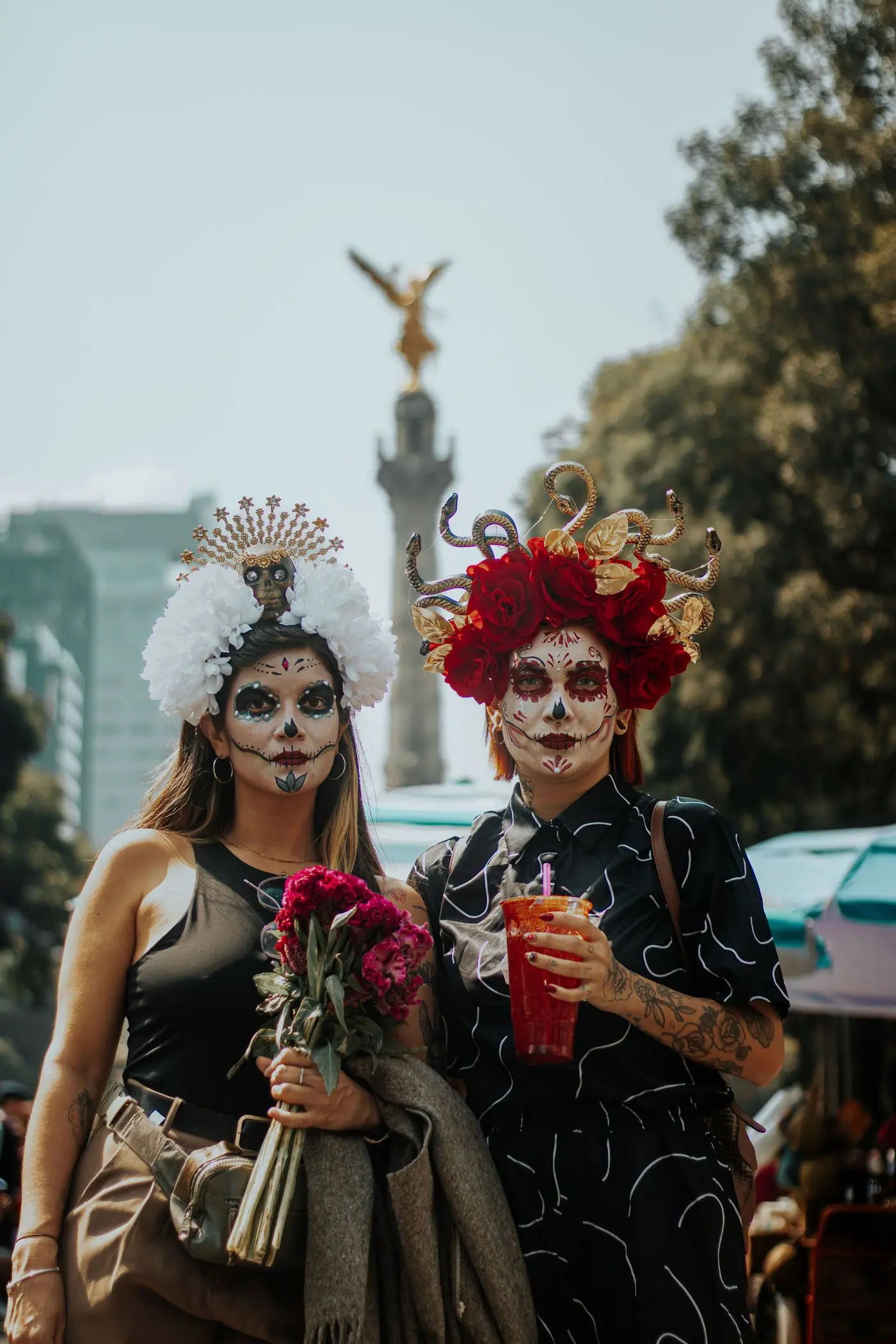
If someone has maquillaje de Catrina, talk about the craft. Te quedó increíble el maquillaje works. Qué bonito detalle works. Se ve muy elegante works. "Sexy skull" does not.
Te quedó increíble el maquillaje.
Your makeup came out amazing.
¿Quién te lo hizo?
Who did it for you?
¿Vienes del desfile?
Are you coming from the parade?
The word maquillaje is neutral: makeup.[^maquillaje] The tone around it is where you either sound charming or like someone who should be gently escorted away from the group.
## Openers that don't feel like lines
A good opener gives the other person an easy answer. Ask about the route, a public display, or the crowd. Recent [CDMX parade routes](/blog/day-of-the-dead-mexico-city) have commonly involved Reforma and the Zócalo, but official details can change, so route questions are normal and useful.[^route]
| You want to... | Say this | Why it works |
|---|---|---|
| Ask route | ¿Sabes por dónde pasa el desfile? | Useful for both of you |
| Mention altar | Qué bonita está la ofrenda | Gentle |
| Start after event | ¿También vienes del desfile? | Shared context |
| Ask photo | ¿Nos tomamos una foto? | Clear and optional |
| Ask Instagram | ¿Te puedo seguir en Instagram? | Soft and modern |
Public Catrina looks give the right context for respectful compliments.
## Where flirting should stop
If someone is arranging an ofrenda, praying, crying, visiting a grave, or talking about a dead relative, this is not your opening. Switch to respect. Qué bonito detalle or gracias por contarme is plenty.
Do not say me muero por ti unless you already have a playful relationship and the other person is clearly in that mode. As a cold opener, it is not clever; it is a pun wearing too much cologne.
## The photo-to-flirt pipeline
Ask for the photo first. Then read the energy. If they are warm, you can say ¿te puedo seguir en Instagram? If they pause, smile politely and let the moment end. Good flirting in Mexico often feels light because it gives the other person room to say yes without pressure.
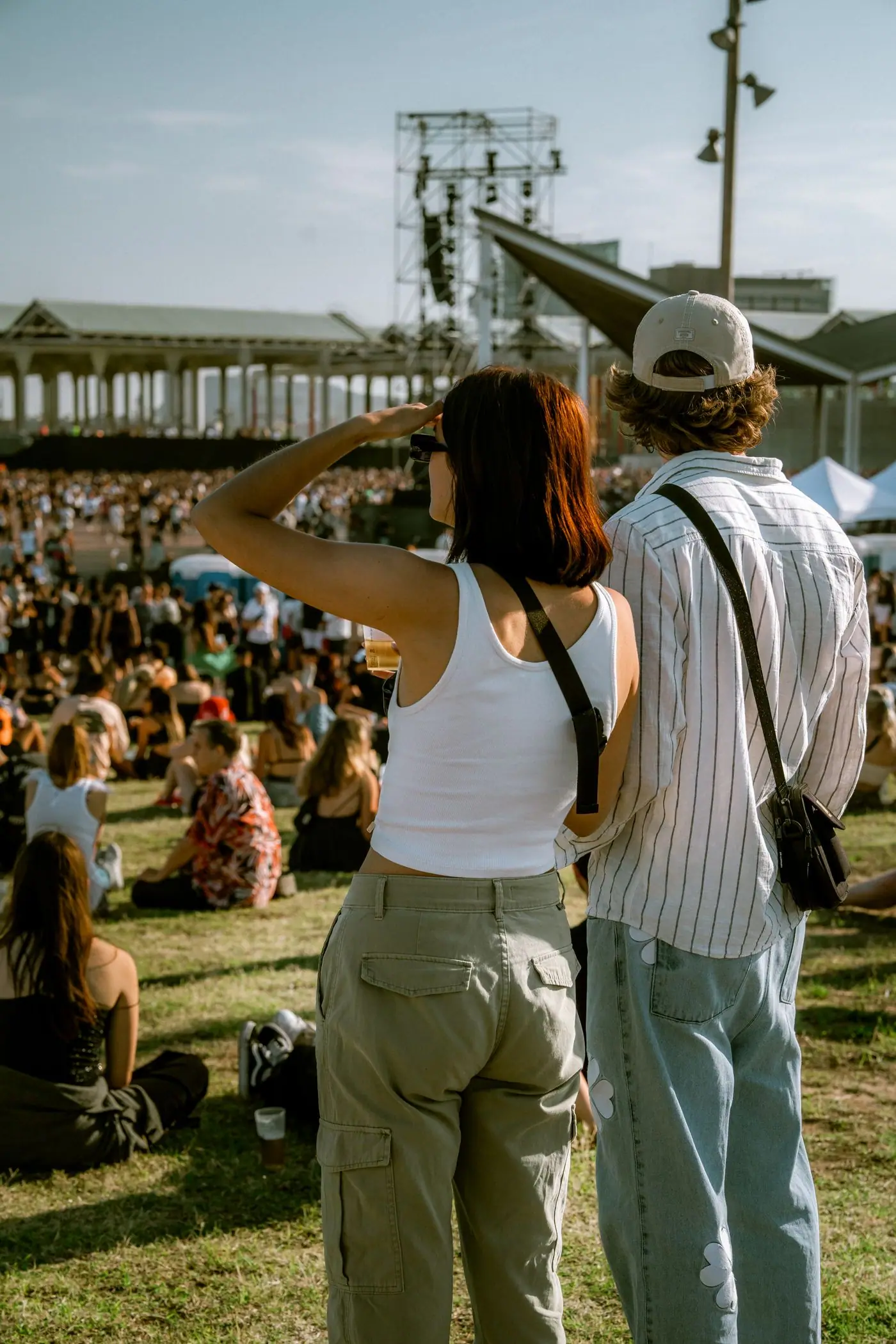
A public festival couple scene supports low-pressure openers and crowd conversation.
The best line is not the cleverest one. It is the one that fits the room. At Día de Muertos, charm means knowing when to flirt, when to compliment, and when to simply be quiet.
## Green lights and red lights
A green light is when the other person is already in public-event mode: laughing with friends, posing for public photos, asking about the route, waiting in line, or talking about where to go next. A red light is when the person is with family, looking at names on an ofrenda, praying, crying, or clearly trying to pass through a crowd. The Spanish may be the same, but the moment is not.
If the vibe is friendly, keep your next step small: ¿vas para el Zócalo?, ¿qué plan sigue?, or ¿vienes con amigos? These are lighter than jumping straight to ¿tienes novio? or ¿me das tu número?. [Mexican flirting](/blog/flirting-mexican-spanish) often works through rhythm: a small joke, a shared observation, then a little invitation.
The casual touch matters. [Qué padre](/words/padre) tu maquillaje feels different from a huge declaration about someone's beauty. It compliments the choice, not the body. That is useful when you are still a stranger and the event carries cultural weight. You can always get warmer if the conversation opens; starting respectful gives you somewhere good to go.
## How to exit gracefully
If they do not lean in, let it go. Bueno, que te diviertas is a perfect exit. If they say they are with family, answer claro, perdón, que la pasen bonito. That line saves dignity on both sides. The sexiest thing at a crowded cultural event is sometimes knowing how not to trap someone in a conversation they did not ask for.
[^unesco]: [UNESCO, Indigenous festivity dedicated to the dead](https://ich.unesco.org/en/RL/indigenous-festivity-dedicated-to-the-dead-00054)
[^coquetear]: [Diccionario de la lengua española, coquetear](https://dle.rae.es/coquetear)
[^maquillaje]: [Diccionario de la lengua española, maquillaje](https://dle.rae.es/maquillaje)
[^route]: [Mexico City official route note](https://mexicocity.cdmx.gob.mx/tag/day-dead-parade-route/?lang=en)
FAQ:
Q: Can you flirt at Día de Muertos events?
A: Yes, at public social events, bars, parades, or parties. Be much more careful around ofrendas, cemeteries, or family remembrance.
Q: What is a good compliment for Catrina makeup?
A: Try te quedó increíble el maquillaje or qué bonito detalle. Compliment the effort, not the skull as something sexy or scary.
Q: How do I start a conversation at a parade?
A: Ask something situational: ¿sabes por dónde pasa el desfile? or ¿ya viste las ofrendas del Zócalo?
Q: Can I ask for a photo?
A: Yes, but ask first: ¿puedo tomar una foto? If you want to be in it, ask ¿nos tomamos una foto?
Q: Is me muero por ti a good line?
A: Usually no here. It sounds too punny and can feel tone-deaf around a remembrance holiday.
Q: How do I ask for Instagram?
A: Say ¿te puedo seguir en Instagram? or ¿me pasas tu Insta? if the vibe is already friendly.
Q: When should I not flirt?
A: Do not flirt while someone is praying, mourning, arranging an altar, or clearly focused on family memory.
Sources:
- UNESCO, Indigenous festivity dedicated to the dead: https://ich.unesco.org/en/RL/indigenous-festivity-dedicated-to-the-dead-00054
- DLE, coquetear: https://dle.rae.es/coquetear
- DLE, maquillaje: https://dle.rae.es/maquillaje
- Mexico City official route note: https://mexicocity.cdmx.gob.mx/tag/day-dead-parade-route/?lang=en
Related words: ligar, buena-onda, chido, padre, neta