---
title: "Flirting at a Mexican Sports Bar Without Competing With the TV"
description: "Learn what to say at a Mexican sports bar between goals, rounds, and replays, with flirty Spanish that feels casual instead of forced."
type: "article"
category: "dating"
url: "https://consalsa.app/blog/flirting-mexican-sports-bar"
canonical: "https://consalsa.app/blog/flirting-mexican-sports-bar"
published: "2026-09-27"
updated: "2026-09-27"
author: "Andrey the Nomad"
site: "ConSalsa.App"
license: "https://consalsa.app/terms#ip"
---

# Flirting at a Mexican Sports Bar Without Competing With the TV
URL: https://consalsa.app/blog/flirting-mexican-sports-bar
Date: 2026-09-27
Updated: 2026-09-27
Category: dating
Keywords: flirting in spanish sports bar, mexican sports bar spanish, flirt during soccer game spanish
Summary: Learn what to say at a Mexican sports bar between goals, rounds, and replays, with flirty Spanish that feels casual instead of forced.

Quick answer:
- At a Mexican sports bar, keep flirting short, situational, and easy to answer.
- Use the match as shared context: ¿le vas a alguien?, ¿vienes seguido?, or estuvo buenísimo el gol.
- Do not interrupt the biggest play of the night with a life story.
- Respect team rivalry; teasing is fun only when the other person is smiling too.

What you'll learn:
- How to open a conversation without fighting the screen for attention.
- Flirty lines tied to goals, rounds, beers, and team loyalty.
- How to tease lightly without insulting someone's team or mood.
- How to exit gracefully if the vibe is not there.

Don't sound gringo:
Do not start your best sentence while the ball is in the box. It is not rudeness that kills it, it is timing — you will get a polite half-answer and read it as rejection. Wait for the replay. The replay is when Mexicans talk.

Body:

Flirting at a Mexican sports bar is not a vocabulary problem. It is a timing problem, and almost everyone who struggles with it is saying perfectly good Spanish at completely the wrong second.

The bar runs on the match clock. You do not control it, you cannot pause it, and the whole skill is knowing which ninety-second windows belong to you.

## The room has a clock and it is not yours

There are roughly four states in a sports bar, and only two of them are conversational. Trying to have a real exchange during the other two reads as not knowing where you are.

| State | What the room is doing | Can you talk? |
|---|---|---|
| play, ball in midfield | half-watching, half-talking | yes, lightly |
| play, ball in the box | nobody is listening to you | no |
| replay, foul, substitution | everyone turns to each other | **yes, this is the window** |
| <mark lang="es-MX">medio tiempo</mark> | the room resets, people move | yes, the long one |

The mistake is not being forward. The mistake is starting something that needs an answer at the exact moment the answer costs the other person the goal.

<div class="note-card is-tip">
  <span class="note-label">The one rule</span>
  <p>Ask short questions during play. Save anything that needs more than five words back for a replay or <span lang="es-MX">medio tiempo</span>. If you get a distracted <span lang="es-MX">ajá</span> it usually means the timing was wrong, not that the answer is no — the same sentence forty seconds later often gets a completely different reception.</p>
</div>

<figure>
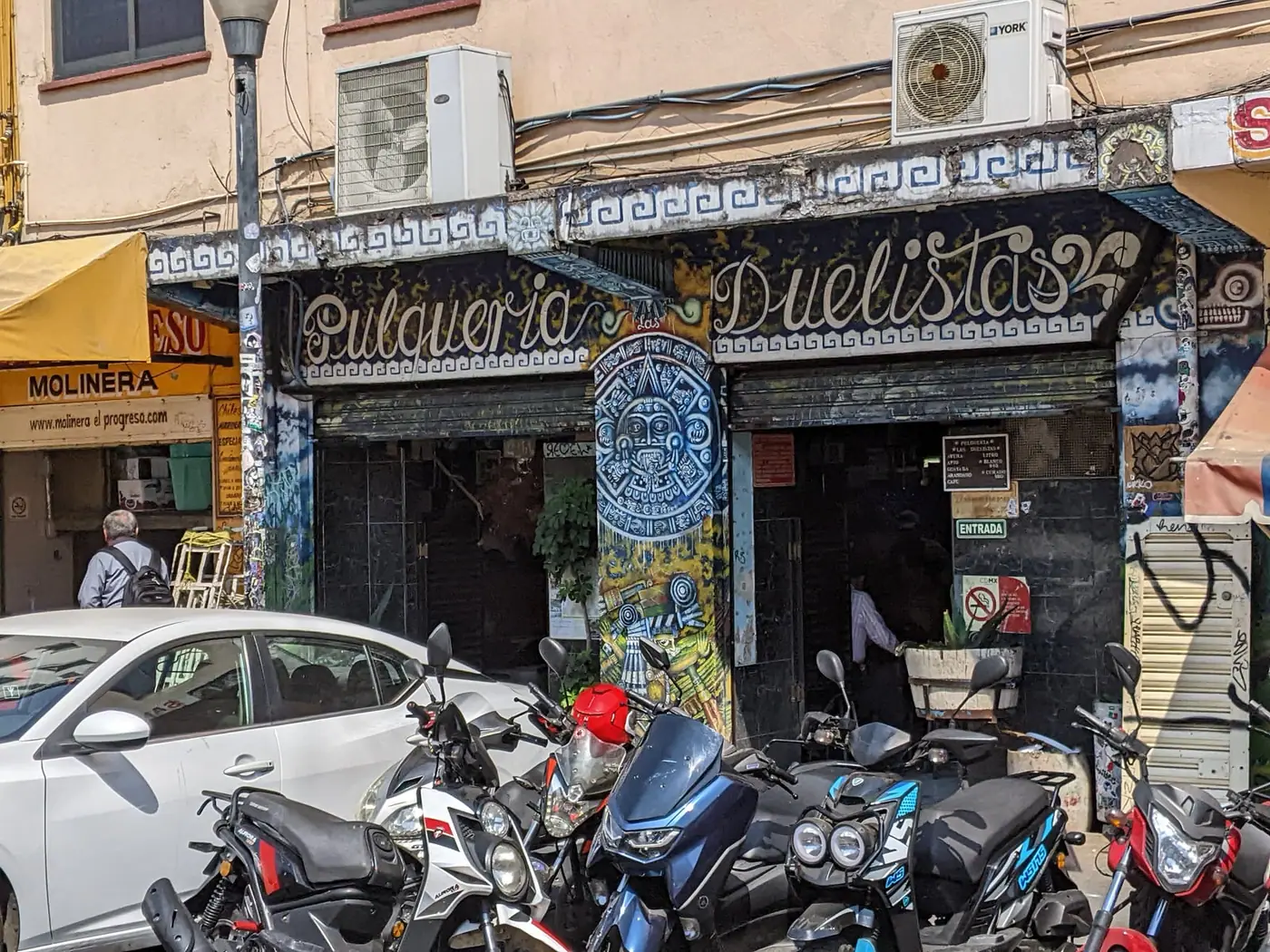
  <img src="/images/blog/optimized/flirting-mexican-sports-bar-1-1400-d7782883.webp" alt="The painted facade of Pulqueria Duelistas in Mexico City" loading="lazy" />
  <figcaption>Half the room is watching the match. The other half is watching the room. Photo by Chivista, <a href="https://creativecommons.org/publicdomain/zero/1.0/">CC0</a>.</figcaption>
</figure>

## What each window is actually good for

Not all openings are equal, and the good ones are shorter than you think.

<ul class="meter-list">
  <li class="meter-head"><span>the moment</span><span>how much room you get</span><span></span></li>
  <li data-tone="blunt" style="--fill:8%"><span class="meter-es" lang="es-MX">Tiro a gol<span class="meter-en" lang="en">Shot on goal</span></span><span class="meter-track"><span class="meter-fill"></span></span><span class="meter-val">none</span></li>
  <li data-tone="firm" style="--fill:30%"><span class="meter-es" lang="es-MX">Juego normal<span class="meter-en" lang="en">Ordinary play</span></span><span class="meter-track"><span class="meter-fill"></span></span><span class="meter-val">a line</span></li>
  <li data-tone="mid" style="--fill:62%"><span class="meter-es" lang="es-MX">Repetición o falta<span class="meter-en" lang="en">Replay or foul</span></span><span class="meter-track"><span class="meter-fill"></span></span><span class="meter-val">a question</span></li>
  <li data-tone="soft" style="--fill:88%"><span class="meter-es" lang="es-MX">Medio tiempo<span class="meter-en" lang="en">Halftime</span></span><span class="meter-track"><span class="meter-fill"></span></span><span class="meter-val">a conversation</span></li>
</ul>

A goal is its own category. For about twenty seconds after one, everybody in the bar is talking to everybody, including strangers, and that is the single easiest opening you will ever get. You do not need a line. <mark lang="es-MX">¡No manches, qué golazo!</mark> to nobody in particular, and whoever turns around has selected themselves.

<ul class="examples">
  <li class="example">
    <div class="es" lang="es-MX">¿Le vas a alguno o solo viniste por las chelas?</div>
    <div class="en" lang="en">Do you support either team or did you just come for the beers?</div>
  </li>
  <li class="example">
    <div class="es" lang="es-MX">¿Vienes seguido o hoy sí valía la pena?</div>
    <div class="en" lang="en">Do you come often, or was tonight actually worth it?</div>
  </li>
  <li class="example">
    <div class="es" lang="es-MX">Perdón, ¿ese fue penal o me lo estoy inventando?</div>
    <div class="en" lang="en">Sorry, was that a penalty or am I making it up?</div>
  </li>
</ul>

That third one is the most useful sentence in this post. Asking someone to explain a refereeing decision is a real question, it flatters them slightly, it takes exactly one replay to answer, and it works whether or not you already know.

<div id="midpost-newsletter-slot"></div>

## Team talk cuts both ways

Rivalry is the most available material in the room and the easiest way to lose the room.

<div class="chat-thread">
  <div class="chat-head"><span class="chat-avatar"></span><span>Barra, minuto 38</span><span class="chat-meta">teasing that works</span></div>
  <ul class="chat-msgs">
    <li class="out"><span class="es" lang="es-MX">no puedo creer que le vayas al América</span><span class="en">I can't believe you support América</span></li>
    <li class="in"><span class="es" lang="es-MX">jaja ya sé, es una enfermedad</span><span class="en">haha I know, it's a disease</span></li>
    <li class="out"><span class="es" lang="es-MX">¿y desde cuándo la traes?</span><span class="en">and how long have you had it?</span></li>
  </ul>
  <p class="chat-read">She made the joke about herself first, so the tease landed as agreement. <strong>Only push on a rivalry after the other person has already joked about their own team.</strong> If they have not, you are not teasing, you are just insulting something inherited from their dad.</p>
</div>

The safer version of the same energy is to be self-deprecating about your own lack of a team. <mark lang="es-MX">No le voy a nadie todavía, ¿a quién me recomiendas?</mark> hands them the floor and turns the whole thing into a recruitment pitch, which people enjoy far more than defending themselves.

## Reading a no over the noise

A loud room makes soft refusals harder to hear, and Mexican Spanish leans on soft refusals. Pragmatic competence is exactly this: knowing what a form is doing socially, not just what it means.[^cvc-pragmatica]

| What you hear | What it usually means |
|---|---|
| <mark lang="es-MX">ah, qué padre</mark> + turns back to the screen | polite close |
| <mark lang="es-MX">sí, ahorita</mark> | not now, possibly not ever |
| <mark lang="es-MX">estoy con mis amigos</mark> | a full no, said kindly |
| a question back at you | you are in |
| <mark lang="es-MX">¿y tú a quién le vas?</mark> | you are definitely in |

The tell is not the words, it is whether anything comes back. Mexican politeness is built to avoid a bare refusal,[^cvc-cortesia] so the signal you want is a returned question, not a positive-sounding adjective.

<figure>
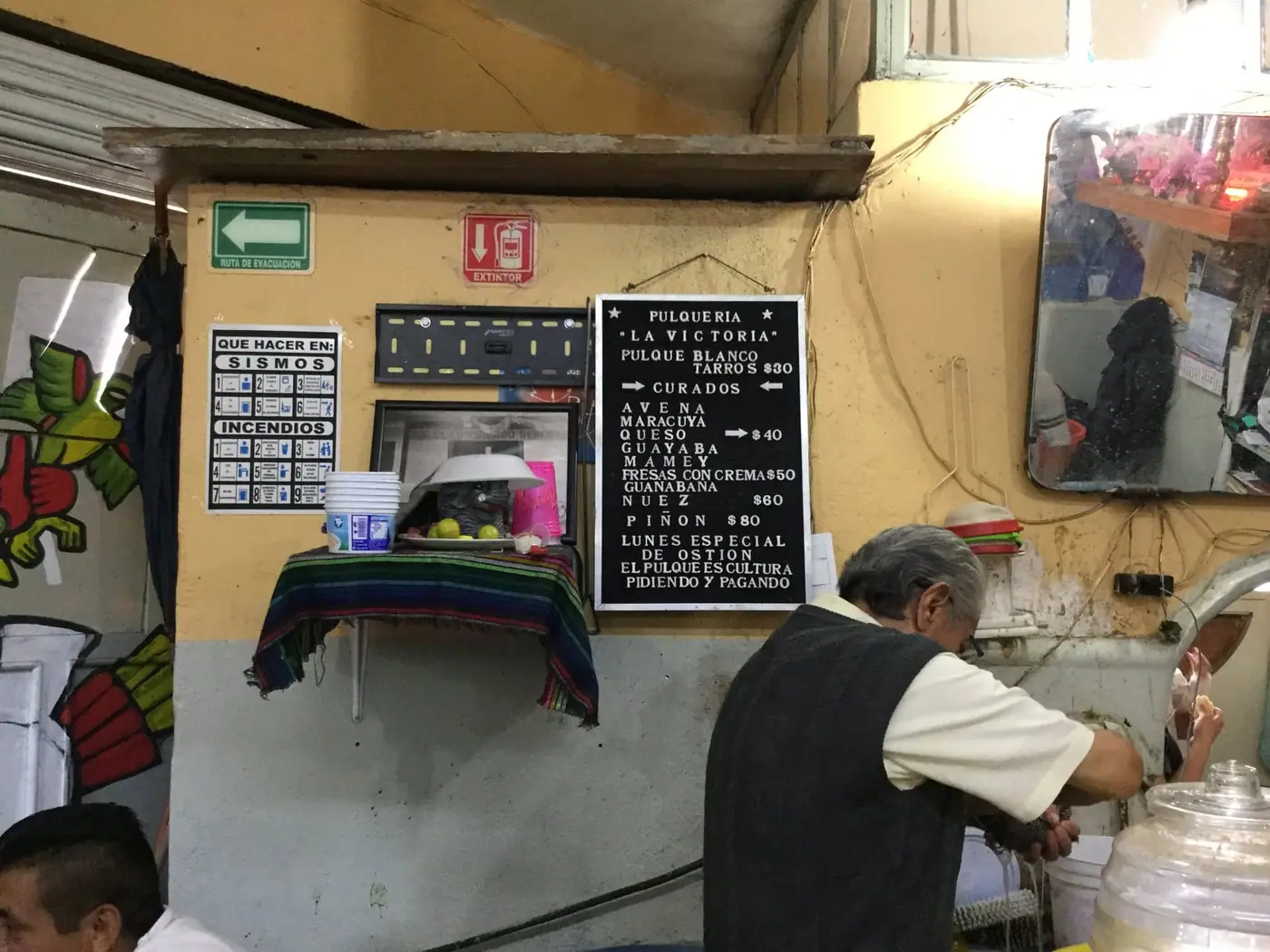
  <img src="/images/blog/optimized/flirting-mexican-sports-bar-2-1400-c7baf259.webp" alt="The interior of a Mexico City pulqueria with a hand-written price board" loading="lazy" />
  <figcaption>A returned question is the only reliable green light in a room this loud. Photo by FRANKLIN GRACIDA, <a href="https://creativecommons.org/licenses/by-sa/4.0/">CC BY-SA 4.0</a>.</figcaption>
</figure>

## Leaving before it gets awkward

The exit is easier here than almost anywhere, because the match gives you a natural one. You are not ending a conversation, you are letting someone watch the second half.

<mark lang="es-MX">Va, te dejo ver el partido</mark> is graceful, gives them an out, and leaves the door open if they would rather you did not go. <mark lang="es-MX">Suerte con tu equipo</mark> works the same way. Both are ordinary politeness strategies doing the actual work of face-saving.[^cvc-tacticas]

And if it went well, the ask is small: <mark lang="es-MX">¿te caigo en el próximo?</mark> — shall I find you at the next one. It is a low-stakes invitation because it is attached to a fixture that exists whether or not either of you shows up.

<figure>
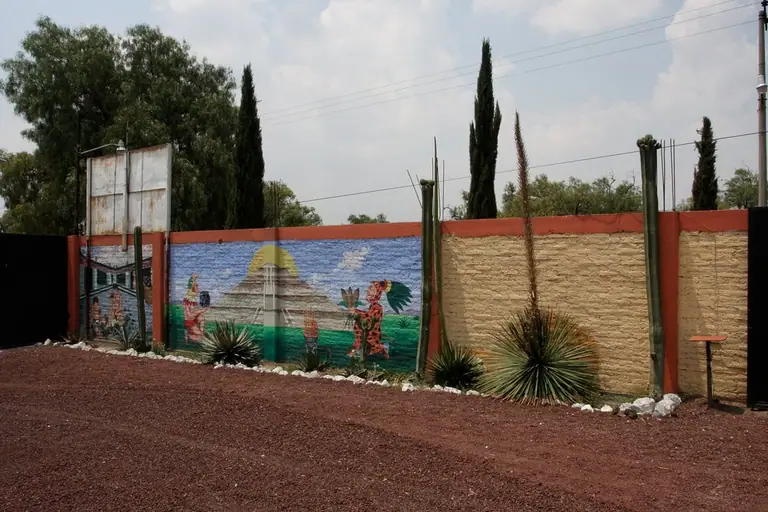
  <img src="/images/blog/optimized/flirting-mexican-sports-bar-3-768-965de478.webp" alt="A painted mural on the wall of a pulqueria near Teotihuacan" loading="lazy" />
  <figcaption>The exit is easy here. You are not ending a conversation, you are letting someone watch the second half. Photo by TravelingOtter, <a href="https://creativecommons.org/licenses/by-sa/2.0/">CC BY-SA 2.0</a>.</figcaption>
</figure>

One last piece of vocabulary, since it will be on the table in front of you. <mark lang="es-MX">Chela</mark> is beer,[^dem-chela] <mark lang="es-MX">botana</mark> is the small food that comes with drinks,[^dem-botana] and <mark lang="es-MX">ligar</mark> is the verb for what this whole post is about — from the sense of tying or linking two things together.[^dem-ligar] Offering to share a <mark lang="es-MX">botana</mark> is a more Mexican move than offering to buy a drink, and it is much harder to misread.

*Hero photo by Scott Dexter, [CC BY-SA 2.0](https://creativecommons.org/licenses/by-sa/2.0/).*

[^dem-ligar]: [Diccionario del español de México, ligar](https://dem.colmex.mx/ver/ligar) - El Colegio de México
[^dem-chela]: [Diccionario del español de México, chela](https://dem.colmex.mx/ver/chela) - El Colegio de México
[^dem-botana]: [Diccionario del español de México, botana](https://dem.colmex.mx/ver/botana) - El Colegio de México
[^cvc-pragmatica]: [Instituto Cervantes, competencia pragmática](https://cvc.cervantes.es/ensenanza/biblioteca_ele/diccio_ele/diccionario/competenciapragmatica.htm) - Centro Virtual Cervantes
[^cvc-tacticas]: [Instituto Cervantes, tácticas y estrategias pragmáticas](https://cvc.cervantes.es/ensenanza/biblioteca_ele/diccio_ele/diccionario/tacticasestrategpragma.htm) - Centro Virtual Cervantes
[^cvc-cortesia]: [Instituto Cervantes, cortesía](https://cvc.cervantes.es/ensenanza/biblioteca_ele/diccio_ele/diccionario/cortesia.htm) - Centro Virtual Cervantes

FAQ:
Q: How do I start a conversation at a Mexican sports bar?
A: Use the match. ¿Le vas a alguien? asks who they support and it is the most natural opener in the room, because it is about the screen rather than about them.

Q: When should I not talk?
A: During the play. Interrupting a penalty, a late goal or the final round is the fastest way to be remembered badly. Talk in the gaps, not over the moment.

Q: What does ¿le vas a alguien? mean?
A: Do you support anyone. Irle a un equipo is the standard construction for supporting a team, and it is worth learning because vas is not obvious from the words.

Q: Is teasing about teams okay?
A: Yes, and it is half the culture - but only while both people are smiling. Rivalry banter runs on shared enjoyment, and it stops being funny the second one person is not in on it.

Q: What if I do not know anything about football?
A: Say so and ask. ¿Y ese quién es? works perfectly and most fans are delighted to explain. Faking knowledge is far riskier than admitting you have none.

Q: What is a low-pressure follow-up line?
A: ¿Vienes seguido? It is short, easy to answer either way, and it moves the conversation off the screen without making it a whole thing.

Q: How do I buy someone a drink without it being loaded?
A: ¿Te invito una chela? Te invito means I am treating, and among Mexicans it is generous rather than transactional - it does not put anyone under obligation.

Q: How do I exit gracefully if it is not landing?
A: Va, que disfrutes el partido. It is warm, it is final, and it lets both of you go back to the screen with nothing awkward left behind.

Sources:
- Diccionario del español de México, ligar: https://dem.colmex.mx/ver/ligar
- Diccionario del español de México, chela: https://dem.colmex.mx/ver/chela
- Diccionario del español de México, botana: https://dem.colmex.mx/ver/botana
- Instituto Cervantes, competencia pragmática: https://cvc.cervantes.es/ensenanza/biblioteca_ele/diccio_ele/diccionario/competenciapragmatica.htm
- Instituto Cervantes, tácticas y estrategias pragmáticas: https://cvc.cervantes.es/ensenanza/biblioteca_ele/diccio_ele/diccionario/tacticasestrategpragma.htm
- Instituto Cervantes, cortesía: https://cvc.cervantes.es/ensenanza/biblioteca_ele/diccio_ele/diccionario/cortesia.htm

Related words: ligar, tirar-la-onda, buena-onda, chela