---
title: "Why Mexican Announcers Stretch Goooool Until Your Coffee Gets Cold"
description: "Learn why Mexican soccer announcers stretch goooool, what narradores do, and the fan Spanish behind the most famous call in futbol."
type: "article"
category: "guides"
url: "https://consalsa.app/blog/goooool-narrador"
canonical: "https://consalsa.app/blog/goooool-narrador"
published: "2026-08-28"
updated: "2026-08-28"
author: "Andrey the Nomad"
site: "ConSalsa.App"
license: "https://consalsa.app/about"
---

# Why Mexican Announcers Stretch Goooool Until Your Coffee Gets Cold
URL: https://consalsa.app/blog/goooool-narrador
Date: 2026-08-28
Updated: 2026-08-28
Category: guides
Keywords: why do spanish announcers say gol, goooool meaning, mexican soccer announcer, narrador meaning spanish
Summary: Learn why Mexican soccer announcers stretch goooool, what narradores do, and the fan Spanish behind the most famous call in futbol.

Quick answer:
- Goooool is an elongated soccer goal call, not a different word from gol.
- Mexican narradores stretch it to carry excitement, identity, and broadcast style.
- You can join with gol, golazo, a huevo, or no manches depending on the play.
- Do not try to out-scream the narrator in a quiet bar; match the room.

What you'll learn:
- Why the long goal call became part of Spanish-language soccer sound.
- How to understand narrador, gol, golazo, and canta el gol.
- What to yell during a Mexico or Liga MX match without sounding forced.
- When the call is celebration and when it is pure TV theater.

Don't sound gringo:
Match the room, not the television. In a packed bar nobody notices how long you hold the gol. In a quiet one, an impression of a famous narrador reads as a performance.

Body:

The stretched <mark lang="es-MX">gooooool</mark> sounds like something that has always existed, the way a national anthem does. It has not. It has an author, a stadium and a year.

## One man started it, at the Maracanã, in 1968

The long call belongs to **Ángel Fernández Rugama** — born in Morelia in 1925, died in Mexico City in 2006 — the narrador who turned a broadcast into a performance and who held the goal for as long as his lungs would allow. He dated the birth of it himself to the Maracanã in 1968, and he called the result *el gol del Ángel*.[^independiente][^voces]

What he actually changed was the job. Before him the narrador reported; after him the narrador performed. He invented nicknames for players so persistently that some footballers ended up better known by his invention than by their own surname — a habit the whole profession inherited.[^voces]

<mark lang="es-MX">Enrique Bermúdez</mark>, El Perro, took the stretched goal and the opening flourishes and carried them into the next generation, at which point they stopped being one man's style and became simply how Mexican football sounds.[^milenio] <mark lang="es-MX">Christian Martinoli</mark> then pulled the register somewhere else again — sarcastic, irreverent, closer to how people actually talk in a living room.

| El narrador | Lo que aportó |
|---|---|
| Ángel Fernández | The stretched gol, the nicknames, the broadcast as performance |
| Enrique Bermúdez | Carried the style forward until it became the default |
| Christian Martinoli | Irreverence and sarcasm, closer to the sofa than the press box |

So when you hear a goal held for eleven seconds, you are hearing a sixty-year-old idea that one person had, on one night, in Rio.

<figure>
  <img src="/images/blog/goooool-narrador-1.jpg" alt="A musician playing a violin with another person standing behind him." loading="lazy" />
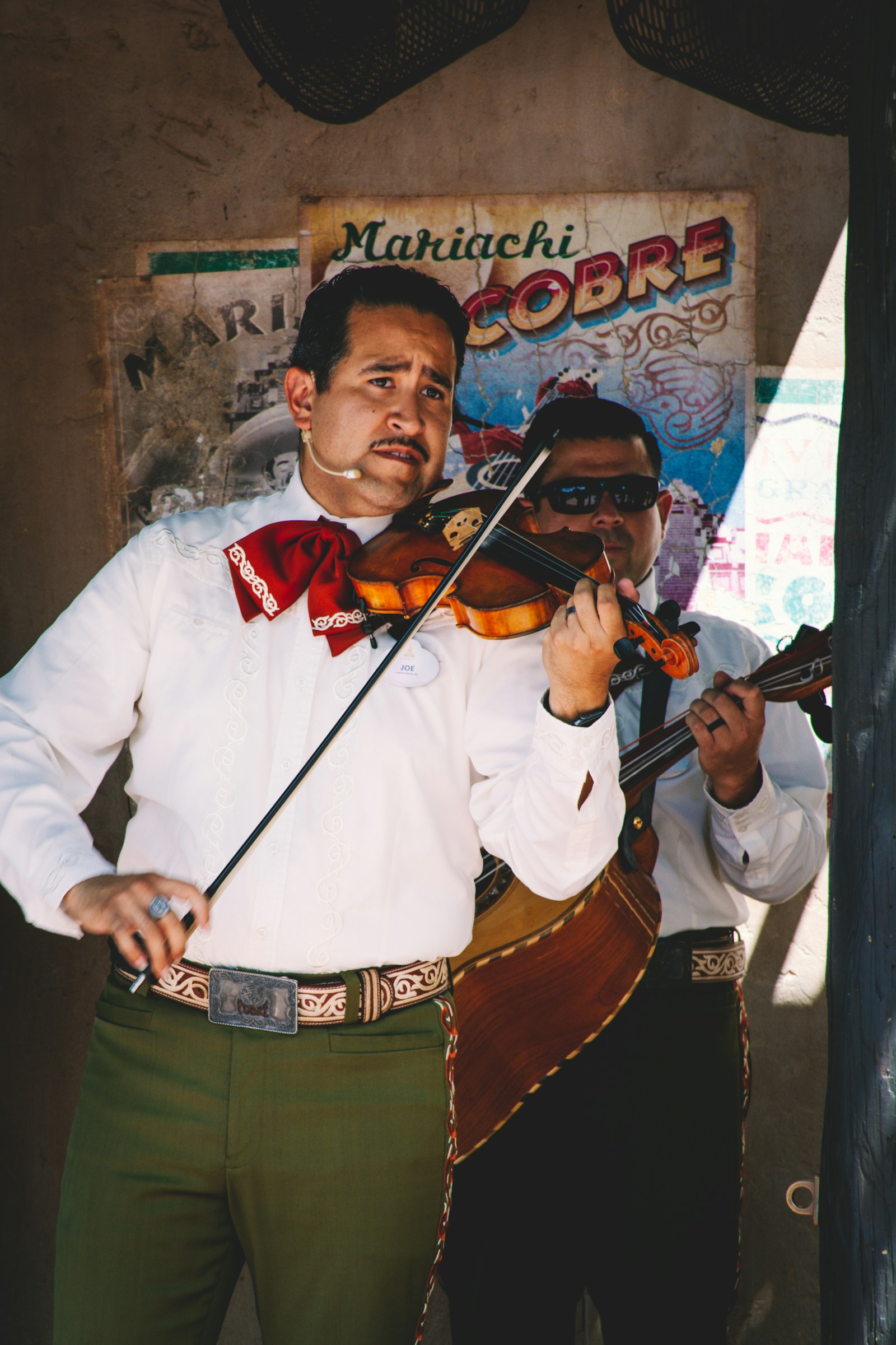
  <figcaption>The narrador's job is closer to performance than to reporting, and that was a deliberate change. Photo by <a href="https://unsplash.com/photos/ZMQcFHhqkaI" target="_blank" rel="noopener noreferrer">Samuel Ramos on Unsplash</a>.</figcaption>
</figure>

<div id="midpost-newsletter-slot"></div>

## The length is information, not decoration

The call is not one fixed sound. How long it runs, and what follows it, tells you what kind of goal it was.

<ol class="ladder">
  <li><div class="rung-card">
    <span class="rung-label">rutinario</span>
    <span class="rung-es" lang="es-MX">Gol</span>
    <span class="rung-en" lang="en">Goal</span>
    <span class="rung-note">Short. A penalty converted, a tap-in, a match already decided.</span>
  </div></li>
  <li><div class="rung-card">
    <span class="rung-label">bueno</span>
    <span class="rung-es" lang="es-MX">Goooool</span>
    <span class="rung-en" lang="en">Goooool</span>
    <span class="rung-note">The standard. Three or four seconds, then the scorer's name.</span>
  </div></li>
  <li><div class="rung-card">
    <span class="rung-label">enorme</span>
    <span class="rung-es" lang="es-MX">Gooooooooool de México</span>
    <span class="rung-en" lang="en">Goal for Mexico</span>
    <span class="rung-note">Held until the breath goes. Reserved for the ones that change something.</span>
  </div></li>
  <li><div class="rung-card">
    <span class="rung-label">anulado</span>
    <span class="rung-es" lang="es-MX">...no, no, no. Fuera de lugar</span>
    <span class="rung-en" lang="en">...no, no, no. Offside</span>
    <span class="rung-note">The cruellest sound in the language: a full call that collapses mid-vowel.</span>
  </div></li>
</ol>

That last rung is worth listening for. Since VAR, the collapse happens often enough that fans have learned to hold their own celebration for a second — and the narrador's voice is the thing everyone is waiting on.

## Fans and narradores do not use the same words

This is the part that helps you in a bar. The person on television and the person next to you are speaking two different registers, and copying the wrong one is what makes a foreigner sound like a broadcast.

<div class="do-dont">
  <div class="dd-col dd-do"><p class="dd-title">Lo que grita la gente</p><ul>
    <li><b lang="es-MX">¡Gol!</b> — the whole thing, honestly</li>
    <li><b lang="es-MX">¡Golazo!</b> — only if it deserved it</li>
    <li><b lang="es-MX">¡No manches!</b> — disbelief, very common</li>
    <li><b lang="es-MX">¡Uuuuy!</b> — for the one that nearly went in</li>
    <li><b lang="es-MX">¡Ya, árbitro!</b> — at the referee, constantly</li>
  </ul></div>
  <div class="dd-col dd-dont"><p class="dd-title">Lo que dice el narrador</p><ul>
    <li><b lang="es-MX">La tiene... la acomoda... ¡y la manda!</b></li>
    <li><b lang="es-MX">Se cierra la pinza</b> — the defense closing</li>
    <li><b lang="es-MX">Llega el silbatazo final</b> — full time</li>
    <li>The nicknames, which are his to invent and not yours</li>
    <li>The stretched call itself, if you are in a quiet room</li>
  </ul></div>
</div>

Every big narrador has a personal catalogue that fans recognize instantly and almost never say themselves. Bermúdez alone gave Mexico <mark lang="es-MX">donde las arañas tejen su nido</mark> for the top corner, <mark lang="es-MX">al rinconcito, papá</mark>, and <mark lang="es-MX">zambombazo</mark> for a shot hit far too hard.[^goal][^lja] Ángel Fernández left behind <mark lang="es-MX">el último minuto también tiene 60 segundos</mark>. Borrowing one of these lands like quoting an advert.

## Golazo, and the -azo that makes it

<mark lang="es-MX">Golazo</mark> is not a synonym for <mark lang="es-MX">gol</mark>. The <mark lang="es-MX">-azo</mark> ending is an augmentative, so the word is literally a goal made bigger, and using it for a scrappy six-yard finish will get you corrected by whoever is standing nearest.

The same ending is everywhere once you notice it:

<ul class="examples">
  <li class="example">
    <div class="es" lang="es-MX">¡Qué golazo, hermano!</div>
    <div class="en" lang="en">What an unbelievable goal, mate!</div>
  </li>
  <li class="example">
    <div class="es" lang="es-MX">Le metió un derechazo tremendo.</div>
    <div class="en" lang="en">He hit an enormous right-footer.</div>
  </li>
  <li class="example">
    <div class="es" lang="es-MX">Nos dieron un partidazo.</div>
    <div class="en" lang="en">They gave us an incredible match.</div>
  </li>
</ul>

<figure>
  <img src="/images/blog/goooool-narrador-2.jpg" alt="A view of a football pitch from among the crowd in the stands." loading="lazy" />
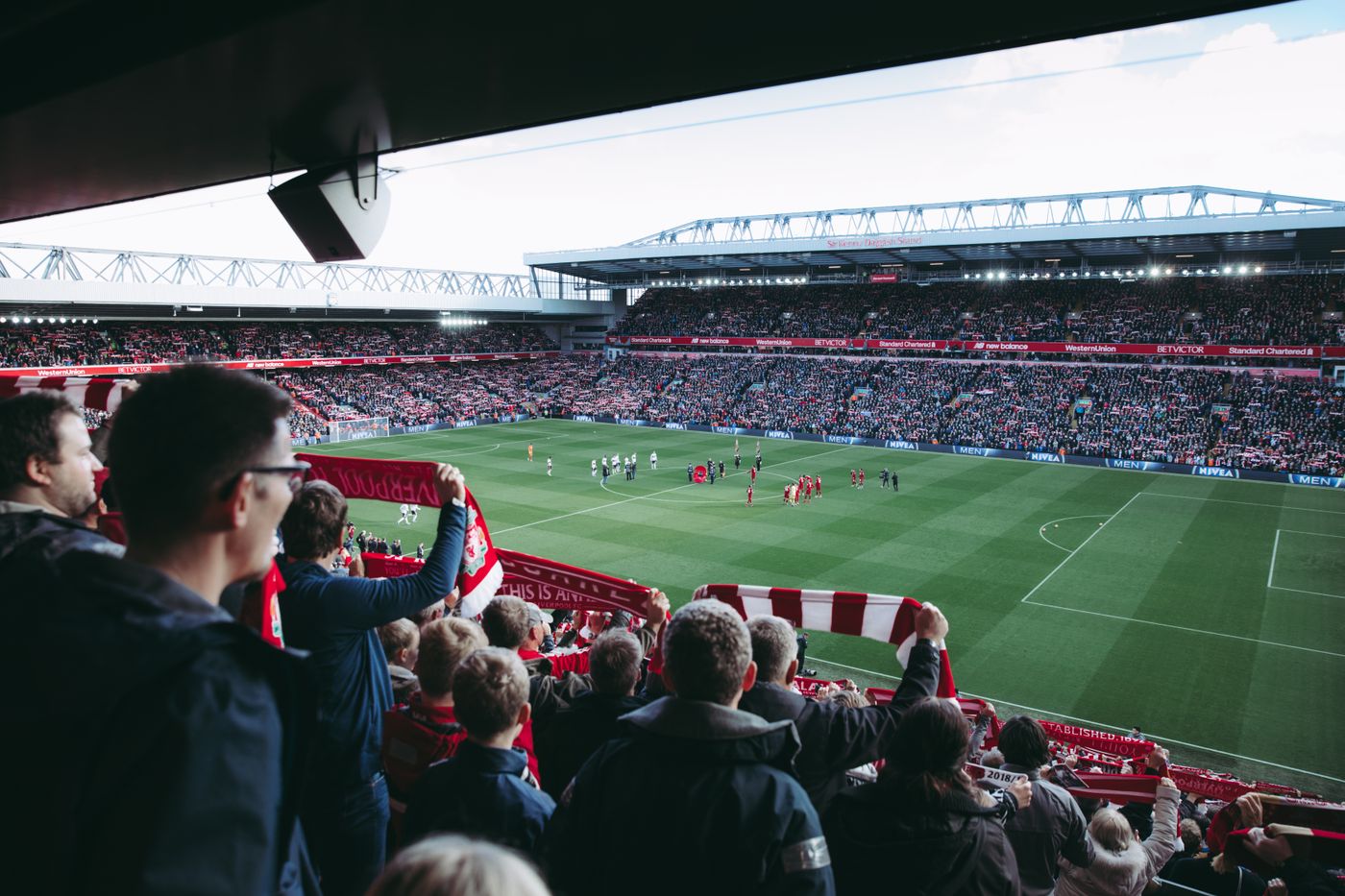
  <figcaption>In the stand, the vocabulary is much shorter than it is on television. Photo from <a href="https://www.pexels.com/photo/30585396/" target="_blank" rel="noopener noreferrer">Pexels</a>.</figcaption>
</figure>

## Joining in without doing an impression

<div class="note-card is-tip">
  <span class="note-label">La regla del cuarto</span>
  <p>Match the room, not the television. In a packed bar nobody will notice how long you hold it. In a quiet one, an impression of a famous narrador reads as a performance rather than as enthusiasm.</p>
  <p>The safe move is <b lang="es-MX">¡gol!</b> at whatever volume everyone else is using, and <b lang="es-MX">¡golazo!</b> only when it earned the extra syllables.</p>
</div>

And when it is taken away, the room has a script for that too — <mark lang="es-MX">no puede ser</mark>, <mark lang="es-MX">chale</mark>, and a long complaint aimed at the VAR booth rather than at any player.

<figure>
  <img src="/images/blog/goooool-narrador-3.jpg" alt="Fans outdoors celebrating together with a large balloon overhead." loading="lazy" />
  <figcaption>The stretched vowel is a tool, not a goal-only ritual — <span lang="es-MX">penaaaal</span> gets the same treatment. Photo from <a href="https://www.pexels.com/photo/30585178/" target="_blank" rel="noopener noreferrer">Pexels</a>.</figcaption>
</figure>

## The short version

The long <mark lang="es-MX">gol</mark> is an invention with a birthday, and the length of it carries information rather than just excitement.

Listen to the narrador for the story. Copy the crowd for the words. Those are two different jobs, and only one of them is yours.

[^independiente]: [El Independiente, Ángel Fernández: la voz que revolucionó las narraciones en el futbol mexicano](https://elindependiente.mx/opinion/la-maquina-del-tiempo/2024/09/20/angel-fernandez-la-voz-que-revoluciono-las-narraciones-en-el-futbol-mexicano/) — El Independiente
[^voces]: [Voces del Deporte, perfil de Ángel Fernández Rugama](https://www.vocesdeldeporte.mx/perfiles/VOCES-DE-AYER/ANGEL-FERNANDEZ-RUGAMA/) — Voces del Deporte
[^milenio]: [Milenio, el legado de los narradores deportivos en la memoria del futbol](https://www.milenio.com/deportes/el-legado-de-los-narradores-deportivos-en-la-memoria-del-futbol) — Milenio
[^goal]: [Goal, las frases de Martinoli, Luis García y el Perro Bermúdez](https://www.goal.com/es-mx/noticias/equipos-van-martinoli-luis-garcia-perro-bermudez-raoul-ortiz/2mm5n6g3d8yz1mqdzp4dlhtrs) — Goal
[^lja]: [LJA.MX, narradores de futbol de culto en México](https://www.lja.mx/2025/04/narradores-de-futbol-de-culto-en-mexico/) — LJA.MX

FAQ:
Q: Why do Mexican announcers stretch out goooool?
A: It is emotional punctuation. The length of the call carries how big the goal was, and the announcer is holding the moment open for everyone listening rather than reporting a fact.

Q: Is goooool a different word from gol?
A: No, it is the same word held. The spelling with extra letters is just a way of writing the sound down.

Q: What is a narrador?
A: The play-by-play announcer. In Mexico the role is part reporter and part performer, and the big narradores are recognizable voices in their own right.

Q: What should I yell when a goal goes in?
A: Gol on its own works. Golazo if it was spectacular, and no manches or a huevo if you want to sound like everyone else in the bar.

Q: What does golazo mean?
A: A great goal specifically. The -azo ending is an augmentative, so it is a goal made bigger - and using it for an ordinary tap-in will get you corrected.

Q: Should I try to imitate the long call myself?
A: Match the room rather than the television. In a packed bar nobody will notice; in a quiet one, an imitation of a famous narrador tends to land as a performance rather than as enthusiasm.

Q: What do people shout when a goal is disallowed?
A: Complaints at the VAR and the referee, usually loudly. No puede ser and chale cover the disappointment without insulting anyone.

Q: Are there other stretched calls?
A: Yes - penal and the drawn-out reaction to a near miss both get the same treatment. The stretched vowel is a general tool, not a goal-only one.

Sources:
- El Independiente, Ángel Fernández: la voz que revolucionó las narraciones en el futbol mexicano: https://elindependiente.mx/opinion/la-maquina-del-tiempo/2024/09/20/angel-fernandez-la-voz-que-revoluciono-las-narraciones-en-el-futbol-mexicano/
- Voces del Deporte, perfil de Ángel Fernández Rugama: https://www.vocesdeldeporte.mx/perfiles/VOCES-DE-AYER/ANGEL-FERNANDEZ-RUGAMA/
- Milenio, el legado de los narradores deportivos en la memoria del futbol: https://www.milenio.com/deportes/el-legado-de-los-narradores-deportivos-en-la-memoria-del-futbol
- LJA.MX, narradores de futbol de culto en México: https://www.lja.mx/2025/04/narradores-de-futbol-de-culto-en-mexico/
- Goal, las frases de Martinoli, Luis García y el Perro Bermúdez: https://www.goal.com/es-mx/noticias/equipos-van-martinoli-luis-garcia-perro-bermudez-raoul-ortiz/2mm5n6g3d8yz1mqdzp4dlhtrs

Related words: a-huevo, no-mames, guey, orale