---
title: "Someone Called You Gorda in Mexico: Three Things Decide What It Meant"
description: "Gorda and gordita run from pet name to insult with nothing in the word to tell you which. Here is what Mexicans read instead, and how to answer either one."
type: "article"
category: "manners"
url: "https://consalsa.app/blog/gorda-gordita-mexico"
canonical: "https://consalsa.app/blog/gorda-gordita-mexico"
published: "2026-09-19"
updated: "2026-09-19"
author: "Andrey the Nomad"
site: "ConSalsa.App"
license: "https://consalsa.app/terms#ip"
---

# Someone Called You Gorda in Mexico: Three Things Decide What It Meant
URL: https://consalsa.app/blog/gorda-gordita-mexico
Date: 2026-09-19
Updated: 2026-09-19
Category: manners
Keywords: gorda meaning mexico, gordita meaning spanish, why does he call me gorda, mexican nickname gordo, is gorda an insult, mexican terms of endearment weight
Summary: Gorda and gordita run from pet name to insult with nothing in the word to tell you which. Here is what Mexicans read instead, and how to answer either one.

Quick answer:
- Gordo and gorda work as pet names in Mexico, most often between partners and inside families.
- The word carries no built-in tone. Who says it, how long they have known you, and whether you can say it back are what decide.
- From a stranger it is a sales move or a comment on your body, and those two are told apart by the setting, not the wording.
- Foreigners can safely receive it long before they can safely use it.

What you'll learn:
- Why the -ita ending is not making the word gentler, and what it is actually doing.
- How often Mexicans really use gordo for a partner, from a Mexico City study that counted.
- The four rooms it shows up in, and which one you are standing in.
- Four ways to answer, from playing along to shutting it down without a scene.

Don't sound gringo:
Receive it, do not issue it. A pet name about someone's body is licensed by years of relationship, and being fluent is not the same as being licensed.

Body:

Someone said <mark lang="es-MX">gorda</mark> to you and nobody in the room reacted. So you are the only person still thinking about it. In Mexico the word works as a pet name far more often than as a comment, and the giveaway is never the word itself.

Who said it, how long they have known you, and whether you could say it back.

## The dictionary gives itself away

El Colegio de México defines <mark lang="es-MX">gordo</mark> plainly: someone with more volume than usual.[^dem-gordo] Then it illustrates that definition with three examples, and one of them is <mark lang="es-MX">una linda gordita</mark>. To show what the flat adjective means, the dictionary reaches for the affectionate diminutive.

The same entry ends with <mark lang="es-MX">[caer gordo](/words/me-cae-gordo)</mark>, which means finding a person insufferable and has nothing to do with anybody's body.[^dem-gordo] One root, and it has already split into a pet name and a complaint about your coworker.

| What you heard | Where | Usually means |
|---|---|---|
| Gorda / gordo | From a partner | Pet name, no comment on size |
| Gordita / gordito | From an older relative | Warmth, sometimes with a nudge about eating |
| Gordita | From a market vendor | Sales register, same slot as güerita |
| Gordo | From a friend group, to one guy | An established nickname you cannot borrow |
| Me cae gordo | About someone else | I cannot stand him |
| Una gordita | On a menu | Thick masa pocket, split open and stuffed |

<figure>
  <img src="/images/blog/optimized/pexels-gerardo-manzano-cdmx-night-couple-1400-0a6aa74c.webp" alt="A young couple embracing at night under city lights in Mexico City." loading="lazy" />
  <figcaption>Inside a couple, the word stops describing anything and starts marking who you are to each other. Photo by <a href="https://www.pexels.com/photo/romantic-couple-embracing-in-urban-night-scene-30695962/" target="_blank" rel="noopener noreferrer">Gerardo Manzano on Pexels</a>.</figcaption>
</figure>

## The -ita is not making it smaller

Careful learners get caught here. The textbook says diminutive, so you picture something shrinking.

Alberto Zuluaga Ospina went through around four hundred diminutives across four novels and argued that the suffix has one constant function underneath all its uses, showing up as <mark lang="es-MX">rebajamiento afectuoso o despectivo</mark>, an affectionate lowering or a contemptuous one.[^zuluaga] Same machinery, opposite outcomes. He also picks up Amado Alonso's point that the purely size-reducing reading is by far the least frequent thing the suffix ever does, in speech and in writing alike.[^zuluaga]

So <mark lang="es-MX">gordita</mark> is not <mark lang="es-MX">gorda</mark> with the edges filed off. **It is the speaker stepping closer to you, and closeness can be tender or it can be patronizing.** The suffix will not tell you which. It was never carrying that.

<div class="note-card is-tip">
  <span class="note-label">Worth knowing</span>
  <p>This is why <b lang="es-MX">gordita</b> from your partner and <b lang="es-MX">gordita</b> from a doctor who has not looked up from the chart feel like different words. They are the same word doing the same thing. Only the person changed.</p>
</div>

## How common is it, really

Cristal Cepeda Ruiz ran sociolinguistic questionnaires with 52 people in Mexico City, across four generations from teenagers to speakers in their sixties, and collected about 1,600 answers about what family members call each other.[^cepeda-familiar]

<mark lang="es-MX">Gordo</mark> and <mark lang="es-MX">gorda</mark> came in at 4.4% of everything the cohort in their late twenties and early thirties reported saying to a partner.[^cepeda-familiar] Common enough to expect, nowhere near automatic.

There is a split underneath that number. Cepeda reports that in specific situations, with women, the nickname is **reported less often, because it gets associated negatively with the person's weight**.[^cepeda-familiar] So Mexicans are already reading the same ambiguity you are, and some of them quietly stopped using the word.

<div id="midpost-newsletter-slot"></div>

## Four rooms, four different words

<ul class="meter-list">
  <li class="meter-head"><span>who said it</span><span>how loaded it is</span><span></span></li>
  <li data-tone="soft" style="--fill:15%">
    <span class="meter-es" lang="es-MX">Tu pareja<span class="meter-en" lang="en">your partner</span></span>
    <span class="meter-track"><span class="meter-fill"></span></span>
    <span class="meter-val">soft</span>
  </li>
  <li data-tone="mid" style="--fill:40%">
    <span class="meter-es" lang="es-MX">Tu suegra<span class="meter-en" lang="en">your partner's mother</span></span>
    <span class="meter-track"><span class="meter-fill"></span></span>
    <span class="meter-val">mid</span>
  </li>
  <li data-tone="soft" style="--fill:20%">
    <span class="meter-es" lang="es-MX">La marchanta<span class="meter-en" lang="en">the market vendor</span></span>
    <span class="meter-track"><span class="meter-fill"></span></span>
    <span class="meter-val">soft</span>
  </li>
  <li data-tone="blunt" style="--fill:90%">
    <span class="meter-es" lang="es-MX">Un desconocido en la calle<span class="meter-en" lang="en">a stranger on the street</span></span>
    <span class="meter-track"><span class="meter-fill"></span></span>
    <span class="meter-val">blunt</span>
  </li>
</ul>

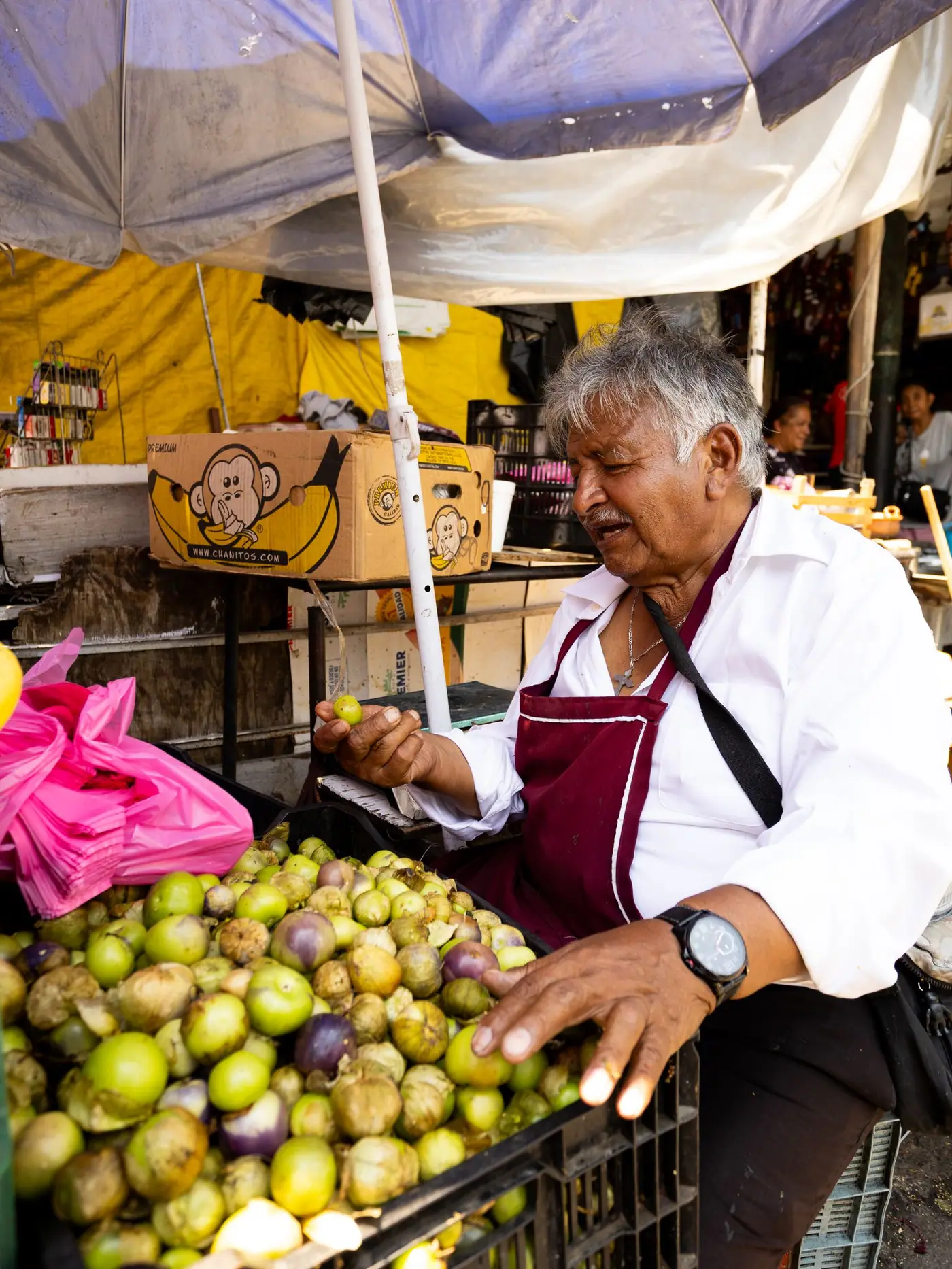
The vendor and the stranger use the identical word and land nowhere near each other. In a market, warm address terms are how a stall opens a sale, and they go out to everyone in the same slot where you would hear <mark lang="es-MX">güerita</mark>, <mark lang="es-MX">joven</mark> or <mark lang="es-MX">marchanta</mark>. Nobody is appraising you. They want you to stop walking.

The stranger has nothing to sell you, and both of you know it.

<figure>
  <img src="/images/blog/optimized/pexels-david-hernandez-cdmx-market-vendor-1400-c995e1ca.webp" alt="A vendor sorting tomatillos at a market stall in Mexico City." loading="lazy" />
  <figcaption>At a stall, the pet name is part of the service, not a verdict. Photo by <a href="https://www.pexels.com/photo/elderly-vendor-at-market-in-ciudad-de-mexico-37642047/" target="_blank" rel="noopener noreferrer">David Hernandez on Pexels</a>.</figcaption>
</figure>

## The reason it is not a harmless word

Mexico's national discrimination survey, run by INEGI in 2022, found that 23.7% of adults said they had been discriminated against in the previous year.[^enadis] Of those people, 30.6% put it down to how they dress or groom themselves. Weight or height came second, at 27.5%.[^enadis][^informador]

That is the background every Mexican hears the word against. It does not make <mark lang="es-MX">gordo</mark> a slur. It makes it a word with a live wire in it, which is why the relationship behind it carries so much of the load.

And there is a reclamation running alongside all of that. Mexico City's own anti-discrimination council, COPRED, published a set of conversations with fat activists who argue for taking the word back on purpose: <mark lang="es-MX">retomar la palabra gorda como una postura política</mark>, treating it as a plain description of a body rather than something to soften.[^copred] One table can hold all three at once, spelled the same way every time.

## Answering it

<ol class="ladder">
  <li>
    <div class="rung-card">
      <span class="rung-label">play along</span>
      <span class="rung-es" lang="es-MX">Ay, ya, gordo.</span>
      <span class="rung-en" lang="en">Oh, stop it.</span>
      <span class="rung-note">Returns the nickname and closes the subject. Only works if you already have the standing to say it back.</span>
    </div>
  </li>
  <li>
    <div class="rung-card">
      <span class="rung-label">neutral</span>
      <span class="rung-es" lang="es-MX">Jaja, ¿de dónde salió eso?</span>
      <span class="rung-en" lang="en">Ha, where did that come from?</span>
      <span class="rung-note">Asks without accusing. Useful the first time, when you genuinely cannot tell what was meant.</span>
    </div>
  </li>
  <li>
    <div class="rung-card">
      <span class="rung-label">asking</span>
      <span class="rung-es" lang="es-MX">Oye, prefiero que no me digas así.</span>
      <span class="rung-en" lang="en">Hey, I would rather you did not call me that.</span>
      <span class="rung-note">The standard move, and it does not read as an attack in Spanish. Say it privately and it stays a preference.</span>
    </div>
  </li>
  <li>
    <div class="rung-card">
      <span class="rung-label">shutting it down</span>
      <span class="rung-es" lang="es-MX">No me hables así, por favor.</span>
      <span class="rung-en" lang="en">Do not talk to me like that, please.</span>
      <span class="rung-note">For the street, not for the dinner table. It ends the exchange rather than negotiating it.</span>
    </div>
  </li>
</ol>

Memorize the third one. Most of the time this is a habit rather than a message, and people drop habits when you ask them to.

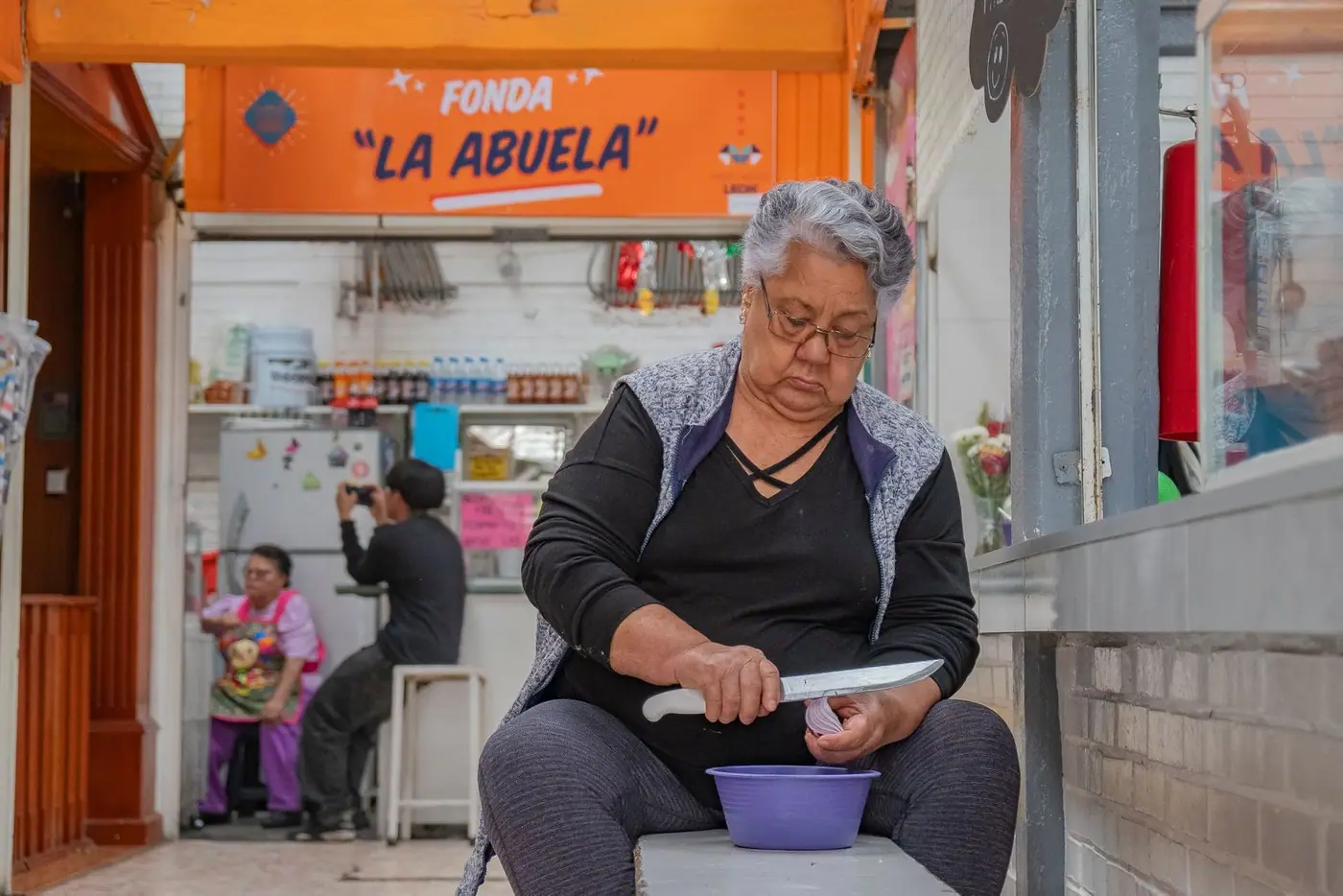
<figure>
  <img src="/images/blog/optimized/pexels-antonio-partida-fonda-la-abuela-1400-0867a6b1.webp" alt="A woman preparing food at a market fonda in Guanajuato under a sign reading Fonda La Abuela." loading="lazy" />
  <figcaption>Fonda La Abuela, Guanajuato. Family words get borrowed for strangers constantly, which is half the confusion. Photo by <a href="https://www.pexels.com/photo/elderly-woman-cooking-at-la-abuela-market-stall-37759648/" target="_blank" rel="noopener noreferrer">Antonio Partida on Pexels</a>.</figcaption>
</figure>

## Receive it, do not issue it

<div class="do-dont">
  <div class="dd-col dd-do"><p class="dd-title">Fine for you</p><ul>
    <li>Hearing it from a partner and letting it be normal</li>
    <li>Hearing it at a stall and answering the actual question</li>
    <li>Saying <b lang="es-MX">prefiero que no</b> when you do not like it</li>
    <li>Ordering <b lang="es-MX">dos gorditas de chicharrón</b></li>
  </ul></div>
  <div class="dd-col dd-dont"><p class="dd-title">Not yours yet</p><ul>
    <li>Trying it on a friend you met last month</li>
    <li>Using it about someone who is not in the room</li>
    <li>Copying the nickname a friend group uses for one guy</li>
    <li>Explaining to a Mexican that the word is problematic</li>
  </ul></div>
</div>

None of this is about your Spanish being good enough. A nickname about somebody's body is licensed by the years behind it, not by fluency. You can understand <mark lang="es-MX">gordo</mark> perfectly on day one and still have no standing to use it in year two.

The mechanic underneath is <mark lang="es-MX">confianza</mark>: the accumulated permission that decides what you are allowed to say to whom. It is the same clock that decides when somebody starts calling you <mark lang="es-MX">[carnal](/words/carnal)</mark>. Pet names sit near the top of what it unlocks, and a pet name about a body sits above those.

[^dem-gordo]: [Diccionario del español de México, gordo](https://dem.colmex.mx/ver/gordo) - El Colegio de México.
[^zuluaga]: [Alberto Zuluaga Ospina, La función del diminutivo en español](https://bibliotecadigital.caroycuervo.gov.co/id/eprint/413/1/TH_25_001_023_0.pdf) - Thesaurus, Tomo XXV, Núm. 1 (1970), Instituto Caro y Cuervo.
[^cepeda-familiar]: [Cristal Yeseidy Cepeda Ruiz, «Abuelita no, abue». Fórmulas nominales en el contexto familiar de la Ciudad de México](https://www.redalyc.org/journal/5138/513864246043/html/) - Sincronía, núm. 78 (2020), pp. 527-562.
[^enadis]: [Encuesta Nacional sobre Discriminación (ENADIS) 2022, comunicado de prensa núm. 275/23](https://www.inegi.org.mx/contenidos/saladeprensa/boletines/2023/ENADIS/ENADIS_Nal22.pdf) - INEGI.
[^informador]: [Forma de vestir o arreglarse, principal motivo de discriminación en México](https://www.informador.mx/jalisco/Inegi-Forma-de-vestir-o-arreglarse-principal-motivo-de-discriminacion-en-Mexico-20230525-0102.html) - El Informador.
[^copred]: [Cuerpos disidentes: la discriminación contra las personas gordas](https://copred.cdmx.gob.mx/storage/app/media/Cuerpos-Disidentes-La-discriminacion-contra-las-personas-gordas.pdf) - COPRED, Ciudad de México.

FAQ:
Q: What does gorda mean in Mexican Spanish?
A: Literally it means fat. As a form of address it usually works as a pet name, most often from a partner or a close family member, and it carries no comment on the person's actual size.

Q: Is it rude when my boyfriend calls me gorda?
A: Inside a Mexican couple it is a common and usually affectionate habit. It is worth saying if you do not like it, and that is a preference, not a correction of his Spanish.

Q: What is the difference between gorda and gordita?
A: The -ita ending softens the delivery, not the meaning. It can make the word tender or make it condescending, and only the speaker and the setting tell you which.

Q: Why did a market vendor call me gordita?
A: Vendors use warm address terms with everyone to open a sale, in the same slot where they would say güerita, joven or marchanta. It is a register, not an assessment.

Q: Can I call my Mexican friend gordo?
A: Not until they call you something like it first. The word is licensed by relationship, and using it early reads as a stranger commenting on a body.

Q: Does gordita always refer to weight?
A: No. A gordita is also a thick corn masa pocket sold at street stalls, and me cae gordo means you find a person unbearable, with no reference to their size at all.

Q: Is calling someone gordo considered discrimination in Mexico?
A: It can be. Weight is one of the most cited reasons for discrimination in Mexico's national survey, and the difference between a pet name and a slur is entirely the relationship behind it.

Q: How do I ask someone to stop calling me gorda?
A: Say oye, prefiero que no me digas así. Naming the preference directly is normal in Mexican Spanish and does not read as an accusation.

Sources:
- Diccionario del español de México, gordo - El Colegio de México: https://dem.colmex.mx/ver/gordo
- Zuluaga Ospina, La función del diminutivo en español, Thesaurus XXV (1970): https://bibliotecadigital.caroycuervo.gov.co/id/eprint/413/1/TH_25_001_023_0.pdf
- Cepeda Ruiz, Fórmulas nominales en el contexto familiar de la Ciudad de México, Sincronía 78 (2020): https://www.redalyc.org/journal/5138/513864246043/html/
- Encuesta Nacional sobre Discriminación (ENADIS) 2022 - INEGI: https://www.inegi.org.mx/contenidos/saladeprensa/boletines/2023/ENADIS/ENADIS_Nal22.pdf
- Cuerpos disidentes: la discriminación contra las personas gordas - COPRED, Ciudad de México: https://copred.cdmx.gob.mx/storage/app/media/Cuerpos-Disidentes-La-discriminacion-contra-las-personas-gordas.pdf
- Forma de vestir o arreglarse, principal motivo de discriminación en México - El Informador: https://www.informador.mx/jalisco/Inegi-Forma-de-vestir-o-arreglarse-principal-motivo-de-discriminacion-en-Mexico-20230525-0102.html

Related words: me-cae-gordo, jefa, morra, ruco