---
title: "How to Watch Liga MX From the US Without Missing Kickoff"
description: "Liga MX crowns two champions a year, and Mexico stopped changing its clocks in 2022. Here is the calendar, the Spanish, and how to find the game."
type: "article"
category: "guides"
url: "https://consalsa.app/blog/how-to-watch-liga-mx"
canonical: "https://consalsa.app/blog/how-to-watch-liga-mx"
published: "2026-09-20"
updated: "2026-09-20"
author: "Andrey the Nomad"
site: "ConSalsa.App"
license: "https://consalsa.app/terms#ip"
---

# How to Watch Liga MX From the US Without Missing Kickoff
URL: https://consalsa.app/blog/how-to-watch-liga-mx
Date: 2026-09-20
Updated: 2026-09-20
Category: guides
Keywords: how to watch liga mx, liga mx spanish, what does jornada mean, liguilla meaning, apertura clausura difference, liga mx schedule from us
Summary: Liga MX crowns two champions a year, and Mexico stopped changing its clocks in 2022. Here is the calendar, the Spanish, and how to find the game.

Quick answer:
- Liga MX plays two separate championships a year: the Apertura from July to December and the Clausura from January to May.
- A jornada is a matchweek, not a calendar date. La tabla is the standings, and the liguilla is the eight-team playoff that decides the title.
- Mexico stopped observing daylight saving time in 2022, so most kickoff times shift by an hour relative to the US between November and March.
- Broadcast rights move between networks often, so check a current official listing instead of an old guide.

What you'll learn:
- Why Mexico crowns two champions a year, and what that does to the calendar.
- How to read a fixture listing: jornada, local, visitante, ida, vuelta, global.
- Why the team that finishes first in the table often wins nothing at all.
- How to open a conversation with fans without walking straight into a rivalry.

Don't sound gringo:
Do not say temporada when you mean torneo. Mexico plays two tournaments inside one season, so ¿quién ganó la temporada? has no answer and marks you instantly. Ask ¿quién ganó el Apertura? and you sound like someone who has been following.

Body:

Liga MX is Mexico's top men's league, and following it from the US is less about finding a stream than about three things nobody explains: the season is actually two seasons, the standings do not decide the champion, and Mexico stopped changing its clocks in 2022.

Get those three straight and the Spanish around them stops being a wall. Miss them and you will show up an hour late to a match that turns out not to matter.

## Two tournaments, two champions, one year

This is the part that breaks American brains first. Mexico does not play one long season ending in one trophy. It plays **two short championships inside the same year**, each with its own table, its own playoff, and its own champion.[^ligamx-calendario]

| Term | What it is | Roughly when |
|---|---|---|
| <mark lang="es-MX">Apertura</mark> | the opening tournament | July to December |
| <mark lang="es-MX">Clausura</mark> | the closing tournament | January to May |
| <mark lang="es-MX">torneo</mark> | one of those two championships | the unit that matters |
| <mark lang="es-MX">temporada</mark> | the year that contains both | almost never used to mean a title |
| <mark lang="es-MX">Campeón de Campeones</mark> | the two champions play each other | July |

So when someone says <mark lang="es-MX">son bicampeones</mark>, they usually mean a club won the <mark lang="es-MX">Apertura</mark> and then the <mark lang="es-MX">Clausura</mark> back to back — two trophies inside about ten months. It is a real achievement and it is also not what "back-to-back" means in the US.

**The practical version: ask about a <mark lang="es-MX">torneo</mark>, never a <mark lang="es-MX">temporada</mark>.** The Apertura 2026 regular phase runs from mid-July to 22 November — seventeen rounds, eighteen clubs.[^ligamx-calendario]

<figure>
  <img src="/images/blog/optimized/how-to-watch-liga-mx-1-1400-fc0836fe.webp" alt="A full Estadio Azteca seen from the stands during a match" loading="lazy" />
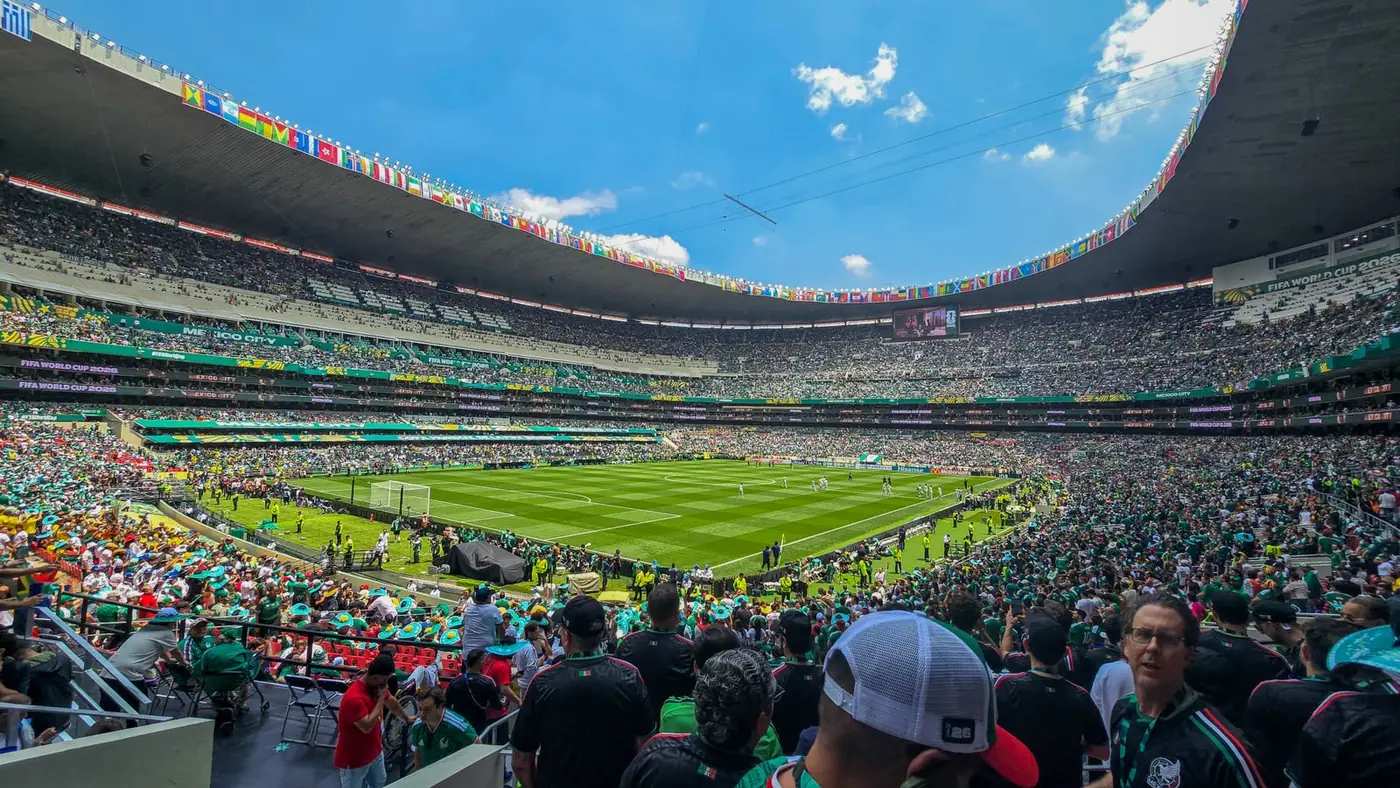
  <figcaption>Every league builds its own calendar logic. Mexico's runs two championships through one year. Photo by Omar David Sandoval Sida, <a href="https://creativecommons.org/licenses/by-sa/4.0/">CC BY-SA 4.0</a>.</figcaption>
</figure>

## The clock problem nobody warns you about

Here is the one that actually costs you kickoffs. In October 2022 Mexico passed the <mark lang="es-MX">Ley de los Husos Horarios</mark>, which abolished <mark lang="es-MX">horario de verano</mark> — daylight saving — across almost the whole country.[^husos-horarios]

The United States did not. So twice a year, the gap between a Mexican kickoff and your clock quietly moves by an hour, and nothing about the listing tells you.

<div class="note-card is-tip">
  <span class="note-label">The rule that saves you</span>
  <p>From early November to mid-March, most of Mexico is an hour "closer" to the US than you remember from the summer. Mexico City does not spring forward or fall back. Your city does. If a match you have watched all autumn suddenly looks an hour off in November, nothing moved in Mexico — your own clock did.</p>
</div>

There are exceptions, and they are the ones closest to you: all of Baja California, plus the border municipalities of Chihuahua, Coahuila, Nuevo León and Tamaulipas, still follow the US schedule so the border does not split in half twice a year.[^husos-horarios]

## Reading a fixture listing

Once the calendar makes sense, a listing is only six words deep.

| Spanish | What it means | Where you see it |
|---|---|---|
| <mark lang="es-MX">jornada</mark> | matchweek, round | the heading over every set of fixtures |
| <mark lang="es-MX">local</mark> | home team | always listed first |
| <mark lang="es-MX">visitante</mark> | away team | always listed second |
| <mark lang="es-MX">ida</mark> | first leg | knockout ties only |
| <mark lang="es-MX">vuelta</mark> | second leg | knockout ties only |
| <mark lang="es-MX">global</mark> | aggregate score | how a tie is actually decided |

<mark lang="es-MX">Jornada</mark> is worth a second. The dictionary sense is a day's work, or as much ground as you cover in a day.[^dem-jornada] That is exactly the feel: a <mark lang="es-MX">jornada</mark> is one full pass of the league, everyone playing once. Not a date. A unit of progress.

Which is why <mark lang="es-MX">¿en qué jornada vamos?</mark> is a normal question and <mark lang="es-MX">¿qué jornada es hoy?</mark> is a slightly odd one.

<div id="midpost-newsletter-slot"></div>

<figure>
  <img src="/images/blog/optimized/how-to-watch-liga-mx-2-1400-816dde81.webp" alt="Supporters waving red and white flags in the stands at a Chivas match" loading="lazy" />
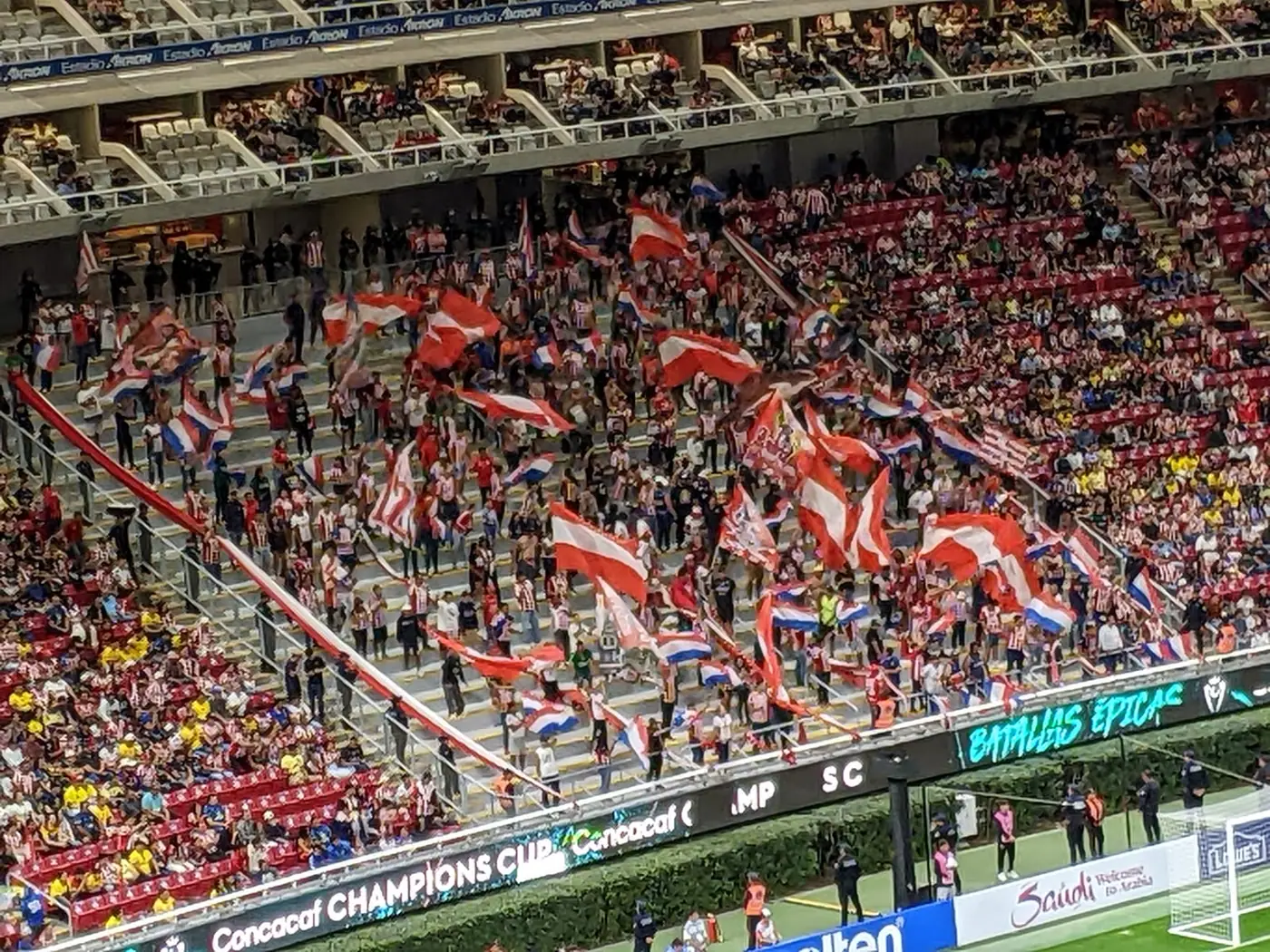
  <figcaption>The vocabulary is small. The part that takes a season to learn is when to use it. Photo by Chivista, <a href="https://creativecommons.org/publicdomain/zero/1.0/">CC0</a>.</figcaption>
</figure>

## Why finishing first can win you nothing

The <mark lang="es-MX">tabla general</mark> — the standings — runs all tournament and then stops mattering almost entirely. It decides who gets into the <mark lang="es-MX">liguilla</mark> and in what order, and that is the end of its job.[^ligamx-tabla]

<ol class="ladder">
  <li>
    <div class="rung-card">
      <span class="rung-label">17 rounds</span>
      <span class="rung-es" lang="es-MX">La tabla general</span>
      <span class="rung-en" lang="en">The standings</span>
      <span class="rung-note">Four months of football to sort eighteen clubs. Only the top eight survive it.</span>
    </div>
  </li>
  <li>
    <div class="rung-card">
      <span class="rung-label">quarters</span>
      <span class="rung-es" lang="es-MX">Cuartos de final</span>
      <span class="rung-en" lang="en">Quarter-finals</span>
      <span class="rung-note">Seeded 1–8, 2–7, 3–6, 4–5. Two legs, and the better-placed team plays the second one at home.</span>
    </div>
  </li>
  <li>
    <div class="rung-card">
      <span class="rung-label">semis</span>
      <span class="rung-es" lang="es-MX">Semifinales</span>
      <span class="rung-en" lang="en">Semi-finals</span>
      <span class="rung-note">Same format. If the <span lang="es-MX">global</span> is level, the higher seed advances — no extra time.</span>
    </div>
  </li>
  <li>
    <div class="rung-card">
      <span class="rung-label">the only one that counts</span>
      <span class="rung-es" lang="es-MX">La final</span>
      <span class="rung-en" lang="en">The final</span>
      <span class="rung-note">Two legs again. Whoever wins here is <span lang="es-MX">campeón</span>, whatever the table said in October.</span>
    </div>
  </li>
</ol>

That seeding advantage is the whole reason finishing high still matters: level on aggregate, **the better-placed team goes through without playing another minute.** It is also why Mexican fans argue about the format more or less permanently. The <mark lang="es-MX">Play-In</mark>, a qualifying round bolted on for several tournaments, was scrapped from the Clausura 2026 onward and the league went back to a straight top eight.[^mediotiempo-playin]

If the bracket you memorise this year is different next year, that is not you misremembering. Learn the words, not the diagram.

## Talking to fans without starting something

The single most useful sentence here is a question, not an opinion.

<div class="chat-thread">
  <div class="chat-head"><span class="chat-avatar"></span><span>Bar, jornada 9</span><span class="chat-meta">the safe opener</span></div>
  <ul class="chat-msgs">
    <li class="in"><span class="es" lang="es-MX">¿le vas a algún equipo?</span><span class="en">do you support a team?</span></li>
    <li class="out"><span class="es" lang="es-MX">apenas voy entendiendo, ¿tú a cuál?</span><span class="en">I'm still figuring it out, which one do you follow?</span></li>
    <li class="in"><span class="es" lang="es-MX">al América, pero no me odies</span><span class="en">América, but don't hate me</span></li>
  </ul>
  <p class="chat-read">He joked about being hated before you could react. <strong>Let the other person name their team first.</strong> Announce yours cold and you have a one-in-three chance of naming their rival.</p>
</div>

<mark lang="es-MX">Le voy al América</mark> is the standard construction — <mark lang="es-MX">irle a</mark> plus a team, not <mark lang="es-MX">apoyar</mark>, which sounds like a press release. And the organized supporters' group is <mark lang="es-MX">la porra</mark>, a word that covers both the chant and the people doing the chanting.[^dem-porra]

<div class="do-dont">
  <div class="dd-col dd-do">
    <p class="dd-title">Opens a conversation</p>
    <ul>
      <li><b lang="es-MX">¿Le vas a algún equipo?</b> lets them go first.</li>
      <li><b lang="es-MX">¿Cómo va la tabla?</b> asks for the standings without pretending you know them.</li>
      <li><b lang="es-MX">¿Ya está la liguilla?</b> asks whether the playoff places are settled.</li>
    </ul>
  </div>
  <div class="dd-col dd-dont">
    <p class="dd-title">Starts a different conversation</p>
    <ul>
      <li><b lang="es-MX">Yo le voy al América.</b> said first, to a stranger, in the wrong bar.</li>
      <li><b lang="es-MX">¿Quién ganó la temporada?</b> has no answer.</li>
      <li>Any opinion about a <b lang="es-MX">clásico</b> before you know who is sitting next to you.</li>
    </ul>
  </div>
</div>

<figure>
  <img src="/images/blog/optimized/how-to-watch-liga-mx-3-1400-fa73f58b.webp" alt="Estadio Akron in Guadalajara on a match day" loading="lazy" />
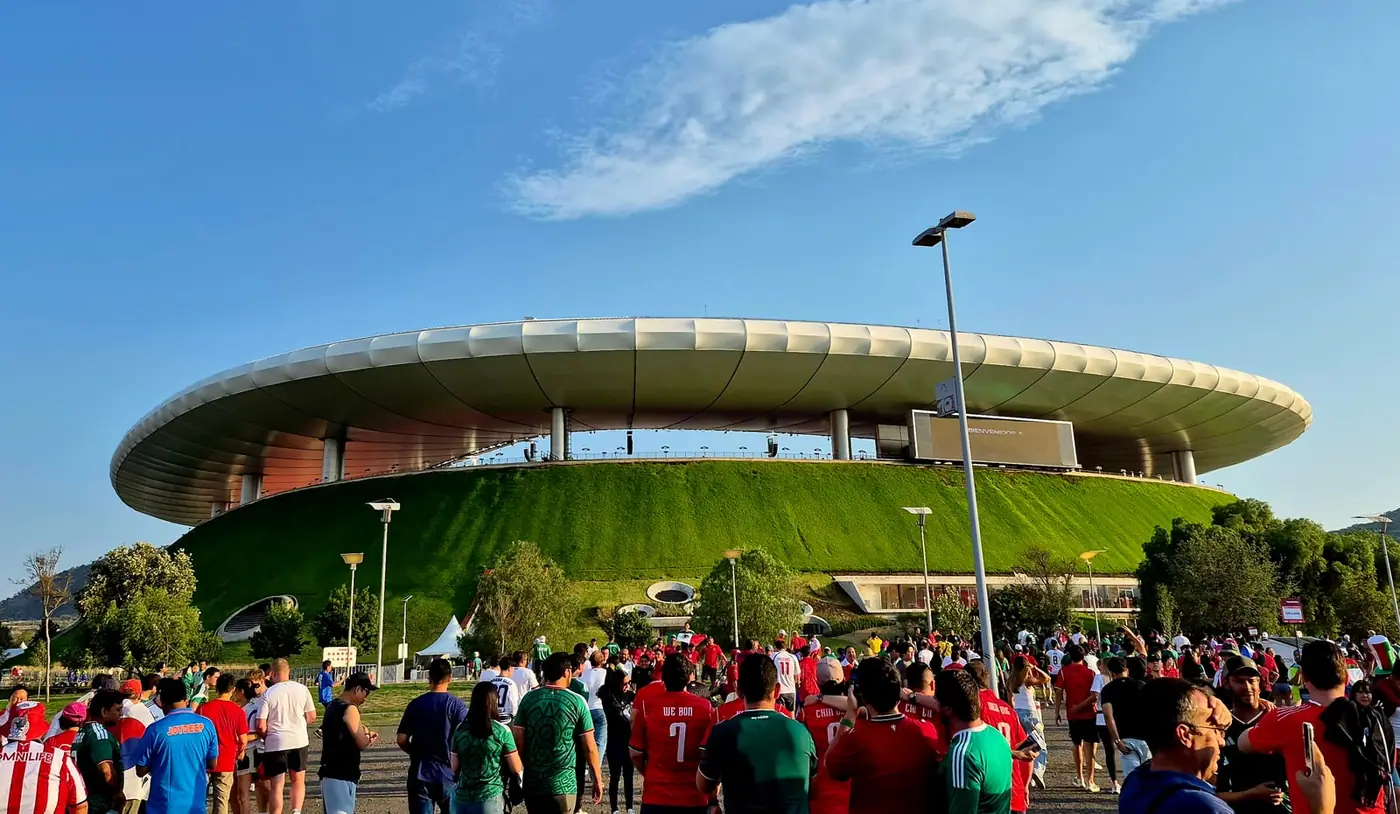
  <figcaption>Football talk in Mexico opens with a question. The declaration comes later, once you know the room. Photo by Erik Cleves Kristensen, <a href="https://creativecommons.org/licenses/by/4.0/">CC BY 4.0</a>.</figcaption>
</figure>

None of this requires you to pick a team. Plenty of people watch for years as <mark lang="es-MX">neutral</mark>, and saying so honestly — <mark lang="es-MX">no le voy a nadie todavía</mark> — gets a much warmer response than a team picked off a jersey you liked.

What it does require is knowing which tournament you are in, which round, and what your own clock is doing in November.

[^ligamx-calendario]: [Liga MX, calendario oficial del Torneo Apertura 2026](https://www.ligamx.net/cancha/detallenoticia/47591/calendario-oficial-del-torneo-apertura-2026) - Liga BBVA MX
[^ligamx-tabla]: [Liga MX, estadística histórica y tabla general](https://ligamx.net/cancha/estadisticahistorica) - Liga BBVA MX
[^husos-horarios]: [Ley de los Husos Horarios en los Estados Unidos Mexicanos](https://www.diputados.gob.mx/LeyesBiblio/ref/lhheum.htm) - Cámara de Diputados, publicada en el DOF el 28 de octubre de 2022
[^dem-jornada]: [Diccionario del español de México, jornada](https://dem.colmex.mx/ver/jornada) - El Colegio de México
[^dem-porra]: [Diccionario del español de México, porra](https://dem.colmex.mx/ver/porra) - El Colegio de México
[^mediotiempo-playin]: [Mediotiempo, la Liga MX elimina el Play-In](https://www.mediotiempo.com/futbol/liga-mx/liga-mx-elimina-play-in-definitivamiente-asi-cambiara-formato-torneo)

FAQ:
Q: What is Liga MX?
A: Mexico's top men's professional football league, with 18 clubs. It runs two short tournaments per year, the Apertura and the Clausura, and each one crowns its own champion.

Q: What is the difference between Apertura and Clausura?
A: They are two separate championships inside one season. The Apertura runs roughly July to December, the Clausura January to May. Winning one does not carry over into the other.

Q: What does jornada mean in football?
A: Matchweek or round. Fixtures and standings are organized by jornada, so jornada 12 means the twelfth round of matches rather than a date on the calendar.

Q: What is the liguilla?
A: The knockout phase at the end of each tournament. The regular season only decides who qualifies, so a team can top the table for four months and still finish with nothing.

Q: What do local and visitante mean?
A: Home and away. Every fixture listing uses them, and commentary uses them constantly instead of team names.

Q: What are ida and vuelta?
A: The first and second leg of a two-legged tie. The result that matters is the marcador global, the aggregate score across both matches.

Q: Why do Liga MX kickoff times shift for US viewers?
A: Mexico abolished daylight saving time in most of the country in 2022. The US still changes its clocks, so from early November to mid-March the gap between a Mexican kickoff and your local time moves by an hour.

Q: Where can I watch Liga MX from the US?
A: Broadcast and streaming rights change hands regularly, so the reliable answer is to check the current official listing for the tournament rather than trust a guide written two seasons ago.

Q: What is a clásico?
A: A derby. El Clásico Nacional is América against Chivas. There are regional ones too, like the Clásico Capitalino and the Clásico Regiomontano.

Q: How do I talk to Mexican fans without starting an argument?
A: Ask before you declare. ¿Le vas a algún equipo? lets them name their team first, which is much safer than announcing yours and finding out you picked their rival.

Sources:
- Liga MX, calendario oficial del Torneo Apertura 2026: https://www.ligamx.net/cancha/detallenoticia/47591/calendario-oficial-del-torneo-apertura-2026
- Liga MX, estadística histórica y tabla general: https://ligamx.net/cancha/estadisticahistorica
- Ley de los Husos Horarios en los Estados Unidos Mexicanos: https://www.diputados.gob.mx/LeyesBiblio/ref/lhheum.htm
- Diccionario del español de México, jornada: https://dem.colmex.mx/ver/jornada
- Diccionario del español de México, porra: https://dem.colmex.mx/ver/porra
- Mediotiempo, la Liga MX elimina el Play-In: https://www.mediotiempo.com/futbol/liga-mx/liga-mx-elimina-play-in-definitivamiente-asi-cambiara-formato-torneo

Related words: a-huevo, no-manches, guey, sale