---
title: "Lavandería Spanish in Mexico: Kilos, Suavizante, Planchado, and Pickup Times"
description: "The little ticket is a registered contract, and it decides who pays when a shirt comes back wrong. The five decisions the counter needs, and the words that protect you."
type: "article"
category: "living"
url: "https://consalsa.app/blog/lavanderia-spanish-mexico"
canonical: "https://consalsa.app/blog/lavanderia-spanish-mexico"
published: "2026-06-05"
updated: "2026-08-20"
author: "Andrey the Nomad"
site: "ConSalsa.App"
license: "https://consalsa.app/about"
---

# Lavandería Spanish in Mexico: Kilos, Suavizante, Planchado, and Pickup Times
URL: https://consalsa.app/blog/lavanderia-spanish-mexico
Date: 2026-06-05
Updated: 2026-08-20
Category: living
Keywords: lavanderia spanish mexico, mexican spanish laundry, suavizante planchado meaning, lavanderia por kilo minimo, para cuando esta lavanderia, ropa encogida destenida reclamo
Summary: The little ticket is a registered contract, and it decides who pays when a shirt comes back wrong. The five decisions the counter needs, and the words that protect you.

Quick answer:
- Laundry is sold by weight with a minimum: por kilo, mínimo tres kilos. Ask ¿cuál es el mínimo? before you assume a small bag is cheap.
- The counter needs five decisions: softener, ironing, separation, folded or hung, and when you want it.
- The nota they hand you is a contract. Profeco requires it to list the number, description and condition of the garments and the pickup deadline.
- Say ¿me lo anota como delicado? for anything you care about. Written on the ticket is worth more than said out loud.

What you'll learn:
- How laundry is priced and why the mínimo matters more than the per-kilo rate.
- The five questions you will be asked, and the short answers to each.
- What the ticket legally has to say, and what the shop is and is not responsible for.
- The words for when it goes wrong: se encogió, se destiñó, se manchó, falta una prenda.

Don't sound gringo:
Get anything you care about written on the ticket, not just mentioned. Say ¿me lo anota como delicado, por favor? The nota is the contract - a conversation at the counter is not.

Body:

The small paper rectangle they hand you across the counter is not a receipt. It is a **contract**, and it is the only thing that matters on the day a shirt comes back the wrong size.

Almost nobody who drops off laundry in Mexico knows that. It changes what you say at the counter.

## First: it is sold by weight, with a floor

<mark lang="es-MX">Por kilo</mark> is the standard, and the number that actually decides your bill is not the rate - it is the <mark lang="es-MX">mínimo</mark>.

<ul class="examples">
  <li class="example">
    <div class="es" lang="es-MX">¿A cómo el kilo y cuál es el mínimo?</div>
    <div class="en" lang="en">How much per kilo, and what's the minimum?</div>
  </li>
  <li class="example">
    <div class="es" lang="es-MX">Son tres kilos mínimo, ¿verdad?</div>
    <div class="en" lang="en">It's a three-kilo minimum, right?</div>
  </li>
</ul>

A three-kilo floor is common, which means a small bag and a medium bag often cost exactly the same. Locals batch their laundry around that number rather than dropping off twice a week - the neighborhood per-kilo, same-day-or-next-day rhythm is the whole shape of the errand.[^livingrootless]

| La palabra | Qué es |
|---|---|
| Por kilo | Priced by weight |
| El mínimo | The floor. Usually around three kilos |
| Encargo / servicio completo | You leave it, they do everything |
| Autoservicio | Self-service, you run the machines |
| Lavado | The wash |
| Secado | The dry |
| Planchado | Ironing, priced separately |
| Tintorería | Dry cleaning. A different shop, a different process |

That last row saves suits. A <mark lang="es-MX">lavandería</mark> washes with water. A <mark lang="es-MX">tintorería</mark> dry-cleans. Anything labelled dry-clean-only belongs in the second one, and handing it to the first is how a wool coat becomes a child's wool coat.

<figure>
  <img src="/images/blog/lavanderia-1.jpg" alt="A row of front-loading washing machines and dryers along the wall of a laundry room." loading="lazy" />
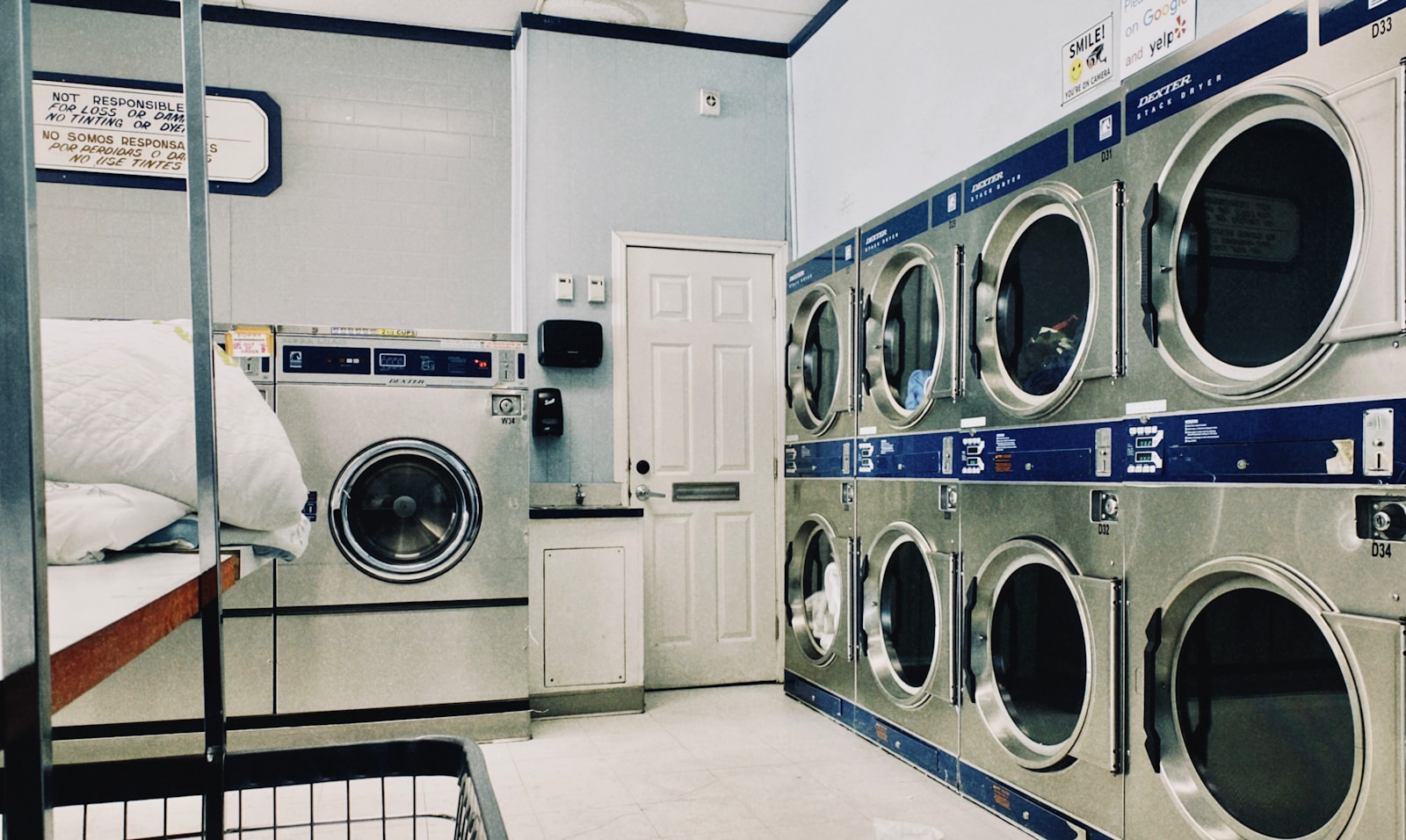
  <figcaption>Priced by the kilo, with a floor. The minimum decides your bill far more often than the rate does. Photo by <a href="https://unsplash.com/photos/rHKYg9rb074" target="_blank" rel="noopener noreferrer">Douglas Monterrosa on Unsplash</a>.</figcaption>
</figure>

<div id="midpost-newsletter-slot"></div>

## The five decisions the counter needs

You will be asked some version of these, quickly, while someone else is waiting behind you. Short answers are correct answers.

<ol class="ladder">
  <li><div class="rung-card">
    <span class="rung-label">uno</span>
    <span class="rung-es" lang="es-MX">¿Con suavizante?</span>
    <span class="rung-en" lang="en">With fabric softener?</span>
    <span class="rung-note">Added by default nearly everywhere. Say sin suavizante if you don't want it.</span>
  </div></li>
  <li><div class="rung-card">
    <span class="rung-label">dos</span>
    <span class="rung-es" lang="es-MX">¿Le ponemos planchado?</span>
    <span class="rung-en" lang="en">Shall we add ironing?</span>
    <span class="rung-note">Costs extra. Narrow it: solo las camisas.</span>
  </div></li>
  <li><div class="rung-card">
    <span class="rung-label">tres</span>
    <span class="rung-es" lang="es-MX">¿Todo junto o separado?</span>
    <span class="rung-en" lang="en">All together or separated?</span>
    <span class="rung-note">Whites and colors get mixed unless you ask.</span>
  </div></li>
  <li><div class="rung-card">
    <span class="rung-label">cuatro</span>
    <span class="rung-es" lang="es-MX">¿Doblada o en gancho?</span>
    <span class="rung-en" lang="en">Folded or on hangers?</span>
    <span class="rung-note">Gancho is worth it for shirts and costs little.</span>
  </div></li>
  <li><div class="rung-card">
    <span class="rung-label">cinco</span>
    <span class="rung-es" lang="es-MX">¿Para cuándo la necesita?</span>
    <span class="rung-en" lang="en">When do you need it?</span>
    <span class="rung-note">Answer with a day. Then ask ¿como a qué hora?</span>
  </div></li>
</ol>

## The ticket is a contract, and that is not a metaphor

Laundry and dry-cleaning services in Mexico operate under **contratos de adhesión** that must be registered with Profeco. The consumer guidance is specific about what to check: that the shop's contract carries a Profeco registration number and authorisation date, and that the service note states the **number, description and condition of the garments received**, plus the maximum period you have to collect them.[^profeco-elegir]

The model contract Profeco publishes then does something genuinely useful - it draws the liability line in writing.[^profeco-contrato] In broad terms, the shop **is** responsible for damage caused by equipment failure. It is **not** responsible for:

<div class="do-dont">
  <div class="dd-col dd-do"><p class="dd-title">Te conviene que quede anotado</p><ul>
    <li><b lang="es-MX">Prendas delicadas</b> - named individually on the nota</li>
    <li><b lang="es-MX">Manchas existentes</b> - pointed out before you hand it over</li>
    <li><b lang="es-MX">No va a la secadora</b> - written, not mentioned</li>
    <li><b lang="es-MX">El número de prendas</b> - counted in front of you</li>
  </ul></div>
  <div class="dd-col dd-dont"><p class="dd-title">Normalmente no responden por</p><ul>
    <li>Garments with no care label, or an incorrect one</li>
    <li>Colors that run, or prints that lift</li>
    <li>Stains you already treated yourself</li>
    <li>Objects left in pockets</li>
    <li>Invisible residues - deodorant, perfume, sweat</li>
  </ul></div>
</div>

Which turns into one very practical sentence:

<div class="note-card is-tip">
  <span class="note-label">La frase que sí protege</span>
  <p><b lang="es-MX">¿Me lo anota como delicado en la nota, por favor?</b></p>
  <p>Written on the ticket is worth considerably more than said across the counter. Same for <b lang="es-MX">esta prenda no va a la secadora</b>.</p>
</div>

Most shrinking happens in the dryer rather than the wash, so that second phrase is the one that saves knitwear.

<figure>
  <img src="/images/blog/lavanderia-2.jpg" alt="A laundry bag in a wire cart in front of a row of commercial washing machines." loading="lazy" />
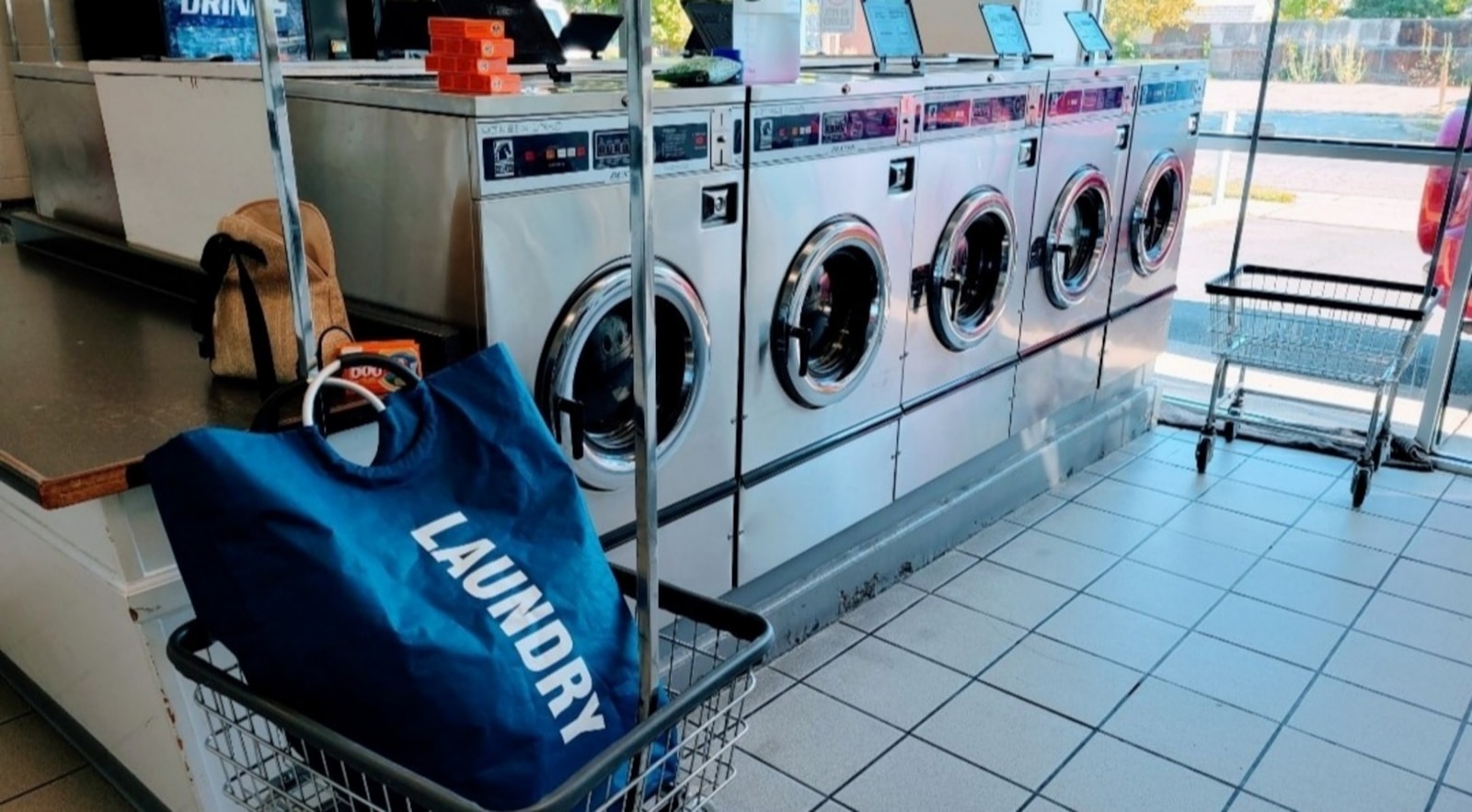
  <figcaption>Count the garments before you hand the bag over. The note is supposed to say how many. Photo by <a href="https://unsplash.com/photos/4H2W_Lslju8" target="_blank" rel="noopener noreferrer">angela gerber on Unsplash</a>.</figcaption>
</figure>

## Picking up, and the words for when it went wrong

Pickup is short and almost always the same four lines:

<ul class="examples">
  <li class="example">
    <div class="es" lang="es-MX">Buenas, vengo por mi ropa. Aquí está mi nota.</div>
    <div class="en" lang="en">Hi, I'm here for my laundry. Here's my ticket.</div>
  </li>
  <li class="example">
    <div class="es" lang="es-MX">Perdón, no encuentro mi nota. Está a nombre de Andrey.</div>
    <div class="en" lang="en">Sorry, I can't find my ticket. It's under Andrey.</div>
  </li>
  <li class="example">
    <div class="es" lang="es-MX">¿Le debo algo?</div>
    <div class="en" lang="en">Do I owe you anything?</div>
  </li>
</ul>

And if something is wrong, say it plainly. There is no need to build up to it:

| Lo que pasó | Cómo se dice |
|---|---|
| It shrank | Se encogió |
| The color ran | Se destiñó |
| It got stained | Se manchó |
| A garment is missing | Falta una prenda |
| This isn't mine | Esta no es mía |
| It came back damp | Vino húmeda |

<div class="chat-thread">
  <div class="chat-head"><span class="chat-avatar"></span><span>en el mostrador, jueves</span><span class="chat-meta">sin drama y sin rodeos</span></div>
  <ul class="chat-msgs">
    <li class="out"><span class="es" lang="es-MX">Buenas, vengo por mi ropa. Oiga, el suéter se encogió bastante</span><span class="en">Hi, here for my laundry. The sweater shrank quite a bit</span></li>
    <li class="in"><span class="es" lang="es-MX">A ver... ¿venía anotado como delicado?</span><span class="en">Let's see... was it noted as delicate?</span></li>
    <li class="out"><span class="es" lang="es-MX">Sí, aquí está en la nota</span><span class="en">Yes, it's right here on the ticket</span></li>
    <li class="in"><span class="es" lang="es-MX">Deje lo checo con el encargado y le marco</span><span class="en">Let me check with the manager and I'll call you</span></li>
  </ul>
  <p class="chat-read">The whole conversation turned on four words on a piece of paper. <strong>That is why you get it written down.</strong></p>
</div>

If it goes further than the counter, Profeco publishes how to file a complaint and what you need to bring - which, unsurprisingly, is the nota.[^profeco-queja]
<figure>
  <img src="/images/blog/lavanderia-3.jpg" alt="Neatly folded stacks of shirts and towels on a blue counter in a laundromat." loading="lazy" />
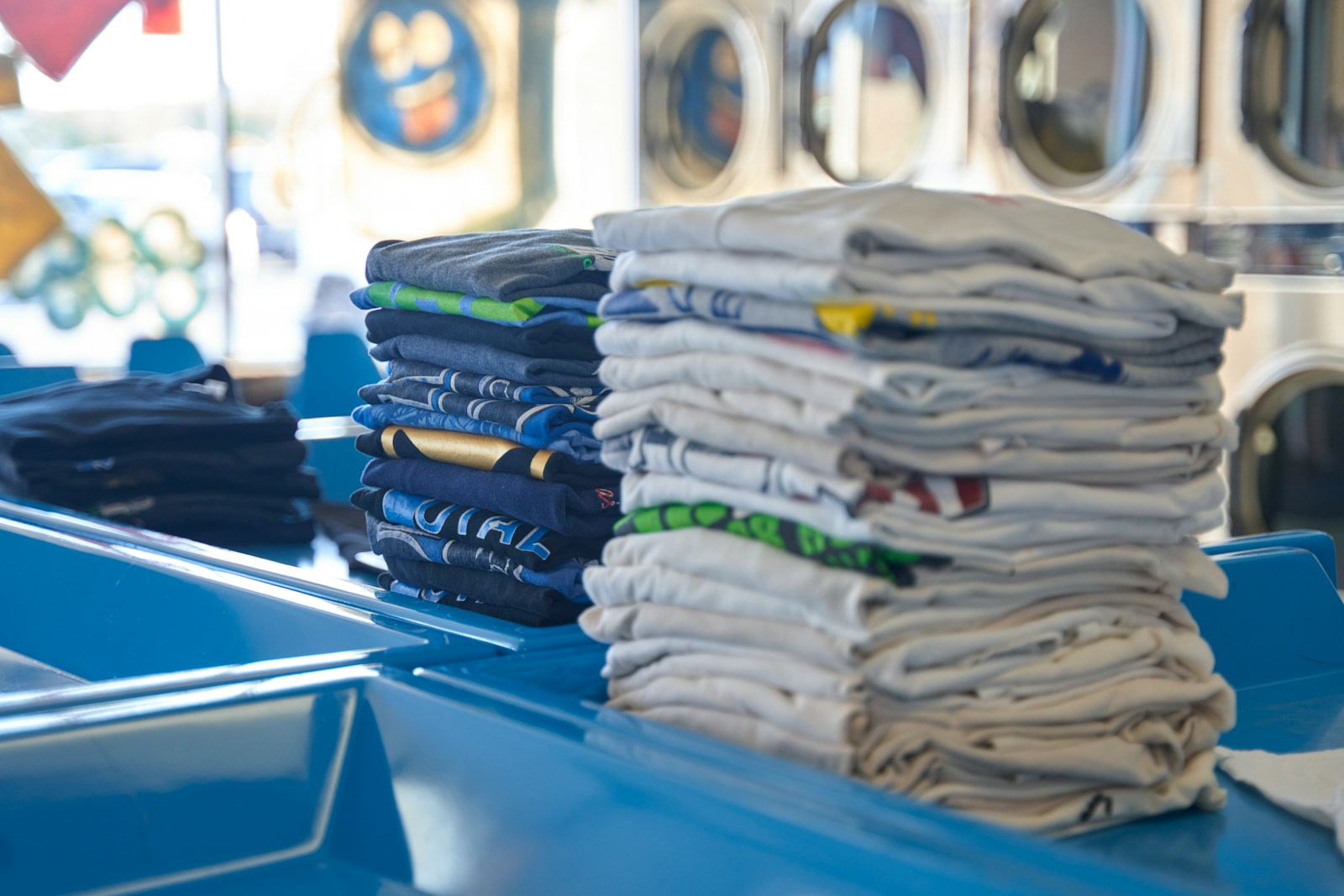
  <figcaption>Folded or on hangers is one of the five questions, and hangers are usually worth the small extra. Photo by <a href="https://unsplash.com/photos/APUvZYCjPJ0" target="_blank" rel="noopener noreferrer">Dan LeFebvre on Unsplash</a>.</figcaption>
</figure>

## The short version

Ask the minimum before the rate. Answer the five questions in short words. Get anything you care about written onto the nota, and keep the nota.

<ul class="examples">
  <li class="example">
    <div class="es" lang="es-MX">Vengo a dejar ropa. ¿Cuál es el mínimo? Sin suavizante, planchado solo las camisas, y este suéter anótemelo como delicado, no va a la secadora.</div>
    <div class="en" lang="en">Here to drop off laundry. What's the minimum? No softener, ironing on the shirts only, and note this sweater as delicate - it doesn't go in the dryer.</div>
  </li>
</ul>

That is thirty seconds at a counter, and it is the difference between laundry and a small grief.

[^livingrootless]: [Living Rootless, Mexico City: My Laundry](https://blog.livingrootless.com/2018/11/mexico-city-my-laundry.html) — Living Rootless
[^profeco-elegir]: [Profeco, ¿Cómo elegir el mejor servicio de tintorería, lavandería y similares?](https://www.gob.mx/profeco/documentos/como-elegir-el-mejor-servicio-de-tintoreria-lavanderia-y-similares-23629?state=published) — Procuraduría Federal del Consumidor
[^profeco-contrato]: [Profeco, contrato tipo de servicios de lavandería por carga de ropa](https://rcal.profeco.gob.mx/contratostipo/LAVANDERIA%20POR%20CARGA%20DE%20ROPA%20PROFECO.pdf) — Procuraduría Federal del Consumidor
[^profeco-queja]: [Profeco, cómo presentar una queja como persona consumidora](https://www.gob.mx/profeco/documentos/tuviste-algun-problema-de-consumo?state=published) — Procuraduría Federal del Consumidor

FAQ:
Q: How is laundry priced in Mexico?
A: Usually by the kilo, with a minimum charge. A three-kilo minimum is common, so a small bag often costs the same as a medium one.

Q: How do I drop off laundry?
A: Hola, vengo a dejar ropa. Then answer the five questions: softener, ironing, separation, folding, and when.

Q: How do I ask when it will be ready?
A: ¿Para cuándo está? For a specific time, ¿como a qué hora?

Q: What does suavizante mean?
A: Fabric softener. Sin suavizante, por favor if you do not want it.

Q: What does planchado mean?
A: Ironing. Con planchado usually costs extra and is priced separately from washing.

Q: What is the difference between lavandería and tintorería?
A: A lavandería washes; a tintorería dry-cleans. Suits, coats and anything labelled dry-clean-only go to a tintorería.

Q: Is the ticket important?
A: Yes. It is a registered contract. Profeco requires it to state the number, description and condition of the garments and the maximum period for collection.

Q: What if they damage my clothes?
A: The standard contract makes them responsible for damage caused by equipment failure, but not for garments without care labels, colors that run, or stains you treated yourself.

Q: How do I say something shrank?
A: Se encogió. If the color ran, se destiñó. If a garment is missing, falta una prenda.

Q: What does autoservicio mean?
A: Self-service - you use the machines yourself. Encargo or servicio completo means you leave it and they do it.

Sources:
- Profeco, ¿Cómo elegir el mejor servicio de tintorería, lavandería y similares?: https://www.gob.mx/profeco/documentos/como-elegir-el-mejor-servicio-de-tintoreria-lavanderia-y-similares-23629?state=published
- Profeco, contrato tipo de servicios de lavandería por carga de ropa: https://rcal.profeco.gob.mx/contratostipo/LAVANDERIA%20POR%20CARGA%20DE%20ROPA%20PROFECO.pdf
- Profeco, cómo presentar una queja como persona consumidora: https://www.gob.mx/profeco/documentos/tuviste-algun-problema-de-consumo?state=published
- Living Rootless, Mexico City: My Laundry: https://blog.livingrootless.com/2018/11/mexico-city-my-laundry.html

Related words: sale, mande, chamba, ni-modo