---
title: "Left on Read in Mexico: What to Text, What to Think, and When to Chill"
description: "Learn Mexican Spanish for en visto, me dejó en visto, todo bien, luego hablamos, and low-pressure follow-ups that keep dignity."
type: "article"
category: "texting"
url: "https://consalsa.app/blog/left-on-read-mexican-spanish"
canonical: "https://consalsa.app/blog/left-on-read-mexican-spanish"
published: "2026-06-18"
updated: "2026-06-18"
author: "Andrey the Nomad"
site: "ConSalsa.App"
license: "https://consalsa.app/about"
---

# Left on Read in Mexico: What to Text, What to Think, and When to Chill
URL: https://consalsa.app/blog/left-on-read-mexican-spanish
Date: 2026-06-18
Updated: 2026-06-18
Category: texting
Keywords: left on read in spanish mexico, en visto meaning, me dejo en visto, mexican texting phrases, dating spanish mexico
Summary: Learn Mexican Spanish for en visto, me dejó en visto, todo bien, luego hablamos, and low-pressure follow-ups that keep dignity.

Quick answer:
- En visto means seen and not answered. Me dejó en visto is the standard way to say someone left you on read.
- A read receipt is information about their phone, not a verdict about you.
- One follow-up is normal. The rule is that it should carry something useful, not just check for a pulse.
- If the second message also goes unanswered, stop. Silence twice is an answer.

What you'll learn:
- What en visto means, and why having the word makes it smaller.
- Why silence after a confirmed plan differs from silence in a new chat.
- Which follow-ups get answered and which make the silence the topic.
- The point where a second silence stops being ambiguous.

Don't sound gringo:
One follow-up is normal. A follow-up to the follow-up is usually your anxiety typing in Spanish.

Body:

The read receipt is information. It is not a trial verdict. <mark lang="es-MX">Me dejó en visto</mark> is the phrase people use when the message was seen and the reply did not come. The survival skill is deciding when one follow-up helps and when it just hands your phone to your anxiety.

<mark lang="es-MX">Me dejó en visto</mark> is the phrase, and <mark lang="es-MX">en visto</mark> is the state: seen, not answered. It is worth learning before the feeling arrives, because having a name for something makes it noticeably smaller. It is also worth remembering that a read receipt reports on somebody’s phone, not on their opinion of you.[^rae-ver][^doorway-ahorita]

## The one follow-up rule

Send one message if there is a practical reason or a real connection. Then stop.

| Phrase | What it does | Best read |
|---|---|---|
| Need logistics | Follow up | Ask clearly |
| New app chat | Maybe wait | No one owes instant reply |
| After a date | One warm check-in | Then watch |
| After repeated silence | Stop | Pattern is answer |
| Emergency/safety | Call or direct text | Different category |

The rows differ mainly by how much had already been agreed. Silence inside a new app chat means very little. Silence after a confirmed plan means something, because a plan creates an obligation that a conversation does not.[^grindr-bio]

What the workable follow-ups have in common is that they carry something other than a request for attention. They ask about a time, offer an exit, or supply information. None of them checks for a pulse, which is the message that reliably goes unanswered.

<div class="chat-thread">
  <div class="chat-head"><span class="chat-avatar"></span><span>miércoles, 9:12 pm</span><span class="chat-meta">mira el tercer mensaje</span></div>
  <ul class="chat-msgs">
    <li class="out"><span class="es" lang="es-MX">Oye, ¿seguimos para el viernes?</span><span class="en">Hey, are we still on for Friday?</span></li>
    <li class="out"><span class="es" lang="es-MX">👀</span><span class="en">👀</span></li>
    <li class="out"><span class="es" lang="es-MX">Vi que lo viste jaja</span><span class="en">I saw that you saw it haha</span></li>
    <li class="in"><span class="es" lang="es-MX">perdón, ando en chinga. Te escribo mañana</span><span class="en">sorry, I'm slammed. I'll write tomorrow</span></li>
  </ul>
  <p class="chat-read">The third message is the one that cost something. <strong>Naming the read receipt turns a small silence into a thing that has to be explained.</strong></p>
</div>

## What not to text

Do not text a performance of not caring. <mark lang="es-MX">jaja ya entendí</mark> often sounds bitter. Do not text a courtroom question. And do not send a second message that secretly asks, "am I lovable?" when the practical question is dinner.

The messages that fail are the ones that make the silence itself the topic. <mark lang="es-MX">¿Hice algo?</mark> and <mark lang="es-MX">Veo que me dejaste en visto</mark> both require the other person to account for themselves before anything else can happen, and most people simply will not do that over text.[^grindr-guidelines]

<ul class="examples">
  <li class="example">
    <div class="es" lang="es-MX">Oye, ¿todo bien? Si andas ocupado, tranqui.</div>
    <div class="en" lang="en">Hey, everything okay? If you are busy, no worries.</div>
  </li>
  <li class="example">
    <div class="es" lang="es-MX">Solo para saber si sí se arma hoy.</div>
    <div class="en" lang="en">Just to know if today is still happening.</div>
  </li>
  <li class="example">
    <div class="es" lang="es-MX">Va, cuando puedas me dices.</div>
    <div class="en" lang="en">Cool, tell me when you can.</div>
  </li>
</ul>

<figure>
  <img src="/images/blog/cdmx-night-street-people.jpg" alt="Late silence feels louder in a new city." loading="lazy" />
  <figcaption>Late silence feels louder in a new city.</figcaption>
</figure>

<div id="midpost-newsletter-slot"></div>

## The light check-in

The clean message is <mark lang="es-MX">oye, ¿todo bien?</mark> or <mark lang="es-MX">cuando puedas me dices</mark>. If you need to release the thread, <mark lang="es-MX">creo que mejor lo dejamos aquí</mark> is dignified.

The light check-in works because it builds in permission to be busy. <mark lang="es-MX">Si andas ocupado, tranqui</mark> is not weakness - it removes the need to explain the delay, and removing that need is usually the thing that unblocks the reply.[^spanishandgo-politeness]

## Follow-up or leave it?

| Situation | Use this | Why it works |
|---|---|---|
| Confirming a plan | Follow up once | Practical |
| Just wanting reassurance | Wait | Do not outsource calm |
| They ignored two direct questions | Leave it | Pattern |
| You feel unsafe | Prioritize safety | Use direct action |

These keep the ball in play without asking anybody to justify how long they took.

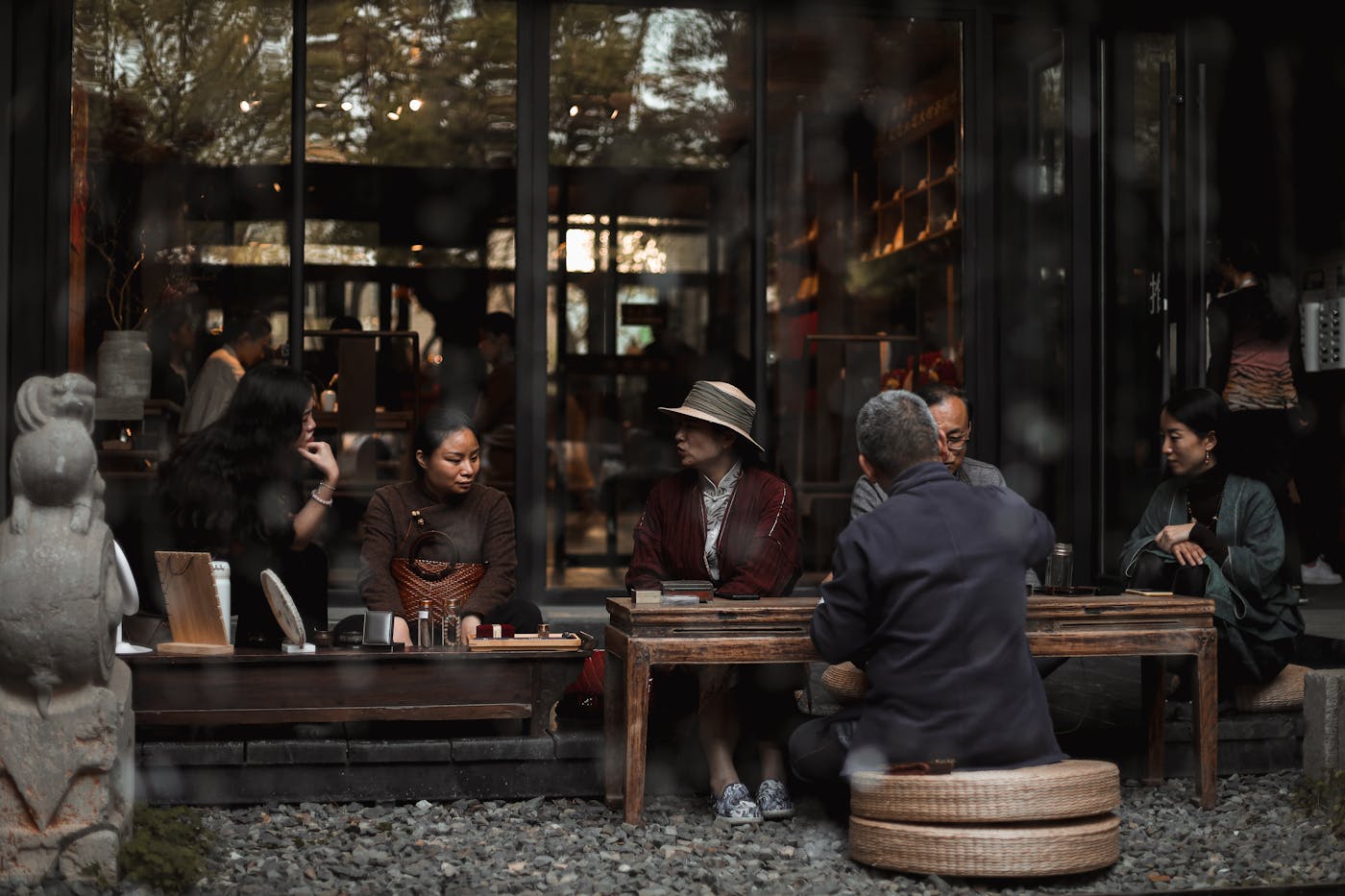
<figure>
  <img src="/images/blog/outdoor-cafe-friends-talk.jpg" alt="The best follow-up still leaves you self-respect." loading="lazy" />
  <figcaption>The best follow-up still leaves you self-respect.</figcaption>
</figure>

## Follow-ups that keep your dignity

One message, and let it carry something other than the silence.

<ul class="examples">
  <li class="example">
    <div class="es" lang="es-MX">Oye, ¿todo bien? Si andas ocupado, tranqui.</div>
    <div class="en" lang="en">Hey, everything okay? If you are busy, no worries.</div>
  </li>
  <li class="example">
    <div class="es" lang="es-MX">Solo para saber si sí se arma hoy.</div>
    <div class="en" lang="en">Just to know if today is still happening.</div>
  </li>
  <li class="example">
    <div class="es" lang="es-MX">Va, cuando puedas me dices.</div>
    <div class="en" lang="en">Cool, tell me when you can.</div>
  </li>
  <li class="example">
    <div class="es" lang="es-MX">Creo que mejor lo dejamos aquí. Cuídate.</div>
    <div class="en" lang="en">I think it is better to leave it here. Take care.</div>
  </li>
</ul>

## Silence twice is an answer

Being calm in Spanish does not mean pretending silence feels great. It means giving one clear chance and not negotiating with a wall.

Once is noise. Twice is a message. A second unanswered follow-up is not ambiguous, and treating it as ambiguity is a decision you are making rather than information anybody gave you.[^rae-quedar]

[^rae-ver]: [Diccionario de la lengua española, ver](https://dle.rae.es/ver) - The RAE entry for ver helps explain why vemos can mean more than literally seeing; it can point to checking or considering.
[^doorway-ahorita]: [Doorway to Mexico, ahorita meaning and examples](https://doorwaytomexico.com/paulina/ahorita-meaning-examples/) - Doorway to Mexico treats ahorita as a flexible Mexican timing word, a key idea for reading vague plans without panicking.
[^grindr-bio]: [Grindr, how to describe yourself on dating apps](https://www.grindr.com/blog/dating-app-bio-ideas) - Grindr’s bio guide frames dating-app language as short, flirty, and personality-driven, which matches why tiny phrases matter.
[^grindr-guidelines]: [Grindr Community Guidelines](https://www.grindr.com/community-guidelines) - Grindr’s community guidelines foreground safety, authenticity, privacy, and adults-only use, essential context for app-language posts.
[^spanishandgo-politeness]: [Spanish and Go, alternatives to me gustaría](https://spanishandgo.com/learn/alternatives-to-me-gustaria/) - Spanish and Go’s Mexico-focused politeness examples are useful for showing that natural Spanish often chooses a social formula over literal translation.
[^rae-quedar]: [Diccionario de la lengua española, quedar](https://dle.rae.es/quedar) - The RAE entry for quedar includes agreeing on something and arranging a meeting, the backbone of many dating texts.

FAQ:
Q: What does en visto mean?
A: Seen. Me dejó en visto means they read my message and did not reply, and it is the exact Mexican equivalent of being left on read.

Q: Is being left on read rude in Mexico?
A: It is common enough to have its own verb phrase, which tells you how normal it is. It is mildly impolite between friends and almost expected on dating apps.

Q: How long should I wait before following up?
A: Long enough that the follow-up is not about the silence. A day for plans, longer for anything emotional. The clock matters less than what the message contains.

Q: What is a good follow-up message?
A: Oye, ¿todo bien? Si andas ocupado, tranqui. It gives them a ready-made excuse, which makes replying easy rather than shameful.

Q: What should I not send?
A: Anything that references the read receipt. Vi que lo viste turns a small silence into a confrontation and almost never produces the reply you wanted.

Q: How many times should I follow up?
A: Once. If the second message goes unanswered too, that is the answer, and a third message only costs you the dignity the first two kept.

Q: Does dejar en visto mean they are not interested?
A: Not reliably. Mexicans open messages constantly and reply in bursts, so a read receipt often means they read it standing in a Metro car with no free hands.

Q: How do I say it happened to me?
A: Me dejó en visto, or the more resigned me clavó el visto. Both are completely normal to say out loud to friends.

Sources:
- Diccionario de la lengua española, ver: https://dle.rae.es/ver
- Doorway to Mexico, ahorita meaning and examples: https://doorwaytomexico.com/paulina/ahorita-meaning-examples/
- Grindr, how to describe yourself on dating apps: https://www.grindr.com/blog/dating-app-bio-ideas
- Grindr Community Guidelines: https://www.grindr.com/community-guidelines
- Spanish and Go, alternatives to me gustaría: https://spanishandgo.com/learn/alternatives-to-me-gustaria/
- Diccionario de la lengua española, quedar: https://dle.rae.es/quedar

Related words: ahorita, ni-modo, sale, hijole