---
title: "Me Da, Me Regala, Te Encargo: The Mexican Way to Ask for Things"
description: "Learn Mexican counter phrases like me da, me regala, te encargo, porfa, and gracias without translating them too literally."
type: "article"
category: "phrases"
url: "https://consalsa.app/blog/me-da-me-regala-te-encargo"
canonical: "https://consalsa.app/blog/me-da-me-regala-te-encargo"
published: "2026-05-31"
updated: "2026-05-31"
author: "Andrey the Nomad"
site: "ConSalsa.App"
license: "https://consalsa.app/about"
---
# Me Da, Me Regala, Te Encargo: The Mexican Way to Ask for Things
URL: https://consalsa.app/blog/me-da-me-regala-te-encargo
Date: 2026-05-31
Updated: 2026-05-31
Category: phrases
Keywords: me da meaning mexican spanish, me regala meaning mexico, te encargo meaning mexican spanish, mexican spanish counter phrases, how to ask for things in mexico
Summary: Learn Mexican counter phrases like me da, me regala, te encargo, porfa, and gracias without translating them too literally.
Quick answer:
- At counters in Mexico, me da means can I have, me regala can be a polite can you give me, and te encargo means could you help me with.
- Do not translate me regala as literally asking for a gift. In service contexts, it can soften a request.
- Use me da when ordering food or buying something. Use te encargo when asking someone to handle a small task.
- Add por favor or gracias if you want to sound warmer, but the core phrase already does a lot of social work.
What you'll learn:
- How Mexican Spanish uses giving verbs for everyday counter requests.
- When me da, me regala, and te encargo sound natural, warm, or too familiar.
- How to order at shops, markets, cafés, and stands without overbuilding the sentence.
- How to avoid translating English can I get word-for-word.
Don't sound gringo:
Don't translate can I have literally every time. In Mexico, me da and te encargo often sound more natural than puedo tener, especially at counters.
Body:
One of the most Mexican-feeling things you can learn is how to ask for normal objects without sounding like you translated yourself in a panic. Me da, me regala, and te encargo are tiny phrases that make counters, markets, cafés, and stands feel less like exams.
The problem is that they look weird in English. Good. That is where the useful stuff lives.
## The counter request map
Here is the clean version.
| You want to ask | Use this | Literal trap |
|---|---|---|
| Can I have...? | Me da...? | Sounds like "you give me" |
| Could you give me...? | ¿Me puede dar...? | More explicitly polite |
| Can you get me...? | ¿Me regala...? | Does not always mean free |
| Could you help me with...? | Te encargo... | Sounds like entrusting a mission |
| Please | Por favor / porfa | Porfa is warmer and casual |
The verb dar means to give.[^rae-dar] At a counter, **me da is not rude if your tone is normal**. It is just the compact service phrase.
Use:
Me da una botella de agua, por favor.
Can I have a bottle of water, please?
Me da dos de pastor.
Can I get two al pastor?
## Why me regala is not as strange as it looks
Regalar means to give as a gift.[^rae-regalar] So yes, the literal version of me regala una bolsa can look like "gift me a bag."
But in Mexican service Spanish, **literal meaning is not the whole social meaning**. The phrase can soften a request, especially for small things, help, bags, napkins, condiments, or attention.
¿Me regala una servilleta?
Could I get a napkin?
¿Me regala tantita salsa?
Could I get a little salsa?
If it feels too local for you right now, no problem. Use me da. Nobody loses points for sounding clear.
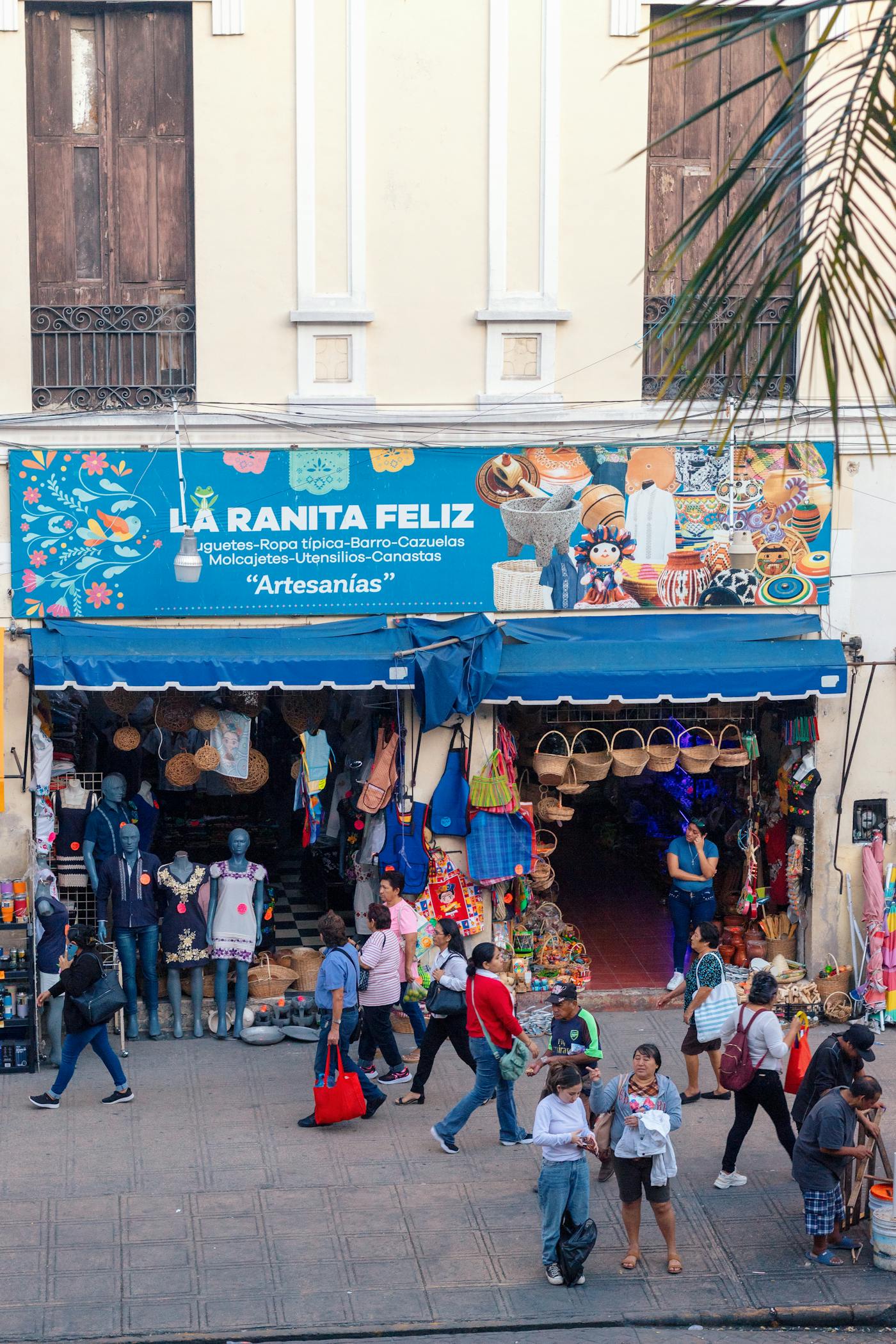
Market Spanish often sounds warmer than its literal translation. Photo by Iván Cauich on Pexels.
## Te encargo has a task feeling
Encargar can mean to entrust, charge, or ask someone to take care of something.[^rae-encargar] In everyday Mexican Spanish, te encargo often has a soft task-request feeling.
Use it when someone is helping you handle something:
| Situation | Phrase |
|---|---|
| Asking someone to save your spot | Te encargo mi lugar tantito |
| Asking for a small favor | Te encargo esto, porfa |
| Asking a server for something | Te encargo la cuenta |
| Asking building staff | Te encargo el paquete |
Notice the tone: te encargo is warmer and more familiar than me da. At a brand-new formal counter, ¿me puede dar? is safer. With a taquero, neighbor, doorman, or regular café, te encargo can feel human.
## The phrase you should stop translating from English
English says "Can I get...?" Spanish learners often produce:
¿Puedo tener...?
People will understand it. It is not a disaster. But it often sounds like English wearing a little Spanish hat.
Try these instead:
| English instinct | More Mexican counter Spanish |
|---|---|
| Can I get a coffee? | Me da un café |
| Can I have a bag? | ¿Me da una bolsa? |
| Could I get the check? | ¿Me trae la cuenta? |
| Can you give me a receipt? | ¿Me da ticket? |
| Can I get one more? | ¿Me da otro? |
Favor is the noun behind por favor,[^rae-favor] but do not make every sentence kneel. One por favor, a normal tone, and gracias are enough.
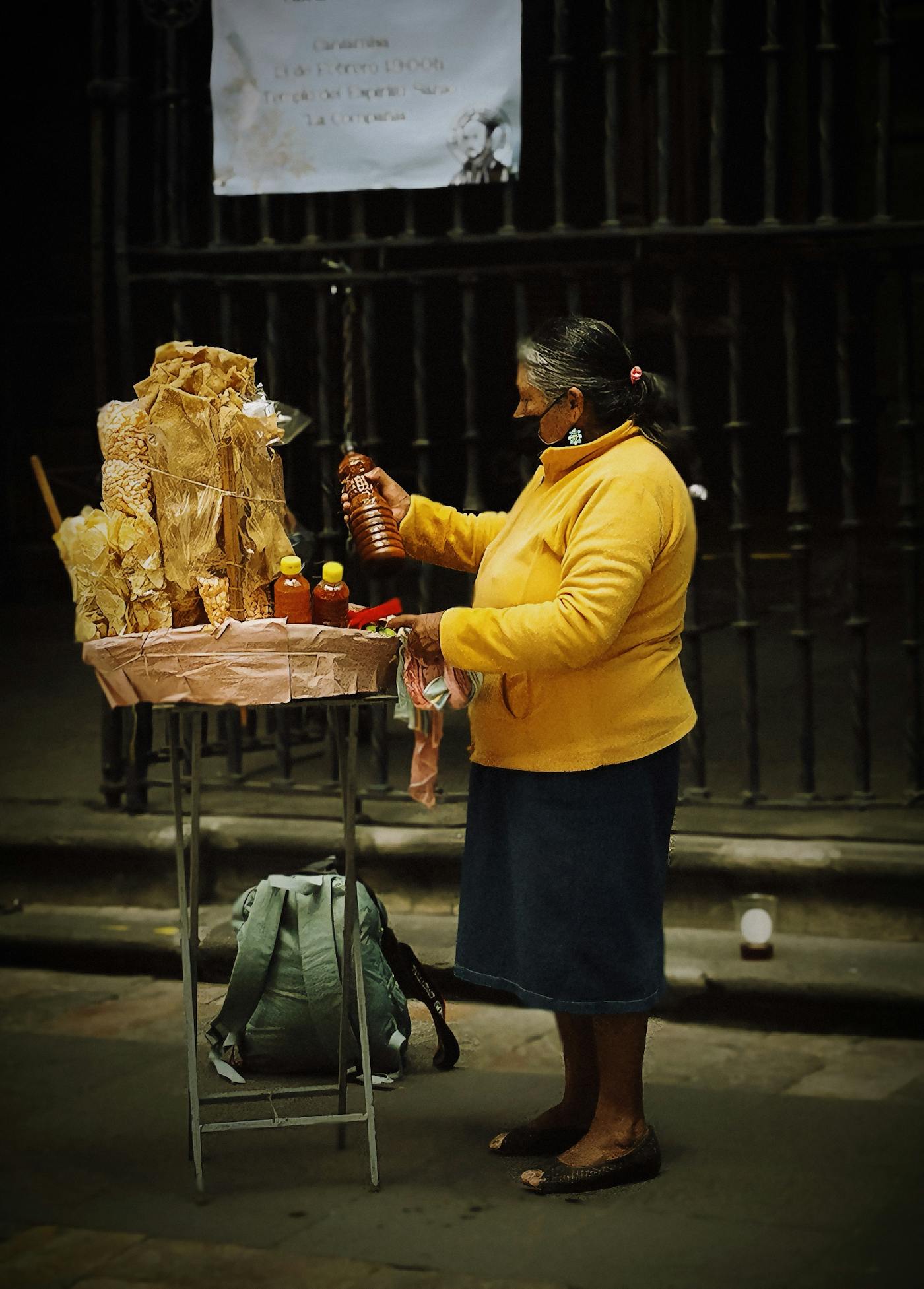
Small purchases are where this language becomes automatic. Photo from Pexels.
## Safe defaults
If you are a learner, here is the easiest ladder:
- Start with me da
- Add por favor if the sentence feels bare
- Use ¿me puede dar? when you want more distance
- Try me regala after you have heard it in the wild
- Use te encargo when there is a small task or relationship
And when in doubt, smile lightly, keep the request short, and end with gracias. The word comes from the broader idea of grace or thanks,[^rae-gracias] but in daily Mexico it is also the sound of not making the cashier carry your anxiety.
Eat Mexico's CDMX food phrase guide makes the same practical point from the restaurant side: small polite words like por favor and gracias matter when ordering.[^eatmexico-phrases]
[^rae-dar]: [Diccionario de la lengua española, dar](https://dle.rae.es/dar) — Real Academia Española
[^rae-regalar]: [Diccionario de la lengua española, regalar](https://dle.rae.es/regalar) — Real Academia Española
[^rae-encargar]: [Diccionario de la lengua española, encargar](https://dle.rae.es/encargar) — Real Academia Española
[^rae-favor]: [Diccionario de la lengua española, favor](https://dle.rae.es/favor) — Real Academia Española
[^rae-gracias]: [Diccionario de la lengua española, gracia](https://dle.rae.es/gracia) — Real Academia Española
[^eatmexico-phrases]: [Eat Mexico, Spanish phrases for Mexico City's culinary scene](https://eatmexico.com/useful-spanish-phrases-to-use-while-exploring-mexico-citys-culinary-scene/) — Eat Mexico
FAQ:
Q: What does me da mean in Mexican Spanish?
A: Me da literally means you give me, but at a counter it often means can I have. Me da una botella de agua is a normal way to ask for a bottle of water.
Q: Why do Mexicans say me regala if they are paying?
A: In many service contexts, me regala softens the request. It does not always mean the item is free.
Q: What does te encargo mean?
A: Te encargo literally relates to entrusting or asking someone to take care of something. In Mexico, it can mean could you help me with this or please handle this for me.
Q: Is me regala too much for learners?
A: It can sound natural in Mexico, but if you feel unsure, use me da. Me da is simpler and very safe.
Q: Can I say puedo tener in Mexico?
A: People will understand you, but it sounds like a direct translation of English can I have. Me da or ¿me puede dar? usually sounds more natural.
Q: Should I say tú or usted at a counter?
A: When unsure, use usted forms like me da or ¿me puede dar? They are neutral and polite.
Q: What is the easiest counter phrase in Mexico?
A: Me da..., por favor is the easiest all-purpose phrase for ordering or buying something.
Sources:
- Diccionario de la lengua española, dar: https://dle.rae.es/dar
- Diccionario de la lengua española, regalar: https://dle.rae.es/regalar
- Diccionario de la lengua española, encargar: https://dle.rae.es/encargar
- Diccionario de la lengua española, favor: https://dle.rae.es/favor
- Diccionario de la lengua española, gracias: https://dle.rae.es/gracia
- Eat Mexico, Spanish phrases for Mexico City's culinary scene: https://eatmexico.com/useful-spanish-phrases-to-use-while-exploring-mexico-citys-culinary-scene/
Related words: mande, sale, orale, que-onda