---
title: "What to Say in Mercado Medellín When You Do Not Know the Names of Things"
description: "The one CDMX market where ¿cómo se llama esto? gets a different answer at every stall - because the aisle is Cuban, Colombian and Venezuelan, and so is the vocabulary."
type: "article"
category: "markets"
url: "https://consalsa.app/blog/mercado-medellin-spanish"
canonical: "https://consalsa.app/blog/mercado-medellin-spanish"
published: "2026-06-06"
updated: "2026-08-20"
author: "Andrey the Nomad"
site: "ConSalsa.App"
license: "https://consalsa.app/about"
---

# What to Say in Mercado Medellín When You Do Not Know the Names of Things
URL: https://consalsa.app/blog/mercado-medellin-spanish
Date: 2026-06-06
Updated: 2026-08-20
Category: markets
Keywords: mercado medellin spanish, mexican market phrases, cdmx market spanish, jitomate vs tomate, regional spanish food names, la pequena habana cdmx
Summary: The one CDMX market where ¿cómo se llama esto? gets a different answer at every stall - because the aisle is Cuban, Colombian and Venezuelan, and so is the vocabulary.

Quick answer:
- Mercado Medellín is officially Mercado Melchor Ocampo, in Roma Sur, and locals call it La Pequeña Habana.
- It is the one market where ¿cómo se llama esto? gets a different answer per stall - the same fruit is maracuyá, parchita or chinola depending on where the vendor is from.
- The trap that catches everyone: in Mexico, tomate means the small green one. The red one is jitomate.
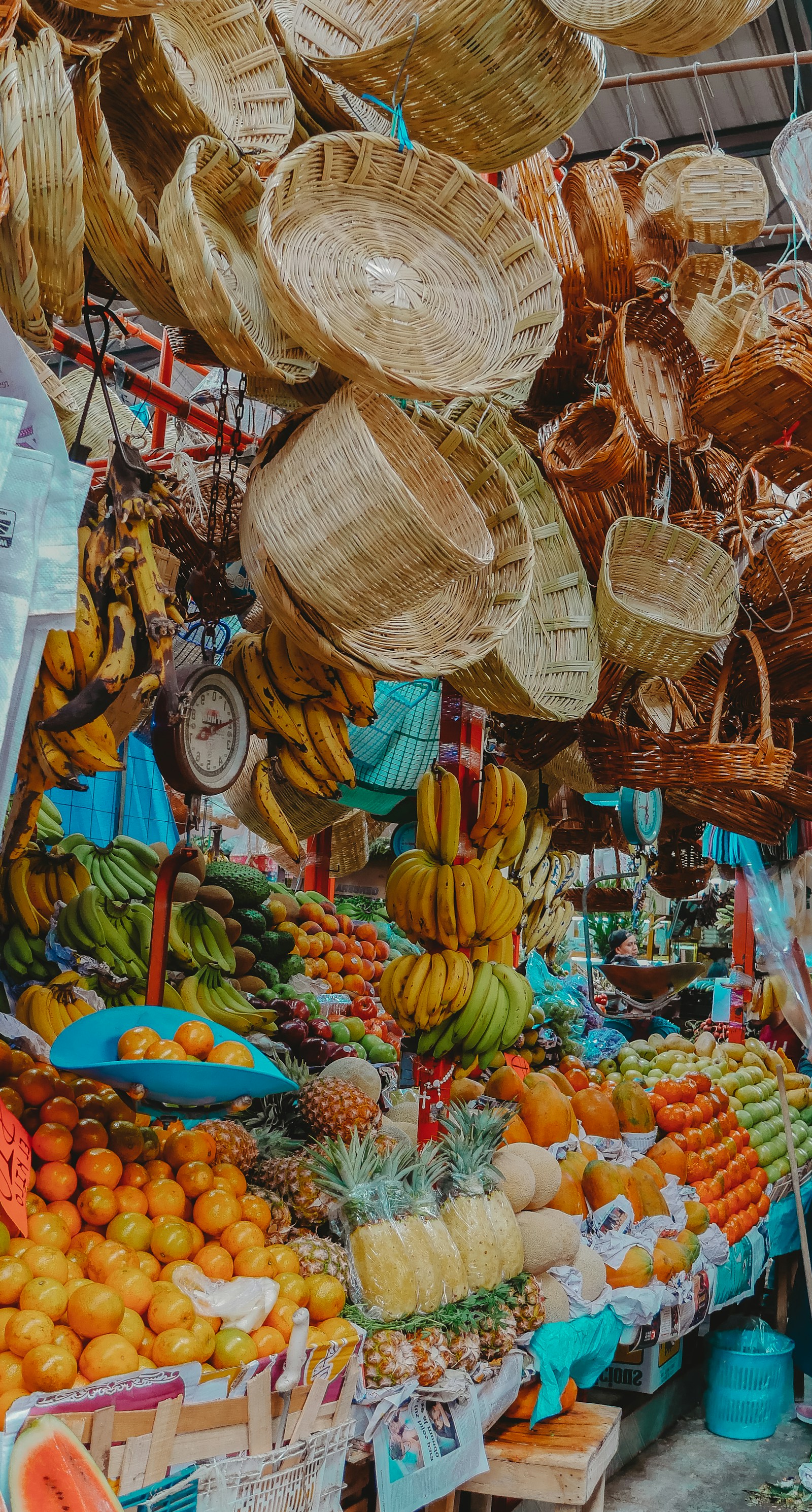
- The question that unlocks the whole place is ¿de dónde es usted? Vendors love it, and their answer tells you which vocabulary to expect.

What you'll learn:
- Why the same ingredient has four names in one aisle, and how to ask without stalling.
- The jitomate and tomate mix-up, plus the other Mexico-only produce words.
- How to buy by quantity: kilo, medio, un cuarto, tantito, para probar.
- The stall vocabulary you will only meet here: arepa, yuca, malta, cachapa, caña.

Don't sound gringo:
When a vendor gives you a fruit name you have never heard, ask ¿y aquí cómo le dicen? - and here what do they call it? You will get the Mexican name and the vendor's name, and the vendor will enjoy telling you.

Body:

There is one market in Mexico City where <mark lang="es-MX">¿cómo se llama esto?</mark> is not a beginner's question. It is the correct question, and you will need it repeatedly, because the answer changes from stall to stall.

Mercado Medellín is the market where Spanish stops being reliably Mexican.

## The market is not really called Medellín

Officially it is **Mercado Melchor Ocampo**, named after the street it sits on in Roma Sur.[^cdmx-medellin] Nobody says that. People say Mercado Medellín, and plenty of people say <mark lang="es-MX">La Pequeña Habana</mark> - Little Havana.[^chilango-habana]

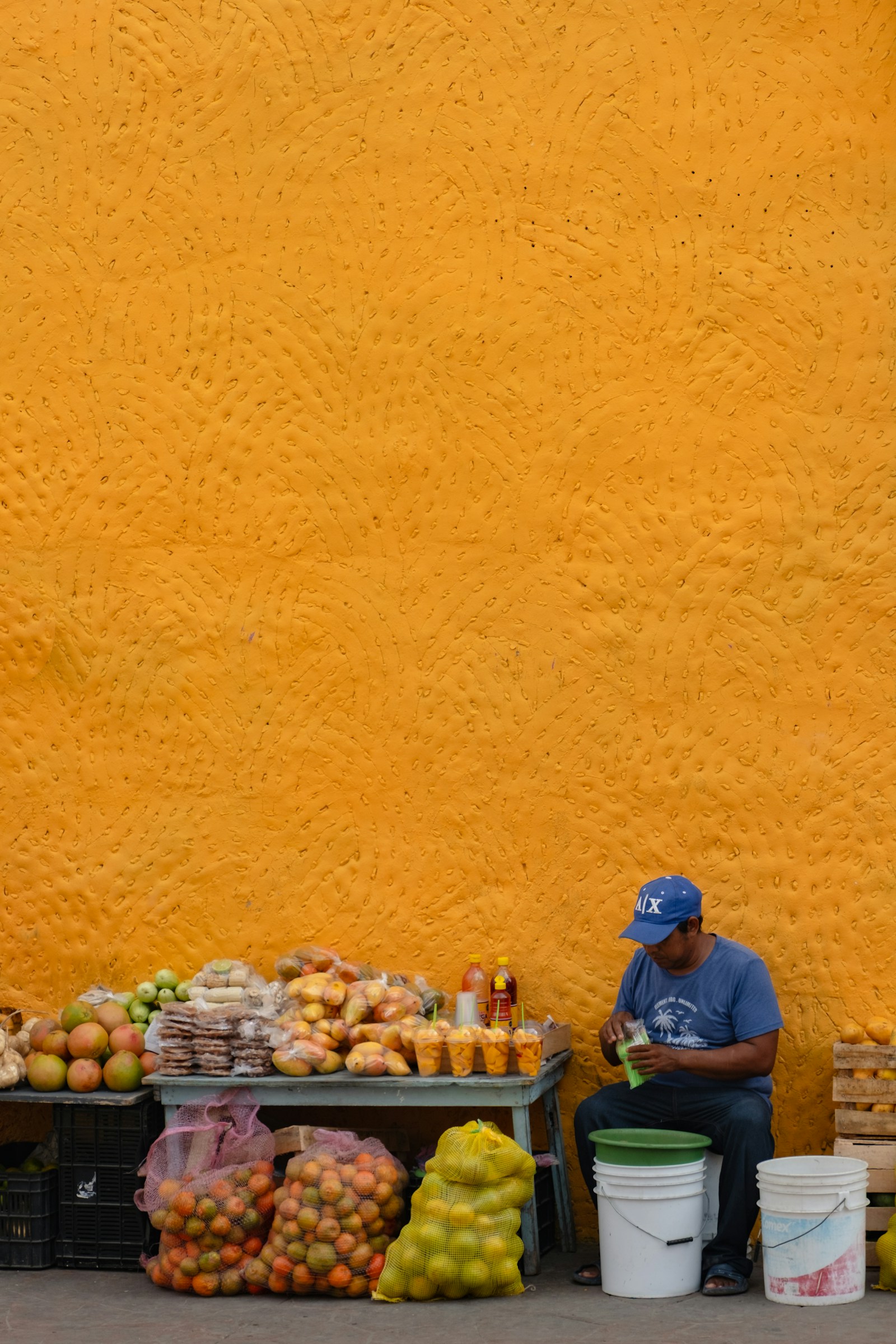
It opened in 1964 as an ordinary neighborhood market. What made it different came later: Cuban, Colombian, Peruvian and Venezuelan vendors moved in over the decades that followed the 1985 earthquake, which flattened much of the surrounding colonia.[^cdmx-medellin] Today there are more than 500 stalls, and the aisles carry <mark lang="es-MX">ron Santa Teresa</mark> from Venezuela, <mark lang="es-MX">café Juan Valdez</mark> from Colombia, Cuban <mark lang="es-MX">maltas</mark>, <mark lang="es-MX">yuca</mark>, <mark lang="es-MX">arepas</mark>, <mark lang="es-MX">jugos de caña</mark>.[^chilango-habana] La Jornada still runs pieces on Calle Medellín as the place to eat Colombian food without leaving the city.[^jornada-medellin]

None of that is nostalgia. Mexico's foreign-born population roughly doubled between 2000 and 2020, and the biggest recent arrivals came from the United States, Venezuela and Colombia.[^conapo-2020] The market is what that looks like at ground level, one aisle at a time.

<figure>
  <img src="/images/blog/mercado-medellin-1.jpg" alt="An open-air market street lined with shopfronts and palm trees." loading="lazy" />
  <figcaption>Half a dozen national vocabularies share one roof, and every one of them is confident. Photo by <a href="https://unsplash.com/photos/ytIqTxhYW4o" target="_blank" rel="noopener noreferrer">Jeffrey Eisen on Unsplash</a>.</figcaption>
</figure>

<div id="midpost-newsletter-slot"></div>

## Same thing, four names, one aisle

This is the part that makes Medellín genuinely useful for your Spanish rather than just pleasant. Ask for the same item at three stalls and you may get three words.

| México | Venezuela | Colombia | Cono Sur |
|---|---|---|---|
| aguacate | aguacate | aguacate | palta |
| maracuyá | parchita | maracuyá | maracuyá |
| plátano | cambur | banano | banana |
| elote | jojoto | mazorca | choclo |
| camote | batata | batata | batata |
| ejote | vainita | habichuela | chaucha |
| chícharo | arveja | arveja | arveja |
| betabel | remolacha | remolacha | remolacha |
| popote | pitillo | pitillo | pajita |

You do not need to memorise this table. You need to know that it **exists**, so that when a vendor says <mark lang="es-MX">parchita</mark> and your brain returns nothing, you don't conclude that your Spanish failed. It didn't. You just met a different country.

The move is one extra question:

<ul class="examples">
  <li class="example">
    <div class="es" lang="es-MX">¿Cómo se llama esto?</div>
    <div class="en" lang="en">What's this called?</div>
  </li>
  <li class="example">
    <div class="es" lang="es-MX">Ah, ¿y aquí cómo le dicen?</div>
    <div class="en" lang="en">Ah, and what do they call it here?</div>
  </li>
</ul>

<mark lang="es-MX">¿Y aquí cómo le dicen?</mark> does two things at once. You collect both words, and you quietly acknowledge that the vendor has a home vocabulary and a Mexico City one. People notice that, and they like it.

## The one that catches literally everybody

<div class="note-card is-safety">
  <span class="note-label">El error clásico</span>
  <p>In Mexico, <b lang="es-MX">tomate</b> means the small green tomatillo. The big red one is <b lang="es-MX">jitomate</b>.</p>
  <p>Everywhere else in Latin America, <b lang="es-MX">tomate</b> is the red one. So if you order <span lang="es-MX">tomates</span> for a red sauce, you will walk home with a bag of green tomatillos and a mild sense of betrayal.</p>
</div>

There is a small pile of these Mexico-only produce words, and they are worth ten minutes of your life:

| Se dice aquí | Y significa |
|---|---|
| jitomate | The red tomato |
| tomate / tomate verde | The green tomatillo |
| elote | Fresh corn on the cob |
| esquites | The same corn, off the cob, in a cup |
| camote | Sweet potato |
| chayote | The pale green squash with the single seed |
| nopal | Cactus paddle, sold cleaned or not |
| epazote | The herb that goes in black beans, non-negotiable |

Ask for <mark lang="es-MX">nopales limpios</mark> unless you want to remove the spines yourself, which you do not.

<figure>
  <img src="/images/blog/mercado-medellin-2.jpg" alt="Woven baskets hanging above crates of oranges and other fruit at a market stall." loading="lazy" />
  <figcaption>The fruit is not the hard part. The naming is. Photo by <a href="https://unsplash.com/photos/K77xDt7E1fE" target="_blank" rel="noopener noreferrer">Roberto Carlos Román Don on Unsplash</a>.</figcaption>
</figure>

## Quantity first, then the thing

Mexican market Spanish puts the amount before the noun, and it is much shorter than a textbook sentence.

<ol class="ladder">
  <li><div class="rung-card">
    <span class="rung-label">el saludo</span>
    <span class="rung-es" lang="es-MX">Buenas, ¿a cuánto está?</span>
    <span class="rung-en" lang="en">Hi, what's it going for?</span>
    <span class="rung-note">Buenas alone is a complete greeting here. No buenos días required.</span>
  </div></li>
  <li><div class="rung-card">
    <span class="rung-label">la cantidad</span>
    <span class="rung-es" lang="es-MX">Me da medio kilo, por favor</span>
    <span class="rung-en" lang="en">Half a kilo, please</span>
    <span class="rung-note">Me da is the standard opener. Not quiero, not necesito.</span>
  </div></li>
  <li><div class="rung-card">
    <span class="rung-label">el freno</span>
    <span class="rung-es" lang="es-MX">Así está bien, gracias</span>
    <span class="rung-en" lang="en">That's enough, thanks</span>
    <span class="rung-note">Say it while the scoop is moving, not after.</span>
  </div></li>
  <li><div class="rung-card">
    <span class="rung-label">el cierre</span>
    <span class="rung-es" lang="es-MX">Es todo, gracias</span>
    <span class="rung-en" lang="en">That's everything, thanks</span>
    <span class="rung-note">Answers ¿algo más? without a speech.</span>
  </div></li>
</ol>

<mark lang="es-MX">Me da</mark> deserves a note. It looks blunt written down - literally *you give me* - but it is the neutral, polite, universal way to order at a Mexican counter. <mark lang="es-MX">Quiero</mark> sounds oddly demanding by comparison, and <mark lang="es-MX">quisiera</mark> sounds like you are about to propose a merger.

<div class="chat-thread">
  <div class="chat-head"><span class="chat-avatar"></span><span>un sábado en el pasillo de frutas</span><span class="chat-meta">fíjate en la última línea</span></div>
  <ul class="chat-msgs">
    <li class="out"><span class="es" lang="es-MX">Buenas, ¿cómo se llama esto?</span><span class="en">Hi, what's this called?</span></li>
    <li class="in"><span class="es" lang="es-MX">Parchita, mi amor. De Venezuela</span><span class="en">Parchita, love. From Venezuela</span></li>
    <li class="out"><span class="es" lang="es-MX">¿Y aquí cómo le dicen?</span><span class="en">And what do they call it here?</span></li>
    <li class="in"><span class="es" lang="es-MX">Maracuyá. Pero la mía sabe mejor, ¿le doy a probar?</span><span class="en">Maracuyá. But mine tastes better, want to try?</span></li>
  </ul>
  <p class="chat-read">One extra question and you got a free tasting. <strong>Curiosity is the most effective phrase in this market, and it is not even a phrase.</strong></p>
</div>

## Things that only exist here

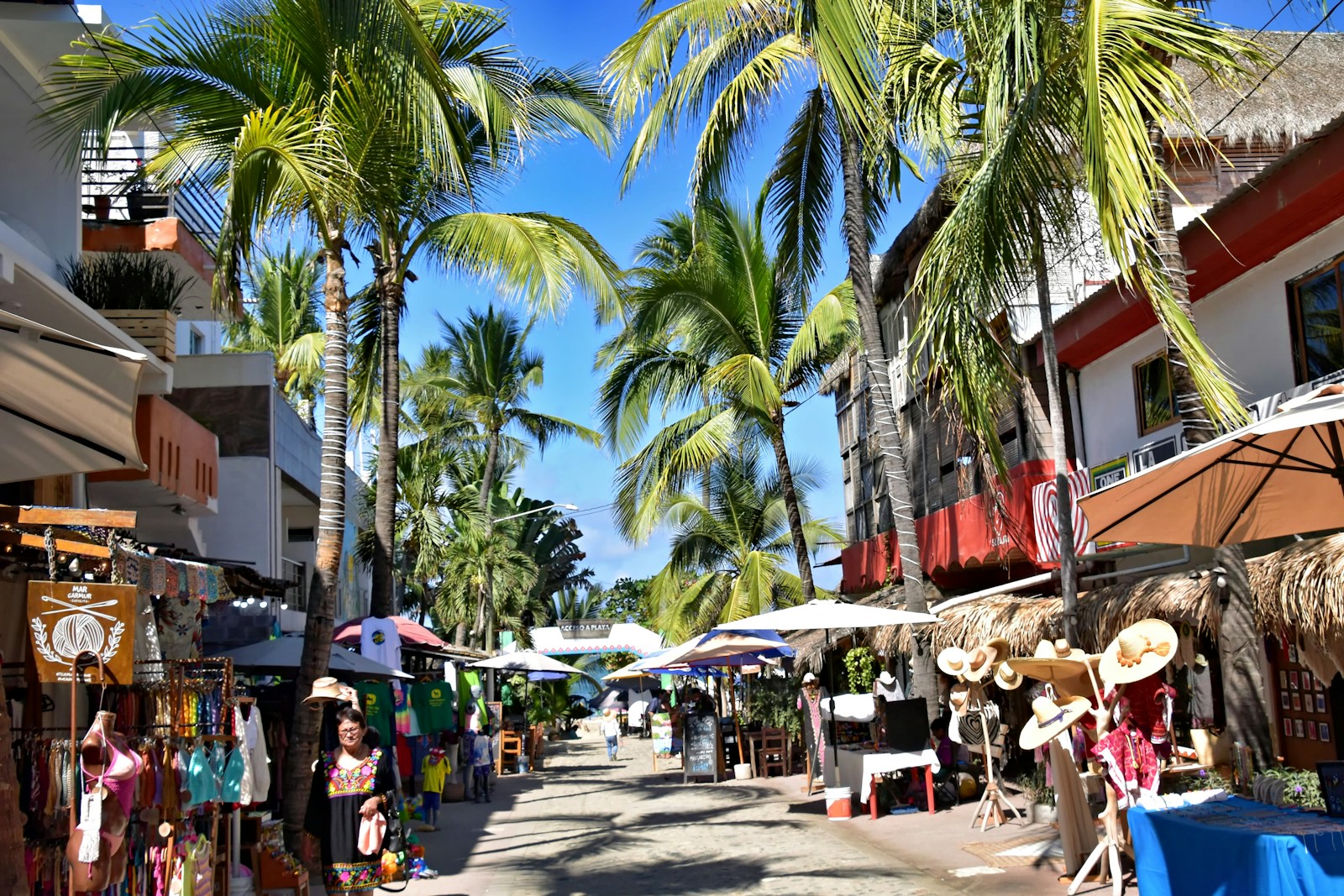
Half the fun of Medellín is the shelf of stuff you cannot buy elsewhere in the city, and the South American and Cuban food counters that come with it.[^local-medellin] Worth knowing what you are looking at:
<div class="do-dont">
  <div class="dd-col dd-do"><p class="dd-title">Vale la pena preguntar</p><ul>
    <li><b lang="es-MX">arepa</b> - corn cake, Venezuelan and Colombian, split and filled</li>
    <li><b lang="es-MX">malta</b> - sweet non-alcoholic malt drink, Cuban and Venezuelan</li>
    <li><b lang="es-MX">yuca</b> - cassava, sold fresh or already fried</li>
    <li><b lang="es-MX">cachapa</b> - sweet corn pancake, usually with cheese</li>
    <li><b lang="es-MX">jugo de caña</b> - pressed sugarcane juice, ordered by the cup</li>
  </ul></div>
  <div class="dd-col dd-dont"><p class="dd-title">Y luego pregunta esto</p><ul>
    <li><b lang="es-MX">¿Esto es dulce o salado?</b> - saves a lot of surprise</li>
    <li><b lang="es-MX">¿Se come frío o caliente?</b> - genuinely not obvious</li>
    <li><b lang="es-MX">¿Con qué se acompaña?</b> - opens a small lecture, in a good way</li>
    <li><b lang="es-MX">¿Cuánto me dura?</b> - useful for cheese and fruit</li>
  </ul></div>
</div>

<figure>
  <img src="/images/blog/mercado-medellin-3.jpg" alt="A man sitting beside a fruit stand in front of a textured orange wall." loading="lazy" />
  <figcaption>Ask where the stall is from. It is a warm question here, and the answer is the menu. Photo by <a href="https://unsplash.com/photos/JtKyjBx8Fgw" target="_blank" rel="noopener noreferrer">Teodor Kuduschiev on Unsplash</a>.</figcaption>
</figure>

## Why this is the best Spanish practice in the city

Most places reward you for sounding correct. Medellín rewards you for being curious, which is a much lower bar and a much better habit.

You will mispronounce things. You will be handed a fruit you did not order. Somebody will call you <mark lang="es-MX">mi amor</mark> or <mark lang="es-MX">marchantita</mark> and mean nothing by it except friendliness. And every single time you ask <mark lang="es-MX">¿y aquí cómo le dicen?</mark>, you leave with two words instead of one.

That is not survival Spanish. That is how people actually learn a language - one aisle, one stall, one small confusion at a time.

[^cdmx-medellin]: [Gobierno de la Ciudad de México, Mercado Medellín](https://mexicocity.cdmx.gob.mx/venues/mercado-medellin/) — Gobierno de la Ciudad de México
[^chilango-habana]: [Chilango, Mercado de Medellín: lo que debes saber de La pequeña Habana](https://www.chilango.com/que-hacer/mercado-de-medellin-en-cdmx-lo-que-debes-saber-de-la-pequena-habana/) — Chilango
[^jornada-medellin]: [La Jornada, La calle Medellín invita a probar las delicias de Colombia](https://www.jornada.com.mx/2026/06/26/cultura/a09n1cul) — La Jornada
[^conapo-2020]: [CONAPO, La población nacida en el extranjero en el Censo 2020](https://www.gob.mx/conapo/articulos/la-poblacion-nacida-en-el-extranjero-en-el-censo-de-poblacion-y-vivienda-2020) — Consejo Nacional de Población
[^local-medellin]: [Local.mx, Los exquisitos puestos sudamericanos y cubanos del Mercado Medellín](https://www.local.mx/restaurantes/mercado-medellin/) — Local.mx

FAQ:
Q: What is Mercado Medellín actually called?
A: Officially it is Mercado Melchor Ocampo, named for the street. Everyone calls it Mercado Medellín, and many call it La Pequeña Habana.

Q: Why are there so many South American vendors?
A: Cuban, Colombian, Peruvian and Venezuelan vendors settled into the market in the decades after the 1985 earthquake, which devastated much of the surrounding neighborhood.

Q: Is it true that tomate means something different in Mexico?
A: Yes. In Mexico, tomate usually means the small green tomatillo. The big red one is jitomate. Elsewhere in Latin America, tomate is the red one.

Q: How do I ask what something is called?
A: Say ¿cómo se llama esto? and then, if you want the local name too, ¿y aquí cómo le dicen?

Q: How do I ask for half a kilo?
A: Say me da medio kilo, por favor. For a quarter, un cuarto.

Q: What does tantito mean?
A: A little bit. It is one of the most Mexican words on this list and it works for almost any quantity.

Q: Can I taste something before buying?
A: Often yes. Say ¿me da a probar tantito? Fruit and cheese stalls expect it.

Q: What is a malta?
A: A sweet, non-alcoholic malt drink common in Cuba and Venezuela. You will find it here and almost nowhere else in the city.

Q: Is pointing rude?
A: No. Pointing plus de ese or de aquel is exactly how everyone shops when they do not know a name.

Q: What time does it open?
A: It runs daily, roughly from mid-morning to early evening. Mornings are calmer and the produce is better.

Sources:
- Gobierno de la Ciudad de México, Mercado Medellín: https://mexicocity.cdmx.gob.mx/venues/mercado-medellin/
- Chilango, Mercado de Medellín: lo que debes saber de La pequeña Habana: https://www.chilango.com/que-hacer/mercado-de-medellin-en-cdmx-lo-que-debes-saber-de-la-pequena-habana/
- La Jornada, La calle Medellín invita a probar las delicias de Colombia: https://www.jornada.com.mx/2026/06/26/cultura/a09n1cul
- CONAPO, La población nacida en el extranjero en el Censo 2020: https://www.gob.mx/conapo/articulos/la-poblacion-nacida-en-el-extranjero-en-el-censo-de-poblacion-y-vivienda-2020
- Local.mx, Los exquisitos puestos sudamericanos y cubanos del Mercado Medellín: https://www.local.mx/restaurantes/mercado-medellin/

Related words: mande, sale, chido, lana