---
title: "¿Entre Qué Calles? How Mexican Addresses Actually Work"
description: "A Mexican address needs calle and número, colonia, alcaldía or municipio, and código postal - plus the entre calles and referencia no form asks for."
type: "article"
category: "getting_around"
url: "https://consalsa.app/blog/mexican-address-spanish"
canonical: "https://consalsa.app/blog/mexican-address-spanish"
published: "2026-08-31"
updated: "2026-08-31"
author: "Andrey the Nomad"
site: "ConSalsa.App"
license: "https://consalsa.app/about"
---

# ¿Entre Qué Calles? How Mexican Addresses Actually Work
URL: https://consalsa.app/blog/mexican-address-spanish
Date: 2026-08-31
Updated: 2026-08-31
Category: getting_around
Keywords: mexican address format, entre que calles meaning, numero exterior interior mexico, colonia meaning mexican address, codigo postal mexico, how to write a mexican address, alcaldia vs delegacion
Summary: A Mexican address needs calle and número, colonia, alcaldía or municipio, and código postal - plus the entre calles and referencia no form asks for.

Quick answer:
- A Mexican address is six parts in order: calle and number, número interior, colonia, alcaldía or municipio, código postal, then city and state.
- The colonia is not optional. Several streets in the same city can share a name, and the colonia is what tells them apart.
- Couriers will ask ¿entre qué calles? - the two cross streets. No online form has that field, so keep the answer saved.
- S/N means sin número, a building with no street number. A referencia is a landmark, and it counts as part of the address.

What you'll learn:
- Every line of a Mexican address, in the order forms and couriers expect it.
- The difference between número exterior, número interior, colonia, and alcaldía.
- What to answer when a delivery driver asks for cross streets or a landmark.
- How to dictate your address on the phone without spelling it four times.

Don't sound gringo:
Don't answer ¿entre qué calles? by repeating your street number louder. They already have it. They want the two streets your street runs between - write them down once and keep them in your phone.

Body:

A courier called me about a package and asked a question I had never heard in my life: <mark lang="es-MX">¿entre qué calles?</mark> I read him the street and the number again, slowly, as if the problem had been my diction. He waited. Then he asked again, patiently, the way you talk to someone standing in the wrong country.

That was not impatience on his end. He was asking the most useful question in Mexican delivery, and I had no idea it was a question I was supposed to be able to answer.

A Mexican address is six parts in a fixed order: street and number, unit, <mark lang="es-MX">colonia</mark>, <mark lang="es-MX">alcaldía</mark> or <mark lang="es-MX">municipio</mark>, <mark lang="es-MX">código postal</mark>, then city and state. Leave out the <mark lang="es-MX">colonia</mark> and your package can go, correctly and legally, to a street with the same name on the other side of town.

The address is not one string. It is a funnel, and every line narrows the search - including two lines no form will ever ask you for.

## The anatomy of a Mexican address

Here is the whole thing, top to bottom, in the order forms and people expect it.

| Line | Spanish name | Example |
|---|---|---|
| Street + street number | Calle y número exterior | Orizaba 84 |
| Unit inside the building | Número interior | Int. 302 |
| Neighborhood | Colonia | Col. Roma Norte |
| Borough or municipality | Alcaldía o municipio | Cuauhtémoc |
| Postal code | Código postal | C.P. 06700 |
| City + state | Ciudad y estado | Ciudad de México, CDMX |

Written out on one line, it looks like this: Orizaba 84, Int. 302, Col. Roma Norte, Cuauhtémoc, C.P. 06700, Ciudad de México.

**Every line does a job.** The street gets you to a name. The <mark lang="es-MX">colonia</mark> tells you which of the several streets with that name. The <mark lang="es-MX">código postal</mark> confirms the <mark lang="es-MX">colonia</mark>. The <mark lang="es-MX">alcaldía</mark> tells the sorting center which chunk of the city.

You will also meet these abbreviations constantly, mostly on forms that give you nine characters of space:

| Short form | Full | What it means |
|---|---|---|
| No. Ext. / Núm. Ext. | número exterior | the street number |
| No. Int. / Núm. Int. | número interior | your unit, apartment, or office |
| S/N | sin número | the building has no street number |
| Col. | colonia | the neighborhood |
| C.P. | código postal | the five-digit postal code |
| Alc. / Deleg. | alcaldía / delegación | Mexico City borough |
| Mpio. | municipio | municipality, outside CDMX |
| Edo. | estado | state |

## Número exterior vs número interior

<mark lang="es-MX">Exterior</mark> is outside. <mark lang="es-MX">Interior</mark> is inside. That is the whole logic, and it survives contact with reality better than most things in this post.

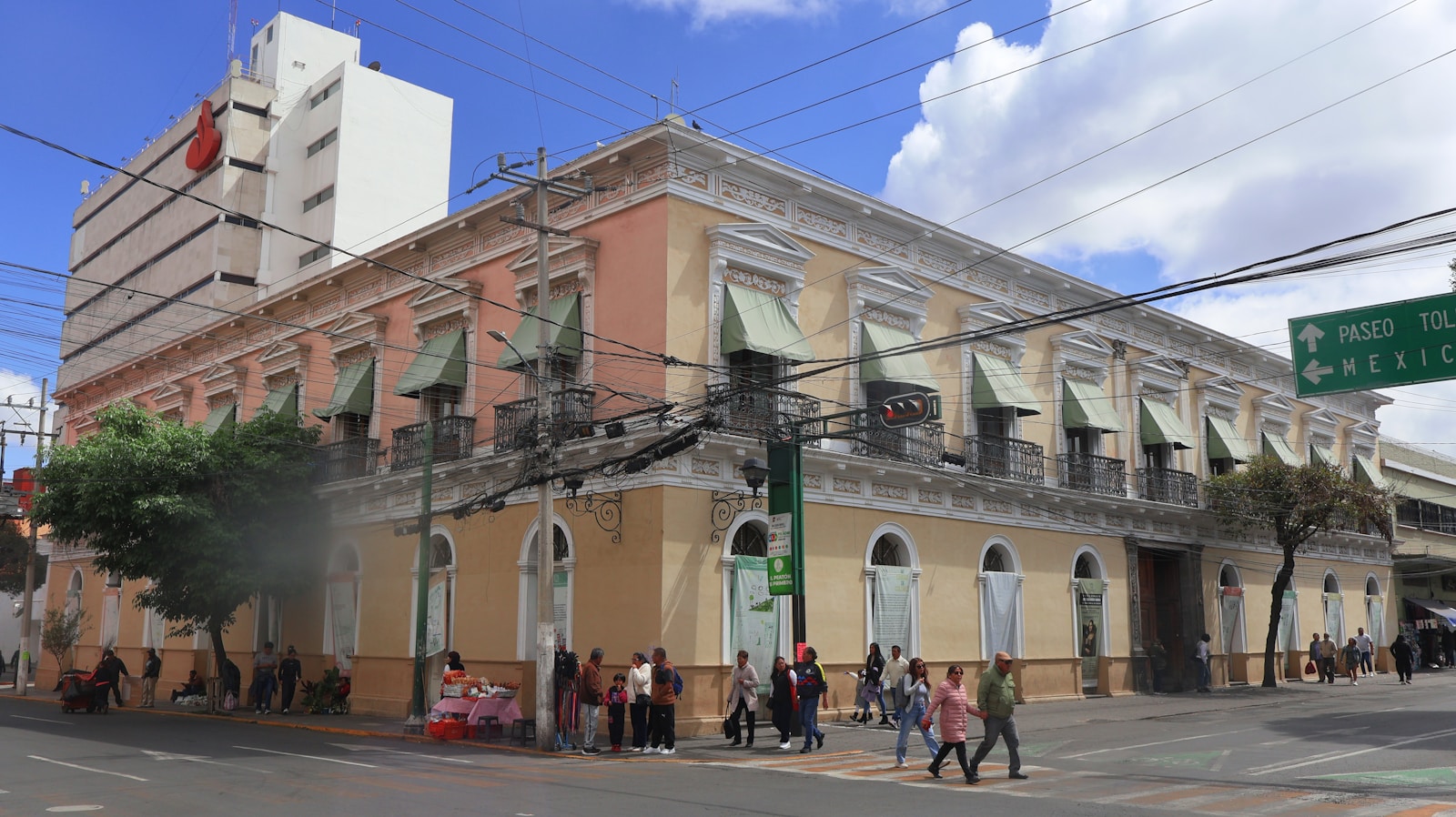
The <mark lang="es-MX">número exterior</mark> is painted on the street door of the building. The <mark lang="es-MX">número interior</mark> is your apartment, your office, your studio at the back of the courtyard.

<ul class="examples">
  <li class="example">
    <div class="es" lang="es-MX">Es Orizaba ochenta y cuatro, interior trescientos dos.</div>
    <div class="en" lang="en">It's Orizaba 84, unit 302.</div>
  </li>
  <li class="example">
    <div class="es" lang="es-MX">El exterior es el 84, el interior es el 302.</div>
    <div class="en" lang="en">The street number is 84, the unit is 302.</div>
  </li>
</ul>

**If you skip the interior, the package reaches the building and stops there.** Sometimes a neighbor signs. Sometimes it goes back. Sometimes it becomes a story you tell later.

Some buildings use letters instead: <mark lang="es-MX">interior A</mark>, <mark lang="es-MX">depto. 4B</mark>, <mark lang="es-MX">casa 3</mark>. All fine. Write whatever is actually on your door, not what you think sounds more official.

<figure>
  <img src="/images/blog/mexican-address-spanish-1.jpg" alt="A historic colonnaded stone building on a street corner in Mexico." loading="lazy" />
  <figcaption>The number on the door is the número exterior. Everything inside the building is the número interior. Photo by <a href="https://unsplash.com/photos/h0kTjr3HTAs" target="_blank" rel="noopener noreferrer">Orlando Garcia on Unsplash</a>.</figcaption>
</figure>

## The colonia is load-bearing

In Mexico, <mark lang="es-MX">colonia</mark> is the everyday word for a city neighborhood, and the dictionaries list exactly that sense: each of the urban zones that grew up around the center of a city.[^rae-colonia][^dem-colonia]

It is also the line foreigners delete first, because it looks decorative next to a postal code. It is not decorative. It is the line that makes the rest of the address mean one specific place.

Here is why. The national statistical catalogue of place codes covers state, <mark lang="es-MX">municipio</mark>, and locality.[^inegi-mg] The <mark lang="es-MX">colonia</mark> layer sits on top of that as a separate settlement layer that has to be delimited on purpose, using blocks and street lines, because it is not a clean administrative unit in the first place.[^inegi-colonias] In Mexico City, the working catalogue of <mark lang="es-MX">colonias</mark> published as open data comes from the electoral institute rather than from one single address authority.[^cdmx-colonias]

Translated out of institution language: **nobody ever ran a national committee to stop two streets from sharing a name.**

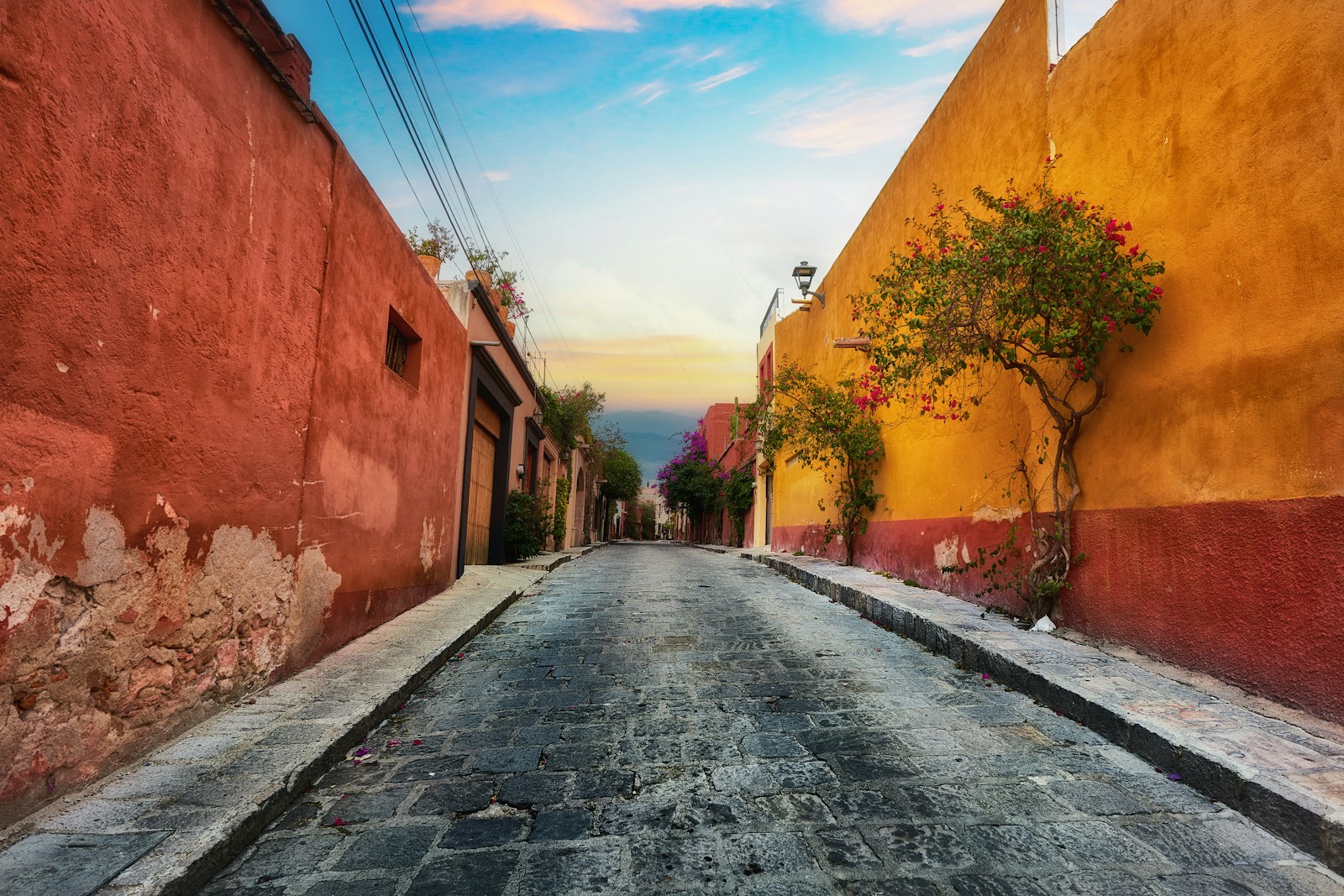
So Mexico City has more than one Calle Morelos. More than one Avenida Juárez. More than one 5 de Mayo, several Independencias, and a truly heroic number of streets named after the same handful of national heroes. They are not duplicates by mistake. They are in different <mark lang="es-MX">colonias</mark>, and the <mark lang="es-MX">colonia</mark> is the thing that keeps them apart.

Write Calle Morelos 120, Ciudad de México and you have described dozens of front doors. Write Calle Morelos 120, Col. Del Carmen and you have described one.

<div id="midpost-newsletter-slot"></div>

## Alcaldía, delegación, municipio

These three confuse people because they are all the same slot in the address, filled by whichever word the local system uses.

Outside Mexico City, that line is the <mark lang="es-MX">municipio</mark> - the municipality. Inside Mexico City, it is the <mark lang="es-MX">alcaldía</mark>, one of the city's 16 territorial demarcations, whose boundaries are published as municipal-level geostatistical areas.[^cdmx-alcaldias] The current legal framework for them is the Ley Orgánica de Alcaldías de la Ciudad de México.[^congreso-cdmx]

Until the city's political reform, those 16 were called <mark lang="es-MX">delegaciones</mark>. The name changed. Half the city did not.

**You will hear both, and older forms still print <mark lang="es-MX">Delegación</mark> as the field label.** Nobody will correct you either way. Coyoacán is Coyoacán.

| Where you are | That line is called | Example |
|---|---|---|
| Mexico City, official | Alcaldía | Cuauhtémoc |
| Mexico City, everyday | Delegación | Benito Juárez |
| Anywhere else in Mexico | Municipio | Zapopan |
| Small town inside a municipio | Localidad | Tepoztlán |

And a small trap worth knowing: <mark lang="es-MX">colonia</mark> and <mark lang="es-MX">alcaldía</mark> are different levels. Roma Norte is a <mark lang="es-MX">colonia</mark>. Cuauhtémoc is the <mark lang="es-MX">alcaldía</mark> that contains it, along with a few dozen others. Writing one where the other belongs is the most common way an otherwise perfect address goes soft.

<figure>
  <img src="/images/blog/mexican-address-spanish-2.jpg" alt="A narrow cobbled street running between red and yellow painted walls in Mexico." loading="lazy" />
  <figcaption>Two streets in two different colonias can carry the same name. The colonia is the line that separates them. Photo by <a href="https://unsplash.com/photos/QfBRBEKj76E" target="_blank" rel="noopener noreferrer">Jezael Melgoza on Unsplash</a>.</figcaption>
</figure>

## Código postal: five digits, one colonia

The <mark lang="es-MX">código postal</mark> is five digits. The national lookup published by Correos de México walks you down state, then <mark lang="es-MX">municipio</mark>, then settlement, and hands back the code for that specific <mark lang="es-MX">colonia</mark>.[^correos-cp]

Which means the postal code and the <mark lang="es-MX">colonia</mark> are two ways of saying the same thing, and you write both anyway. One is for humans and one is for sorting machines.

<ul class="examples">
  <li class="example">
    <div class="es" lang="es-MX">¿Cuál es tu código postal?</div>
    <div class="en" lang="en">What's your postal code?</div>
  </li>
  <li class="example">
    <div class="es" lang="es-MX">Cero seis siete cero cero.</div>
    <div class="en" lang="en">Zero six seven zero zero.</div>
  </li>
</ul>

Say the digits one at a time. Do not say "six thousand seven hundred." Nobody does that and it makes the other person start over.

## ¿Entre qué calles? The field no form has

This is the question. Every courier, every gas delivery, every water truck, every furniture guy. <mark lang="es-MX">¿Entre qué calles?</mark> means: between which two streets does your building sit.

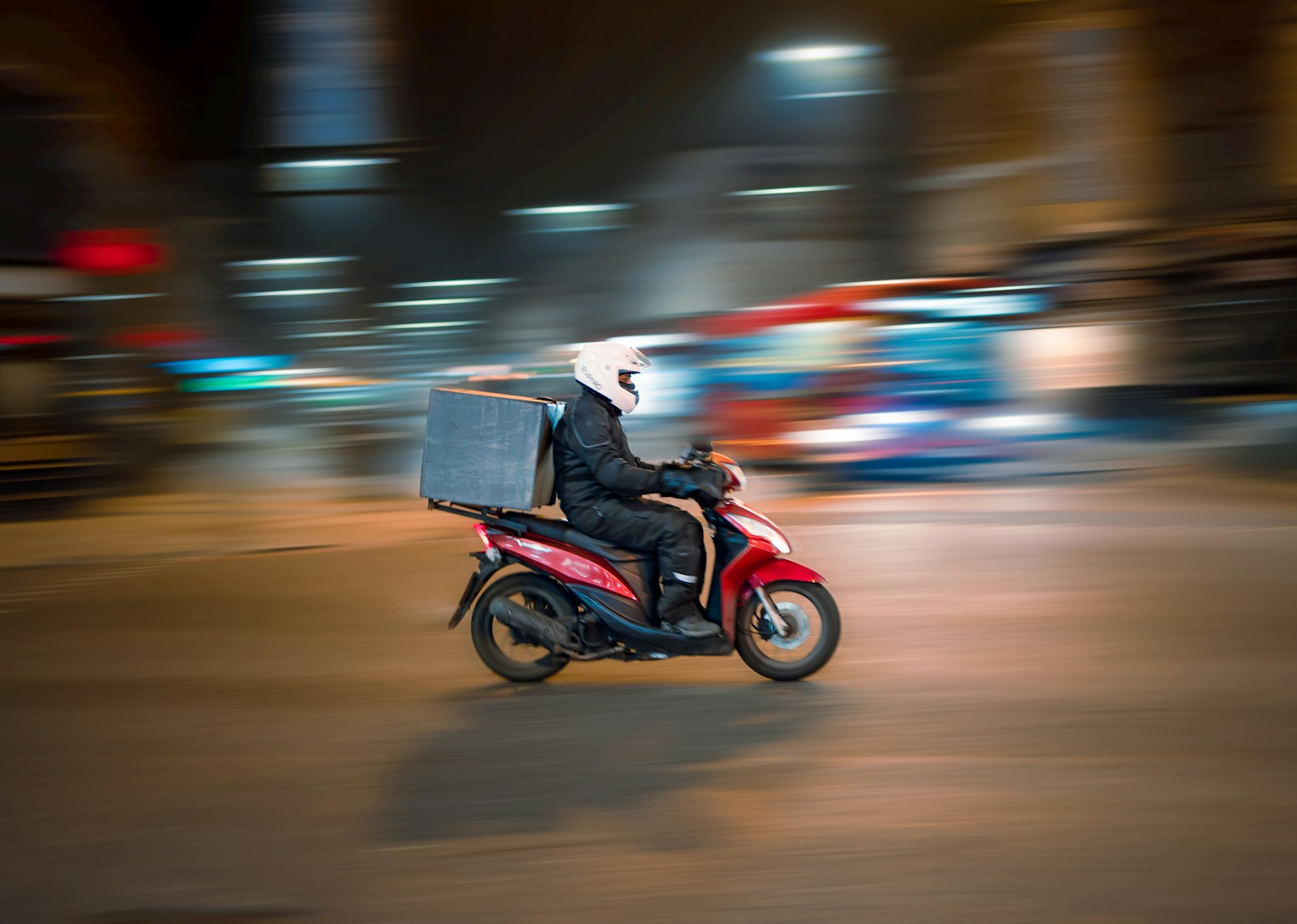
Drivers do not navigate by number. They navigate by cross street, then scan the block for the number. Give them the two cross streets and you cut the search from a street to about forty meters of it.

<ul class="examples">
  <li class="example">
    <div class="es" lang="es-MX">Entre Colima y Tabasco.</div>
    <div class="en" lang="en">Between Colima and Tabasco.</div>
  </li>
  <li class="example">
    <div class="es" lang="es-MX">Casi esquina con Tabasco.</div>
    <div class="en" lang="en">Almost at the corner of Tabasco.</div>
  </li>
  <li class="example">
    <div class="es" lang="es-MX">Es la cuadra entre Colima y Tabasco, del lado de los números pares.</div>
    <div class="en" lang="en">It's the block between Colima and Tabasco, on the even-numbered side.</div>
  </li>
</ul>

**No online form on earth has a field for this.** Which is why you should find your two cross streets once, today, and keep them saved somewhere you can read them while a stranger waits on the phone.

It is the one piece of information that turns every delivery from a phone negotiation into a knock on the door.

If a delivery form gives you a free-text box labelled <mark lang="es-MX">referencias</mark> or <mark lang="es-MX">indicaciones</mark>, that box is where the cross streets go. That box is doing more work than the rest of the form.

<figure>
  <img src="/images/blog/mexican-address-spanish-3.jpg" alt="A delivery rider on a scooter blurred in motion on a Mexican street at night." loading="lazy" />
  <figcaption>The driver is already on your street. What they need is the block, the corner, and something they can see. Photo by <a href="https://unsplash.com/photos/clYlmCaQbzY" target="_blank" rel="noopener noreferrer">Rowan Freeman on Unsplash</a>.</figcaption>
</figure>

## Referencias: the landmark is part of the address

A <mark lang="es-MX">referencia</mark> is, plainly, a reference point.[^rae-referencia] In Mexican daily life it means the visible thing near your door: a color, a shop, a tree, a church, a sign.

In a lot of countries this would be considered charmingly informal. Here it is just part of the address, and leaving it out is the informal choice.

<ul class="examples">
  <li class="example">
    <div class="es" lang="es-MX">La referencia es un portón verde, junto a la tintorería.</div>
    <div class="en" lang="en">The landmark is a green gate, next to the dry cleaner's.</div>
  </li>
  <li class="example">
    <div class="es" lang="es-MX">Frente al parque, arriba de la panadería.</div>
    <div class="en" lang="en">Across from the park, above the bakery.</div>
  </li>
  <li class="example">
    <div class="es" lang="es-MX">Es el edificio gris de cuatro pisos, el único con toldo.</div>
    <div class="en" lang="en">It's the gray four-story building, the only one with an awning.</div>
  </li>
</ul>

Good <mark lang="es-MX">referencias</mark> are things that do not move and can be seen from a scooter at speed. A parked car is not a <mark lang="es-MX">referencia</mark>. A green gate is.

## S/N and the addresses that break forms

<mark lang="es-MX">S/N</mark> is <mark lang="es-MX">sin número</mark>: the building has no assigned street number. It is common in small towns, on rural roads, in newer developments, and on the odd stubborn CDMX corner.

It is a legitimate address. It also means the rest of the line has to carry the weight, so a strong <mark lang="es-MX">referencia</mark> stops being optional.

| What you have | What to write |
|---|---|
| No street number | Calle Hidalgo S/N |
| No street number, rural road | Carretera a Tepoztlán S/N, Km 4 |
| Building with no unit numbers | Casa azul, junto al kiosco |
| Number exists but is not visible | Núm. 84, portón sin número visible |

Two more form traps worth naming. Some online checkouts give you one address line and no <mark lang="es-MX">colonia</mark> field, usually because the form was built for another country. Put the <mark lang="es-MX">colonia</mark> in the second address line, or at the end of the first one. Do not just drop it.

And when a form asks for "State", Ciudad de México is both the city and the state. You write it twice and it looks wrong and it is correct.

## How to dictate your address on the phone

The person on the other end is writing it down by hand, on a screen, or into a headset in traffic. Give it in the order they expect, in short chunks, with a pause after each one.

<ul class="examples">
  <li class="example">
    <div class="es" lang="es-MX">Orizaba ochenta y cuatro... interior trescientos dos... colonia Roma Norte... alcaldía Cuauhtémoc... código postal cero seis siete cero cero.</div>
    <div class="en" lang="en">Orizaba 84... unit 302... Roma Norte neighborhood... Cuauhtémoc borough... postal code 06700.</div>
  </li>
  <li class="example">
    <div class="es" lang="es-MX">Está entre Colima y Tabasco. La referencia es un portón verde.</div>
    <div class="en" lang="en">It's between Colima and Tabasco. The landmark is a green gate.</div>
  </li>
</ul>

Then the two phrases that save the call:

<ul class="examples">
  <li class="example">
    <div class="es" lang="es-MX">¿Se lo repito?</div>
    <div class="en" lang="en">Shall I repeat it?</div>
  </li>
  <li class="example">
    <div class="es" lang="es-MX">Le deletreo la calle: o, ere, i, zeta, a, be, a.</div>
    <div class="en" lang="en">Let me spell the street for you: O, R, I, Z, A, B, A.</div>
  </li>
</ul>

When they confirm, [sale](/words/sale) or [va](/words/va) is the whole reply. And if they say <mark lang="es-MX">ahorita llego</mark>, read our note on [ahorita](/words/ahorita) before you plan the rest of your afternoon.

| Too much | Better |
|---|---|
| Le voy a explicar cómo llegar desde el metro | Entre Colima y Tabasco |
| Es un edificio antiguo muy bonito | Portón verde, junto a la tintorería |
| Creo que el número es 84 pero no se ve bien | Es el 84, el portón no tiene número visible |
| Está en la Roma, no sé bien la alcaldía | Colonia Roma Norte, alcaldía Cuauhtémoc |

## The version to save in your phone

Write your address out once, in full, in the order above, with the cross streets and a landmark at the end. Keep it in a note. Paste it into forms, read it on calls, send it on WhatsApp.

Something like this:

<ul class="examples">
  <li class="example">
    <div class="es" lang="es-MX">Orizaba 84, Int. 302, Col. Roma Norte, Alcaldía Cuauhtémoc, C.P. 06700, Ciudad de México. Entre Colima y Tabasco. Portón verde, junto a la tintorería.</div>
    <div class="en" lang="en">Orizaba 84, unit 302, Roma Norte, Cuauhtémoc borough, postal code 06700, Mexico City. Between Colima and Tabasco. Green gate, next to the dry cleaner's.</div>
  </li>
</ul>

That last sentence is not extra. That last sentence is the address.

[^correos-cp]: [Correos de México, Consulta y descarga de códigos postales](https://www.correosdemexico.gob.mx/SSLServicios/ConsultaCP/Descarga.aspx) — Servicio Postal Mexicano
[^inegi-mg]: [Catálogo único de claves de áreas geoestadísticas estatales, municipales y localidades](https://www.inegi.org.mx/app/ageeml/) — Instituto Nacional de Estadística y Geografía
[^inegi-colonias]: [Delimitación de colonias y otros asentamientos humanos: documento metodológico](https://inegi.org.mx/contenidos/productos/prod_serv/contenidos/espanol/bvinegi/productos/nueva_estruc/889463920076.pdf) — Instituto Nacional de Estadística y Geografía
[^cdmx-colonias]: [Portal de Datos Abiertos de la CDMX, Colonias del IECM 2022](https://datos.cdmx.gob.mx/dataset/colonias-del-iecm-2022) — Instituto Electoral de la Ciudad de México
[^cdmx-alcaldias]: [Portal de Datos Abiertos de la CDMX, Límite de Alcaldías (áreas geoestadísticas municipales)](https://datos.cdmx.gob.mx/dataset/alcaldias) — Gobierno de la Ciudad de México / INEGI
[^congreso-cdmx]: [Marco legal de la CDMX](https://www.congresocdmx.gob.mx/marco-legal-cdmx-107-2.html) — Congreso de la Ciudad de México
[^rae-colonia]: [Diccionario de la lengua española, colonia](https://dle.rae.es/colonia) — Real Academia Española
[^rae-referencia]: [Diccionario de la lengua española, referencia](https://dle.rae.es/referencia) — Real Academia Española
[^dem-colonia]: [Diccionario del español de México, colonia](https://dem.colmex.mx/ver/colonia) — El Colegio de México

FAQ:
Q: What does entre qué calles mean?
A: It means between which streets. A courier is asking for the two cross streets your building sits between, because that is how drivers navigate a colonia.

Q: What is a colonia in a Mexican address?
A: A colonia is the neighborhood. It is a required line in a Mexican address because different colonias in the same city often have streets with the same name.

Q: What is the difference between número exterior and número interior?
A: Número exterior is the number on the street door of the building. Número interior is your unit inside it, like an apartment or office number.

Q: What does S/N mean in a Mexican address?
A: S/N is sin número, meaning the building has no assigned street number. When you write it, add a strong landmark so the address is still findable.

Q: Is an alcaldía the same as a delegación?
A: In Mexico City they refer to the same 16 territorial demarcations. Alcaldía is the current official term; many people and older forms still say delegación.

Q: What is the difference between an alcaldía and a municipio?
A: Alcaldías are the 16 demarcations inside Mexico City. Everywhere else in the country the equivalent line in your address is the municipio.

Q: Do I still need the código postal if I write the colonia?
A: Yes. The código postal is five digits and maps to a specific colonia, so the two confirm each other. Carriers use it for sorting and forms usually require it.

Q: What is a referencia in a Mexican address?
A: A referencia is a landmark or visual detail, like a green door or the pharmacy on the corner. In Mexico it is a normal, expected part of giving an address.

Sources:
- Correos de México, Consulta y descarga de códigos postales: https://www.correosdemexico.gob.mx/SSLServicios/ConsultaCP/Descarga.aspx
- INEGI, Catálogo único de claves de áreas geoestadísticas estatales, municipales y localidades: https://www.inegi.org.mx/app/ageeml/
- INEGI, Delimitación de colonias y otros asentamientos humanos: documento metodológico: https://inegi.org.mx/contenidos/productos/prod_serv/contenidos/espanol/bvinegi/productos/nueva_estruc/889463920076.pdf
- Portal de Datos Abiertos de la CDMX, Colonias del IECM 2022: https://datos.cdmx.gob.mx/dataset/colonias-del-iecm-2022
- Portal de Datos Abiertos de la CDMX, Límite de Alcaldías (áreas geoestadísticas municipales): https://datos.cdmx.gob.mx/dataset/alcaldias
- Congreso de la Ciudad de México, Marco legal de la CDMX: https://www.congresocdmx.gob.mx/marco-legal-cdmx-107-2.html
- Diccionario de la lengua española, colonia: https://dle.rae.es/colonia
- Diccionario de la lengua española, referencia: https://dle.rae.es/referencia
- Diccionario del español de México, colonia: https://dem.colmex.mx/ver/colonia

Related words: ahorita, sale, va, aguas