---
title: "Troca, Lonche, Parkear: Is Your Mexican-American Spanish Wrong?"
description: "Mexican-American Spanish is not broken Mexican Spanish. Learn how words like troca, lonche, and parkear travel, and what may sound different in CDMX."
type: "article"
category: "guides"
url: "https://consalsa.app/blog/mexican-american-spanish"
canonical: "https://consalsa.app/blog/mexican-american-spanish"
published: "2026-07-17"
updated: "2026-07-17"
author: "Andrey the Nomad"
site: "ConSalsa.App"
license: "https://consalsa.app/about"
---
# Troca, Lonche, Parkear: Is Your Mexican-American Spanish Wrong?
URL: https://consalsa.app/blog/mexican-american-spanish
Date: 2026-07-17
Updated: 2026-07-17
Category: guides
Keywords: mexican american spanish, troca meaning spanish, lonche meaning mexico, parkear vs estacionar, chicano spanish words, border spanish vocabulary
Summary: Mexican-American Spanish is not broken Mexican Spanish. Learn how words like troca, lonche, and parkear travel, and what may sound different in CDMX.
Quick answer:
- Mexican-American Spanish is a set of real community varieties shaped by migration, regional Mexican Spanish, English contact, and family history.
- Troca, lonche, and parquear are documented Spanish words, though their frequency and social meaning change across regions.
- A word that feels ordinary in Texas or Los Angeles may sound regional, old-fashioned, playful, or simply less common in CDMX.
- Do not correct heritage speakers into a single pure Mexico standard; ask where a word lives and learn the local alternative too.
What you'll learn:
- How three famous English-contact words behave across Mexican-American communities and different parts of Mexico.
- Why switching words in CDMX is practical code expansion, not proof that your home Spanish was wrong.
- How to ask about unfamiliar regional language without turning a conversation into a purity test.
- Which neutral alternatives help when you need maximum clarity with a new audience.
Don't sound gringo:
Do not tell a heritage speaker that troca or lonche is bad Spanish because an app preferred camioneta or almuerzo. The useful question is where the word is common—not whether a community passed your purity test.
Body:
You say troca in Los Angeles because everyone in your family says troca. Then someone in CDMX answers with camioneta, and a normal word from home suddenly feels as if it has been called to the principal’s office.
It has not. **Mexican-American Spanish is not failed Mexico Spanish.** It carries communities, migration routes, regional Mexican roots, English contact, and family memory—and arriving in Mexico does not turn any of that into an error.
## The three-word border map
| Word | Common meaning | Where it may feel ordinary | Broad alternative |
|---|---|---|---|
| Troca | Pickup truck | US Southwest, northern contact zones | Camioneta |
| Lonche | Lunch; packed meal; sometimes sandwich | US Mexican communities, north/west Mexico | Comida / almuerzo / torta |
| Parquear / parkear | To park | Many American varieties, border speech | Estacionar |
These are not invented mistakes. RAE lists troca as a word used in the United States, Mexico, and Nicaragua for a pickup or delivery truck, with English truck as its source.[^rae-troca] It also records lonche, from English lunch, for a light midday meal in Mexico and several other countries.[^rae-lonche]
And parquear is in the dictionary too, marked for the Americas and defined through aparcar.[^rae-parquear] A dictionary entry does not mean every neighborhood uses a word equally. It does mean the “that is not even Spanish” speech can sit down now.
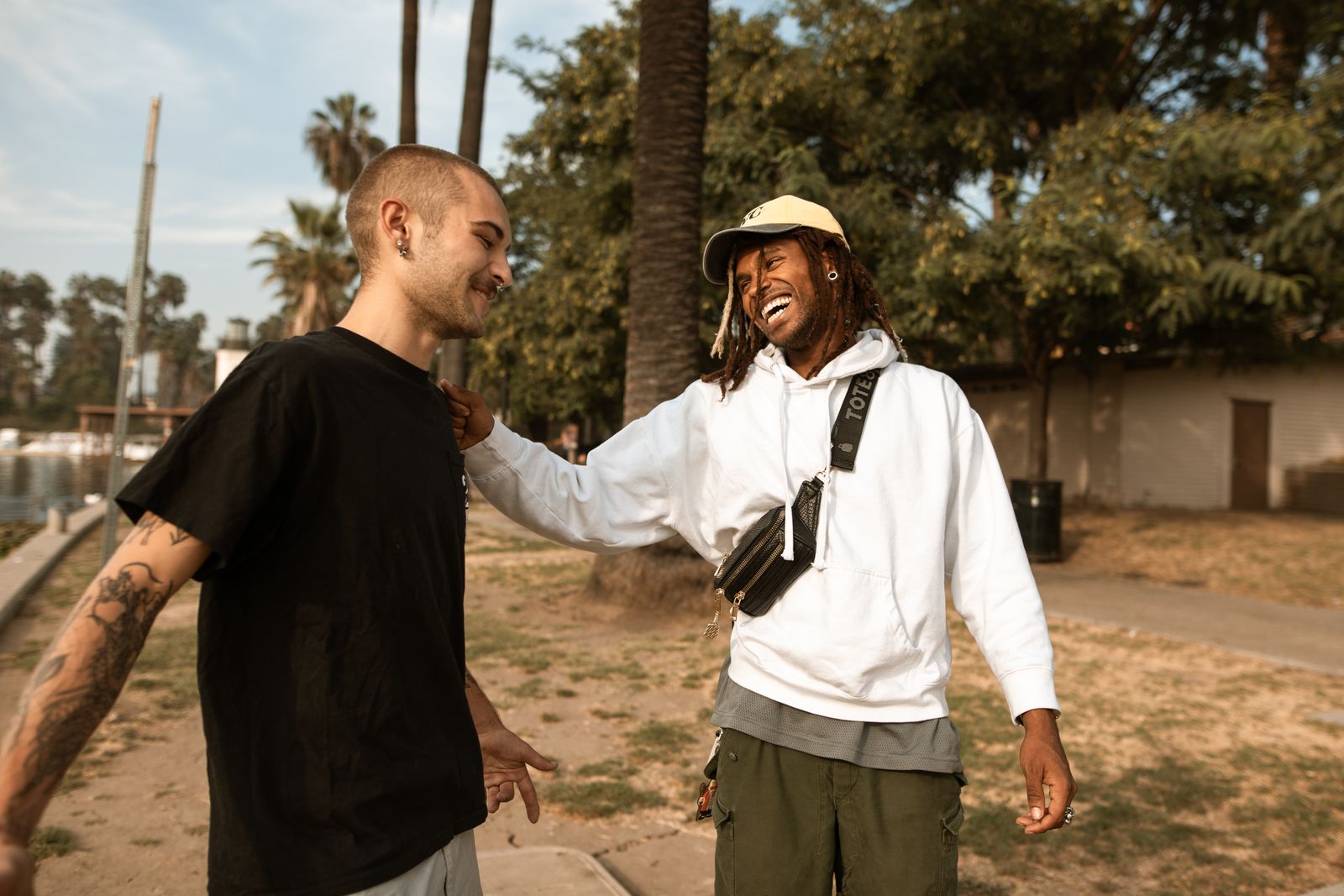
Words move through cities, phones, families, and friend groups—not through one national gate. Photo by Jona Meza on Pexels.
## Your family word can be regional twice
Mexican-American Spanish does not come from one generic Mexico. Families arrived from Jalisco, Michoacán, Sonora, Nuevo León, Zacatecas, Oaxaca, and many other places. Their Spanish carried regional words into US neighborhoods, then kept changing beside English.
That means a word can be regional in Mexico and take on a second life in the United States. The DEM gives lonche a general popular “lunch” sense, plus a northern and west-central meaning of torta or sandwich.[^dem-lonche] Your grandmother’s lonche might mean the meal, the bag, or one particular sandwich. In a new city, ask what people call it and keep both words.
Échate el lonche para el trabajo.
Pack your lunch for work.
¿Dónde dejaste la troca?
Where did you leave the pickup?
Those sentences can be fully natural in one community and noticeable in another. **Noticeable is not defective.**
## When your family word lands in CDMX
Mexico City has its own high-frequency choices. You are more likely to hear camioneta for a pickup, estacionar for parking, and comida for the main midday meal. Someone may understand your home word immediately, ask one question, or smile because it locates you.
The practical move is code expansion:
| If you normally say | Add for CDMX | Do not tell yourself |
|---|---|---|
| Troca | Camioneta | “My family taught me wrong” |
| Lonche | Comida / torta | “Nobody in Mexico says this” |
| Parkear | Estacionar | “I must erase English contact” |
| Raite | Aventón | “Only one can be real Spanish” |
This is the same adjustment any speaker makes across regions. A person from Mexico changes words in Argentina. A New Yorker learns what a British colleague means by “quite.” You are learning which word gets the keys found fastest.
Community speech carries belonging as well as information. Photo by Mental Health America on Pexels.
## Identity is not a proficiency test
Spanish in the United States carries emotional weight. Pew found that most surveyed US Latinos considered Spanish important for future generations, while most also said Spanish was not required to be Hispanic. The same study found that many non-Spanish-speaking Latinos had been shamed by other Latinos about their Spanish.[^pew-spanish]
That is useful context before correcting anybody’s family vocabulary. Heritage speakers may already be navigating accent anxiety, interrupted transmission, and the feeling that every sentence is being graded by two countries at once.
If you are a learner, your job is not to recruit heritage speakers into a purity project. If you are a heritage speaker who already braces for correction before finishing a sentence, needing a word in CDMX does not revoke anything. ¿Aquí cómo le dicen? is a complete strategy.
En mi casa le decimos troca. ¿Aquí dicen camioneta?
At home we call it troca. Do people say camioneta here?
Sí, te entendí. Acá se oye más camioneta.
Yeah, I understood you. Camioneta is more common here.
That exchange produces information without manufacturing shame.
## Ask about range, not correctness
Good regional questions sound like curiosity:
- Is that common here?
- Does it sound northern, border, older, or family-ish?
- What would you say at work?
- Would everybody understand it?
Bad questions arrive with the verdict hidden inside them: “Is that proper?” “Why do they say it wrong?” “What is the pure word?”
Instituto Cervantes treats register, social relations, and regional markers as part of sociolinguistic competence.[^cervantes-socio] That is a better model than a single ladder with “correct” at the top and everybody’s aunt at the bottom.
## Code-switching does not make a sentence lazy
English contact can produce borrowing, calques, switching, and new community meanings. Sometimes a speaker chooses an English word because it is the fastest one available. Sometimes the switch signals humor, intimacy, profession, or local identity.
You can still ask for clarity. If a word is blocking the conversation, try ¿te refieres a una camioneta? or ¿como un sándwich?. What you do not need is a miniature lecture on linguistic decline while someone is trying to find their keys.
Shared meaning gets negotiated at real tables, one clarification at a time. Photo by Julia M Cameron on Pexels.
## Keep both words
For the next regional word you meet, make a two-column note: “home/community” and “broad local alternative.” Put troca beside camioneta, lonche beside whatever the meal means in that family, and parkear beside estacionar.
Then keep both. Use the family word at the family table and the broader local option when it makes the moment easier. **A larger Spanish does not require a smaller history.** It gives you more ways to sound like yourself and more ways to meet the person in front of you.
[^rae-troca]: [Diccionario de la lengua española, troca](https://dle.rae.es/troca) — RAE and ASALE.
[^rae-lonche]: [Diccionario de la lengua española, lonche](https://dle.rae.es/lonche) — RAE and ASALE.
[^rae-parquear]: [Diccionario de la lengua española, parquear](https://dle.rae.es/parquear) — RAE and ASALE.
[^dem-lonche]: [Diccionario del español de México, lonche](https://dem.colmex.mx/ver/lonche) — El Colegio de México.
[^pew-spanish]: [Latinos’ views of and experiences with the Spanish language](https://www.pewresearch.org/race-ethnicity/2023/09/20/latinos-views-of-and-experiences-with-the-spanish-language/) — Pew Research Center.
[^cervantes-socio]: [MCER, competencia sociolingüística](https://cvc.cervantes.es/ensenanza/biblioteca_ele/marco_complementario/capitulo_05.htm) — Instituto Cervantes.
FAQ:
Q: Is Mexican-American Spanish real Spanish?
A: Yes. It includes established community varieties shaped by Mexican regional speech, English contact, migration, and generations of local use.
Q: Is troca a real Spanish word?
A: Yes. The RAE lists troca for a pickup or delivery truck in the United States, Mexico, and Nicaragua, derived from English truck.
Q: What does lonche mean?
A: Lonche can mean a light midday meal in several countries. In northern and western Mexico it can also refer to a torta or sandwich.
Q: Is parkear wrong?
A: Parquear is documented across the Americas. In CDMX, estacionar is often the more neutral and expected verb, while parkear may sound regional or contact-influenced.
Q: Why do Mexican-American and CDMX Spanish differ?
A: They grew in different places and social networks. Mexican-American Spanish also reflects which Mexican regions families came from and how long their communities have been in contact with English.
Q: Should heritage speakers change how they speak in Mexico?
A: They do not need to erase their variety. Learning a local alternative can make communication easier, just as any speaker adjusts vocabulary for a new audience.
Q: What should learners copy?
A: Learn both the community word and a broad neutral alternative. Then choose based on where you are, who you are with, and whether clarity or belonging matters most.
Sources:
- Diccionario de la lengua española, troca: https://dle.rae.es/troca
- Diccionario de la lengua española, lonche: https://dle.rae.es/lonche
- Diccionario de la lengua española, parquear: https://dle.rae.es/parquear
- Diccionario del español de México, lonche: https://dem.colmex.mx/ver/lonche
- Pew Research Center, Latinos’ views of Spanish: https://www.pewresearch.org/race-ethnicity/2023/09/20/latinos-views-of-and-experiences-with-the-spanish-language/
- Instituto Cervantes, competencia sociolingüística: https://cvc.cervantes.es/ensenanza/biblioteca_ele/marco_complementario/capitulo_05.htm
Related words: raite, broder, compa, chamba