---
title: "Mexican Family Spanish: Surviving (and Enjoying) the First Visit"
description: "First Mexican family visit? Learn mijo, provecho, pásale, con confianza, food offers, greetings, refills, and polite warmth."
type: "article"
category: "manners"
url: "https://consalsa.app/blog/mexican-family-visit-spanish"
canonical: "https://consalsa.app/blog/mexican-family-visit-spanish"
published: "2026-07-01"
updated: "2026-07-01"
author: "Andrey the Nomad"
site: "ConSalsa.App"
license: "https://consalsa.app/about"
---
# Mexican Family Spanish: Surviving (and Enjoying) the First Visit
URL: https://consalsa.app/blog/mexican-family-visit-spanish
Date: 2026-07-01
Updated: 2026-07-01
Category: manners
Keywords: mexican family spanish, first visit mexican family phrases, provecho meaning mexico, pasale con confianza meaning, mijo meaning mexican spanish
Summary: First Mexican family visit? Learn mijo, provecho, pásale, con confianza, food offers, greetings, refills, and polite warmth.
Quick answer:
- A first Mexican family visit runs on warmth, food, greetings, and tiny permission phrases.
- Pásale means come in, con confianza means make yourself comfortable, and provecho is used around meals.
- Mijo or mija can sound affectionate even when you are not literally someone's child.
- The safest learner move is to accept warmth graciously without acting like you own the house.
What you'll learn:
- How to greet, enter, sit, eat, decline seconds, and say goodbye during a family visit.
- What common family words do socially, not just literally.
- How to sound polite without becoming stiff or overly formal.
- How to handle food offers and family warmth without panic.
Don't sound gringo:
Do not turn con confianza into permission to raid the fridge. It means relax and feel welcome, not act like you pay rent.
Body:
The first Mexican family visit can feel like a Spanish exam with better food. Somebody says pásale, somebody calls you mijo, somebody offers more food when your body has already written its resignation letter.
Do not panic. Most of the language is not trying to trap you. It is warmth with rituals. If you are visiting a partner's family, a host family, or a friend's parents, your job is not to sound native; it is to receive the welcome without taking over the room.
## The first-visit phrase map
| You hear | It does | Your safest move |
|---|---|---|
| Pásale | Come in | Gracias, con permiso |
| Con confianza | Feel comfortable | Relax, but stay respectful |
| Provecho | Meal courtesy | Gracias, igualmente |
| Mijo / mija | Affectionate address | Smile, do not overanalyze |
| ¿Quieres más? | Food offer | Compliment, then accept or decline |
| ¿Mande? | Polite "what?" | Repeat gently |
Pásale comes from pasar, a verb with core meanings around passing, entering, or moving through.[^rae-pasar] At a doorway, it is not just logistics. It is a welcome mat in verb form.
Con confianza literally points to trust or confidence, and RAE gives confianza that base field.[^rae-confianza] In a house, it means "relax, you are welcome here." It does not mean "become the household's chaotic new roommate."
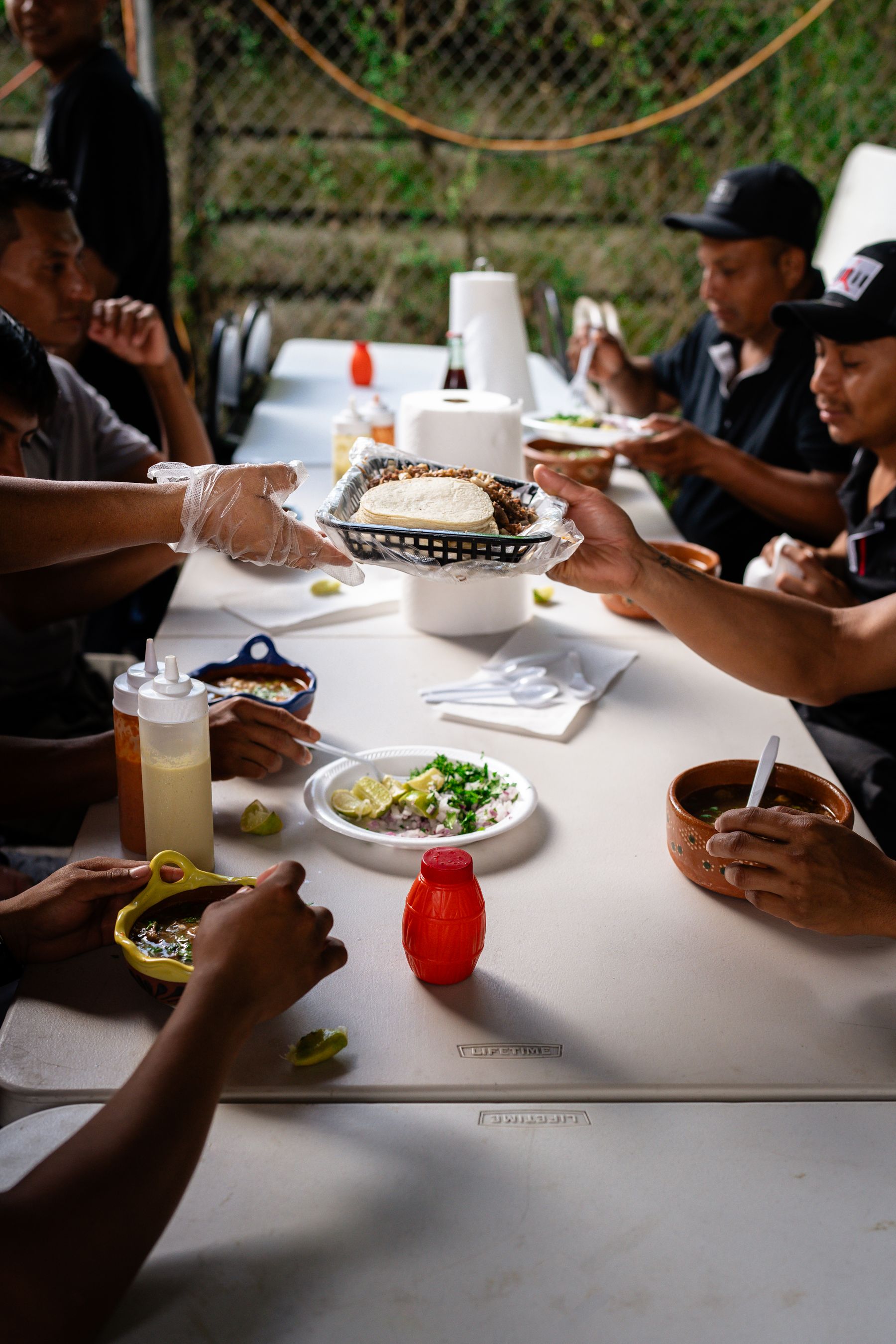
Food is often where the language gets warmest and most confusing. Photo by Marcus Queiroga Silva on Pexels.
## Greetings and entering
If elders are around, start slightly formal. Use usted until the family brings you down to tú. RAE treats usted as a formal second-person address.[^rae-usted] You do not lose points for being a little too respectful at the beginning.
Mucho gusto, gracias por invitarme.
Nice to meet you, thank you for inviting me.
Con permiso.
Excuse me / with your permission.
Qué gusto conocerlos.
It is so nice to meet you all.
Aim for humble, not terrified. You are not auditioning to be adopted by the whole family in one afternoon. You are showing you can read a room. A simple smile, slower Spanish, and one sincere gracias por invitarme will carry more than a dozen fancy phrases.
## Mijo, mija, jefe, jefa
Mijo and mija come from mi hijo and mi hija.[^rae-hijo] In Mexico, older people may use them affectionately even if you are obviously not their child and have just arrived holding supermarket flowers like a nervous intern.
Do not answer, "I am not your son." Please. Let warmth be warm.
The DEM also records jefe as boss, father, or male head of household depending on context.[^dem-jefe] [Jefe](/words/jefe) and [jefa](/words/jefa) can be family words, service words, or friendly address words. Do not throw them everywhere at a first visit. Listen first.
## Food offers: the real test
Food is where Mexican family Spanish gets both loving and relentless. Provecho is the meal courtesy, and RAE ties provecho to benefit or usefulness; as a social phrase, it functions like "enjoy your meal."[^rae-provecho]
Provecho.
Enjoy your meal.
Gracias, igualmente.
Thanks, you too.
If they offer more and you want it:
Sí, tantito más, gracias.
Yes, just a little more, thank you.
If your stomach is done:
Gracias, estaba delicioso, pero ya estoy lleno.
Thank you, it was delicious, but I am full now.
Compliment first, decline second. That little order saves you.
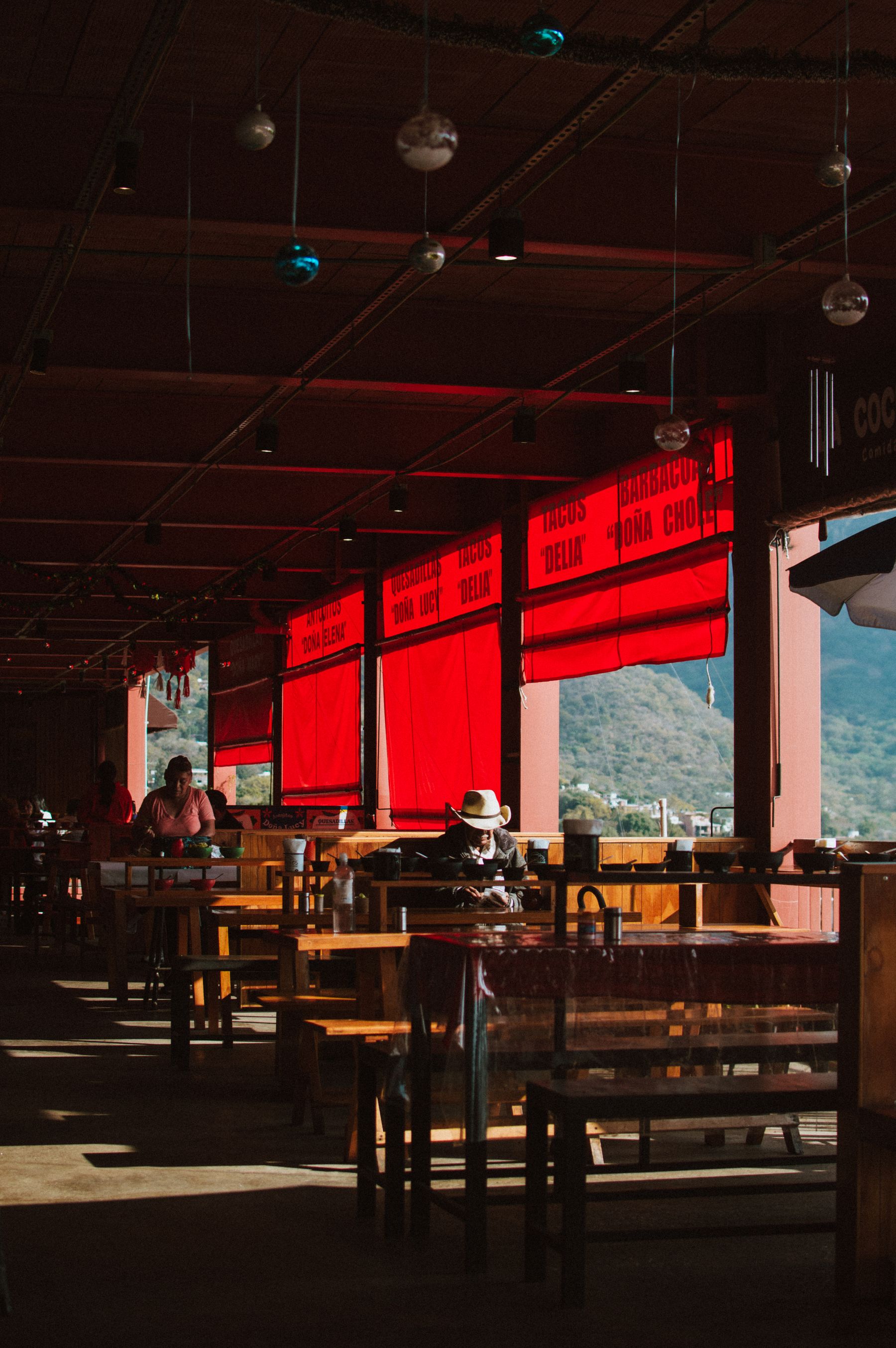
Warmth in Mexican Spanish often comes with an invitation to sit, eat, and stay a little longer. Photo by Susan Flores on Pexels.
## Saying goodbye
The goodbye should be warmer than your US instinct. Do not vanish after dessert like you were completing a tactical operation.
Muchas gracias por invitarme. Todo estuvo delicioso.
Thank you so much for inviting me. Everything was delicious.
Me dio mucho gusto conocerlos.
It was really nice to meet you all.
Nos vemos pronto, ojalá.
Hope to see you soon.
That is enough. You do not need to perform Mexican-ness. Be gracious, observant, and a little flexible.
The visit begins at the door, but it ends with how warmly you leave. Photo by Jimmy Elizarraras on Pexels.
## If you miss something
You will miss something. Someone will say a joke too fast, an aunt will ask a question from the kitchen, or a cousin will use a nickname that sounds like three words wearing a trench coat. The best move is not to pretend you understood.
Use a small, polite repair:
Perdón, ¿me lo repites más despacio?
Sorry, can you repeat that more slowly?
Todavía me cuesta entender cuando hablan todos juntos.
It is still hard for me to understand when everyone talks at once.
Much better than smiling through a question about whether you want coffee and accidentally agreeing to a second plate.
## What to remember
First family visits are full of small permission phrases. Pásale says enter. Con confianza says relax. Provecho says we are sharing food and manners. Mijo or mija says you are being treated with a little softness.
Receive that warmth. Ask when you are unsure, compliment what is offered, and leave people with the feeling that inviting you was easy. Just do it with your shoes on the right side of the line.
[^rae-hijo]: [Diccionario de la lengua española, hijo](https://dle.rae.es/hijo) - Real Academia Española.
[^rae-provecho]: [Diccionario de la lengua española, provecho](https://dle.rae.es/provecho) - Real Academia Española.
[^rae-pasar]: [Diccionario de la lengua española, pasar](https://dle.rae.es/pasar) - Real Academia Española.
[^rae-confianza]: [Diccionario de la lengua española, confianza](https://dle.rae.es/confianza) - Real Academia Española.
[^rae-usted]: [Diccionario de la lengua española, usted](https://dle.rae.es/usted) - Real Academia Española.
[^dem-jefe]: [Diccionario del español de México, jefe](https://dem.colmex.mx/ver/jefe) - El Colegio de México.
FAQ:
Q: What does pásale mean?
A: Pásale means come in, go ahead, or pass through. At a home, it is a warm invitation to enter.
Q: What does con confianza mean?
A: Con confianza means feel comfortable or make yourself at home, but it still expects respectful manners.
Q: What does provecho mean?
A: Provecho is a polite meal phrase, similar to enjoy your meal or bon appétit.
Q: What does mijo or mija mean?
A: Mijo and mija come from mi hijo and mi hija, but they can be affectionate terms used beyond literal parent-child relationships.
Q: How do I decline more food politely?
A: Say gracias, estaba delicioso, pero ya estoy lleno or llenísima. Compliment first, then decline.
Q: Should I use usted with family elders?
A: Use usted until the family invites a more casual tú, especially with older relatives.
Q: How do I say goodbye?
A: Say muchas gracias por invitarme, estuvo delicioso, and nos vemos. Warm and simple is enough.
Sources:
- Diccionario de la lengua española, hijo: https://dle.rae.es/hijo
- Diccionario de la lengua española, provecho: https://dle.rae.es/provecho
- Diccionario de la lengua española, pasar: https://dle.rae.es/pasar
- Diccionario de la lengua española, confianza: https://dle.rae.es/confianza
- Diccionario de la lengua española, usted: https://dle.rae.es/usted
- Diccionario del español de México, jefe: https://dem.colmex.mx/ver/jefe
Related words: mande, jefa, jefe, sale