---
title: "6 Words to Cheer for El Tri Like a Born Fan"
description: "Six Mexican fútbol words that make you sound like a real fan: stretch a goooool, beg for a penal, blame the árbitro, and take the loss with ni modo."
type: "article"
category: "seasonal"
url: "https://consalsa.app/blog/mexican-futbol-fan-spanish"
canonical: "https://consalsa.app/blog/mexican-futbol-fan-spanish"
published: "2026-06-27"
updated: "2026-06-27"
author: "Andrey the Nomad"
site: "ConSalsa.App"
license: "https://consalsa.app/about"
---
# 6 Words to Cheer for El Tri Like a Born Fan
URL: https://consalsa.app/blog/mexican-futbol-fan-spanish
Date: 2026-06-27
Updated: 2026-06-27
Category: seasonal
Keywords: mexican soccer spanish phrases, el tri meaning, how to cheer for mexico soccer, spanish soccer slang mexico, watching futbol in mexico, penal arbitro spanish, ni modo soccer
Summary: Six Mexican fútbol words that make you sound like a real fan: stretch a goooool, beg for a penal, blame the árbitro, and take the loss with ni modo.
Quick answer:
- El Tri is the nickname for Mexico's national team - say it instead of la selección to sound like a local fan.
- When a goal lands, you stretch it out: goooool, then eso or vamos to ride the energy.
- Blame the referee with árbitro vendido or a sharp no manches when a call goes against you.
- When El Tri loses (again), ni modo closes the night without drama - it means oh well, nothing to do.
What you'll learn:
- What El Tri means and why fans never just say the team's full name.
- How to cheer a goal, beg for a penal, and roast the árbitro in real time.
- The group-chat phrases that fly before, during, and after the match.
- How to take the loss like a local, because El Tri will break your heart.
Don't sound gringo:
Do not call a penalty a penalti like the textbook says. At a Mexican bar everyone screams penal, one syllable shorter and a lot louder. Saying penalti out loud marks you as someone who learned Spanish in a classroom, not in front of a TV with thirty strangers.
Body:
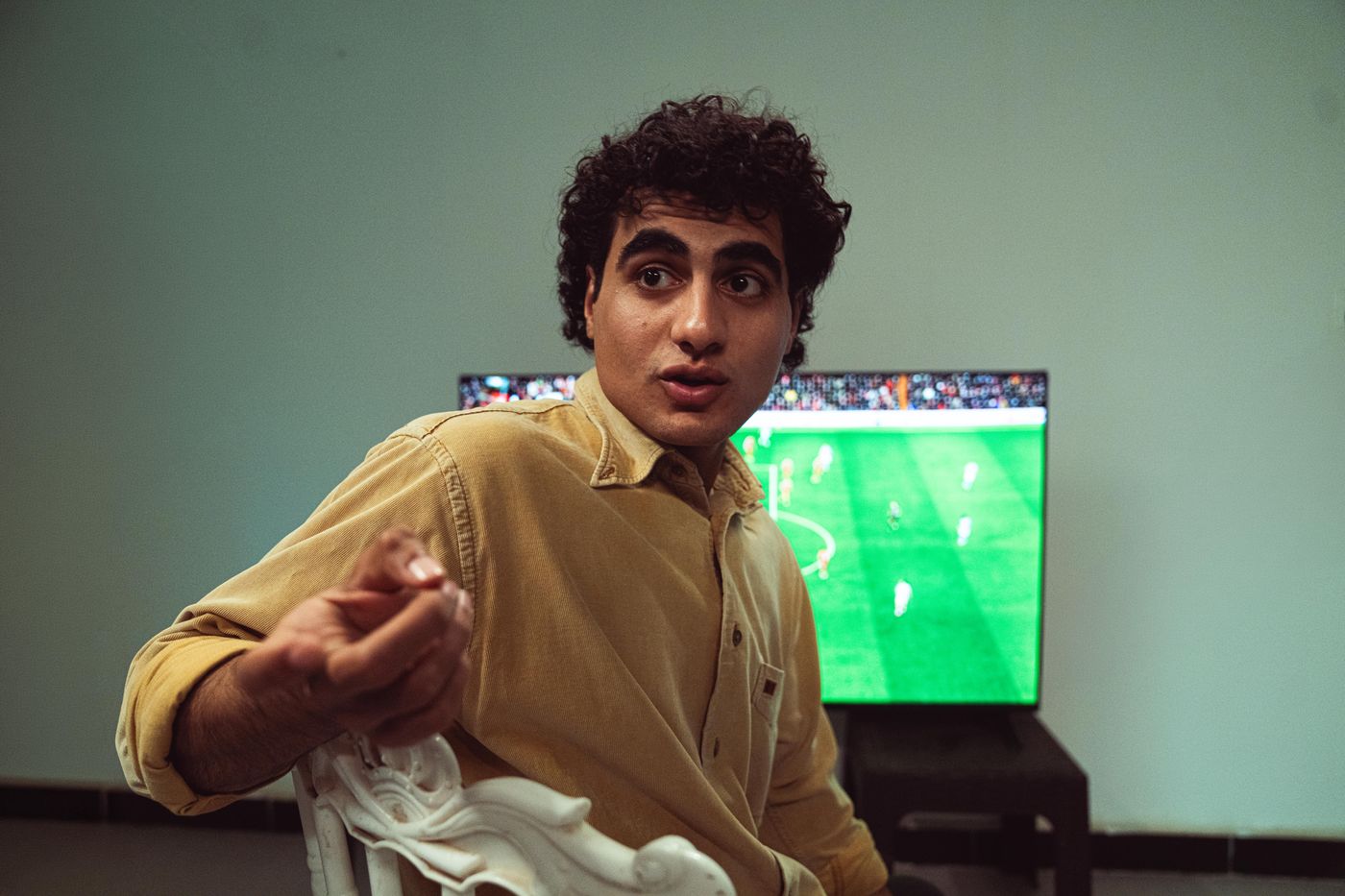
Picture a packed bar in CDMX. Thirty people in green jerseys, two minutes to kickoff, and the guy on the next stool is already swearing El Tri is going to blow it. The TV is too loud. Your beer is cold. And everyone around you is screaming words you don't recognize.
I've been in that exact room more times than I can count. The first time, I just nodded along and pretended I knew what was going on.
Took me a couple of matches to realize you don't need fluent Spanish to belong there. You need about six words, said loud and at the right second.
The whole night runs on **gol, el Tri, penal, the cursed árbitro**, and the two phrases that bookend every match: ya merito when hope is alive, and ni modo when it dies.
Learn those and you'll fit in at any bar in the country. Here's exactly when to use each one.
## The fan phrasebook at a glance
Here's the whole kit. Six words, and the exact second each one belongs to.
| Spanish | What it means | When you say it |
|---|---|---|
| gol / goooool | goal | The instant the ball crosses the line - stretch it |
| el Tri | Mexico's national team | Any time you talk about the team, not "la selección" |
| penal | penalty kick | Screaming for one, or screaming at one |
| árbitro | referee | The villain of every match, always |
| ya merito | almost, any second now | El Tri is pressing, the goal feels close |
| ni modo | oh well, nothing to do | El Tri lost again and you're making peace with it |
Look at that list again. **Half of it is about pain.**
Being an El Tri fan is mostly hope, then heartbreak, then blaming the guy with the whistle. The words are built for exactly that.
## El Tri, not la selección
Start here, because it's the fastest tell. The team is officially la selección nacional, and the news anchors will call it that.
Fans almost never do. They say el Tri, short for el tricolor - the three colors of the flag.[^britannica]
La selección isn't wrong, exactly. It just sounds like you're reading the headline instead of living in the room.
At a bar with the game on, it's **el Tri, every single time.**
¿A qué hora juega el Tri?
What time does Mexico play?
El Tri va a sufrir hoy, te lo digo.
Mexico's gonna suffer today, I'm telling you.
That second line is a genre all its own. Mexican fans love calling the disaster before it happens - half joke, half emotional armor. Land a good doom prophecy before kickoff and you're basically one of them already.
The green jersey crowd is where you'll hear "el Tri" forty times before kickoff. Photo by Karl Rayson on Pexels.
## The goal: how to lose your voice correctly
When El Tri scores, there's no calm version. None.
The word gol stretches into goooool, dragged out as long as your lungs hold. Radio narrators started this decades ago and the whole country still copies them.
The rule is simple: **the bigger the moment, the longer the gol.** A routine goal gets two seconds. A last-minute winner gets ten and a wrecked voice the next morning.
Right after, you pile on. Eso (that's it), vamos (let's go), and if the whole place erupts, no manches as pure disbelief. Something genuinely beautiful earns a qué padre or a chido once the screaming dies down.
¡Goooool! ¡Eso, eso, vamos!
Goooool! Yes, yes, let's go!
¡No manches, qué golazo!
No way, what a goal!
That last word, golazo, is gol with the -azo ending that means "a huge one." A screamer from outside the box is a golazo.
Drop golazo at the right moment and the whole table turns to nod at you. Cheap to learn, big payoff.
## Begging for the penal, screaming at the árbitro
Now the dark arts.
A penal is a penalty kick. Yes, the textbook says penalti - but **nobody at the bar says that.** They say penal, sharp and loud, both when they want one and when they got robbed of one.[^rae-penalti]
The second a defender so much as breathes on a Mexican attacker, the room turns into a courtroom. Suddenly everybody's a referee. ¡Penal! ¡Es penal, árbitro!
And the árbitro - the referee - is the eternal enemy.[^rae-arbitro]
When a call goes against El Tri, the classic accusation comes out: árbitro vendido, the ref's been bought. It's so common it's almost affectionate at this point.
¡Eso es penal! ¿Qué no viste, árbitro?
That's a penalty! Did you not see that, ref?
Árbitro vendido, nos robaron otra vez.
The ref's bought, they robbed us again.
You can dial the heat up with no manches for a bad call or a tired ya párale (knock it off) at the screen. The rougher words exist too, but among strangers, keep it at this level until you read the room.
Every disputed call turns the room into a courtroom, and the árbitro never wins. Photo by khezez on Pexels.
## Ya merito: the hope phase
Between the screaming there's the tension, and it has a word too.
Ya merito means almost, any second now. When El Tri is camped in the other team's box, passing and passing, the whole bar leans forward and starts muttering it under their breath.
It's pure superstition, really. Say ya merito enough times and maybe the soccer gods deliver. They usually don't. You say it anyway.
Ya merito, ya merito... ¡ash, falló!
Almost, almost... ugh, he missed!
Ya casi, ya merito cae el gol.
Almost there, the goal's about to drop any second.
You'll also hear ya casi right next to it, same idea. Both are the sound of a country holding its breath.
## The group chat survival guide
Here's the part people forget. Half the match happens on your phone. The grupo lights up before, during, and after, and it follows a pretty predictable rhythm.
| Moment | What people text | Tone |
|---|---|---|
| Before kickoff | ¿Dónde lo van a ver? / Va a sufrir el Tri | Plans plus a doom joke |
| Goal for Mexico | GOOOOL / 🇲🇽🔥🔥 / no manches | All caps, all emoji |
| Bad call | Árbitro vendido / nos robaron | Collective outrage |
| El Tri loses | Ni modo / ya ni llorar es bueno | Tired peace |
That last line, ya ni llorar es bueno, literally "now not even crying is any good," is the dark-humor classic for when there's truly nothing left to do. It pairs perfectly with ni modo.
The group chat is where the trash talk really lives, and honestly it's a love language. Friends roast El Tri, the coach, the ref, and each other with zero mercy. The whole thing works because it's aimed inward - your own team, your own friends. That's fair game. Walking up to a stranger to insult their club is a different thing entirely.
The grupo runs in parallel to the match - doom jokes before, all caps after a goal. Photo by RDNE Stock Project on Pexels.
## When El Tri breaks your heart
It will. **Trust me on this one.**
The team has a long, painful habit of getting close and then falling short, so fans built a whole vocabulary to absorb it. The keystone is ni modo - oh well, nothing to do about it.
And ni modo isn't giving up. If anything it's the opposite. It's how you let go of the result without letting it ruin the night. You say it, you sigh, you wave for another round, and you start mentally planning for the next tournament. That loop, honestly, is the real fan experience.
Otra vez quedamos fuera. Ni modo, será la próxima.
We're out again. Oh well, next time.
Ni modo, así es el Tri. Ya ni llorar es bueno.
Oh well, that's Mexico for you. Nothing left to do but laugh.
## Who says all this, and where to be careful
This is bar-and-living-room language, said loud, among people who actually care.
The cheering and the doom jokes work anywhere fans gather. The harsher stuff at the árbitro stays fun as long as everyone's mad at the same call. Just read the table first. A quiet family watch party at someone's tía's house is not a packed sports bar, and the volume should match.[^amexlengua]
One safe rule: aim your roasting at El Tri, the coach, and the ref, never at the actual club of the person next to you. Mexican club rivalries (América versus Chivas especially) run deep, and a joke you think is light can land wrong with a stranger. Cheer hard, blame the ref freely, and save the personal jabs for friends who'll fire back. That's el Tri fandom in one sentence.
[^rae-arbitro]: [Diccionario de la lengua española, árbitro](https://dle.rae.es/árbitro) - Real Academia Española
[^rae-penalti]: [Diccionario de la lengua española, penalti](https://dle.rae.es/penalti) - Real Academia Española
[^amexlengua]: [Diccionario de mexicanismos](https://www.academia.org.mx/obras/obras-de-consulta-en-linea/diccionario-de-mexicanismos) - Academia Mexicana de la Lengua
[^britannica]: [Mexico national football team](https://www.britannica.com/topic/Mexico-national-football-team) - Britannica
FAQ:
Q: What does El Tri mean?
A: El Tri is the nickname for Mexico's national soccer team, short for el tricolor - the three colors of the flag (green, white, red). Fans say El Tri far more than la selección nacional, both in the stadium and in the group chat.
Q: How do you cheer when Mexico scores a goal?
A: You stretch the word out as long as your lungs allow: goooool. Then you pile on with eso, vamos, or se armó. The longer the goal, the bigger the moment felt.
Q: What do Mexican fans yell at the referee?
A: The classic is árbitro vendido (the ref's been bought). You'll also hear no manches, ya párale, and plenty that's too rude to print. The árbitro is everyone's villain.
Q: How do you say penalty in Mexican Spanish?
A: Penal. Textbooks teach penalti, but in Mexico fans shout penal - one syllable shorter and what you'll actually hear at any bar or stadium.
Q: What does ya merito mean during a game?
A: Ya merito means almost or any second now. Fans say it when El Tri is pressing the goal: ya merito, ya merito - so close you can taste it.
Q: What do you say when Mexico loses?
A: Ni modo - oh well, nothing to do about it. It's how fans absorb yet another heartbreak without losing their cool. Often followed by a tired sigh and another round.
Q: Is it rude to trash-talk during a Mexican soccer match?
A: Among friends, no - roasting the team, the ref, and each other is half the fun. Keep it playful. Just don't insult someone's actual club to a stranger and expect a laugh.
Q: What is the difference between El Tri and la selección?
A: Same team. La selección is the neutral, news-anchor term. El Tri is the fan term, warmer and more personal. Use El Tri at the bar.
Sources:
- Diccionario de la lengua española - árbitro, Real Academia Española: https://dle.rae.es/árbitro
- Diccionario de la lengua española - penalti, Real Academia Española: https://dle.rae.es/penalti
- Diccionario de mexicanismos, Academia Mexicana de la Lengua: https://www.academia.org.mx/obras/obras-de-consulta-en-linea/diccionario-de-mexicanismos
- Selección Nacional de México, Federación Mexicana de Fútbol: https://www.miseleccionmx.com/
- Mexico national football team - history and nickname, Britannica: https://www.britannica.com/topic/Mexico-national-football-team
Related words: ni-modo, no-manches, padre, chido