---
title: "Mexican Greetings: How to Say Hi Like a Local, Not a Textbook"
description: "Beyond hola: how Mexicans actually greet each other with qué onda, buenas, and mande, plus the one reply (mande) that confuses every learner."
type: "article"
category: "manners"
url: "https://consalsa.app/blog/mexican-greetings"
canonical: "https://consalsa.app/blog/mexican-greetings"
published: "2026-05-18"
updated: "2026-06-14"
author: "Andrey the Nomad"
site: "ConSalsa.App"
license: "https://consalsa.app/about"
---

# Mexican Greetings: How to Say Hi Like a Local, Not a Textbook
URL: https://consalsa.app/blog/mexican-greetings
Date: 2026-05-18
Updated: 2026-06-14
Category: manners
Keywords: mexican greetings spanish, que onda meaning, mexican spanish greetings, how to greet people in mexico, mexican spanish phrases, spanish for mexico travel
Summary: Beyond hola: how Mexicans actually greet each other with qué onda, buenas, and mande, plus the one reply (mande) that confuses every learner.

Quick answer:
- In Mexico, hola works, but qué onda, buenas, buenos días, mande, and qué tal all carry different social temperatures.
- Qué onda is casual and friendly, best with friends, classmates, coworkers, and people your age.
- Buenas is a soft, all-purpose greeting for shops, restaurants, elevators, and quick public interactions.
- Mande is a polite response when someone calls you or you did not hear clearly, especially with older people or service situations.

What you'll learn:
- How to greet friends, strangers, shopkeepers, and older people
- When qué onda sounds natural and when it sounds too casual
- Why buenas is one of the safest Mexico travel phrases
- How mande works without sounding stiff

Body:

If you only say **hola** in Mexico, you will be understood. Nobody is going to stop the conversation and revoke your Spanish learner card.

But after a few days here, hola starts to feel like using only "hello" in English. It works at the airport, sure. It does not always match the room.

Mexican greetings are tiny social thermometers. **Qué onda** feels friendly and relaxed. **Buenas** is warm and public. **[Mande](/words/mande)** is polite, useful, and very Mexican. The trick is not memorizing twenty greetings. The trick is learning what kind of relationship each one assumes.

## The greeting map

Here is the practical version. If you are visiting Mexico from the US, living here for a few months, or trying not to sound like your app paused at Chapter 1, start with this table.

| Greeting | Closest English feel | Best with | Watch out for |
|---|---|---|---|
| Hola | Hi / hello | Anyone | Safe, but sometimes plain |
| Buenos días | Good morning | Everyone | Use before noon-ish |
| Buenas tardes | Good afternoon | Everyone | Useful after midday |
| Buenas noches | Good evening / night | Everyone | Works after dark |
| Buenas | Hey / hi there | Shops, neighbors, elevators, casual public spaces | Very safe, slightly informal |
| [Qué onda](/words/que-onda) | What's up? | Friends, peers, relaxed coworkers | Too casual for formal first contact |
| Qué tal | How's it going? | Almost anyone | Neutral and easy |
| Cómo estás | How are you? | People you may actually talk to | Can invite a real answer |
| Mande | Yes? / pardon? | Older people, service moments, family, strangers | It is a response, not an opener |

The biggest learner mistake is treating greetings like pure vocabulary. They are not. They are little relationship settings.

## Buenas: the traveler's best friend

If I could give a US traveler one greeting before their first breakfast in CDMX, it would be **buenas**.

You walk into a tiny café. The person behind the counter is busy. You do not need a speech. You just need to enter the room politely.

<ul class="examples">
  <li class="example">
    <div class="es" lang="es-MX">Buenas.</div>
    <div class="en" lang="en">Hi there.</div>
  </li>
</ul>

That is enough.

Buenas works because it is soft and flexible. It can stand in for buenos días, buenas tardes, or buenas noches without making you check the exact time like you are filing paperwork.

Use it when you enter:

- a bakery
- a pharmacy
- an elevator
- a small restaurant
- a waiting room
- a neighborhood shop
- a building lobby

It is not flashy. That is the point. **Buenas sounds like you know you are entering a shared space.**

## Qué onda: friendly, but not for everyone

[Qué onda](/words/que-onda) is one of the most Mexican-feeling greetings learners hear early. Literally, onda can mean wave or vibe, but qué onda functions like **what's up, what's going on, or how's it going**.

With friends, it is perfect:

<ul class="examples">
  <li class="example">
    <div class="es" lang="es-MX">¿Qué onda? ¿Ya llegaste?</div>
    <div class="en" lang="en">What's up? Did you get here already?</div>
  </li>
</ul>

With a language exchange friend:

<ul class="examples">
  <li class="example">
    <div class="es" lang="es-MX">Qué onda, ¿cómo vas?</div>
    <div class="en" lang="en">Hey, how's it going?</div>
  </li>
</ul>

With a random older shopkeeper at 8 a.m.? Maybe do not lead with it. It is not offensive, just too familiar. Like walking into a doctor's office in the US and opening with "yo, what's good?"

## Which greeting should I use?

| Situation | Natural choice | Why it works |
|---|---|---|
| Entering a corner store | Buenas | Polite, quick, local-feeling |
| Meeting an older neighbor | Buenos días / buenas tardes | Respectful and warm |
| Texting a Mexican friend | Qué onda | Casual and friendly |
| Joining a coworking table | Hola, qué tal | Relaxed but not too intimate |
| Replying when someone calls your name | Mande | Polite attention |
| Asking a waiter a question | Disculpa / buenas | Gets attention gently |
| Seeing a friend at a bar | Qué onda | Right level of casual |
| Starting a formal email | Buenos días | Clear and professional |

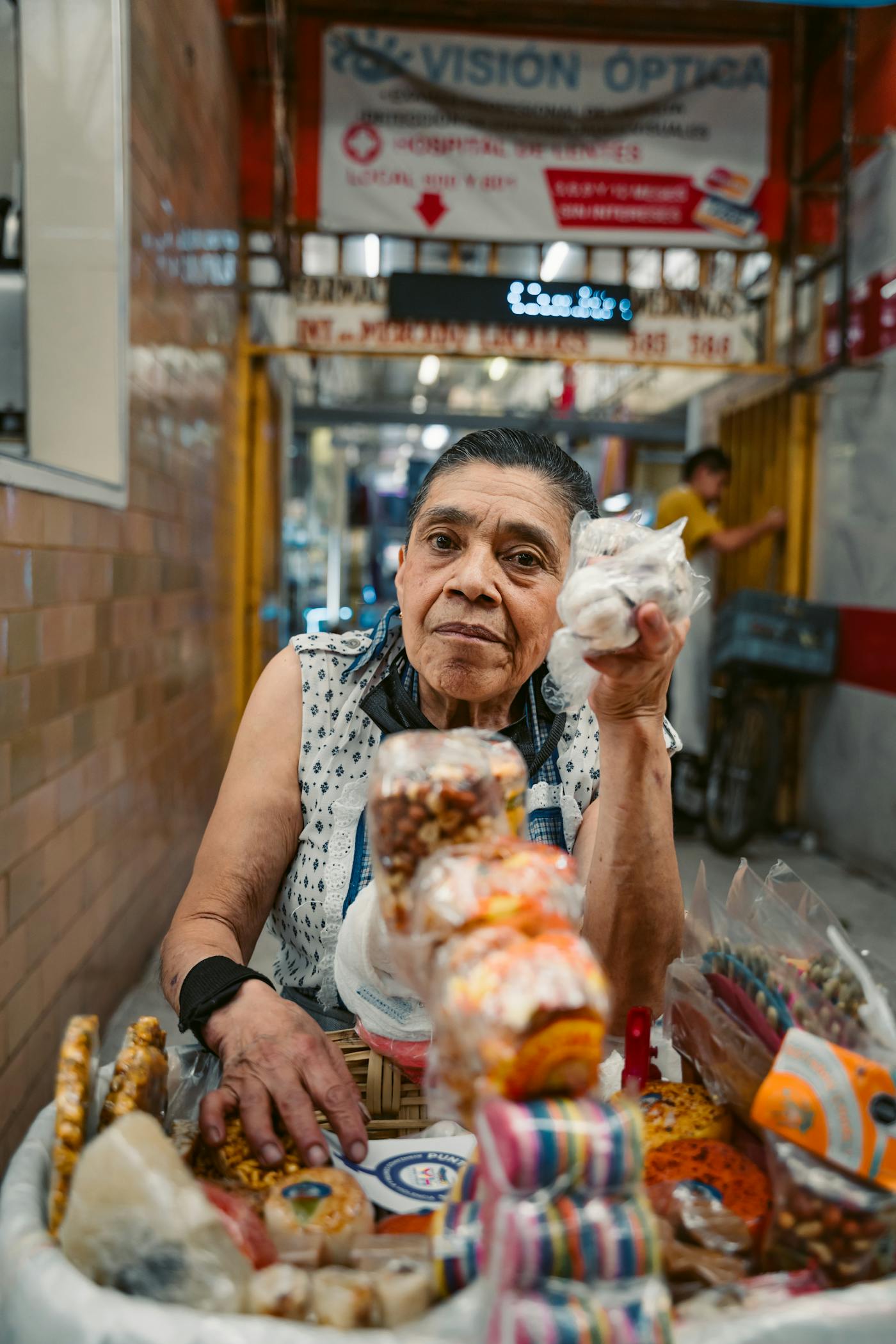
The US comparison is pretty simple: **hola is hello, qué onda is what's up, buenas is a neighborhood hi, and mande is closer to yes? or pardon?** But Spanish adds more visible politeness to small public interactions, especially with older people and service workers.

<figure>
  <img src="/images/blog/elderly-vendor-mexico.jpg" alt="An older street vendor selling snacks in a narrow Mexico City alley." loading="lazy" />
  <figcaption>With older people, vendors, and strangers, your greeting can be casual, but it should still have respect in it. Photo by <a href="https://www.pexels.com/photo/elderly-street-vendor-16866984/" target="_blank" rel="noopener noreferrer">Miguel González on Pexels</a>.</figcaption>
</figure>

<div id="midpost-newsletter-slot"></div>

## Mande: the word learners overthink

Mande is one of those words that can confuse Americans because the literal root connects to mandar, "to command" or "to order." In real Mexican Spanish, though, **mande is usually a polite response**.

Someone says your name from another room:

<ul class="examples">
  <li class="example">
    <div class="es" lang="es-MX">¿Andrés?</div>
    <div class="en" lang="en">Andrés?</div>
  </li>
  <li class="example">
    <div class="es" lang="es-MX">¿Mande?</div>
    <div class="en" lang="en">Yes?</div>
  </li>
</ul>

You did not hear the price clearly:

<ul class="examples">
  <li class="example">
    <div class="es" lang="es-MX">¿Mande? Perdón, no escuché.</div>
    <div class="en" lang="en">Sorry? I didn't hear.</div>
  </li>
</ul>

Some younger Mexicans use **qué** instead, especially with friends. But mande remains useful because it is gentle. If you are learning, mande is safer than barking **qué** at someone you just met.

## Tiny greetings that make you sound less translated

Try these in real life. Nothing dramatic. Just small upgrades.

<ul class="examples">
  <li class="example">
    <div class="es" lang="es-MX">Buenas, ¿me das un café?</div>
    <div class="en" lang="en">Hi there, can I get a coffee?</div>
  </li>
  <li class="example">
    <div class="es" lang="es-MX">Qué onda, ¿todo bien?</div>
    <div class="en" lang="en">Hey, all good?</div>
  </li>
  <li class="example">
    <div class="es" lang="es-MX">Hola, buenas tardes.</div>
    <div class="en" lang="en">Hi, good afternoon.</div>
  </li>
  <li class="example">
    <div class="es" lang="es-MX">Buenas, una pregunta.</div>
    <div class="en" lang="en">Hi there, quick question.</div>
  </li>
  <li class="example">
    <div class="es" lang="es-MX">¿Mande? ¿Me lo repites?</div>
    <div class="en" lang="en">Sorry? Can you repeat that?</div>
  </li>
</ul>

The goal is not to sound aggressively local. The goal is to stop sounding like every interaction begins in a classroom.

## A quick note on kisses, handshakes, and personal space

Mexico can feel warmer than many US social settings, but the rules depend on age, city, relationship, workplace, and personal style.

In casual social circles, people may greet with a cheek kiss, a hug, a handshake, or a quick verbal greeting. In professional or first-contact settings, follow the other person's lead. If you are unsure, **start with words and let the body language answer the rest**.
<figure>
  <img src="/images/blog/bellas-artes-crowd.jpg" alt="People gathered near Bellas Artes in Mexico City at sunset." loading="lazy" />
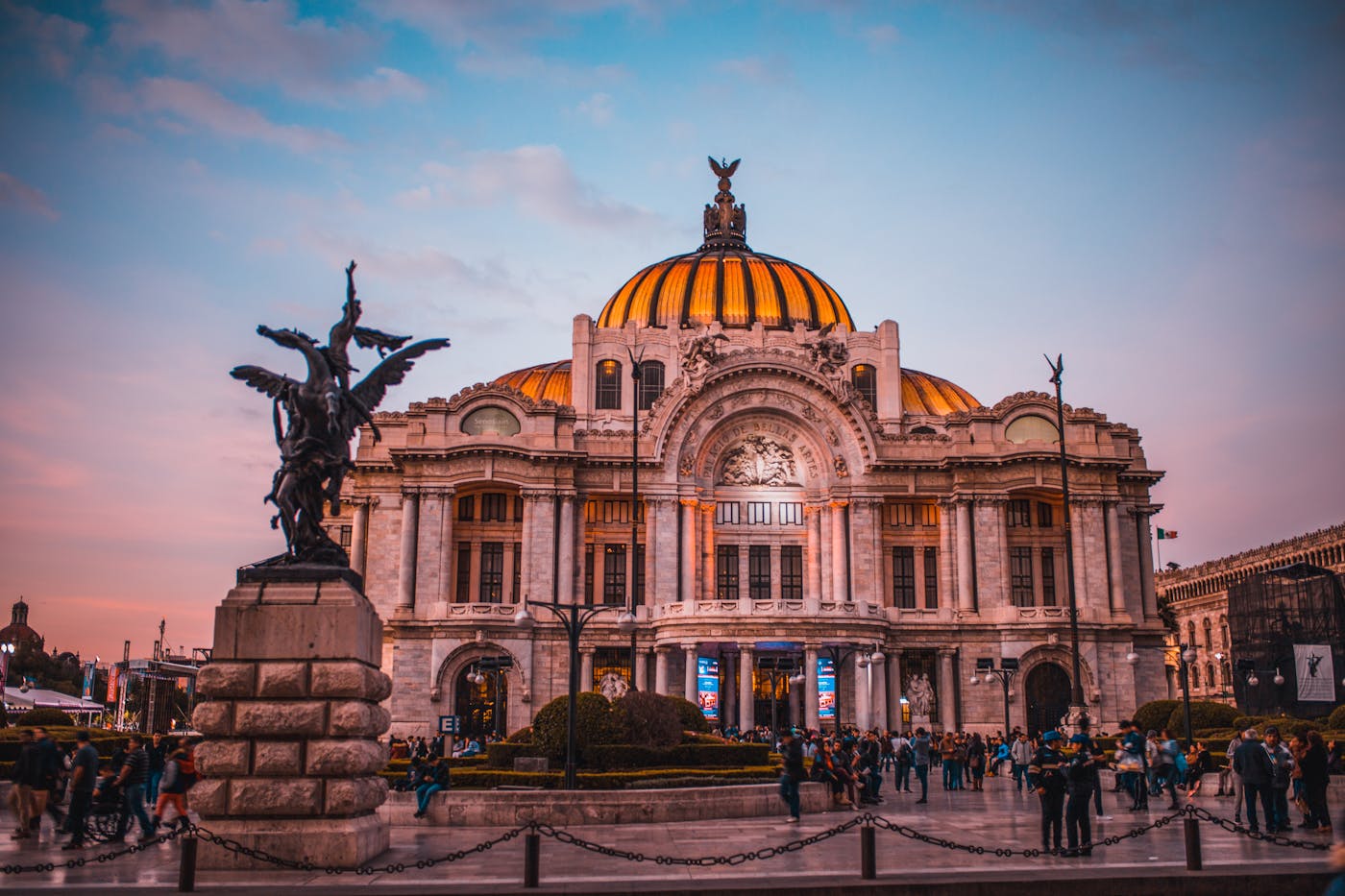
  <figcaption>Mexico gives you a lot of tiny social moments: crossing paths, entering rooms, asking for help, finding the right level of warm. Photo from <a href="https://www.pexels.com/photo/604661/" target="_blank" rel="noopener noreferrer">Pexels</a>.</figcaption>
</figure>

## The safe starter set

If you only keep five, keep these:

- **Buenas** for shops, elevators, cafés, and public spaces
- **Buenos días** for morning politeness
- **Qué tal** when you want casual but not too casual
- **Qué onda** with friends and relaxed peers
- **Mande** when someone calls you or you need them to repeat

That set will carry you through a lot of Mexico without sounding stiff or fake.

FAQ:
Q: How do Mexicans greet each other?
A: Mexicans greet each other with hola, buenos días, buenas tardes, buenas noches, buenas, qué onda, qué tal, cómo estás, and other phrases depending on age, closeness, and setting.

Q: What does qué onda mean in Mexico?
A: Qué onda means something like what's up, how's it going, or what's going on. In Mexico it is casual, friendly, and very common with friends and relaxed peers.

Q: Is buenas a greeting in Mexico?
A: Yes. Buenas is a shortened, friendly greeting used in shops, restaurants, waiting rooms, elevators, and public interactions. It works when you do not want to choose between buenos días and buenas tardes.

Q: What does mande mean in Mexican Spanish?
A: Mande is a polite way to respond when someone calls you, asks for your attention, or says something you did not catch. It can mean yes?, pardon?, or what was that?

Q: Can travelers say qué onda in Mexico?
A: Yes, but use it casually. Qué onda is great with friends, younger locals, language partners, and relaxed coworkers. With older people, shopkeepers, or formal contacts, start with buenos días or buenas.

Q: Is hola too plain in Mexico?
A: No. Hola is universal and safe. It just lands warmer when paired with buenos días, qué tal, or a smile, depending on the moment.

Q: What is the difference between cómo estás and qué tal?
A: Both ask how someone is. Cómo estás is the standard. Qué tal is slightly more casual and often used as a quick conversational opener instead of a real question.

Q: Do Mexicans kiss on the cheek when greeting?
A: Often yes, between women and between men and women in informal settings. Between men a handshake or a quick hug is more common. Follow the lead of the person greeting you.

Sources:
- Diccionario del español de México, qué onda: https://dem.colmex.mx/ver/onda
- Diccionario de la lengua española, mandar: https://dle.rae.es/mandar
- Diccionario de la lengua española, bueno: https://dle.rae.es/bueno
- Academia Mexicana de la Lengua: https://www.academia.org.mx/
- Fundéu BBVA, fórmulas de saludo: https://www.fundeu.es/

Related words: que-onda, mande
