---
title: "Is He Flirting, Being Friendly, or Just Very Mexican? A CDMX Spanish Decoder"
description: "Decode Mexican warmth, compliments, te invito, me caes bien, qué onda, and real follow-through without stereotyping."
type: "article"
category: "dating"
url: "https://consalsa.app/blog/mexican-guy-flirting-friendly"
canonical: "https://consalsa.app/blog/mexican-guy-flirting-friendly"
published: "2026-06-21"
updated: "2026-06-21"
author: "Andrey the Nomad"
site: "ConSalsa.App"
license: "https://consalsa.app/about"
---

# Is He Flirting, Being Friendly, or Just Very Mexican? A CDMX Spanish Decoder
URL: https://consalsa.app/blog/mexican-guy-flirting-friendly
Date: 2026-06-21
Updated: 2026-06-21
Category: dating
Keywords: is he flirting mexican spanish, mexican guy flirting friendly, me caes bien flirting, mexican dating signals, cdmx dating spanish
Summary: Decode Mexican warmth, compliments, te invito, me caes bien, qué onda, and real follow-through without stereotyping.

Quick answer:
- Mexican conversational warmth is the baseline, not a signal. Reading it as interest is the single most common foreign misread.
- The three-signal test is repetition, specificity and initiation - the same person, a concrete plan, and them starting it.
- One compliment is manners. A compliment plus a proposed day plus a follow-up they sent first is evidence.
- If the room can hold it, you can ask outright: ¿me estás tirando la onda o eres así de buena onda?

What you'll learn:
- Why Mexican conversational warmth is the baseline and not a signal.
- The three-signal test: repetition, specificity, and who starts it.
- How to grade his behaviour against the room instead of against home.
- A light way to ask outright that still leaves him an exit.

Don't sound gringo:
Mexican warmth is not automatically flirting. The flirt is usually in the repeated attention plus a concrete next move.

Body:

Warmth is not evidence. Repeated attention plus a concrete plan is evidence. A Mexican guy can be friendly, expressive, and attentive without flirting. He can also flirt through jokes, attention, and small invitations before saying anything direct. The skill is not stereotyping; it is pattern-reading.

The problem is calibration, not vocabulary. Mexican conversational warmth sits higher by default than most foreigners are used to, so the neutral setting already looks like interest. Read warmth itself as the signal and you will find flirting everywhere, including in a great many places where there is none.[^dem-onda][^spanishandgo-greetings]

## The three-signal test

Do not convict one phrase. Look for all three.

| Phrase | What it does | Best read |
|---|---|---|
| Repeated attention | He comes back to you | Possible signal |
| Specific plan | Names time/place | Stronger signal |
| Playful risk | Compliment/tease | Depends on context |
| Only warmth | Could be friendly | Do not overread |
| No follow-up | Probably not much | Believe action |

Any single row here can be produced by ordinary good manners. The test is not whether a signal shows up but whether it repeats, gets specific, and eventually arrives without you starting it. One out of three proves nothing at all.[^rae-cita]

Sort what you have into two piles: things that cost him nothing, and things that cost him something. Compliments, warmth and <mark lang="es-MX">qué onda</mark> are free. Proposing a day, remembering a detail from last week, sending the first message - those all cost something. Interest lives in the second pile.

<div class="do-dont">
  <div class="dd-col dd-do"><p class="dd-title">Evidencia</p><ul>
    <li>He starts the conversation, more than once</li>
    <li><b lang="es-MX">¿Te late el jueves?</b> — a day he offered</li>
    <li>He remembers something you mentioned in passing</li>
    <li>The plan survives being rescheduled</li>
  </ul></div>
  <div class="dd-col dd-dont"><p class="dd-title">Solo calidez</p><ul>
    <li><b lang="es-MX">Guapa</b> said generously and to everyone</li>
    <li><b lang="es-MX">Te invito un café</b> — often just generosity</li>
    <li>Long replies that never propose anything</li>
    <li>Warmth that has been at the same level for weeks</li>
  </ul></div>
</div>

## Friendly baseline vs flirt

<mark lang="es-MX">qué onda</mark>, smiles, and warm conversation may be normal social behavior. <mark lang="es-MX">¿cuándo nos vemos?</mark> with a real day is different. The phrase matters less than whether he moves from vibe to plan.

Foreigners tend to overcorrect in one of two directions: assuming every kind man is interested, or deciding nothing means anything and missing a real signal. Both come from grading on the wrong curve. The useful comparison is not against home - it is against how he treats everybody else in the room.[^rae-quedar]

<ul class="examples">
  <li class="example">
    <div class="es" lang="es-MX">¿Me estás tirando la onda o eres así de buena onda?</div>
    <div class="en" lang="en">Are you flirting with me or are you just this friendly?</div>
  </li>
  <li class="example">
    <div class="es" lang="es-MX">Jajaja no sé si estás coqueteando.</div>
    <div class="en" lang="en">Haha I do not know if you are flirting.</div>
  </li>
  <li class="example">
    <div class="es" lang="es-MX">Si te late, nos vemos esta semana.</div>
    <div class="en" lang="en">If you are into it, we see each other this week.</div>
  </li>
</ul>

<figure>
  <img src="/images/blog/cdmx-friends-coffee-park.jpg" alt="Friendliness can feel flirty if your US baseline is colder." loading="lazy" />
  <figcaption>Friendliness can feel flirty if your US baseline is colder.</figcaption>
</figure>

<div id="midpost-newsletter-slot"></div>

## Ask playfully if the room can hold it

If there is chemistry, <mark lang="es-MX">¿me estás tirando la onda o eres así de buena onda?</mark> can be funny. Use it only when the vibe is already playful, not with a coworker trapped by the coffee machine.

Asking outright is more available here than you would expect, as long as you keep it light. A question with a laugh in it hands him a graceful exit and hands you an answer, which is more than another week of interpretation will produce.[^timeout-first-date-bars]

## How to read it

| Situation | Use this | Why it works |
|---|---|---|
| Calls you guapo once | Maybe compliment | Wait |
| Asks when you are free | Stronger | Watch specifics |
| Always says "a ver" | Weak | Pattern |
| Makes public plan | Clearer | Proceed |

Said with the smile audible in your voice, the question stops being an accusation and becomes part of the flirting itself.

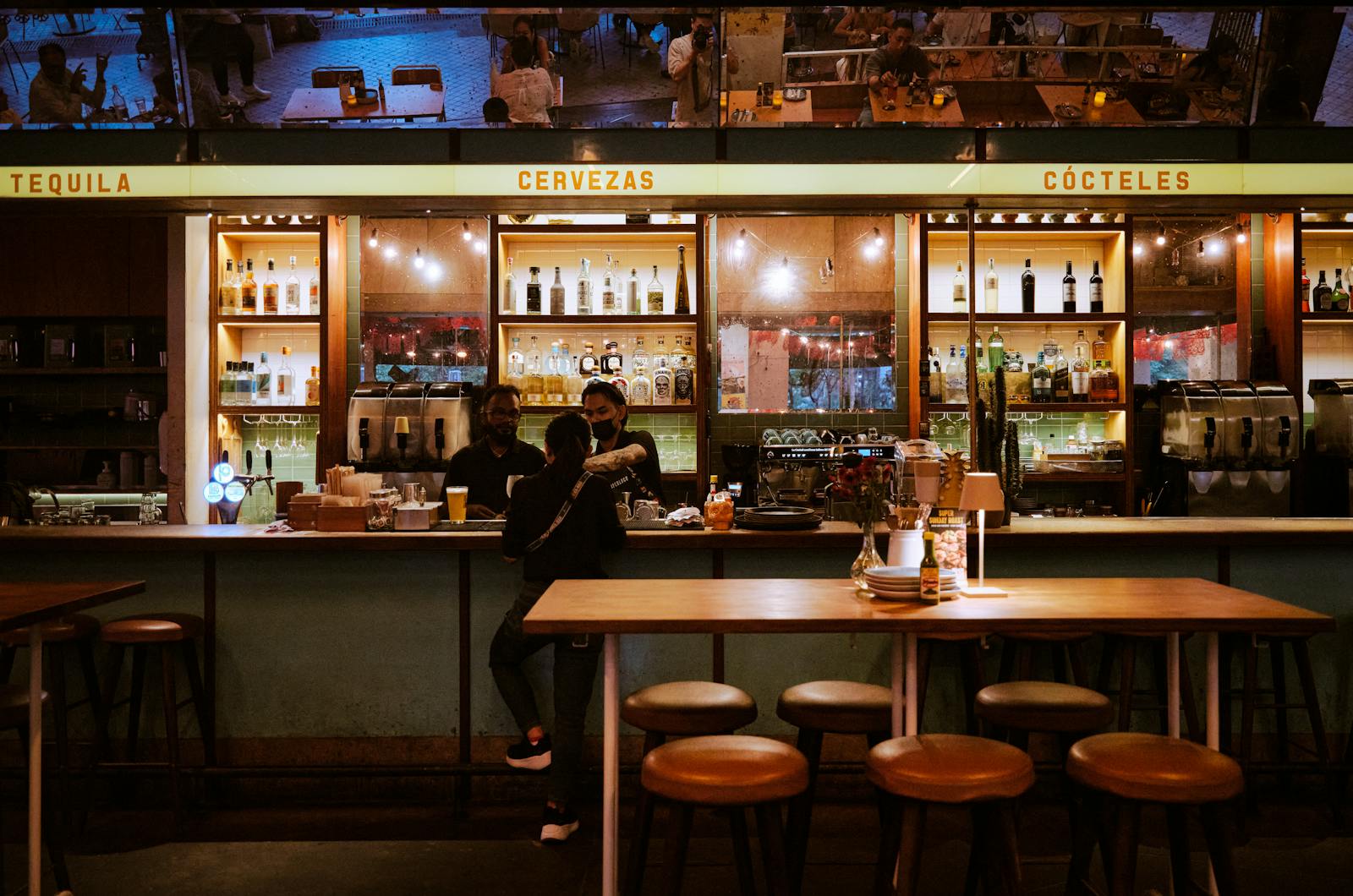
<figure>
  <img src="/images/blog/mexican-bar-nightlife-cozy.jpg" alt="Concrete plans change the reading." loading="lazy" />
  <figcaption>Concrete plans change the reading.</figcaption>
</figure>

## Ways to ask without making it heavy

Playful and short, with an exit built in so either answer is comfortable.

<ul class="examples">
  <li class="example">
    <div class="es" lang="es-MX">¿Me estás tirando la onda o eres así de buena onda?</div>
    <div class="en" lang="en">Are you flirting with me or are you just this friendly?</div>
  </li>
  <li class="example">
    <div class="es" lang="es-MX">Jajaja no sé si estás coqueteando.</div>
    <div class="en" lang="en">Haha I do not know if you are flirting.</div>
  </li>
  <li class="example">
    <div class="es" lang="es-MX">Si te late, nos vemos esta semana.</div>
    <div class="en" lang="en">If you are into it, we see each other this week.</div>
  </li>
  <li class="example">
    <div class="es" lang="es-MX">Me caes bien, pero voy tranqui.</div>
    <div class="en" lang="en">I like your vibe, but I am going slowly.</div>
  </li>
</ul>

## Warmth is the baseline, not the signal

Respect the baseline and watch the follow-through. That keeps the article useful instead of turning Mexican warmth into a caricature.

Warmth is the medium here, not the message. Stop treating it as evidence and the actual evidence gets much easier to see - it is nearly always a plan with a day attached to it.[^rae-guapo]

[^dem-onda]: [Diccionario del español de México, onda](https://dem.colmex.mx/ver/onda) - The Diccionario del español de México gives onda popular senses around attitude, vibe, greeting, and showing romantic or sexual interest.
[^spanishandgo-greetings]: [Spanish and Go, greetings and goodbyes in Spanish](https://spanishandgo.com/learn/greetings-and-goodbyes-in-spanish/) - Spanish and Go notes qué onda as a Mexican informal greeting, useful for separating friendliness from flirting.
[^rae-cita]: [Diccionario de la lengua española, cita](https://dle.rae.es/cita) - The RAE entry for cita covers an agreed time and place to meet, plus a meeting or encounter, which maps neatly to date logistics.
[^rae-quedar]: [Diccionario de la lengua española, quedar](https://dle.rae.es/quedar) - The RAE entry for quedar includes agreeing on something and arranging a meeting, the backbone of many dating texts.
[^timeout-first-date-bars]: [Time Out México, bares para una primera cita en CDMX](https://www.timeoutmexico.mx/ciudad-de-mexico/antros-bares/bares-para-una-primera-cita-cdmx) - Time Out México frames CDMX first dates as a real local genre with bars chosen for conversation, mood, and low-pressure movement.
[^rae-guapo]: [Diccionario de la lengua española, guapo](https://dle.rae.es/guapo) - The RAE entry for guapo covers good-looking and graceful, a safer compliment anchor than more charged slang.

FAQ:
Q: How do I tell flirting from friendliness in Mexico?
A: Look for three things together: attention that repeats, a plan with an actual day in it, and messages he starts. Any one of those on its own is just normal warmth.

Q: Is calling me guapa flirting?
A: Sometimes, but it is also used lightly and generously, including by people who mean nothing by it. On its own it is not evidence.

Q: What does tirar la onda mean?
A: To flirt, to make a move. Asking ¿me estás tirando la onda? is a playful way of raising the question directly, and Mexicans do ask it out loud.

Q: What does te invito mean here?
A: I am treating you, or I am inviting you. It is generous rather than romantic by default - people say te invito un café to colleagues without it meaning anything.

Q: Why is initiation such a strong signal?
A: Because politeness explains replies but not first messages. Someone who repeatedly starts the conversation is spending effort that courtesy does not require.

Q: Am I stereotyping if I assume Mexican men flirt more?
A: Yes, and it will lead you wrong in both directions. The useful frame is that the warmth baseline is higher, so you need better evidence, not different assumptions about people.

Q: How do I ask without making it awkward?
A: Ask playfully and give an exit. ¿Me estás tirando la onda o eres así de buena onda? lets either answer be fine, which is why it usually gets a real one.

Q: What if he is warm but never proposes anything?
A: That is your answer. Sustained warmth with no concrete plan across weeks is a friendship, and treating it as a slow start usually costs more time than it is worth.

Sources:
- Diccionario del español de México, onda: https://dem.colmex.mx/ver/onda
- Spanish and Go, greetings and goodbyes in Spanish: https://spanishandgo.com/learn/greetings-and-goodbyes-in-spanish/
- Diccionario de la lengua española, cita: https://dle.rae.es/cita
- Diccionario de la lengua española, quedar: https://dle.rae.es/quedar
- Time Out México, bares para una primera cita en CDMX: https://www.timeoutmexico.mx/ciudad-de-mexico/antros-bares/bares-para-una-primera-cita-cdmx
- Diccionario de la lengua española, guapo: https://dle.rae.es/guapo

Related words: que-onda, guey, sale, chido