---
title: "You Got “Cáele” in the Group Chat: Mexican House-Party Spanish"
description: "Decode Mexican house-party Spanish: pre, peda, caile, jalas, dónde andan, qué llevo, after, arrival texts, changing plans, and safer late-night logistics."
type: "article"
category: "going_out"
url: "https://consalsa.app/blog/mexican-house-party-spanish"
canonical: "https://consalsa.app/blog/mexican-house-party-spanish"
published: "2026-08-01"
updated: "2026-08-01"
author: "Andrey the Nomad"
site: "ConSalsa.App"
license: "https://consalsa.app/about"
---
# You Got “Cáele” in the Group Chat: Mexican House-Party Spanish
URL: https://consalsa.app/blog/mexican-house-party-spanish
Date: 2026-08-01
Updated: 2026-08-01
Category: going_out
Keywords: mexican party slang, house party spanish, caile meaning mexico, jalas meaning party, peda meaning mexican spanish, after meaning mexico
Summary: Decode Mexican house-party Spanish: pre, peda, caile, jalas, dónde andan, qué llevo, after, arrival texts, changing plans, and safer late-night logistics.
Quick answer:
- Party Spanish is mostly movement: where people are, whether the plan is happening, what to bring, and where the group goes next.
- Pre is the gathering before going out, peda is a drinking party or session, and after is the gathering after the main venue.
- Caile invites someone to come over, jalas asks whether they are in, and dónde andan asks where the group currently is.
- Confirm the address, host, transport, and whether you can bring someone; a casual invitation is not permission to multiply the guest list.
What you'll learn:
- The night’s vocabulary in order, from the first group-chat message to the final change of location.
- Arrival and access texts that work when the building has a gate, intercom, or host who cannot hear the phone.
- How to offer drinks or snacks, ask about a plus-one, and join without making the host solve your whole night.
- Safety and consent phrases for leaving, declining another location, arranging a ride, and keeping your own drink choice.
Don't sound gringo:
Caile does not mean bring four people and a Bluetooth speaker. Confirm who invited you, ask if a plus-one is okay, and bring something unless the host clearly says no hace falta.
Body:
At 8:14, the group chat says caile al pre. At 11:37, nobody has left. At 1:09, someone asks ¿dónde andan? even though they were apparently the person who suggested the next place.
Mexican party Spanish is less about describing fun and more about **moving a group through an unstable plan**. Learn the timeline and you can join, arrive, contribute, change locations, or leave without needing a committee meeting.
## The whole-night phrase map
| Stage | Word or phrase | What it means |
|---|---|---|
| Invitation | ¿Jalas? | Are you in? |
| Arrival | Cáele / caile | Come by |
| Before | El pre | Gathering before going out |
| Main event | La fiesta / la peda | Party / drinking session |
| Location check | ¿Dónde andan? | Where are you all? |
| Next move | ¿A dónde vamos? | Where are we going? |
| After | El after | Gathering after the main venue |
| Exit | Ya me voy / me lanzo | I’m heading out |
The DEM records a popular sense of caer meaning to arrive or appear somewhere, often informally or without much notice, and even gives a party invitation as an example.[^dem-caer] That is the engine inside caile: come through.
Fiesta is the broad standard word for celebration or gathering.[^rae-fiesta] Peda is more specifically alcohol-centered and much more casual. You can attend the first without promising the second.
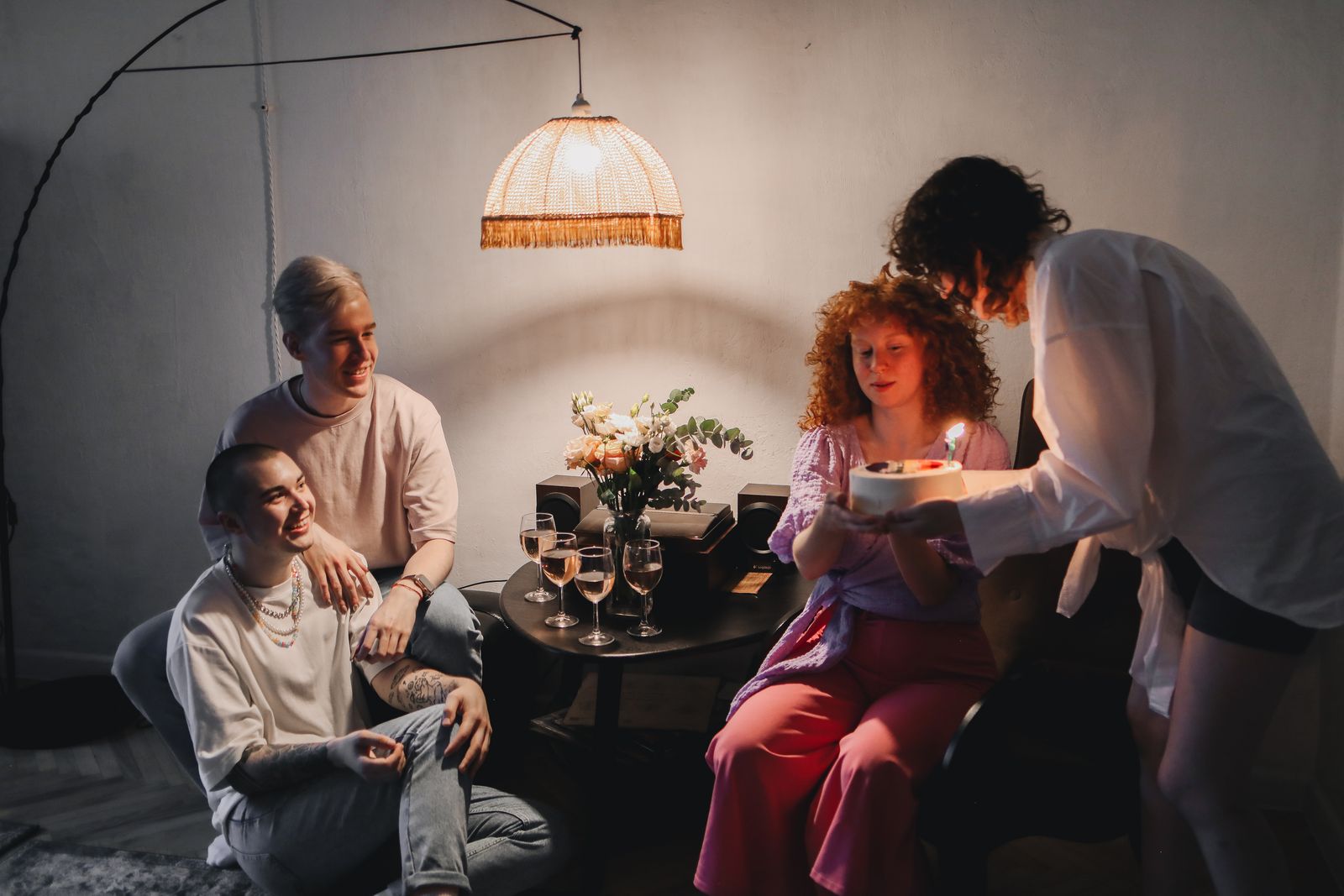
A house party may begin with a plan; music and group momentum usually take over from there. Photo by Pavel Danilyuk on Pexels.
## Confirm before you become logistics
When someone writes caile, confirm four boring details. They will save you from the least fun version of spontaneity:
- the exact address or live location,
- who is hosting,
- what time people are actually arriving,
- whether you should bring something.
Va, sí jalo. ¿Me mandas la ubicación?
Cool, I'm in. Can you send me the location?
¿Qué llevo? Puedo pasar por hielo o chelas.
What should I bring? I can pick up ice or beers.
The DEM defines chela as the popular Mexican word for beer.[^dem-chela] Offer it if that fits the group, but water, ice, snacks, or a nonalcoholic drink are equally useful contributions.
## Arrival texts should be painfully clear
Ya llegué is not enough when the building has three gates, no visible number, and a host whose phone is buried under the music.
| Situation | Better text |
|---|---|
| Outside the building | Ya estoy afuera del 214 |
| At the gate | Estoy en el portón negro |
| Intercom failed | Toqué el timbre, pero no se oye |
| You need access | ¿Me abres, porfa? |
| Wrong corner | Estoy junto a la farmacia |
Add what you see. Nobody wants to conduct a live geolocation puzzle while hosting.
Once you are inside, the useful work becomes easier: greet the host, place what you brought, and join the room. Photo by Polina Tankilevitch on Pexels.
## Ask before adding people
A casual invite is not a public event listing. If you want to bring someone, say ¿puedo caer con un amigo? or ¿hay problema si llevo a alguien?. Wait for a real yes.
Also do not share the address beyond the people invited. The host may have limited space, neighbors, building security, pets, or a very different idea of what “a few people” means.
This is register and relationship work: Instituto Cervantes treats social conventions, politeness, and context as part of sociolinguistic competence.[^cervantes-socio] Caile sounds loose; the home still has boundaries.
## Follow the plan without surrendering your night
At some point, somebody will announce vámonos, and half the room will continue talking for forty minutes. Do not put on your coat yet. Ask the next practical question.
¿A dónde vamos y cómo nos vamos?
Where are we going, and how are we getting there?
Yo pido coche. ¿Quién se viene conmigo?
I'll order a ride. Who's coming with me?
If the group moves on and you do not, tell the person you came with: yo aquí me quedo; avísenme cuando lleguen. You have closed the logistical loop without making the host manage two plans.
## Keep alcohol language descriptive
The DEM marks pedo as vulgar and includes senses related to drunkenness as well as conflict.[^dem-pedo] That is why anda pedo is stronger and rougher than tomó de más.
Use neutral language when something needs solving: no se siente bien, mejor pedimos coche, or le traigo agua. Mexico’s Secretaría de Salud notes that alcohol can slow reactions, impair coordination, affect perception, and cause confusion.[^salud-alcohol] If the situation has moved beyond logistics, use the dedicated [boundary and emergency phrases](/blog/drunk-loud-spanish-mexico) instead of more party slang.
Fun does not require everyone to make the same choices or continue to the same next stop. Photo by Pavel Danilyuk on Pexels.
## Give the night one clean message
Before your next house party, save this:
Sí jalo. ¿Me mandas ubicación? ¿Qué llevo?
I'm in. Can you send the location? What should I bring?
That line confirms, locates, and contributes. Send it before you start getting dressed, then let the group answer. Two messages cover most of the night: where and what to bring, and when you have left safely. For the full goodbye, keep the [party-exit phrases](/blog/leave-mexican-party) handy.
[^dem-caer]: [Diccionario del español de México, caer](https://dem.colmex.mx/ver/caer) — El Colegio de México.
[^rae-fiesta]: [Diccionario de la lengua española, fiesta](https://dle.rae.es/fiesta) — RAE and ASALE.
[^dem-chela]: [Diccionario del español de México, chela](https://dem.colmex.mx/ver/chela) — El Colegio de México.
[^cervantes-socio]: [MCER, competencia sociolingüística](https://cvc.cervantes.es/ensenanza/biblioteca_ele/marco_complementario/capitulo_05.htm) — Instituto Cervantes.
[^dem-pedo]: [Diccionario del español de México, pedo](https://dem.colmex.mx/ver/pedo) — El Colegio de México.
[^salud-alcohol]: [Conoce los efectos en tu organismo al consumir alcohol](https://www.gob.mx/salud/articulos/conoces-los-efectos-en-tu-organismo-al-consumir-alcohol) — Secretaría de Salud.
FAQ:
Q: What does caile mean in Mexican Spanish?
A: It is a casual invitation meaning come by or show up. It comes from caer, which can mean arriving somewhere informally.
Q: What does jalas mean for party plans?
A: ¿Jalas? means are you in or do you want to come? It is casual and common in relaxed group planning.
Q: What is a pre in Mexico?
A: It is the gathering before the main night out, often at someone’s home with drinks, music, and the usual debate about when to leave.
Q: What is an after?
A: It is the gathering after the bar, club, concert, or main party. Ask where it is, who is hosting, and how you will get home before going.
Q: How do I ask what to bring?
A: Say ¿qué llevo? or ¿hace falta algo? If the answer is nothing, a simple snack, ice, or nonalcoholic option can still be thoughtful.
Q: How do I ask to bring a friend?
A: Say ¿puedo caer con un amigo or una amiga? Wait for a clear yes before sharing the address.
Q: How do I say I am leaving?
A: Use ya me voy, ya me lanzo, or yo ya me retiro. Add gracias por invitarme and arrange your ride without asking the group to debate your exit.
Sources:
- Diccionario del español de México, caer: https://dem.colmex.mx/ver/caer
- Diccionario del español de México, chela: https://dem.colmex.mx/ver/chela
- Diccionario del español de México, pedo: https://dem.colmex.mx/ver/pedo
- Diccionario de la lengua española, fiesta: https://dle.rae.es/fiesta
- Instituto Cervantes, competencia sociolingüística: https://cvc.cervantes.es/ensenanza/biblioteca_ele/marco_complementario/capitulo_05.htm
- Secretaría de Salud, effects of alcohol: https://www.gob.mx/salud/articulos/conoces-los-efectos-en-tu-organismo-al-consumir-alcohol
Related words: peda, antro, chela, que-onda