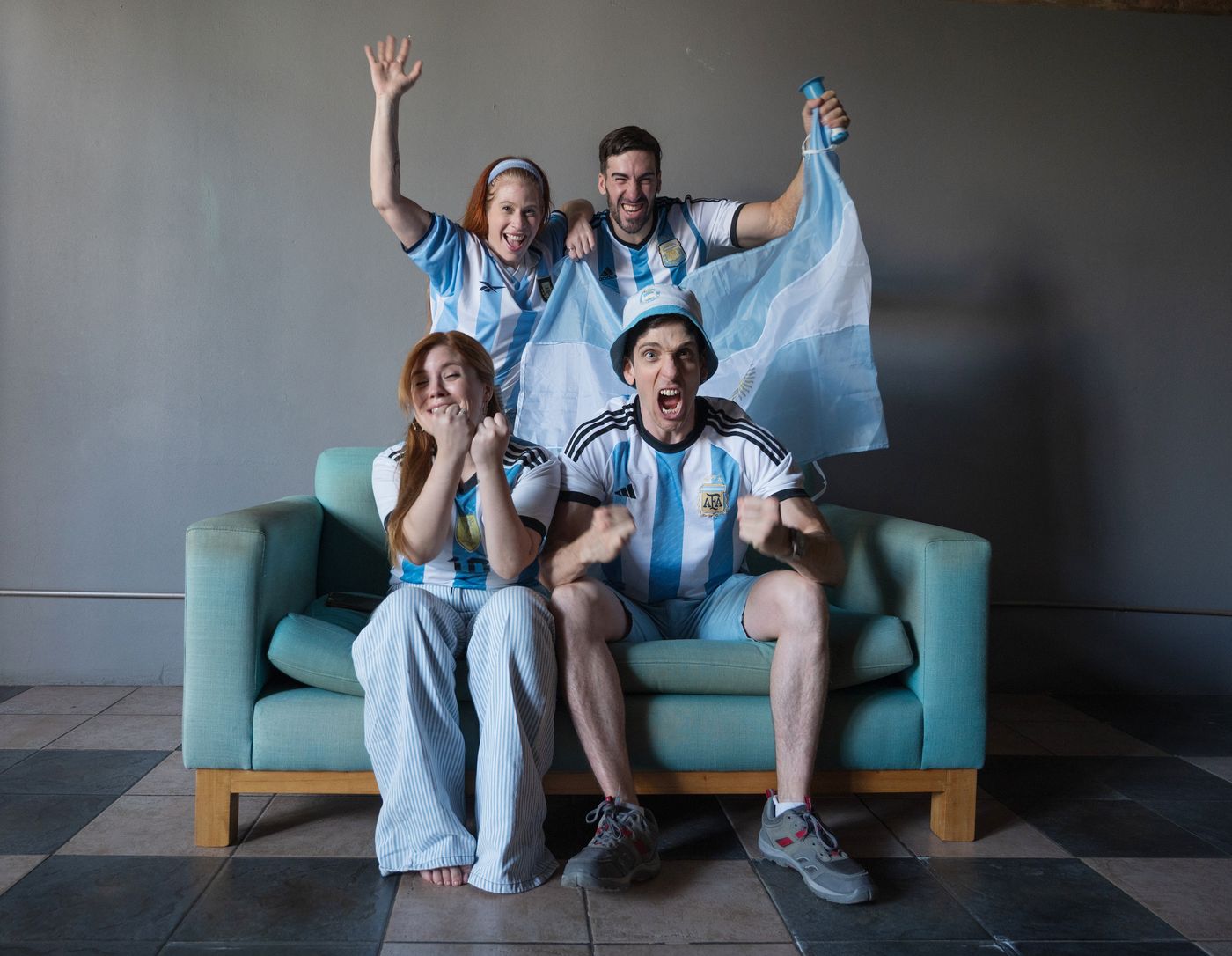
---
title: "Mexican Soccer Jokes That Actually Work in a Fan Group Chat"
description: "Mexican soccer jokes, playful carrilla, and safe fan Spanish for group chats, watch parties, and rivalry nights."
type: "article"
category: "slang"
url: "https://consalsa.app/blog/mexican-soccer-jokes"
canonical: "https://consalsa.app/blog/mexican-soccer-jokes"
published: "2026-07-25"
updated: "2026-07-25"
author: "Andrey the Nomad"
site: "ConSalsa.App"
license: "https://consalsa.app/about"
---

# Mexican Soccer Jokes That Actually Work in a Fan Group Chat
URL: https://consalsa.app/blog/mexican-soccer-jokes
Date: 2026-07-25
Updated: 2026-07-25
Category: slang
Keywords: mexican soccer jokes, mexican soccer trash talk, mexican football jokes spanish, liga mx jokes, soccer group chat spanish
Summary: Mexican soccer jokes, playful carrilla, and safe fan Spanish for group chats, watch parties, and rivalry nights.

Quick answer:
- Mexican soccer jokes usually work best as carrilla: teasing that assumes everyone still belongs in the group.
- Keep jokes about the play, the score, the referee, or your own suffering; avoid identity, class, and tragedy.
- No manches, ya valio, and ni modo are safe reactions when your Spanish is still warming up.
- If you are new, copy the tone before you escalate the joke.

What you'll learn:
- How to joke during a Mexico or Liga MX match without sounding cruel.
- The difference between playful carrilla and ugly trash talk.
- Copy-ready Spanish lines for misses, bad defending, and group chat chaos.
- What jokes to skip when you are not fully sure of the room.

Don't sound gringo:
Don't make your first soccer joke about nationality, poverty, appearance, or violence. Start with the ball, the ref, or your own broken heart.

Body:

The best Mexican soccer jokes are not random insults. They are [carrilla](/blog/carrilla-mexican-spanish): playful teasing where the point is to keep the group laughing, not to make one person disappear from the chat.[^dem-carrilla]

If you are learning Spanish, this is excellent news. You do not need the cruelest line. You need the line that sounds alive, quick, and socially aware. If you are still finding your footing with fan Spanish, [start with the team basics](/blog/el-tri-meaning).

## The fan joke safety map

| Joke target | Usually safe? | Example |
|---|---|---|
| Your own suffering | Yes | Ya me vi llorando otra vez |
| The missed shot | Yes | Era mas facil meterla que fallarla |
| The referee | Usually | Ese arbitro anda perdido |
| A rival team | Depends | Keep it playful |
| A player's body or family | No | Skip it |
| Race, class, immigration, tragedy | No | Never worth it |

<mark lang="es-MX">Broma</mark> can mean a joke or prank, but in soccer the room decides whether it feels funny or ugly.[^rae-broma] That is why <mark lang="es-MX">carrilla</mark> is a better mental model. It has bounce. It also has limits.

<figure>
  <img src="/images/blog/mexican-soccer-jokes-1.jpg" alt="Friends laughing together while watching a soccer game." loading="lazy" />
  <figcaption>The safest soccer joke makes the group louder, not smaller. Photo from Pexels.</figcaption>
</figure>

## Start with reactions, not punchlines

When your Spanish is new, reactions are your best friend. They are short, emotional, and hard to overthink. A good [no manches](/words/no-manches) after a terrible miss can do more than a paragraph of translated comedy.

<ul class="examples">
  <li class="example">
    <div class="es" lang="es-MX">No manches, era gol.</div>
    <div class="en" lang="en">Come on, that should have been a goal.</div>
  </li>
  <li class="example">
    <div class="es" lang="es-MX">Ya valio, nos van a empatar.</div>
    <div class="en" lang="en">We're cooked, they're going to tie it.</div>
  </li>
  <li class="example">
    <div class="es" lang="es-MX">Ni modo, asi sufre uno.</div>
    <div class="en" lang="en">Oh well, this is how we suffer.</div>
  </li>
</ul>

Notice how the joke points at the situation. You are not attacking a person. You are sharing the ridiculous emotional tax of watching <mark lang="es-MX">futbol</mark>.

## Useful lines for the group chat

| Moment | Text this | English feel |
|---|---|---|
| Bad miss | La mando a la Roma | He sent it into the sky |
| Nervous ending | Ya no tengo paz | I have no peace left |
| Defensive chaos | Estamos defendiendo con pensamientos | We are defending with vibes |
| Bad ref call | El arbitro trae otra novela | The ref has his own storyline |
| Lucky win | Ganamos con puro rezo | We won on prayers alone |

<mark lang="es-MX">Arbitro</mark> is the standard word for referee.[^rae-arbitro] Fans will say much stronger things, obviously. But if you are new, <mark lang="es-MX">ese arbitro no vio nada</mark> is enough to join the outrage without throwing a social grenade.

<div id="midpost-newsletter-slot"></div>

## How to tease a rival without making it nasty

Mexican fan culture can be sharp, especially around club rivalries. If you want the deeper rivalry vocabulary, see [Mexican fútbol trash talk](/blog/mexican-futbol-trash-talk). The smart move is to tease the scoreboard, not someone's dignity. Say <mark lang="es-MX">hoy si les toco sufrir</mark>. Say <mark lang="es-MX">ese portero nos hizo el favor</mark>. Say <mark lang="es-MX">gracias por participar</mark> if the trust is already there.

Do not make jokes about money, neighborhood, skin color, sexuality, immigration status, violence, or someone's family. CONAPRED exists because discrimination is real, not because everyone became too delicate for jokes.[^conapred] Soccer is emotional enough. You do not need to bring a match to a gas station.

<figure>
  <img src="/images/blog/mexican-soccer-jokes-2.jpg" alt="A group of soccer fans reacting to a match together." loading="lazy" />
  <figcaption>Read the room before you escalate the joke. Photo from Pexels.</figcaption>
</figure>

## Five jokes that are easy to adapt

These are intentionally light. Use them as templates, then let your own group chat teach you the local flavor.

<ul class="examples">
  <li class="example">
    <div class="es" lang="es-MX">Ese tiro iba para Puebla.</div>
    <div class="en" lang="en">That shot was headed to Puebla.</div>
  </li>
  <li class="example">
    <div class="es" lang="es-MX">Mi defensa tambien trabaja remoto.</div>
    <div class="en" lang="en">My defense also works remotely.</div>
  </li>
  <li class="example">
    <div class="es" lang="es-MX">El VAR esta viendo otra pelicula.</div>
    <div class="en" lang="en">VAR is watching a different movie.</div>
  </li>
  <li class="example">
    <div class="es" lang="es-MX">Metan gol antes de que me haga senor.</div>
    <div class="en" lang="en">Score before I become an old man.</div>
  </li>
  <li class="example">
    <div class="es" lang="es-MX">Ganamos, pero mi presion arterial no.</div>
    <div class="en" lang="en">We won, but my blood pressure did not.</div>
  </li>
</ul>

FIFA's own public campaigns lean on soccer as a shared social space, which is useful framing here: jokes should make the shared space better, not uglier.[^fifa-unites] That matters twice as much in Mexican fan spaces, where a joke can be a welcome mat or a little social shove.

## The human rule

If the joke would still be funny if your team were the target, it is probably safe. If the joke only works by humiliating someone, skip it. And if you are the new American in the chat, spend the first match reacting more than performing.

For heritage learners, this can feel extra weird: you may understand the emotional temperature before you have the exact words. That is okay. Start with <mark lang="es-MX">no manches</mark>, <mark lang="es-MX">ya valio</mark>, [ni modo](/words/ni-modo), and one self-roast about your own team. Those lines make you part of the room without asking everyone to pretend you know every local reference.
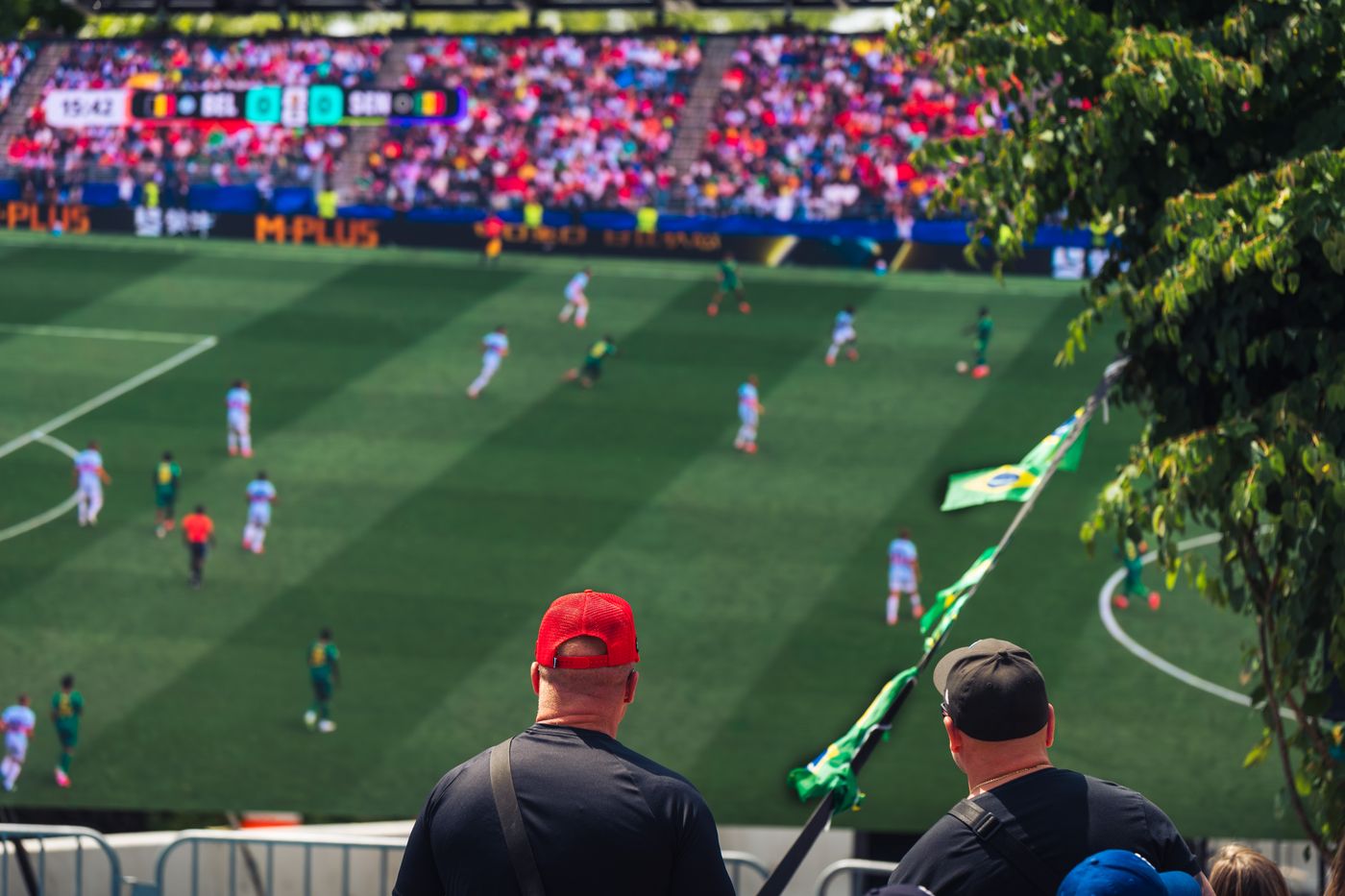
<figure>
  <img src="/images/blog/mexican-soccer-jokes-3.jpg" alt="Soccer fans smiling in a crowded viewing area." loading="lazy" />
  <figcaption>Good fan Spanish feels like joining the table, not auditioning for it. Photo from Pexels.</figcaption>
</figure>

The goal is not to become the funniest person in Spanish by halftime. It is to sound present, warm, and quick enough that someone replies with another joke. That is when you know the <mark lang="es-MX">carrilla</mark> landed.

[^dem-carrilla]: [Diccionario del español de México, carrilla](https://dem.colmex.mx/ver/carrilla) - El Colegio de México
[^rae-broma]: [Diccionario de la lengua española, broma](https://dle.rae.es/broma) - Real Academia Española
[^rae-arbitro]: [Diccionario de la lengua española, árbitro](https://dle.rae.es/%C3%A1rbitro) - Real Academia Española
[^fifa-unites]: [FIFA, Football Unites the World](https://inside.fifa.com/social-impact/campaigns/football-unites-the-world)
[^conapred]: [CONAPRED](https://www.conapred.org.mx/)

FAQ:
Q: What is a safe Mexican soccer joke?
A: A safe joke teases the play, the score, the referee, or your own team pain without targeting someone's identity or background.

Q: What does carrilla mean?
A: Carrilla is playful teasing or ribbing. It can be affectionate, but it depends on trust and tone.

Q: Can foreigners joke during Mexican soccer games?
A: Yes, but start light. React with simple phrases and mirror the group's level before you try sharp trash talk.

Q: Is no manches okay during a game?
A: Yes. No manches is a common reaction to a bad miss, a wild call, or something unbelievable.

Q: What should I avoid joking about?
A: Avoid tragedy, violence, immigration, class, race, sexuality, and someone's body. Keep the joke on the game.

Q: How do I say the ref is bad in Mexican Spanish?
A: You can say ese arbitro anda perdido or no vio nada. It is critical without going straight to insults.

Q: What if I don't understand the joke?
A: Ask ¿que significa? or ¿por que dicen eso? Fans usually enjoy explaining the bit.

Sources:
- Diccionario del español de México, carrilla: https://dem.colmex.mx/ver/carrilla
- Diccionario de la lengua española, broma: https://dle.rae.es/broma
- Diccionario de la lengua española, arbitro: https://dle.rae.es/%C3%A1rbitro
- FIFA, Football Unites the World: https://inside.fifa.com/social-impact/campaigns/football-unites-the-world
- CONAPRED, discriminacion: https://www.conapred.org.mx/

Related words: no-manches, guey, a-huevo