---
title: "Can an App Teach You Mexican Spanish? What Mexico Tests First"
description: "Spanish apps build vocabulary and habits. Learn the Mexican tone, timing, and social context they miss, and how to practice those skills in real life."
type: "article"
category: "guides"
url: "https://consalsa.app/blog/mexican-spanish-apps"
canonical: "https://consalsa.app/blog/mexican-spanish-apps"
published: "2026-07-13"
updated: "2026-07-13"
author: "Andrey the Nomad"
site: "ConSalsa.App"
license: "https://consalsa.app/about"
---
# Can an App Teach You Mexican Spanish? What Mexico Tests First
URL: https://consalsa.app/blog/mexican-spanish-apps
Date: 2026-07-13
Updated: 2026-07-13
Category: guides
Keywords: best app to learn mexican spanish, duolingo mexican spanish, learn real mexican spanish, spanish app limitations, mexican spanish practice, sound natural in mexico
Summary: Spanish apps build vocabulary and habits. Learn the Mexican tone, timing, and social context they miss, and how to practice those skills in real life.
Quick answer:
- Apps are useful for vocabulary, repetition, listening drills, and building a practice habit; those gains are real.
- Most apps cannot see your relationship, the room, or the consequence of a phrase, so they under-teach register and timing.
- Keep the app, then add Mexican conversations, observation, and small real-world missions to train social meaning.
- Judge progress by what you can notice and repair in a real exchange—not only by a streak, score, or completed unit.
What you'll learn:
- Which app-based skills transfer cleanly to daily life in Mexico and which need a second layer of practice.
- How one correct sentence can sound warm, stiff, intimate, or rude depending on the moment.
- A four-part practice loop that turns app vocabulary into usable Mexican Spanish without forced slang.
- Simple weekly missions for counters, chats, listening, and conversation that do not require a tutor.
Don't sound gringo:
Do not delete your app because it taught quiero before me da. Keep the vocabulary; add the situation. At a counter in Mexico, the social move matters as much as the verb.
Body:
Your app can teach you plenty and still leave you blank at a CDMX coffee counter. That freeze usually means the words have not been practiced inside a real exchange yet.
**Keep the app. Stop asking it to be the whole country.** Use it as the gym for vocabulary and patterns, then train the tone, timing, and repair moves that appear only when somebody is waiting for your answer.
## What the app teaches—and what the room adds
| The app can train | Mexico adds | Your bridge practice |
|---|---|---|
| Vocabulary recall | Regional meaning | Verify it in Mexican sources |
| Sentence patterns | Formality and closeness | Notice who says it to whom |
| Listening drills | Real speed and interruptions | Replay short Mexican clips |
| Speaking prompts | Reactions from another person | Practice repair phrases |
| Daily consistency | An actual reason to communicate | Complete one tiny mission |
Research on mobile-assisted vocabulary learning supports the basic bargain: apps can help people learn and retain words, especially with sustained use.[^cambridge-mobile] Duolingo’s own research page also collects studies reporting gains across reading, listening, speaking, and writing.[^duolingo-studies] You do not need to pretend a useful tool is useless just to sound sophisticated.
The missing layer is pragmatic. Instituto Cervantes defines pragmatic competence as using language with attention to the speakers and the communication context, not only the code itself.[^cervantes-pragmatic] That is the layer deciding whether quiero un café sounds perfectly clear, slightly blunt, or charmingly beginner-ish at this particular counter.
Keep the useful structure; add notes about the moments where a phrase actually lives. Photo by Marcus Aurelius on Pexels.
## A correct sentence can still miss the moment
Imagine you learned quiero for “I want.” Excellent verb. At a taco stand, though, me da tres de pastor, por favor often fits the tiny service ritual more naturally. The app supplied grammar; the counter supplied a line behind you, a person taking six orders at once, and a reason to be brief.
The same thing happens with greetings. Hola is never wrong, but buenas can slide more easily into a shop. Adiós is useful, while nos vemos or sale may fit a casual exit better. **You are not replacing standard Spanish with secret Mexican passwords. You are adding a second setting to each tool.**
Buenas. ¿Me da una botella de agua, por favor?
Hi. Could I get a bottle of water, please?
Perdón, no entendí. ¿Me lo repites?
Sorry, I didn't understand. Can you repeat that?
These short phrases are less impressive on a vocabulary list and much more valuable when a line is moving behind you.
## Learn four social joints
Most real conversations do not fail because you forgot the word for “squirrel.” They wobble at the joints: opening, reacting, repairing, and leaving.
| Job | Reliable starter | What it prevents |
|---|---|---|
| Open | Buenas / Oye, disculpa | A cold launch into your request |
| React | Ah, ya / Qué padre / Híjole | Silent processing face |
| Repair | ¿Cómo? / ¿Me lo repites? | Pretending you understood |
| Leave | Gracias, nos vemos | The abrupt escape |
Apps often score the sentence you produced. People experience the entire turn: whether you greeted them, left room for an answer, and showed what happened when you did not understand. Cervantes treats sociolinguistic competence—register, relationships, politeness, and social convention—as a distinct part of communication.[^cervantes-socio]
A tiny real-world listening note is worth more than collecting phrases you cannot place. Photo by George Milton on Pexels.
## Use the app-to-street loop
Try this four-step loop instead of waiting to feel “ready.”
1. Take one phrase pattern from the app.
2. Check how Mexican speakers use it in two unrelated examples.
3. Give it one low-stakes mission.
4. Write down the reply, not only your line.
Suppose the pattern is asking permission. You learn ¿puedo...?, then notice ¿me puedo sentar aquí? in cafés. Your mission is asking before taking a chair. It is intentionally boring; boring missions are the ones you will actually do. The most useful data is the answer: sí, claro, adelante, or a hand gesture toward another table.
This is where the mande, ahorita, and güey pages become more useful than a loose slang list. Each word needs a scene, a relationship, and a risk level.
## Build a week that trains different muscles
You do not need a heroic immersion plan. You need several small contacts with the language.
- Monday: ten minutes of app review.
- Tuesday: one Mexican video replayed three times.
- Wednesday: save three reactions, not three nouns.
- Thursday: complete one counter or street mission.
- Friday: send a short voice note to a language partner.
- Weekend: review the moments where you froze or guessed.
The Cervantes teaching framework explicitly raises the value of drawing learners’ attention to sociolinguistic contrasts as they appear.[^cervantes-learning] That can be as simple as writing, “My app answer was correct; the person said it another way.” Write down both versions. The useful question is which one fits this room.
¿Qué tal estuvo?
How was it?
Bien, estuvo padre. ¿Y a ti qué te pareció?
Good, it was great. What did you think?
The follow-up question is the part many exercises skip. It is also the part that turns practice into a conversation.
## Do not grade Mexican Spanish by one voice
Mexico contains regional, generational, class, family, and professional variation. A word common among your friends in Guadalajara may be less common with your coworkers in Mérida. The Diccionario del español de México is a strong reference for Mexican usage, but even a national dictionary is a floor, not a live camera inside every room.[^dem]
**Avoid the opposite trap too:** hearing one local phrase and declaring every standard alternative “robotic.” Cerveza remains useful even after you learn chela. Trabajo does not expire when chamba arrives. Range is the goal.
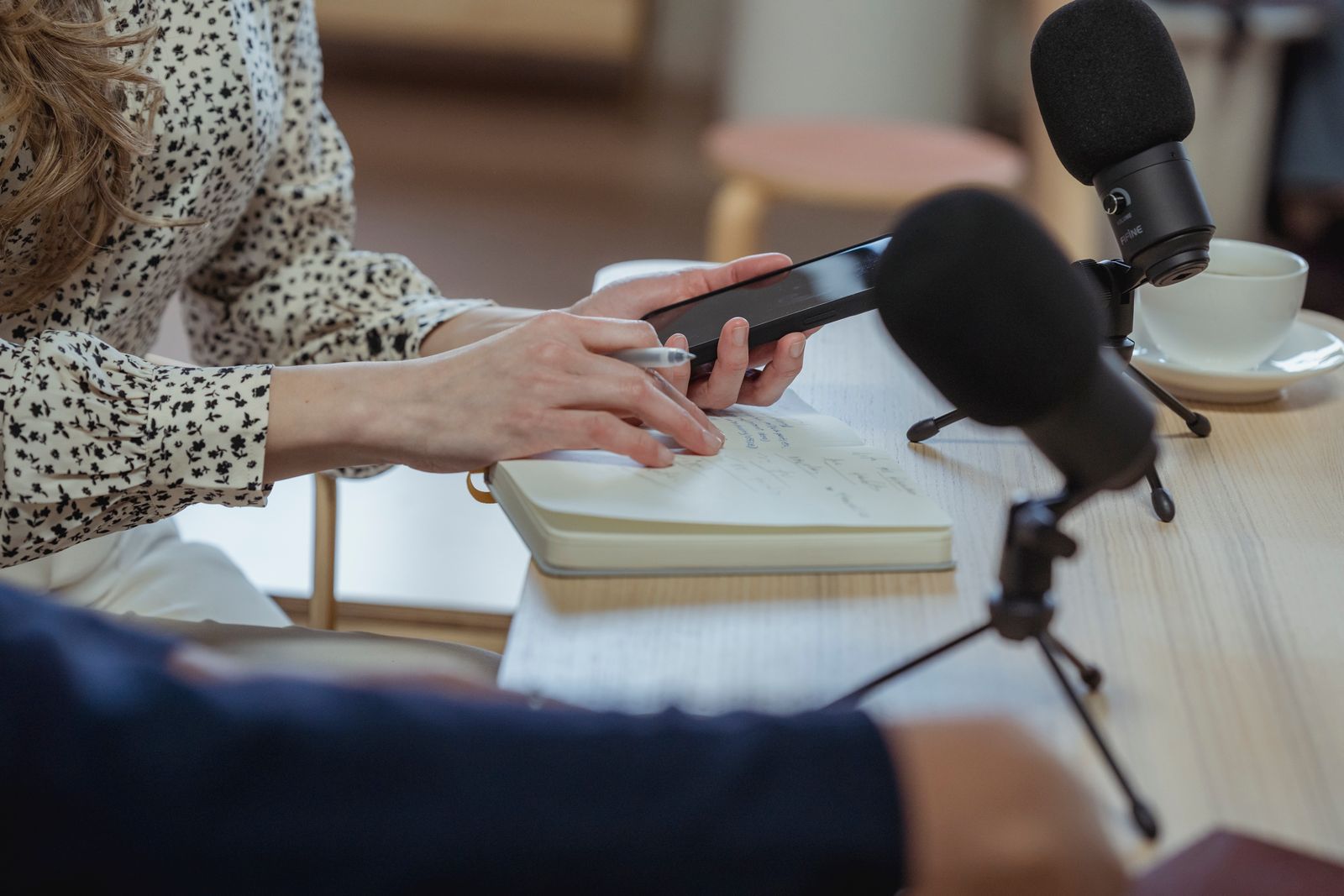
The phone can start the lesson; another person gives the phrase consequences. Photo by Liliana Drew on Pexels.
## Your next lesson is one human moment
Open your app tonight, but do not start a new unit yet. Take one phrase you already know and give it a job tomorrow: ask for a bag, confirm a meeting time, tell someone you did not understand, or leave a café warmly.
Then record what came back. **Fluency grows when your Spanish stops being a completed answer and becomes the next turn.** Your streak can stay. It just has to share the screen with real life.
[^cambridge-mobile]: [A meta-analysis on mobile-assisted vocabulary learning](https://www.cambridge.org/core/journals/recall/article/metaanalysis-on-mobileassisted-vocabulary-learning-do-mobile-applications-help/79C8F00E48D521ED3BCFE0625B5549F3) — Cambridge University Press, *ReCALL*.
[^duolingo-studies]: [Efficacy studies](https://en.duolingo.com/efficacy/studies) — Duolingo.
[^cervantes-pragmatic]: [Competencia pragmática](https://cvc.cervantes.es/ensenanza/biblioteca_ele/diccio_ele/diccionario/competenciapragmatica.htm) — Instituto Cervantes.
[^cervantes-socio]: [MCER, competencia sociolingüística](https://cvc.cervantes.es/ensenanza/biblioteca_ele/marco_complementario/capitulo_05.htm) — Instituto Cervantes.
[^cervantes-learning]: [El aprendizaje y la enseñanza de la lengua](https://cvc.cervantes.es/ensenanza/biblioteca_ele/marco/cap_06.htm) — Instituto Cervantes.
[^dem]: [Diccionario del español de México](https://dem.colmex.mx/) — El Colegio de México.
FAQ:
Q: Can an app teach me Mexican Spanish?
A: It can teach a strong base and may include Mexican voices or vocabulary. You will still need Mexican media and conversations to learn local register, timing, and social meaning.
Q: Is Duolingo Spanish Mexican or Spain Spanish?
A: Courses may expose learners to more than one regional variety. Treat any app as a foundation, then verify the words and tone you hear in the Mexican communities relevant to you.
Q: Should I stop using my Spanish app?
A: No, if it keeps you practicing. Use it for repetition and structure, then add real listening and small interactions so the language gains context.
Q: Why do app sentences sound strange in Mexico?
A: They may be grammatically correct but mismatched to a service encounter, friendship, age difference, or casual text. That is a register problem, not a failed grammar lesson.
Q: How do I learn Mexican slang safely?
A: Start with recognition, notice who uses a word with whom, and try lower-risk words first. Do not copy insults or intimate labels from one entertaining clip.
Q: What should I practice outside an app?
A: Practice openings, reactions, repair phrases, short requests, and exits. These are the joints of a real conversation and are easy to test in low-stakes moments.
Q: How do I know whether I am improving?
A: Look for faster comprehension, fewer frozen moments, better follow-up questions, and the ability to repair a misunderstanding. A streak is useful evidence of consistency, not fluency.
Sources:
- Cambridge ReCALL, meta-analysis on mobile-assisted vocabulary learning: https://www.cambridge.org/core/journals/recall/article/metaanalysis-on-mobileassisted-vocabulary-learning-do-mobile-applications-help/79C8F00E48D521ED3BCFE0625B5549F3
- Duolingo efficacy studies: https://en.duolingo.com/efficacy/studies
- Instituto Cervantes, competencia pragmática: https://cvc.cervantes.es/ensenanza/biblioteca_ele/diccio_ele/diccionario/competenciapragmatica.htm
- Instituto Cervantes, competencia sociolingüística: https://cvc.cervantes.es/ensenanza/biblioteca_ele/marco_complementario/capitulo_05.htm
- Instituto Cervantes, aprendizaje y enseñanza de la lengua: https://cvc.cervantes.es/ensenanza/biblioteca_ele/marco/cap_06.htm
- Diccionario del español de México: https://dem.colmex.mx/
Related words: sale, ahorita, mande, guey