---
title: "How to Learn Mexican Spanish from TikTok Comments, Safely"
description: "A practical method for learning Mexican Spanish tone from TikTok comments, without copying insults, irony, stereotypes, or phrases you cannot place."
type: "article"
category: "texting"
url: "https://consalsa.app/blog/mexican-spanish-tiktok-comments"
canonical: "https://consalsa.app/blog/mexican-spanish-tiktok-comments"
published: "2026-08-05"
updated: "2026-08-05"
author: "Andrey the Nomad"
site: "ConSalsa.App"
license: "https://consalsa.app/about"
---
# How to Learn Mexican Spanish from TikTok Comments, Safely
URL: https://consalsa.app/blog/mexican-spanish-tiktok-comments
Date: 2026-08-05
Updated: 2026-08-05
Category: texting
Keywords: learn mexican spanish tiktok, mexican tiktok comments slang, learn spanish from comments, mexican internet slang, jajaja meaning spanish, safe mexican slang
Summary: A practical method for learning Mexican Spanish tone from TikTok comments, without copying insults, irony, stereotypes, or phrases you cannot place.
Quick answer:
- TikTok comments teach reaction, irony, spelling, and group tone quickly, but they are a poor place to copy phrases without context.
- Save phrases that recur across unrelated Mexican creators, then verify meaning, target, register, and whether the phrase attacks someone.
- Prioritize reusable reactions and connectors; quarantine insults, identity labels, sexual comments, and jokes built on humiliation.
- Move a phrase from recognition to use only after you can explain who can say it, to whom, and what could make it land badly.
What you'll learn:
- A five-pass system for turning a chaotic comment section into a small, reliable Mexican Spanish notebook.
- How laughter spelling, emoji, punctuation, reply structure, and creator context change an apparent translation.
- Which low-risk comment phrases are worth practicing and which high-risk material should stay comprehension-only.
- How to verify language with dictionaries, Mexican sources, and repeated real examples before trying it yourself.
Don't sound gringo:
Never copy a savage comment because the replies laughed. You may be missing a friendship, meme, reclaimed label, or whole public feud. Learn the reaction first; leave the attack alone.
Body:
TikTok comments are a speedrun through Mexican Spanish: reactions, jokes, spelling, flirtation, disbelief, cruelty, affection, and six layers of irony under a 12-second video. They can train your eye fast. They can also hand you a phrase that only works between two cousins in Monterrey during a feud you did not know existed.
You can absolutely learn from comments. Just keep separate lists for phrases you recognize and phrases you understand well enough to use.
## The five-pass comment method
| Pass | Question | What you record |
|---|---|---|
| 1. Scene | What happened in the video? | Literal action and creator context |
| 2. Reaction | What job does the comment do? | Surprise, support, mockery, correction |
| 3. Tone | What changes the words? | Emoji, laughter, punctuation, replies |
| 4. Verification | Does it recur and check out? | Dictionary sense and other examples |
| 5. Risk | Who could be hurt or offended? | Target, relationship, identity, register |
This takes longer than copying the top comment into Notes. It also lowers the chance that you repeat a body insult because everyone under one video appeared to find it funny.
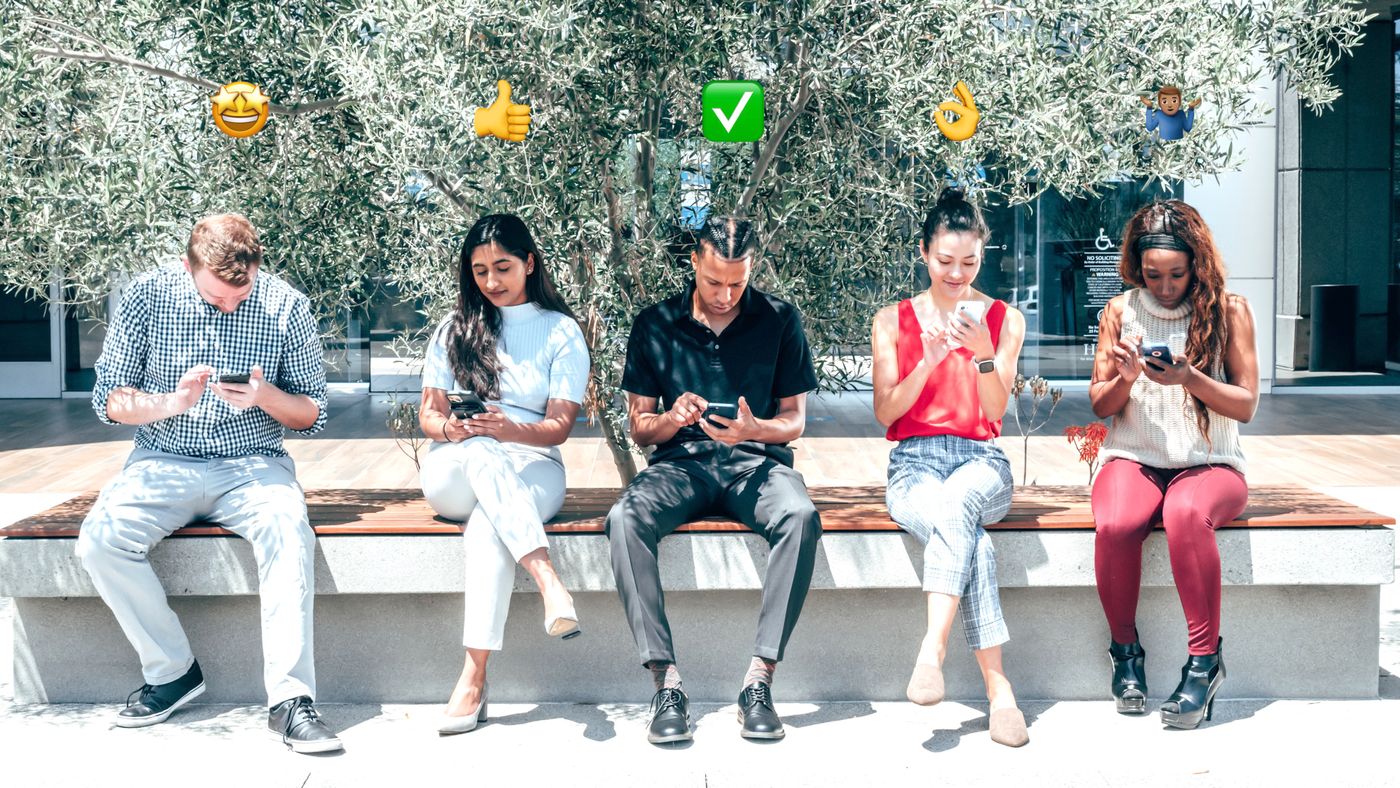
A comment section shows group behavior, not a clean lesson with one stable answer. Photo by Kindel Media on Pexels.
## First, read the video before the words
The same no manches can celebrate a perfect goal, reject an absurd claim, react to a price, or scold a friend. If you save only the comment, you cut away the evidence that made it intelligible.
For each phrase, write a five-word scene:
- Friend reveals a dramatic haircut.
- Creator misses an obvious exit.
- Cook shows a huge portion.
- Couple announces surprise engagement.
- Stranger mocks someone’s accent.
Now label the social job: delight, disbelief, teasing, praise, correction, or attack. **If you cannot name what the comment is doing, it stays recognition-only.**
## Read jajaja in context
RAE defines ja as an interjection that imitates laughter and can also express mockery or incredulity.[^rae-ja] That second part matters. jajaja does not automatically make a sentence friendly.
| Form | Possible feel | Do not assume |
|---|---|---|
| jajaja | Ordinary laughter, softening | Always kind |
| JAJAJA | Big reaction, performance | Anger just because caps |
| ja | Dry, restrained, skeptical | Genuine amusement |
| jeje | Awkward, mischievous, softer | One universal meaning |
| jijiji | Playful, conspiratorial | Safe flirting every time |
| 💀 / 😂 | “I'm dead,” big laughter | Literal meaning |
Replies are useful. Does the creator laugh, correct, ignore, or push back? Still, a laughing reply does not give you permission to use the phrase on a different person. A creator may also laugh along simply because thousands of people are watching.
Shared laughter can signal affection, awkwardness, or mockery; the relationship supplies the difference. Photo by fauxels on Pexels.
## Build three lists, not one
One giant vocabulary list encourages reckless promotion. Use three.
| List | Examples | Rule |
|---|---|---|
| Use now | ¿Neta?, qué padre, ya sé, no inventes | Low-risk, clear social job |
| Understand first | no manches, se pasó, qué oso | Need tone and relationship |
| Recognition only | Identity slurs, sexual comments, body attacks | Understand; do not deploy |
Your lists will change. No manches may move into “use” once you have heard it across enough real settings. An insult may never move, which is not a failure. **Comprehension vocabulary is still vocabulary.**
The Cervantes framework treats register, dialect, politeness, and markers of social relationships as part of sociolinguistic competence.[^cervantes-socio] A normal flashcard rarely tells you any of that, so add those notes yourself.
## Verify across unrelated Mexican voices
Do not trust one viral creator to represent Mexico, one age group, or even their own off-camera speech. Your US-based feed may also mix Mexican, Mexican American, and other Latin American voices without labeling the difference. Search the phrase across unrelated Mexican accounts: different cities, ages, topics, and relationships.
Then check a reference such as the Diccionario del español de México or RAE. A dictionary may not contain the newest meme, but it can tell you whether the underlying word is a vulgar insult, ordinary noun, regional form, or established reaction.
UNAM Chicago’s Español a la mexicana project deliberately uses specialist-supported social content to explain Mexican Spanish to learners and heritage speakers.[^unam-chicago] That is a useful contrast: social media can be both the data and the lesson, but a good lesson makes context visible.
## Never copy the target
A comment may get laughs because it attacks a creator’s body, class, race, gender expression, accent, disability, nationality, or sexuality. Before worrying about the perfect translation, notice who the phrase targets.
TikTok’s current Community Guidelines prohibit hate attacks on protected groups and serious harassment, including degrading remarks and coordinated abuse.[^tiktok-guidelines] Platform rules do not make every remaining comment harmless. Plenty of mean language lives below an enforcement threshold.
Use this quarantine test:
- Does the phrase name a body or identity?
- Is the joke funny only because someone is humiliated?
- Would you say it to the person’s face without a crowd?
- Are commenters invoking a relationship or backstory you lack?
- Would repeating it amplify harassment?
One “yes” is enough to keep the phrase out of your active Spanish.
Digital language travels into real streets; carry only the parts whose social weight you understand. Photo by Miguel Rodríguez on Pexels.
## A 15-minute routine you might actually repeat
Choose one Mexican creator whose topic you actually enjoy. Cooking, soccer, beauty, comedy, neighborhood history—it matters more that you will come back. Save five comments with the video context, not screenshots cropped into mystery. For each phrase:
1. Write the literal idea.
2. Label the reaction and target.
3. Note laughter, emoji, punctuation, and replies.
4. Find two unrelated Mexican examples.
5. Check a dictionary or learner source.
6. Place it on one of the three lists.
Gaceta UNAM has described both TikTok’s widespread use among young Mexicans and its risks as a space for public pile-ons and harm.[^gaceta-unam] Comments give you a large sample of everyday writing, but nobody promised that sample would be kind, representative, or easy to interpret.
## Protect your own comment space too
Learning does not require volunteering for abuse. TikTok provides controls for filtering unwanted comments and specific keywords, along with a review queue for filtered comments.[^tiktok-comments] Use them if you post practice videos or public content.
Do not repost identifiable comments into a “look how Mexicans talk” lesson without permission. Paraphrase, remove usernames, and avoid turning an individual into a language specimen. Publicly visible is not the same as yours to republish however you like.
## The graduation test
Before using a new phrase, finish this sentence:
> “This is something a ___ might say to a ___ when ___, and it could land badly if ___.”
If you can fill all four blanks, try it in a low-stakes exchange with someone you trust. If you cannot, enjoy recognizing it the next time it flies past. That little flash of comprehension is real progress. Sometimes the most fluent choice is understanding the joke and leaving it in the comments.
[^rae-ja]: [Diccionario del estudiante, ja](https://www.rae.es/diccionario-estudiante/ja) — Real Academia Española.
[^cervantes-socio]: [MCER, competencia sociolingüística](https://cvc.cervantes.es/ensenanza/biblioteca_ele/marco_complementario/capitulo_05.htm) — Instituto Cervantes.
[^unam-chicago]: [UNAM Chicago lleva el español mexicano al mundo digital](https://unamglobal.unam.mx/global_revista/unam-chicago-lleva-el-espanol-mexicano-al-mundo-digital/) — UNAM Global.
[^tiktok-guidelines]: [Community Guidelines](https://www.tiktok.com/community-guidelines) — TikTok.
[^gaceta-unam]: [Jóvenes mexicanos ante los claroscuros de TikTok](https://www.gaceta.unam.mx/jovenes-mexicanos-ante-los-claroscuros-de-tiktok/) — Gaceta UNAM.
[^tiktok-comments]: [Managing comments](https://support.tiktok.com/en/account-and-privacy/account-privacy-settings/manage-comments) — TikTok Help Center.
FAQ:
Q: Can TikTok help me learn Mexican Spanish?
A: Yes. It is especially useful for listening, reactions, current informal language, and seeing how tone works across video, caption, comment, and reply.
Q: Are TikTok comments reliable Spanish?
A: They are authentic language samples, not edited lessons. Expect typos, irony, regional mixing, memes, hostility, and context that may be invisible to you.
Q: What Mexican Spanish should I learn from comments first?
A: Start with low-risk reactions, agreement, surprise, laughter, and questions: no manches, ¿neta?, qué padre, ya sé, and variations of jajaja.
Q: Why do Spanish speakers write jajaja?
A: Spanish represents laughter with ja because j corresponds to the sound used in the laugh. Repetition, vowels, and spelling can change the tone.
Q: Should I copy Mexican insults from TikTok?
A: Keep them in recognition-only mode until you understand severity, target, relationship, region, and power. Many are far riskier offline than a viral thread makes them look.
Q: How do I verify a TikTok phrase?
A: Check the Diccionario del español de México or RAE, search examples from unrelated Mexican creators, and ask a trusted speaker about the specific scene.
Q: How can I keep TikTok learning safe?
A: Avoid engaging in harassment, protect personal information, do not repost identifiable comments without permission, and use comment filters when needed.
Sources:
- TikTok Community Guidelines: https://www.tiktok.com/community-guidelines
- TikTok Help Center, managing comments: https://support.tiktok.com/en/account-and-privacy/account-privacy-settings/manage-comments
- Gaceta UNAM, jóvenes mexicanos ante los claroscuros de TikTok: https://www.gaceta.unam.mx/jovenes-mexicanos-ante-los-claroscuros-de-tiktok/
- UNAM Chicago lleva el español mexicano al mundo digital: https://unamglobal.unam.mx/global_revista/unam-chicago-lleva-el-espanol-mexicano-al-mundo-digital/
- RAE Diccionario del estudiante, ja: https://www.rae.es/diccionario-estudiante/ja
- Instituto Cervantes, competencia sociolingüística: https://cvc.cervantes.es/ensenanza/biblioteca_ele/marco_complementario/capitulo_05.htm
Related words: no-manches, neta, chale, no-mames