---
title: "How to Survive Mexican Voice Notes When They Sound Like a 90-Second Sentence"
description: "Decode Mexican WhatsApp voice notes with ya, bueno, este, o sea, total, pues, and the signals that reveal the real ask."
type: "article"
category: "texting"
url: "https://consalsa.app/blog/mexican-voice-notes"
canonical: "https://consalsa.app/blog/mexican-voice-notes"
published: "2026-06-16"
updated: "2026-06-16"
author: "Andrey the Nomad"
site: "ConSalsa.App"
license: "https://consalsa.app/about"
---

# How to Survive Mexican Voice Notes When They Sound Like a 90-Second Sentence
URL: https://consalsa.app/blog/mexican-voice-notes
Date: 2026-06-16
Updated: 2026-06-16
Category: texting
Keywords: mexican voice notes spanish, whatsapp voice notes spanish, mexican spanish listening, o sea pues bueno, understand mexican spanish
Summary: Decode Mexican WhatsApp voice notes with ya, bueno, este, o sea, total, pues, and the signals that reveal the real ask.

Quick answer:
- A long voice note is not one sentence. It is several, joined by filler words that act as punctuation.
- Listen for the road signs - o sea restates, total concludes, ya marks a change, and the ask usually arrives after them.
- You do not need every word. You need the time, the place and the request.
- The repair phrase is specific: name what you did catch, then ask only for the part you missed.

What you'll learn:
- Why a ninety-second voice note is several sentences, not one.
- The filler words that work as punctuation: o sea, total, ya.
- A three-pass method that beats one careful listen.
- The repair phrase that gets one word back instead of a repeat.

Don't sound gringo:
In voice notes, bueno and o sea are often road signs, not vocabulary tests. Wait for the turn: total, entonces, la cosa es que.

Body:

The voice note is not one long sentence. It only feels that way because you are chasing every word. Mexican WhatsApp audio is full of <mark lang="es-MX">bueno</mark>, <mark lang="es-MX">este</mark>, <mark lang="es-MX">o sea</mark>, <mark lang="es-MX">total</mark>, and <mark lang="es-MX">pues</mark>. Those words are not clutter; they are turn signals.

A ninety-second voice note is not one enormous sentence, though it certainly sounds like one. It is six or seven ordinary sentences with the pauses taken out and filler words doing the job punctuation does in writing. Once you can hear the joins, the wall turns into a list.[^rae-ver][^rae-quedar]

## Listen for road signs

Your first job is not perfect comprehension. Your first job is finding the ask.

| Phrase | What it does | Best read |
|---|---|---|
| Bueno | Opening/reset | The point may come after |
| Este | Thinking pause | Do not translate it hard |
| O sea | Clarification | They may rephrase |
| Total | Conclusion/pivot | Important part coming |
| Entonces | Decision/result | Listen closely |

Those filler words are the road signs. <mark lang="es-MX">O sea</mark> means a restatement is coming, so a sentence you missed is about to arrive again. <mark lang="es-MX">Total</mark> signals a conclusion. <mark lang="es-MX">Ya</mark> marks a change of subject. The actual request usually turns up just after one of them.[^rae-cita]

You do not need every word, and chasing every word is what makes people give up halfway. You need three things: the time, the place and the ask. The rest of a voice note is context, affection or storytelling, and none of it changes what you have to do next.

<ol class="ladder">
  <li><div class="rung-card">
    <span class="rung-label">primera</span>
    <span class="rung-es" lang="es-MX">Escucha la forma</span>
    <span class="rung-en" lang="en">Listen for the shape</span>
    <span class="rung-note">Do not chase words. Find where este, o sea and pues are sitting — those are the full stops.</span>
  </div></li>
  <li><div class="rung-card">
    <span class="rung-label">segunda</span>
    <span class="rung-es" lang="es-MX">Busca el pedido</span>
    <span class="rung-en" lang="en">Find the ask</span>
    <span class="rung-note">It usually arrives after total or entonces, near the end.</span>
  </div></li>
  <li><div class="rung-card">
    <span class="rung-label">tercera</span>
    <span class="rung-es" lang="es-MX">Baja la velocidad</span>
    <span class="rung-en" lang="en">Slow it down</span>
    <span class="rung-note">Only now, and only for the detail you actually missed.</span>
  </div></li>
</ol>

## Reply to the ask

If the audio includes a story about traffic, a cousin, rain, a restaurant, and then "entonces, ¿nos vemos a las ocho?", your reply is about eight o clock. Do not apologize for missing every detail. Ask only for the missing piece: place, time, or task.

Answer the request, not the whole recording. A short text replying to the actual question is a perfectly normal response to a long voice note, and it goes down far better than a long voice note back that never reaches the point.[^doorway-ahorita]

<ul class="examples">
  <li class="example">
    <div class="es" lang="es-MX">Perdón, entendí lo de las ocho, pero no caché el lugar.</div>
    <div class="en" lang="en">Sorry, I understood the eight o’clock part, but I missed the place.</div>
  </li>
  <li class="example">
    <div class="es" lang="es-MX">¿Entonces el plan es hoy o mañana?</div>
    <div class="en" lang="en">So is the plan today or tomorrow?</div>
  </li>
  <li class="example">
    <div class="es" lang="es-MX">¿Me mandas la dirección por texto?</div>
    <div class="en" lang="en">Can you send me the address by text?</div>
  </li>
</ul>

<figure>
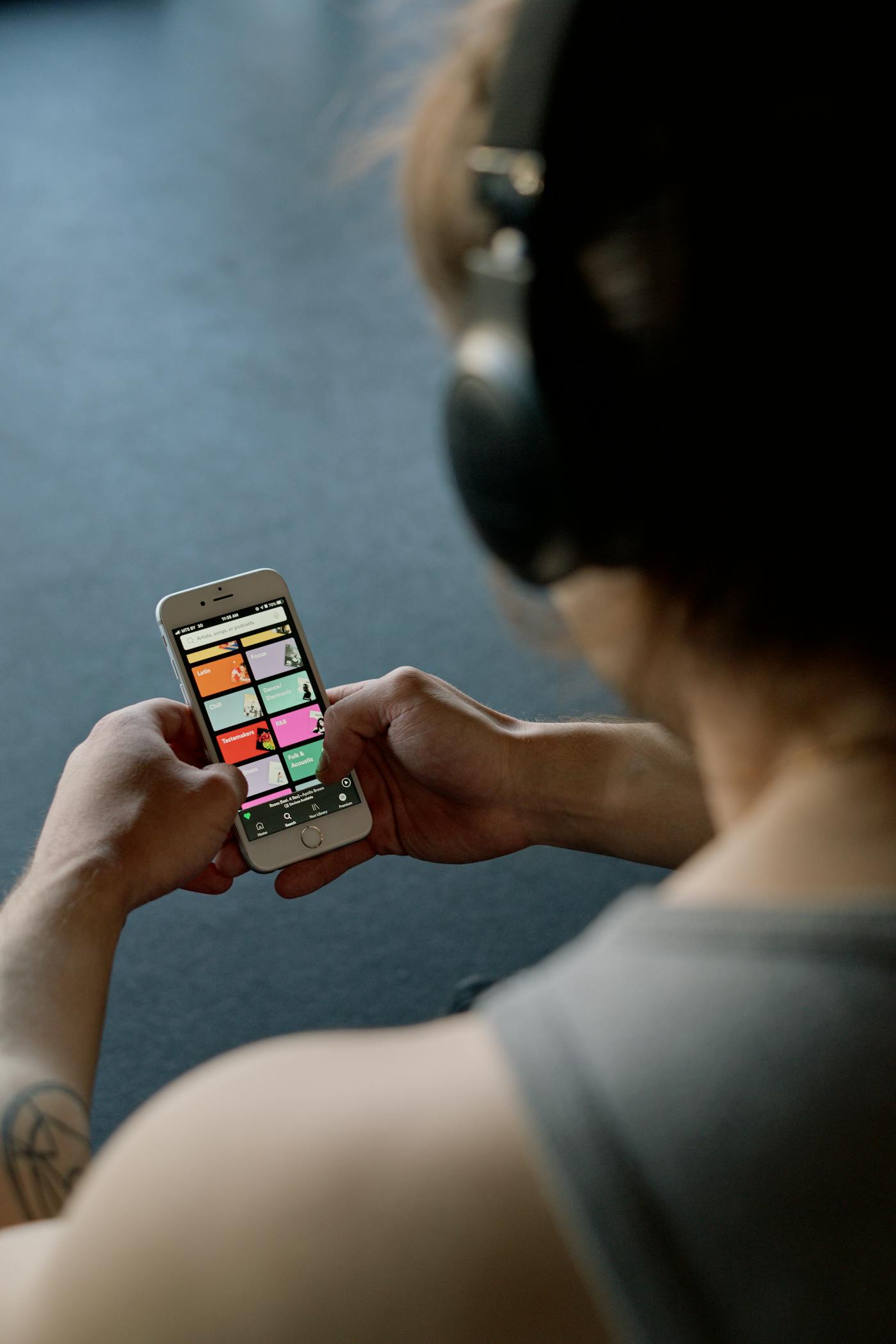
  <img src="/images/blog/headphones-smartphone-media.jpg" alt="Replay for the ask, not for every single word." loading="lazy" />
  <figcaption>Replay for the ask, not for every single word.</figcaption>
</figure>

<div id="midpost-newsletter-slot"></div>

## The three-pass method

First listen for mood. Second listen for logistics. Third listen only if you need a detail. If you still miss it, ask with precision: <mark lang="es-MX">perdón, entendí lo de las ocho, pero no caché el lugar</mark>. That sounds much better than <mark lang="es-MX">no entendí nada</mark>.

Three passes beat one careful listen. First time through, catch the mood and whether there is an ask at all. Second time, collect the numbers - hours, days, street names. Third time, only the piece you still do not have. Most people attempt all three at once and end up with none of them.[^spanishandgo-greetings]

## Useful repair phrases

| Situation | Use this | Why it works |
|---|---|---|
| No caché el lugar | You missed the place | Specific and natural |
| ¿Entonces sí se arma hoy? | You need confirmation | Gets the decision |
| ¿Me lo mandas por texto? | You need precision | Good for addresses |
| Solo entendí la mitad | Use carefully | Honest but broad |

Name the fragment you missed and the answer comes back as text, which is what you wanted in the first place.

<figure>
  <img src="/images/blog/cdmx-busy-street-vehicles.jpg" alt="CDMX background noise is part of the listening challenge." loading="lazy" />
  <figcaption>CDMX background noise is part of the listening challenge.</figcaption>
</figure>

## Repair phrases that get a short answer

Name what you did catch first. That is what gets you one sentence back instead of the whole note.

<ul class="examples">
  <li class="example">
    <div class="es" lang="es-MX">Perdón, entendí lo de las ocho, pero no caché el lugar.</div>
    <div class="en" lang="en">Sorry, I understood the eight o’clock part, but I missed the place.</div>
  </li>
  <li class="example">
    <div class="es" lang="es-MX">¿Entonces el plan es hoy o mañana?</div>
    <div class="en" lang="en">So is the plan today or tomorrow?</div>
  </li>
  <li class="example">
    <div class="es" lang="es-MX">¿Me mandas la dirección por texto?</div>
    <div class="en" lang="en">Can you send me the address by text?</div>
  </li>
  <li class="example">
    <div class="es" lang="es-MX">Va, entonces te veo allá y me avisas cuando llegues.</div>
    <div class="en" lang="en">Cool, then I will see you there and you tell me when you arrive.</div>
  </li>
</ul>

## Ask for the part you missed

Voice notes get easier when you stop treating fillers like enemies. They are the stitching. The ask is the button.

The repair phrase has to be specific to work. <mark lang="es-MX">No entendí</mark> invites the whole thing again at the same speed. <mark lang="es-MX">Entendí lo de las ocho, pero no caché el lugar</mark> gets you one word back.[^cdmxsecreta-roma-cafes]
[^rae-ver]: [Diccionario de la lengua española, ver](https://dle.rae.es/ver) - The RAE entry for ver helps explain why vemos can mean more than literally seeing; it can point to checking or considering.
[^rae-quedar]: [Diccionario de la lengua española, quedar](https://dle.rae.es/quedar) - The RAE entry for quedar includes agreeing on something and arranging a meeting, the backbone of many dating texts.
[^rae-cita]: [Diccionario de la lengua española, cita](https://dle.rae.es/cita) - The RAE entry for cita covers an agreed time and place to meet, plus a meeting or encounter, which maps neatly to date logistics.
[^doorway-ahorita]: [Doorway to Mexico, ahorita meaning and examples](https://doorwaytomexico.com/paulina/ahorita-meaning-examples/) - Doorway to Mexico treats ahorita as a flexible Mexican timing word, a key idea for reading vague plans without panicking.
[^spanishandgo-greetings]: [Spanish and Go, greetings and goodbyes in Spanish](https://spanishandgo.com/learn/greetings-and-goodbyes-in-spanish/) - Spanish and Go notes qué onda as a Mexican informal greeting, useful for separating friendliness from flirting.
[^cdmxsecreta-roma-cafes]: [CDMX Secreta, cafeterías en la Roma](https://cdmxsecreta.com/cafeterias-en-la-roma-cdmx/) - CDMX Secreta’s Roma cafe guide grounds the language in a familiar expat-and-local setting where low-pressure chats happen.

FAQ:
Q: Why do Mexican voice notes sound like one long sentence?
A: Because the pauses are filled rather than silent. Este, o sea, pues and bueno sit where a full stop would be in writing, so the audio never gives your ear a gap to rest in.

Q: What does o sea signal in a voice note?
A: That they are about to restate what they just said, usually more clearly. If you missed the first version, the second one is coming - so keep listening rather than rewinding.

Q: What does total mean mid-message?
A: It marks the conclusion. Total is close to so anyway, and what follows it is very often the actual point of the whole message.

Q: How do I ask someone to repeat only part of it?
A: Name what you got first. Perdón, entendí lo de las ocho, pero no caché el lugar. That gets you one sentence back instead of the whole note again.

Q: Is it rude to reply to a voice note with text?
A: No, and it is extremely common. Mixed threads are normal in Mexico - people send audio and receive text without anyone finding it odd.

Q: What does caché mean?
A: I caught it, in the sense of understanding. No caché is the most natural way to say a specific bit did not land, and it is softer than no entendí.

Q: Should I ask them to send text instead?
A: You can, and ¿me lo escribes porfa? is fine occasionally. But asking every time reads as a standing complaint, and voice notes are genuinely faster for the sender.

Q: What is the fastest way to improve at these?
A: Play it once for the shape, once for the ask, once at reduced speed for the detail. Chasing every word on the first pass is what makes them feel impossible.

Sources:
- Diccionario de la lengua española, ver: https://dle.rae.es/ver
- Diccionario de la lengua española, quedar: https://dle.rae.es/quedar
- Diccionario de la lengua española, cita: https://dle.rae.es/cita
- Doorway to Mexico, ahorita meaning and examples: https://doorwaytomexico.com/paulina/ahorita-meaning-examples/
- Spanish and Go, greetings and goodbyes in Spanish: https://spanishandgo.com/learn/greetings-and-goodbyes-in-spanish/
- CDMX Secreta, cafeterías en la Roma: https://cdmxsecreta.com/cafeterias-en-la-roma-cdmx/

Related words: ahorita, sale, hijole, ni-modo