---
title: "Six Spanish Words US Learners Overuse in Mexico, and Tiny Swaps That Help"
description: "Hola, adiós, quiero, muy bien, amigo, and muchas gracias are correct. Learn when different Mexican Spanish choices sound warmer and less rehearsed."
type: "article"
category: "guides"
url: "https://consalsa.app/blog/overused-spanish-words-mexico"
canonical: "https://consalsa.app/blog/overused-spanish-words-mexico"
published: "2026-07-31"
updated: "2026-07-31"
author: "Andrey the Nomad"
site: "ConSalsa.App"
license: "https://consalsa.app/about"
---

# Six Spanish Words US Learners Overuse in Mexico, and Tiny Swaps That Help
URL: https://consalsa.app/blog/overused-spanish-words-mexico
Date: 2026-07-31
Updated: 2026-07-31
Category: guides
Keywords: natural mexican spanish, spanish words learners overuse, what to say instead of quiero, mexican spanish greetings, sound natural in mexico, mexican spanish for beginners
Summary: Hola, adiós, quiero, muy bien, amigo, and muchas gracias are correct. Learn when different Mexican Spanish choices sound warmer and less rehearsed.

Quick answer:
- Hola, adiós, quiero, muy bien, amigo, and muchas gracias are correct; the issue is using them for every social job.
- Buenas, qué onda, nos vemos, me da, todo bien, a person’s name, and a simple gracias often fit specific Mexican moments better.
- Natural Spanish comes from matching relationship, setting, and purpose—not replacing every standard word with slang.
- Keep the original words; add two or three alternatives so your Spanish can change temperature when the room does.

What you'll learn:
- Why six beginner defaults can feel repetitive, overly formal, too direct, or oddly intimate in certain Mexican settings.
- Which small substitutions work at counters, with neighbors, among friends, and at the end of a casual exchange.
- How to vary a phrase without pretending standard Spanish is wrong or all Mexicans speak one way.
- A one-week practice plan that improves social range without turning every sentence into slang soup.

Don't sound gringo:
Do not replace textbook Spanish with maximum slang. Replace one all-purpose default with one context-specific move: buenas at the door, me da at the counter, nos vemos when leaving.

Body:

<mark lang="es-MX">Hola</mark>, <mark lang="es-MX">adiós</mark>, <mark lang="es-MX">quiero</mark>, <mark lang="es-MX">muy bien</mark>, <mark lang="es-MX">amigo</mark>, and <mark lang="es-MX">muchas gracias</mark> are all correct Spanish. Please do not drag them to the recycling bin because a blog promised “six words natives never say.”

The real problem is range. If one correct phrase does every job—from ordering lunch to greeting your neighbor—your Spanish can sound more rehearsed than you are. A few tiny Mexican alternatives let the language change when the relationship and setting change.

## Keep the word, add a second setting

| Learner default | Keep it for | Add this option |
|---|---|---|
| Hola | Universal greeting | Buenas / qué onda |
| Adiós | Clear goodbye | Nos vemos / que estés bien |
| Quiero | Real wants and direct choices | Me da / me regala / te encargo |
| Muy bien | Strong positive answer | Bien / todo bien / bastante bien |
| Amigo | Actual friend or warm address | A name / joven / no label |
| Muchas gracias | Genuine warm thanks | Gracias / mil gracias / te lo agradezco |

RAE’s entry for <mark lang="es-MX">hola</mark> confirms its greeting function; it is not secretly un-Mexican.[^rae-hola] Keep using it. Just add enough range that a bakery counter, a new client, and an old friend do not all get the same opening.

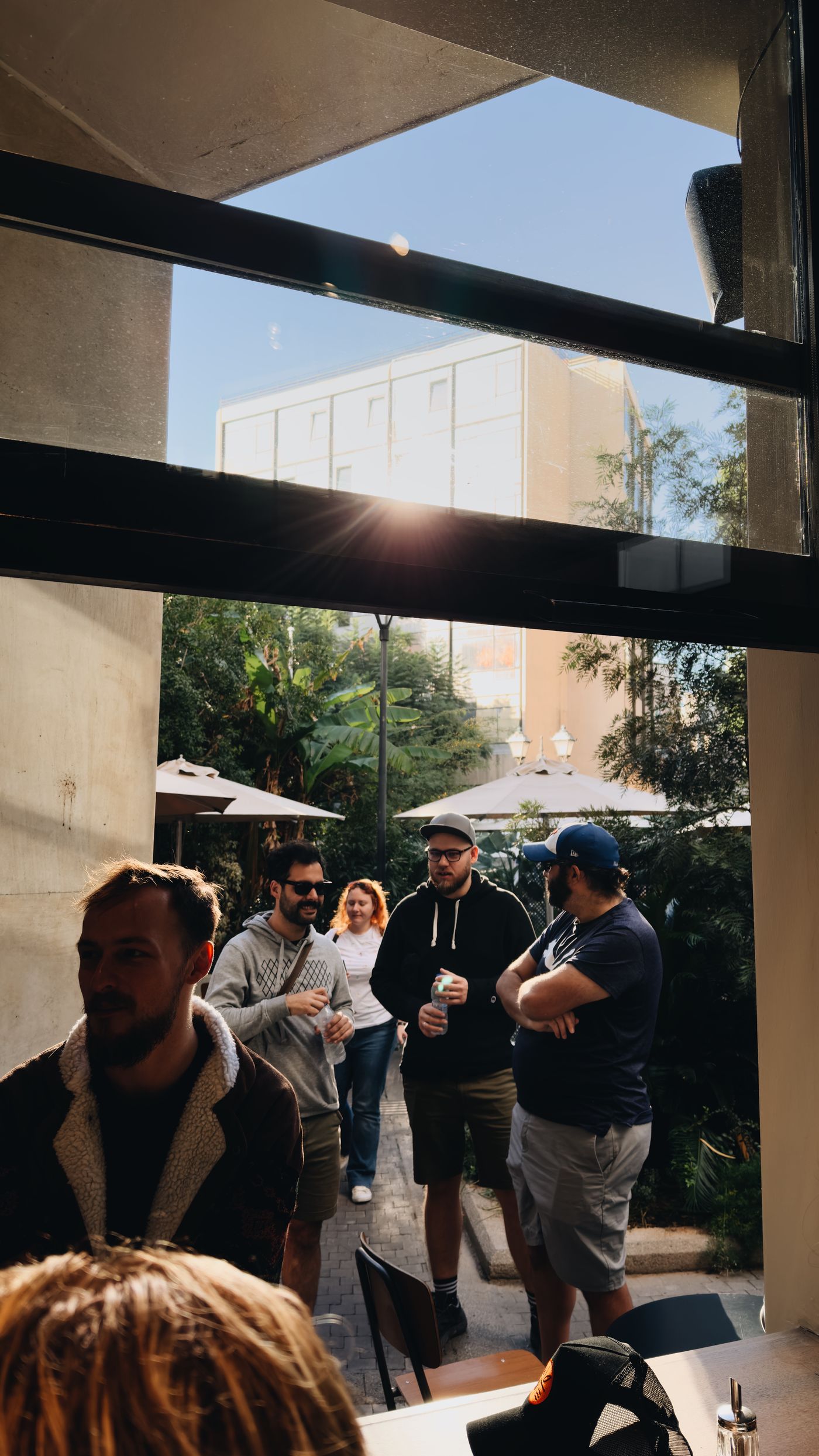
<figure>
  <img src="/images/blog/pexels-overused-outdoor-cafe.jpg" alt="A group of adults talking at an outdoor cafe." loading="lazy" />
  <figcaption>The same Spanish changes as you move from the host at the door to friends around the table. Photo by <a href="https://www.pexels.com/photo/people-talking-on-street-14383835/" target="_blank" rel="noopener noreferrer">Matheus Bertelli on Pexels</a>.</figcaption>
</figure>

## Hola is fine; buenas gives you an easy second gear

<mark lang="es-MX">Hola</mark> works with everyone. Learners overuse it mostly because every new interaction begins there and textbooks like a dependable front door.

In small shops, elevators, reception areas, and neighborhood encounters, <mark lang="es-MX">buenas</mark> is a wonderfully efficient greeting. It does not force you to remember whether your nervous brain believes 12:03 is still morning.

<ul class="examples">
  <li class="example">
    <div class="es" lang="es-MX">Buenas, ¿todavía tienen pan?</div>
    <div class="en" lang="en">Hi, do you still have bread?</div>
  </li>
  <li class="example">
    <div class="es" lang="es-MX">Qué onda, Dani. ¿Todo bien?</div>
    <div class="en" lang="en">Hey, Dani. Everything good?</div>
  </li>
  <li class="example">
    <div class="es" lang="es-MX">Hola, mucho gusto.</div>
    <div class="en" lang="en">Hello, nice to meet you.</div>
  </li>
</ul>

Use <mark lang="es-MX">qué onda</mark> where casual warmth already fits. Do not fire it at a judge because it appeared in the same section as <mark lang="es-MX">buenas</mark>.

## Adiós can feel heavier than the moment

<mark lang="es-MX">Adiós</mark> is perfectly normal, but English-speaking learners sometimes give it a final, full-stop delivery in interactions where Mexican speakers might choose a lighter future-facing exit.

| Situation | Easy exit |
|---|---|
| Leaving friends | Nos vemos |
| Leaving a shop | Gracias, hasta luego |
| Ending a chat | Sale, hablamos |
| Leaving a neighbor | Que estés bien |
| Uncertain next meeting | A ver cuándo nos vemos |

<mark lang="es-MX">Nos vemos</mark> literally points toward seeing each other again. In a quick everyday exchange, that often sounds lighter than a carefully pronounced <mark lang="es-MX">adiós</mark>.

<figure>
  <img src="/images/blog/pexels-overused-friends-phone.jpg" alt="A group of friends having a casual conversation outdoors while one holds a phone." loading="lazy" />
  <figcaption>A name and a simple nos vemos usually sound more personal than a handful of borrowed nicknames. Photo by <a href="https://www.pexels.com/photo/casual-conversation-among-friends-outdoors-34810215/" target="_blank" rel="noopener noreferrer">Sadiq Ali on Pexels</a>.</figcaption>
</figure>

## Quiero is a real want, not every counter request

RAE defines <mark lang="es-MX">querer</mark> around desire, intention, and will.[^rae-querer] That is why <mark lang="es-MX">quiero dos tacos</mark> is understandable but can feel more like announcing desire than making a smooth service request.

At counters in Mexico, you will often hear <mark lang="es-MX">me da...</mark>, <mark lang="es-MX">me regala...</mark>, or <mark lang="es-MX">te encargo...</mark> The DEM documents <mark lang="es-MX">encargar</mark> for asking someone to make, bring, or provide something, including food.[^dem-encargar]

<ul class="examples">
  <li class="example">
    <div class="es" lang="es-MX">Me da dos de pastor, por favor.</div>
    <div class="en" lang="en">I'll have two al pastor, please.</div>
  </li>
  <li class="example">
    <div class="es" lang="es-MX">¿Me regala un agua sin hielo?</div>
    <div class="en" lang="en">Could I get a water without ice?</div>
  </li>
  <li class="example">
    <div class="es" lang="es-MX">Te encargo la cuenta, porfa.</div>
    <div class="en" lang="en">Could you bring me the check, please?</div>
  </li>
</ul>

<mark lang="es-MX">Me regala</mark> does not ask for a free gift. The DEM’s broad entry for <mark lang="es-MX">regalar</mark> includes giving and treating generously; conventional requests extend beyond a literal transaction.[^dem-regalar] Learn the whole scene, not the word-by-word math.

<div id="midpost-newsletter-slot"></div>

## Muy bien is not the only positive temperature

When every class begins <mark lang="es-MX">¿cómo estás?</mark> and every learner answers <mark lang="es-MX">muy bien</mark>, the phrase starts to feel like pressing “continue.”

Real days have more settings.

| How you actually feel | Possible reply |
|---|---|
| Fine | Bien, gracias |
| Calm and okay | Todo bien |
| Better than expected | Bastante bien |
| Managing | Aquí andamos |
| Comfortable here | Muy a gusto |
| Excellent | Súper bien / excelente |

Try the replies that match how you actually feel. There is no need to rotate through the list for variety alone.

## Amigo can create closeness nobody ordered

English uses “my friend” as a softener, a sales voice, an argument warning, and sometimes a substitute when you do not know someone's name. Directly importing that habit can make <mark lang="es-MX">amigo</mark> sound overly familiar or transactional.

Often you need no label:

<ul class="examples">
  <li class="example">
    <div class="es" lang="es-MX">Disculpa, ¿esta fila es para pagar?</div>
    <div class="en" lang="en">Excuse me, is this the line to pay?</div>
  </li>
  <li class="example">
    <div class="es" lang="es-MX">Oye, Carlos, ¿tienes un minuto?</div>
    <div class="en" lang="en">Hey, Carlos, do you have a minute?</div>
  </li>
  <li class="example">
    <div class="es" lang="es-MX">Joven, ¿me cobra, por favor?</div>
    <div class="en" lang="en">Excuse me, could you ring me up?</div>
  </li>
</ul>

The person’s name may be the most underappreciated “natural Spanish” tip on the internet. It sounds personal because it is. If you do not know it, <mark lang="es-MX">disculpa</mark> is a complete and perfectly warm opening.
<figure>
  <img src="/images/blog/pexels-overused-cdmx-street.jpg" alt="Pedestrians and street vendors in the historic center of Mexico City." loading="lazy" />
  <figcaption>Mexico City contains many registers at once; no single slang upgrade fits every person on the street. Photo by <a href="https://www.pexels.com/photo/streetlife-scene-in-historic-ciudad-de-mexico-34877030/" target="_blank" rel="noopener noreferrer">Rafael Landeros on Pexels</a>.</figcaption>
</figure>

## Muchas gracias is lovely; let the help set the size

There is nothing stiff about a heartfelt <mark lang="es-MX">muchas gracias</mark>. The overuse problem is automation. If someone holds an elevator and someone else spends twenty minutes fixing your phone, the same gratitude script misses useful range.

| Help | Reply |
|---|---|
| Tiny courtesy | Gracias |
| Warm small help | Muchas gracias |
| Someone saved you time | Mil gracias |
| Personal effort | Te lo agradezco mucho |
| You want to reciprocate | Gracias, te debo una |

The DEM’s vocabulary project studies the words that make up a large share of Mexican usage, a reminder that ordinary high-frequency vocabulary does enormous work.[^dem-vocabulary] You do not need to abandon common words. You need a few alternatives for the situations where your default feels too formal, too intimate, or simply repetitive.

## Try one swap a day

Pick one situation per day. On Monday, greet every shop with <mark lang="es-MX">buenas</mark>. On Tuesday, order with <mark lang="es-MX">me da</mark>. On Wednesday, leave with <mark lang="es-MX">nos vemos</mark>. Then listen for what people answer; that reply is part of the lesson.

The Cervantes framework describes sociolinguistic skill as knowing social markers, politeness, register, dialect, and accent.[^cervantes-socio] That is a better goal than “sound native.” Build enough range to sound like yourself in more than one room.

Six correct words got you here, so keep them. By the end of the week, add one alternative for each and pay attention to the replies you get.

[^rae-hola]: [Diccionario de la lengua española, hola](https://dle.rae.es/hola) — Real Academia Española.
[^rae-querer]: [Diccionario de la lengua española, querer](https://dle.rae.es/querer) — Real Academia Española.
[^dem-regalar]: [Diccionario del español de México, regalar](https://dem.colmex.mx/ver/regalar) — El Colegio de México.
[^dem-encargar]: [Diccionario del español de México, encargar](https://dem.colmex.mx/ver/encargar) — El Colegio de México.
[^dem-vocabulary]: [Vocabulario fundamental del español](https://dem.colmex.mx/Vocabulario/Fundamental) — El Colegio de México.
[^cervantes-socio]: [MCER, competencia sociolingüística](https://cvc.cervantes.es/ensenanza/biblioteca_ele/marco_complementario/capitulo_05.htm) — Instituto Cervantes.

FAQ:
Q: Is hola wrong in Mexico?
A: No. Hola is universal and useful. Learners simply over-rely on it when buenas, buenos días, qué onda, or a name may better match the moment.

Q: Should I stop saying adiós?
A: No. Adiós is correct, but nos vemos, que estés bien, sale, and hasta luego often sound lighter in ordinary leave-taking.

Q: Is quiero rude when ordering in Mexico?
A: Not inherently, but repeated quiero can sound blunt or childlike at a counter. Me da, me regala, or te encargo often fit service interactions naturally.

Q: Why can amigo sound strange?
A: Calling every stranger amigo can manufacture closeness or sound salesy. Often a greeting, the person's name, joven, or no label is more natural.

Q: Is muchas gracias too formal?
A: No. It is warm and normal. The issue is automatic repetition; gracias, mil gracias, or te lo agradezco may fit different levels of help.

Q: What can I say instead of muy bien?
A: Depending on the question, try bien, todo bien, bastante bien, aquí andamos, perfecto, or muy a gusto.

Q: How do I sound natural without forcing slang?
A: Build small sets by situation, copy phrases you hear repeatedly from trusted speakers, and keep a neutral option available.

Sources:
- Diccionario de la lengua española, hola: https://dle.rae.es/hola
- Diccionario de la lengua española, querer: https://dle.rae.es/querer
- Diccionario del español de México, encargar: https://dem.colmex.mx/ver/encargar
- Diccionario del español de México, regalar: https://dem.colmex.mx/ver/regalar
- Instituto Cervantes, competencia sociolingüística: https://cvc.cervantes.es/ensenanza/biblioteca_ele/marco_complementario/capitulo_05.htm
- El Colegio de México, Vocabulario fundamental del español: https://dem.colmex.mx/Vocabulario/Fundamental

Related words: mande, sale, que-onda, compa