---
title: "Me Dio Pena vs Qué Pena: Mexican Spanish for That Cringe Feeling"
description: "Pena in Mexican Spanish can mean embarrassment, shame, pity, or awkwardness. Learn me dio pena, qué pena, and polite recovery phrases."
type: "article"
category: "phrases"
url: "https://consalsa.app/blog/pena-mexican-spanish"
canonical: "https://consalsa.app/blog/pena-mexican-spanish"
published: "2026-08-08"
updated: "2026-08-08"
author: "Andrey the Nomad"
site: "ConSalsa.App"
license: "https://consalsa.app/about"
---
# Me Dio Pena vs Qué Pena: Mexican Spanish for That Cringe Feeling
URL: https://consalsa.app/blog/pena-mexican-spanish
Date: 2026-08-08
Updated: 2026-08-08
Category: phrases
Keywords: me dio pena meaning, que pena meaning spanish, pena mexican spanish, embarrassed in mexican spanish, mexican spanish awkward phrases
Summary: Pena in Mexican Spanish can mean embarrassment, shame, pity, or awkwardness. Learn me dio pena, qué pena, and polite recovery phrases.
Quick answer:
- Me dio pena usually means I felt embarrassed, shy, or awkward in Mexican Spanish.
- Qué pena can mean how embarrassing, what a shame, or I am sorry depending on context.
- Pena is slippery because it covers embarrassment, pity, shame, and social discomfort.
- Use a short apology or recovery phrase after pena so people know what you mean.
What you'll learn:
- How to separate me dio pena, qué pena, me da pena, and qué oso.
- How Mexican Spanish uses pena in social mistakes, awkward moments, and apologies.
- What to say when your Spanish, timing, or body betrays you in public.
- How to recover without overexplaining.
Don't sound gringo:
Do not translate I am embarrassed as estoy embarazado. That means pregnant. Use me dio pena, me da pena, or qué oso depending on the moment.
Body:
Pena is one of those Spanish words that looks simple and then quietly takes over half your emotional life. In Mexican Spanish, me dio pena can mean "I felt embarrassed," qué pena can mean "how embarrassing," "what a shame," or "sorry," and me da pena can mean "I feel shy or awkward about it."
You do not need a perfect translation. You need to know which social mess you are cleaning up: a wrong order at a cafe, a missed text, a misunderstood joke, or the very specific pain of realizing you confidently used the wrong word in public.
## Pena phrase map
| Phrase | Best read | Use when |
|---|---|---|
| Me dio pena | I felt embarrassed | After something awkward |
| Me da pena | I feel shy / awkward | Before doing something |
| Qué pena | How embarrassing / sorry | Small mistake or sympathy |
| Me da mucha pena | I feel really bad / embarrassed | Stronger apology |
| Qué oso | So embarrassing / cringe | More casual reaction |
RAE gives pena a range that includes pain, punishment, sadness, and shame.[^rae-pena] The DEM also gives Mexican examples where pena moves through embarrassment and social discomfort.[^dem-pena] That is why one English word never quite catches it.
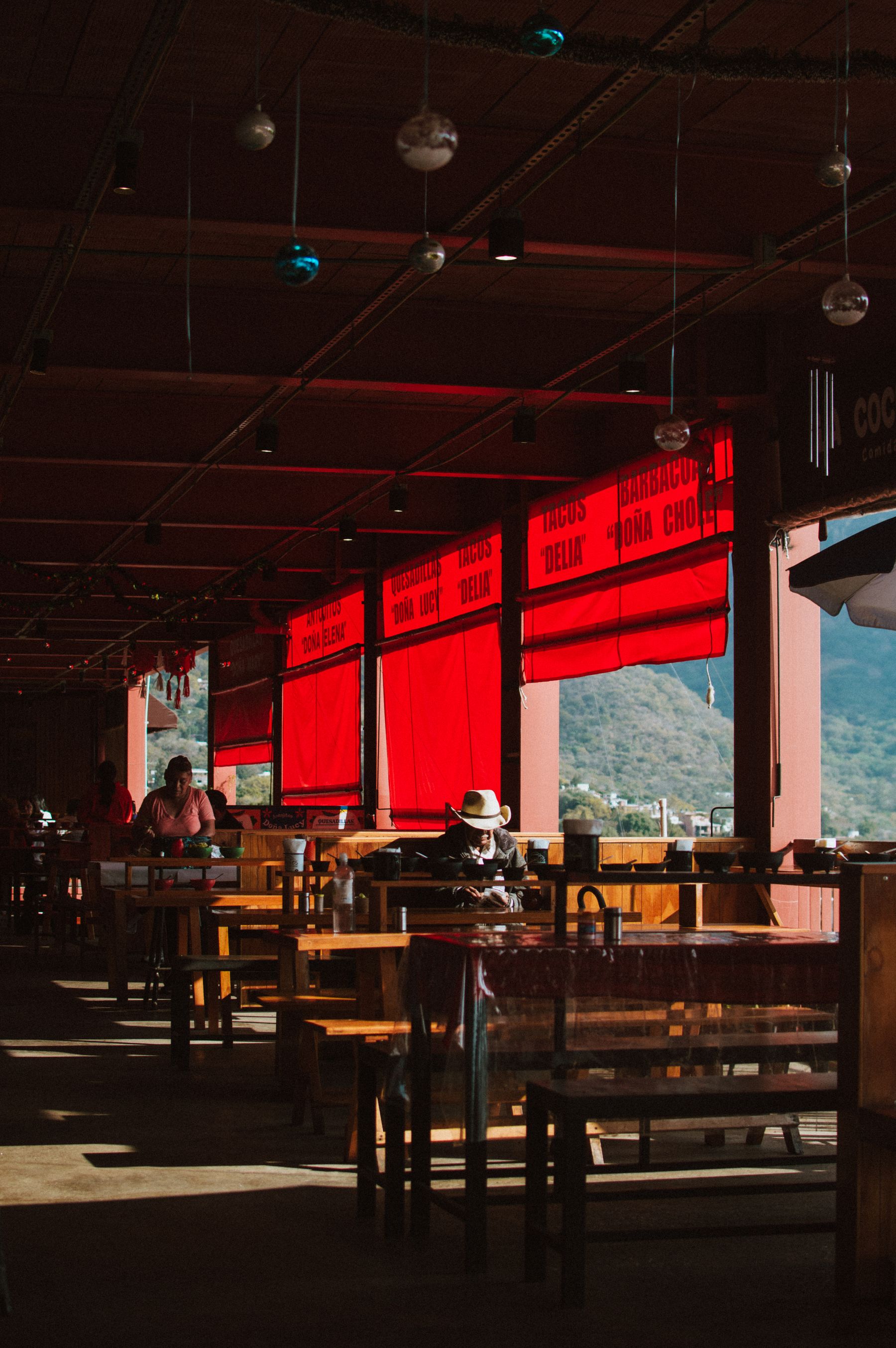
Pena often appears in small public moments: ordering wrong, interrupting, arriving late, misunderstanding the vibe. Photo by Susan Flores on Pexels.
## Me dio pena
Use me dio pena after the awkward thing happened.
Me dio pena porque llegué tarde.
I felt embarrassed because I arrived late.
Me dio pena pedir otra vez.
I felt awkward asking again.
For learners, this is useful because it lets you admit discomfort without becoming dramatic. You are not announcing moral collapse. You are saying, "that was awkward for me." That honesty often makes people kinder, because it shows you noticed the social moment.
## Me da pena
Use me da pena when the embarrassment is current or anticipated.
Me da pena hablar español cuando hay mucha gente.
I feel embarrassed speaking Spanish when there are a lot of people.
Me da pena preguntar, pero ¿dónde se paga?
I feel awkward asking, but where do you pay?
That second sentence is gold. It names the awkwardness and then does the task anyway. Very adult. Mildly heroic, depending on the line at the taquería.
## Qué pena
Qué pena is the phrase with the most emotional range. It can be sympathy, apology, embarrassment, or social cushioning.
| Situation | Qué pena means |
|---|---|
| You bump someone | Sorry |
| You misunderstood | How embarrassing |
| Someone got bad news | What a shame |
| You caused a small problem | I am sorry about that |
RAE's entry for disculpa helps here because qué pena often works beside apology language, not as a full repair by itself.[^rae-disculpa] If you made a mess, add the fix.
Qué pena, me equivoqué de chat.
Sorry, I sent it to the wrong chat.
Qué pena, no vi tu mensaje.
Sorry, I did not see your message.
A good recovery phrase gives the moment somewhere softer to land. Photo by Tiarra Sorte on Pexels.
## The false friend: embarrassed
Please tattoo this gently on your learner brain: embarazado means pregnant, not embarrassed.[^rae-embarazado] It is the classic Spanish false friend because English is a prankster with a passport.
If you want "I am embarrassed," use:
Me da pena.
I feel embarrassed / shy.
Me dio mucha pena.
I felt really embarrassed.
Qué oso.
How embarrassing / so cringe.
RAE's vergüenza entry covers shame or embarrassment more directly, but pena often sounds softer in everyday Mexican moments.[^rae-verguenza]
When the moment gets awkward, a short phrase beats a full apology spiral. Photo by Ali Alcántara on Pexels.
## How to recover gracefully
Try this sequence:
Qué pena, me confundí. ¿Me lo repites?
Sorry, I got confused. Can you repeat it?
Híjole, qué pena. No era mi intención.
Oof, sorry. That was not my intention.
Do not overexplain unless the situation really needs repair. FundéuRAE is useful for Spanish usage questions generally because it focuses on practical language, not just dictionary entries.[^fundeu] But in the room, your best move is often tiny: name it, fix it, move on.
## Pena in texts
In texts, pena often softens the little apology before the actual information.
Qué pena, apenas vi esto.
Sorry, I just saw this.
Me da pena pedirte esto, pero ¿me ayudas?
I feel bad asking you this, but can you help me?
Just do not let pena become a fog machine. If you need something, ask. If you made a mistake, repair it. If the chat only needs a small apology, keep it small. The phrase is a cushion, not the whole chair.
**Pena is not the end of the conversation. It is the soft landing before you keep going.**
[^rae-pena]: [Diccionario de la lengua española, pena](https://dle.rae.es/pena) - Real Academia Española.
[^dem-pena]: [Diccionario del español de México, pena](https://dem.colmex.mx/ver/pena) - El Colegio de México.
[^rae-verguenza]: [Diccionario de la lengua española, vergüenza](https://dle.rae.es/vergüenza) - Real Academia Española.
[^rae-embarazado]: [Diccionario de la lengua española, embarazado](https://dle.rae.es/embarazado) - Real Academia Española.
[^rae-disculpa]: [Diccionario de la lengua española, disculpa](https://dle.rae.es/disculpa) - Real Academia Española.
[^fundeu]: [FundéuRAE](https://www.fundeu.es/) - Fundación del Español Urgente.
FAQ:
Q: What does me dio pena mean?
A: Me dio pena means I felt embarrassed, shy, or awkward about something that happened.
Q: What does qué pena mean?
A: Qué pena can mean how embarrassing, what a shame, or I am sorry, depending on tone and context.
Q: Is pena shame or embarrassment?
A: It can be both. In Mexican Spanish it often points to embarrassment or social discomfort, but context decides.
Q: How do you say I am embarrassed in Mexican Spanish?
A: Say me da pena, me dio pena, or qué oso. Avoid estoy embarazado unless you mean pregnant.
Q: What is the difference between pena and oso?
A: Pena is broader and softer. Oso is more like an embarrassing moment or cringe situation.
Q: Can qué pena be an apology?
A: Yes. Qué pena can soften an apology, especially for a small mistake or inconvenience.
Q: How do I recover from an awkward mistake?
A: Use perdón, qué pena, me equivoqué, or híjole, disculpa, then keep moving.
Sources:
- Diccionario de la lengua española, pena: https://dle.rae.es/pena
- Diccionario del español de México, pena: https://dem.colmex.mx/ver/pena
- Diccionario de la lengua española, vergüenza: https://dle.rae.es/vergüenza
- Diccionario de la lengua española, embarazado: https://dle.rae.es/embarazado
- Diccionario de la lengua española, disculpa: https://dle.rae.es/disculpa
- FundéuRAE: https://www.fundeu.es/
Related words: hijole, chale, no-manches, mande