---
title: "¡Bajan! The One Word That Gets You Off a Mexico City Pesero"
description: "To get off a pesero in Mexico City you shout bajan. Here is how to flag one down, read the windshield, pay the driver, and ask for your stop."
type: "article"
category: "getting_around"
url: "https://consalsa.app/blog/pesero-combi-spanish"
canonical: "https://consalsa.app/blog/pesero-combi-spanish"
published: "2026-08-29"
updated: "2026-08-29"
author: "Andrey the Nomad"
site: "ConSalsa.App"
license: "https://consalsa.app/about"
---
# ¡Bajan! The One Word That Gets You Off a Mexico City Pesero
URL: https://consalsa.app/blog/pesero-combi-spanish
Date: 2026-08-29
Updated: 2026-08-29
Category: getting_around
Keywords: pesero meaning mexico, how to ride a pesero cdmx, combi spanish mexico city, bajan meaning spanish, mexico city bus spanish, microbus cdmx spanish
Summary: To get off a pesero in Mexico City you shout bajan. Here is how to flag one down, read the windshield, pay the driver, and ask for your stop.
Quick answer:
- To get off a pesero, microbús, or combi, shout bajan out loud. There is no bell and no stop button.
- You flag one down by sticking your arm out at the curb. They stop almost anywhere, not only at marked stops.
- The destination is handwritten or printed on the windshield, not shown as a route number.
- You pay the driver as you board. Carry coins - that is still how most units work, though modernized ones on some corridors take the Movilidad Integrada card.
What you'll learn:
- How peseros, micros, combis, and vagonetas differ, and why they all got the same nickname.
- How to stop one from the curb and check the route before you commit to it.
- How to pay, ask for change, and handle coins that strangers hand you.
- The exact words that get the door open at your corner instead of six blocks later.
Don't sound gringo:
Don't wait for a bell or a stop button. Peseros have neither, so silence means the driver keeps going. Say bajan loud enough that a stranger three rows ahead hears you, because that is the person who repeats it forward.
Body:
I got on somewhere near Insurgentes and watched my street go past the window. Then the next one. Then a street I had never heard of, in a colonia I could not name.
Everyone else was getting off fine. They were saying something short as they stood up, one syllable and a slammed door, and I could not catch it.
So I rode that pesero about twenty extra minutes out of pure vocabulary failure, then walked back.
**The word was bajan.** That is how you get off a pesero in Mexico City. No bell, no button, no announcement. There is you, your voice, and a driver who is already back up to speed.
The little buses are the last piece of CDMX transport most foreigners avoid, and the only one that goes almost everywhere. Five sentences and you are in.
## Pesero, micro, combi, vagoneta: same idea, different metal
They are all the same service - small buses run by private concessionaires on fixed routes - in different vehicles. People use the names loosely and nobody will correct you.
| What people say | What it usually is |
|---|---|
| Pesero | Catch-all nickname for all of them |
| Micro / microbús | Small bus, sliding door, narrow aisle |
| Combi / vagoneta | A van with bench seats, tighter, faster |
| Camión | A full-size bus on a concessioned route |
| Ruta | The route itself, and the company running it |
The nickname is a fossil. It comes from the collective taxis of the 1960s that charged exactly one peso per passenger, and it survived every vehicle and every fare increase since.[^excelsior] Mexican dictionaries now list pesero as its own word for this kind of transport.[^dem-pesero]
The general dictionary is drier about it: a microbús is simply a bus smaller than the usual one,[^rae-microbus] and a combi is a van whose inside is divided between seats and cargo space.[^rae-combi] Both definitions are technically correct and emotionally incomplete.
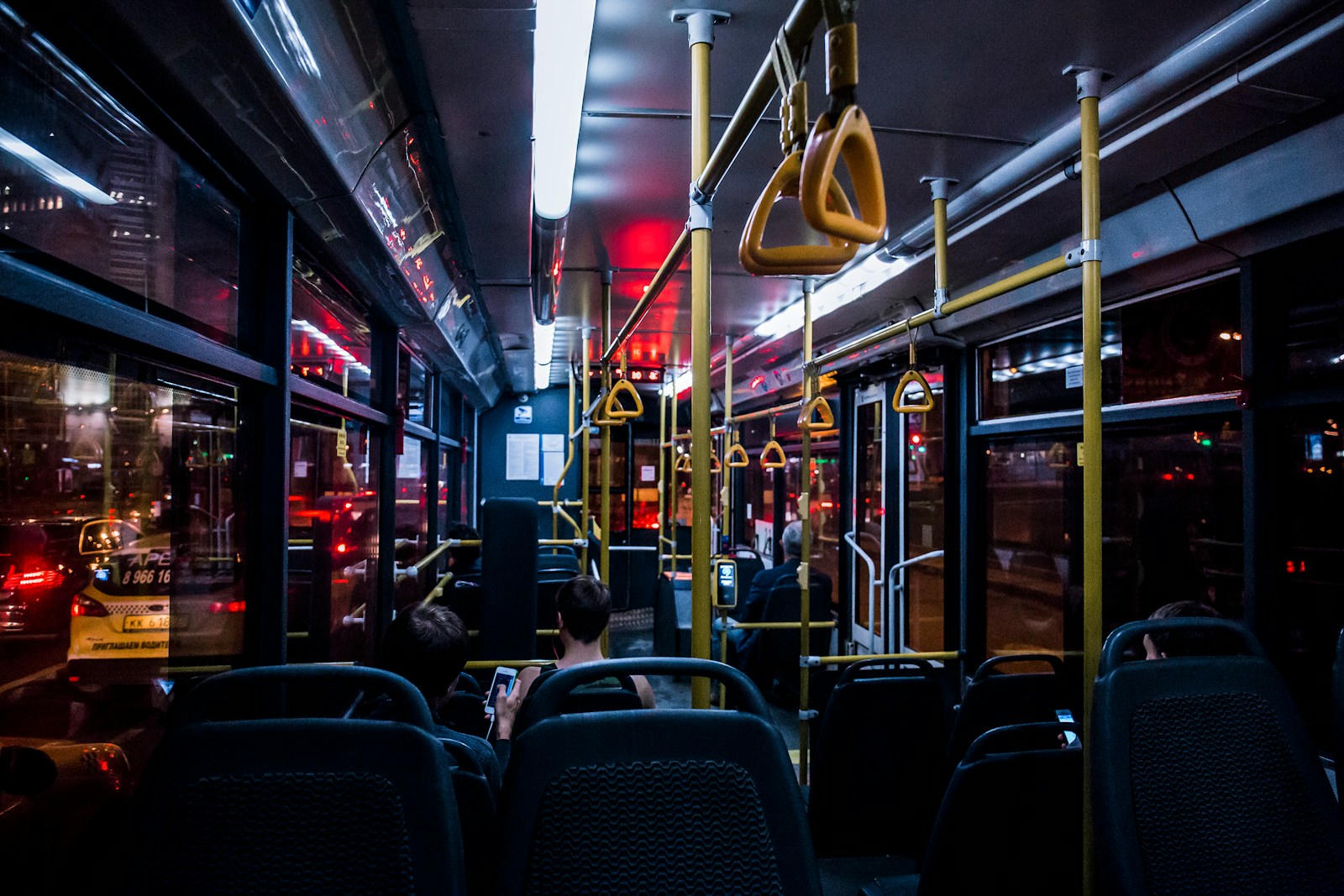
Handrails matter more than seats. On a combi you will spend most of the ride holding something. Photo by Aleksandr Popov on Unsplash.
## The windshield is the route map
Peseros do not really have route numbers you can look up on a sign. What they have is a card in the windshield, or paint on the glass, listing the destination plus a few landmarks along the way: a metro station, a big avenue, a market, a hospital.
You read it in about two seconds while the bus is moving toward you. This is a skill. It arrives faster than you think.
The city does publish the concessioned routes as open data, which is genuinely useful for planning at home.[^semovi-ruta] On the street, though, the windshield wins.
To stop one, stand at the curb and **put your arm straight out toward the street**. Not a wave. Not a polite little hand at chest height. An arm.
They stop almost anywhere along the route, which is the best thing about them and also why traffic in CDMX moves the way it does.
If the windshield is ambiguous, ask through the door before you commit:
¿Va por Doctor Vértiz?
Do you go along Doctor Vértiz?
¿Pasa por el metro Chilpancingo?
Does it pass by Chilpancingo metro?
¿Me deja en Álvaro Obregón?
Can you drop me at Álvaro Obregón?
One street name, one question. The driver answers with a nod, a sí, or a va, and you get on or you step back.
## Paying, and the coins that travel over shoulders
Cash, handed to the driver, normally as you board. **Carry coins. That is still how most of these units work, and trying to break a 500-peso note on a pesero is a social event nobody wants.**
There is an exception worth knowing about. Mexico City has been putting the Tarjeta de Movilidad Integrada, the same card you use on the Metro, onto modernized concessioned units, starting with the hallway buses in 2022.[^semovi-mi] Those have a card validator mounted next to the driver. Older microbuses and combis do not, and they are still the majority. Glance at the dashboard as you board: a validator means you can tap, no validator means coins.
Fares are distance-based and published. **As of 2026 the authorized tariff on a microbús or combi is 7.50 pesos for trips up to 5 km and 9 pesos up to 12 km.**[^infobae-tarifas] It gets adjusted every few years, so check the current authorized tariff with SEMOVI before you rely on the number.[^semovi-tarifas] Fare changes for these routes are a regular news story in CDMX, and they do not move in step with the Metro or Metrobús.[^eluniversal]
¿Cuánto es hasta Coyoacán?
How much is it to Coyoacán?
Dos, por favor.
Two, please.
¿Tiene cambio de cincuenta?
Do you have change for fifty?
Now the part that surprises people. If you board while the bus is full and end up standing at the back, or if someone gets on after you and cannot reach the front, **the money travels forward hand to hand over strangers' shoulders.**
Someone will tap you and put coins in your palm. You are not being robbed and you are not being tipped. You are a link in the chain. Turn around and pass it to the next person.
The useful phrases are tiny:
| Situation | What you say |
|---|---|
| Passing someone's fare forward | Es de atrás |
| Passing fare for two people | Van dos |
| Handing change back down the line | Es de la señora |
| Getting someone's attention | Joven / seño / disculpe |
| Someone hands you coins | Sale, gracias |
Nobody says thank you very loudly. It is a routine, not a favor. A short sale and a nod is the whole exchange.
## ¡Bajan! The word that opens the door
Here is the core of it. Peseros do not announce stops. There are no screens, no recorded voice, no bell, no strip to pull.
You watch the window. When your corner is one block away, you say it.
¡Bajan!
Someone's getting off!
¡Baja!
Getting off!
En la esquina, por favor.
At the corner, please.
Aquí está bien, gracias.
Here is fine, thanks.
Grammatically bajan is just the verb bajar, to go down or get off, in the third person plural.[^rae-bajar] Nobody is parsing it. It functions as a horn.
The volume matters more than the accent. **Say it toward the front of the bus, not into your own scarf.** If the driver does not hear you, a passenger will repeat it forward, which is the system working exactly as designed.
Where you want to stop is worth one extra word:
| What you want | What you say |
|---|---|
| The next corner | En la esquina |
| Right here | Aquí, por favor |
| Just past the light | Después del semáforo |
| At the metro entrance | En el metro, por favor |
| Someone is in your way | ¿Baja? or Con permiso |
That last one is worth practicing. On a packed combi you often have to ask the person blocking the sliding door whether they are getting off too, and then physically climb over a knee or two.
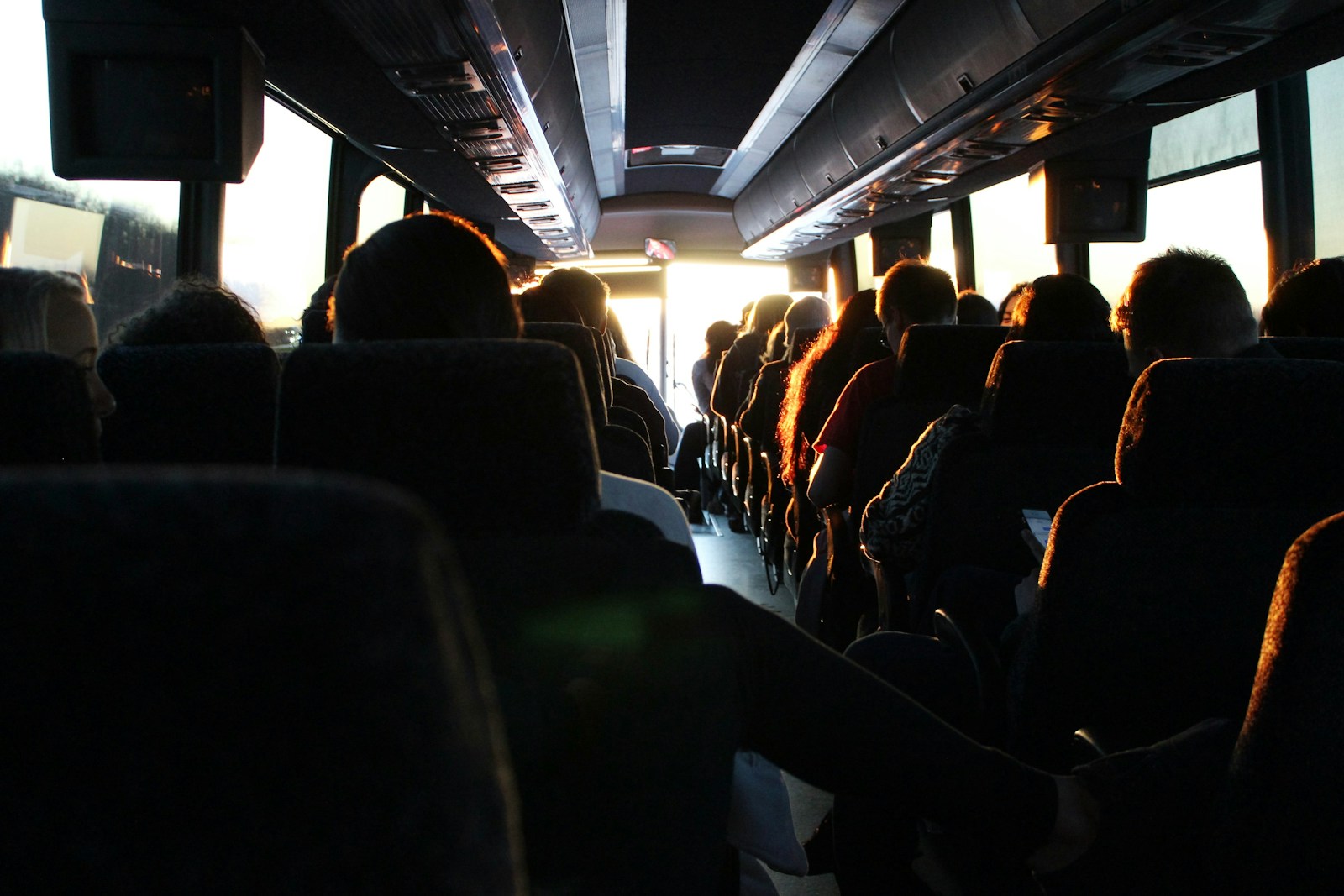
You cannot see street signs from the middle of a full bus, which is why locals start standing up a block early. Photo by Ash Gerlach on Unsplash.
## A whole ride in five short lines
Written out, the entire language of a pesero trip is shorter than one paragraph of a textbook dialogue.
¿Va por Xola?
Do you go along Xola?
Uno, por favor.
One, please.
Es de atrás.
This is from the back.
¡Bajan!
Someone's getting off!
Gracias, joven.
Thanks, man.
That is it. That is fluency, for this specific purpose.
Everything you were afraid of - not knowing the route, not knowing the price, not knowing how to escape - is handled by five short lines and a willingness to be slightly loud in public.
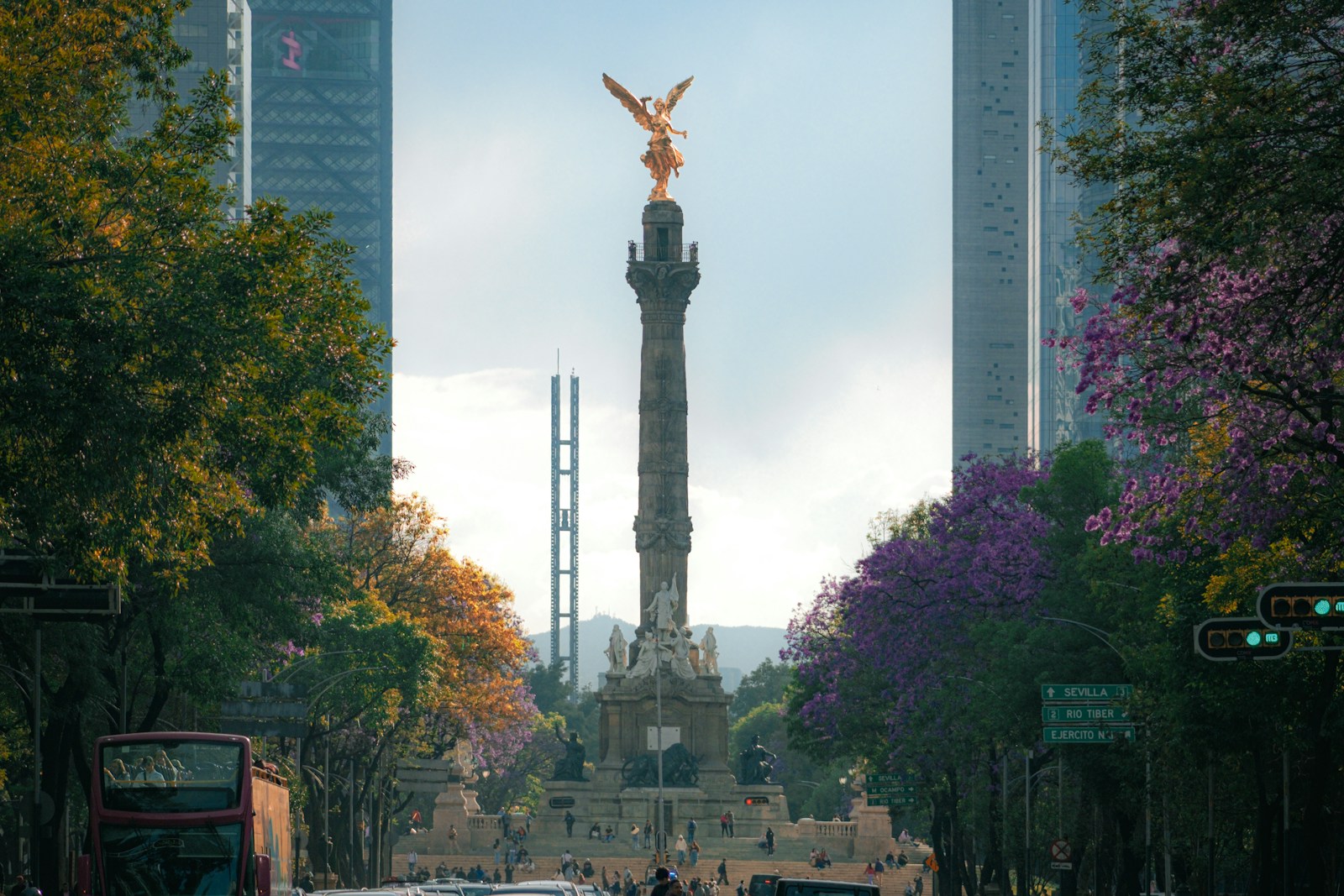
The big avenues are the easy part. Peseros earn their keep on the streets that no rail line reaches. Photo by Angel Maldonado on Unsplash.
## Tone, safety, and when to skip it
Keep your Spanish neutral and short in here. A pesero is not the place to try out the slang you learned on the internet, and the driver is working, not hosting.
A few practical things, learned the boring way:
- Hold on before the bus moves. Drivers pull away fast and the aisle is narrow.
- Keep your phone in your pocket, not in your hand near an open window or the door.
- Sit or stand where you can see out. You need the street to know when to shout.
- Stand up one block early. Standing up is itself a signal, and it saves the driver a hard brake.
- At night, or with luggage, or when you are already exhausted, take something else. The pesero rewards attention and you will not always have it to spare.
If someone shouts aguas near the door, move. That is a warning, not a greeting.
And when you do get it right - arm out, one street name, coins forward, ¡bajan! at your corner - nothing happens. No one looks at you. The door opens, you step down, the bus is gone.
That is the whole reward, and after a few weeks in this city it feels like a lot.
[^excelsior]: [¿Pesero de a peso? La curiosa historia detrás de este apodo a los microbuses](https://www.excelsior.com.mx/trending/por-que-se-le-dice-pesero-al-transporte-publico-en-la-cdmx/1677369) — Excélsior
[^dem-pesero]: [Diccionario del español de México, pesero](https://dem.colmex.mx/Ver/pesero) — El Colegio de México
[^rae-microbus]: [Diccionario de la lengua española, microbús](https://dle.rae.es/microb%C3%BAs) — Real Academia Española
[^rae-combi]: [Diccionario de la lengua española, combi](https://dle.rae.es/combi) — Real Academia Española
[^rae-bajar]: [Diccionario de la lengua española, bajar](https://dle.rae.es/bajar) — Real Academia Española
[^semovi-tarifas]: [Tarifas de transporte público vigentes](https://www.semovi.cdmx.gob.mx/tramites-y-servicios/transporte-de-pasajeros/nuevas-tarifas-de-transporte-publico-vigentes) — Secretaría de Movilidad, Gobierno de la Ciudad de México
[^semovi-ruta]: [Mi Ruta, mapa de rutas de la Ciudad de México](https://semovi.cdmx.gob.mx/movilidad-integrada/mi-ruta) — Secretaría de Movilidad, Gobierno de la Ciudad de México
[^semovi-mi]: [A partir de hoy, la Tarjeta de Movilidad Integrada se puede usar en transporte concesionado](https://www.semovi.cdmx.gob.mx/comunicacion/nota/conjunto-partir-de-hoy-tarjeta-de-movilidad-integrada-se-puede-usar-en-transporte-concesionado) — Secretaría de Movilidad, Gobierno de la Ciudad de México
[^infobae-tarifas]: [Cómo cambiará el transporte público en CDMX para 2026](https://www.infobae.com/mexico/2026/01/01/como-cambiara-el-transporte-publico-en-cdmx-para-2026/) — Infobae México
[^eluniversal]: [Aumento a tarifa de transporte no contempla Metro, Metrobús o Trolebús](https://www.eluniversal.com.mx/estados/aumento-a-tarifa-de-transporte-no-contempla-metro-metrobus-o-trolebus-cdmx/) — El Universal
FAQ:
Q: What does bajan mean on a Mexico City bus?
A: Bajan literally means they get off. On a pesero it works as a shout that tells the driver someone wants the next stop. Baja, the singular, works the same way.
Q: What is a pesero?
A: A pesero is a small privately run bus on a concessioned route in Mexico City. The nickname comes from mid-century collective taxis that charged one peso per passenger.
Q: What is the difference between a pesero, a micro, and a combi?
A: They are the same kind of service in different vehicles. A micro or microbús is a small bus, a combi or vagoneta is a van with bench seats, and pesero is the catch-all nickname for all of them.
Q: How do you stop a pesero in Mexico City?
A: Stand at the curb and stick your arm out toward the street as it approaches. Drivers stop almost anywhere along the route, not only at marked stops.
Q: How do you know where a pesero is going?
A: Read the windshield. The destination and a few landmarks along the way are written on a card or painted on the glass. There is no route number to look up on a sign.
Q: How do you pay on a pesero?
A: Cash to the driver, usually as you board, so carry coins rather than a large bill. Modernized units on some corridors also take the Tarjeta de Movilidad Integrada - look for a card validator next to the driver. As of 2026 the authorized fare is 7.50 pesos for trips up to 5 km and 9 pesos up to 12 km.
Q: Why do strangers hand me money on a combi?
A: Because passengers at the back cannot reach the driver, so their fare travels forward hand to hand. Pass it on and say es de atrás or van dos if you know how many people it covers.
Q: Do peseros announce the stops?
A: No. There are no announcements, no screens, and no bell. You watch the window and you say bajan when your corner is coming up.
Sources:
- Secretaría de Movilidad CDMX, Tarifas de transporte público vigentes: https://www.semovi.cdmx.gob.mx/tramites-y-servicios/transporte-de-pasajeros/nuevas-tarifas-de-transporte-publico-vigentes
- Secretaría de Movilidad CDMX, A partir de hoy, la Tarjeta de Movilidad Integrada se puede usar en transporte concesionado: https://www.semovi.cdmx.gob.mx/comunicacion/nota/conjunto-partir-de-hoy-tarjeta-de-movilidad-integrada-se-puede-usar-en-transporte-concesionado
- Infobae, Cómo cambiará el transporte público en CDMX para 2026: https://www.infobae.com/mexico/2026/01/01/como-cambiara-el-transporte-publico-en-cdmx-para-2026/
- Secretaría de Movilidad CDMX, Mi Ruta: https://semovi.cdmx.gob.mx/movilidad-integrada/mi-ruta
- Excélsior, ¿Pesero de a peso? La curiosa historia detrás de este apodo: https://www.excelsior.com.mx/trending/por-que-se-le-dice-pesero-al-transporte-publico-en-la-cdmx/1677369
- El Universal, Aumento a tarifa de transporte no contempla Metro, Metrobús o Trolebús: https://www.eluniversal.com.mx/estados/aumento-a-tarifa-de-transporte-no-contempla-metro-metrobus-o-trolebus-cdmx/
- Diccionario del español de México, pesero: https://dem.colmex.mx/Ver/pesero
- Diccionario de la lengua española, microbús: https://dle.rae.es/microb%C3%BAs
- Diccionario de la lengua española, combi: https://dle.rae.es/combi
- Diccionario de la lengua española, bajar: https://dle.rae.es/bajar
Related words: aguas, sale, va, orale